
Fuel Transfer Flask
Provenance
- Camera
- NIKON D850
- Lens
- 14.0-24.0 mm f/2.8
- Settings
- 16mm · f/7.1 · 1.3s · ISO 64
- Paper
- Ilford Galerie Smooth Cotton Rag 310 gsm
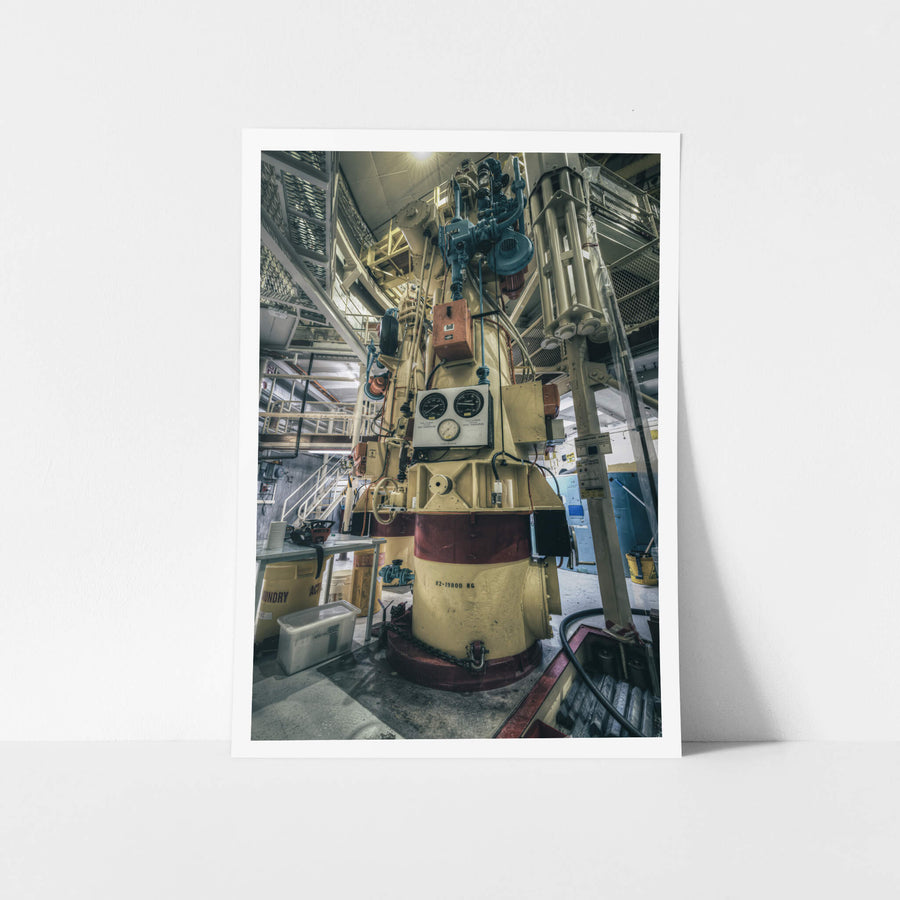
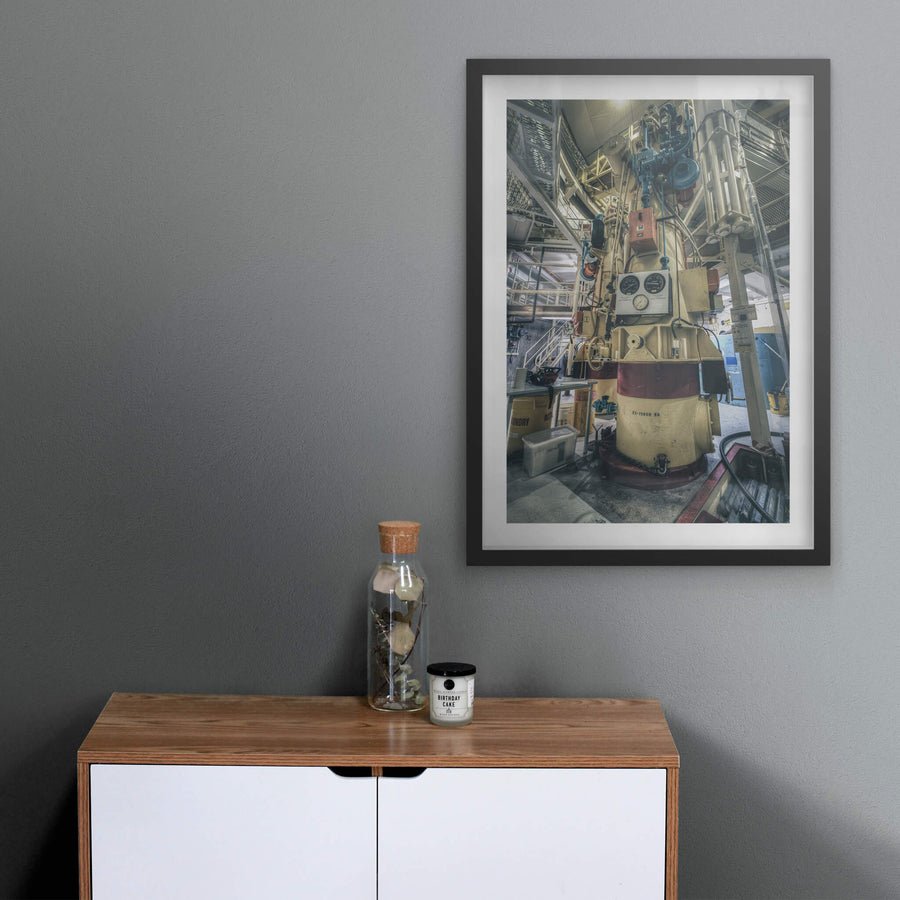
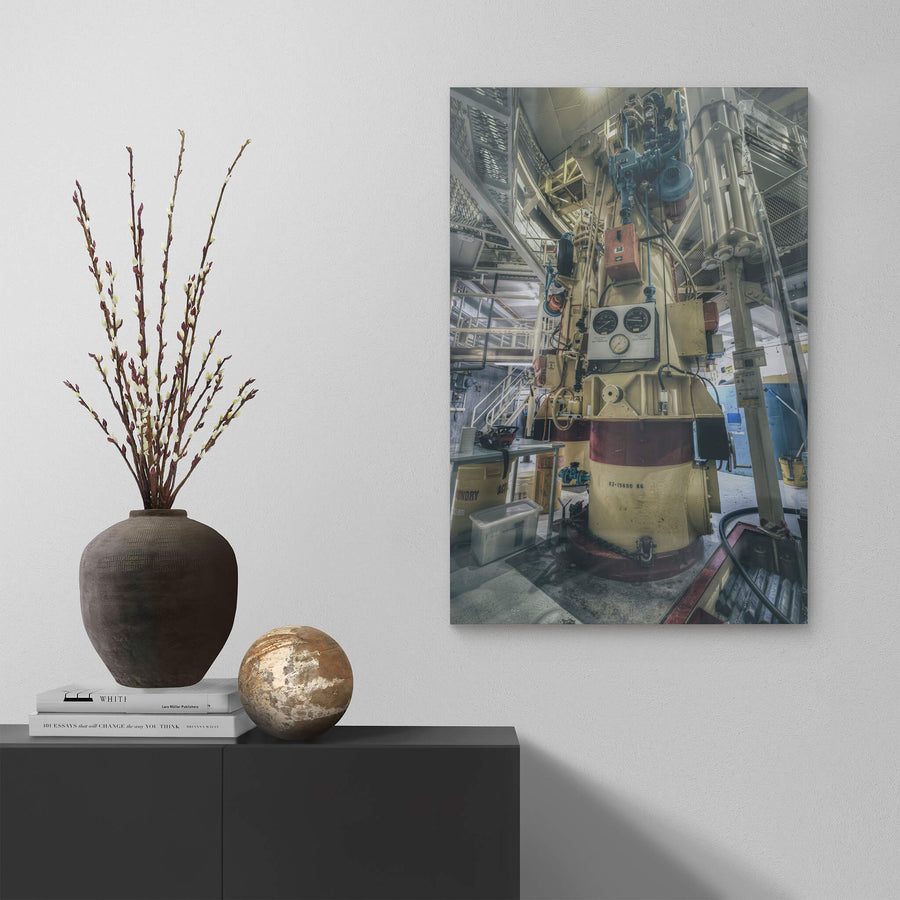
The fuel transfer flask at HIFAR, Lucas Heights. Lead-lined and equipped with an integrated air cooling system, the flask protected personnel during fuel handling. It was moved by the polar crane to load and unload fuel elements from the reactor's top plate.
Open edition
Printed to order, no fixed quantity. Each print is hand-signed by the photographer.
Limited edition
A fixed number of prints exist. Once sold, the edition closes permanently. Each print is individually numbered and signed.
Shipping Free shipping over $250. Ships worldwide, rates calculated at checkout.
Returns Damaged in transit? We replace it. Full policy →
Ships within 10 business days · signed & numbered
In situ


Print datasheet
- Title
- Fuel Transfer Flask
- Series
- ANSTO HIFAR
- Catalogue
- AHF-007
- Process
- Giclée
- Captured
- 7 October 2022
- Camera
- NIKON D850
- Lens
- 14.0-24.0 mm f/2.8
- Aperture
- f/7.1
- Shutter
- 1.3s s
- ISO
- 64
- Focal length
- 16 mm
- Paper
- Ilford Galerie Smooth Cotton Rag 310 gsm
- Paper size
- 290 × 200 mm
- Location
- Lucas Heights, New South Wales, Australia
- Authenticity
- C2PA verified provenance →
- Recognised by
- National Trust of Australia (NSW), 2016 Heritage Award, Multimedia
Lucas Heights, New South Wales, Australia
Map · Mapbox · OpenStreetMap
About this print
The fuel transfer flask shown here was rated for 19.8 tonnes and was maneuvered using HIFAR’s 20-tonne polar crane. Designed for the secure transport of nuclear fuel elements, the flask was lined with lead shielding to protect personnel from radiation exposure during handling operations.
Brett Patman

The series
ANSTO HIFAR
HIFAR, the High Flux Australian Reactor, was Australia's first nuclear reactor. It went critical at 11:15 pm on Sunday 26 January 1958 and ran for forty-nine years and four days before being permanently shut down on 30 January 2007. The reactor was the last of six DIDO-class research reactors built worldwide to cease operation.
Print sizes
The anatomy view shows what this finish is as a physical object: paper margin, mat band, frame depth, acrylic profile. The comparison strip shows how each size sits relative to the others at true scale. Click a size or a finish to update both.
| Type | Size | Width | Height |
|---|


