
Series story · November 2016
Mitsubishi Minami-Ōyūbari Station
The Mitsubishi Minami-Oyubari station is one of the remaining examples of the Mitsubishi mining empire in the Sorachi region and Yubari's industrial past.
Read the noteYour cart
Nothing saved yet. Start with the current series or browse the full archive.
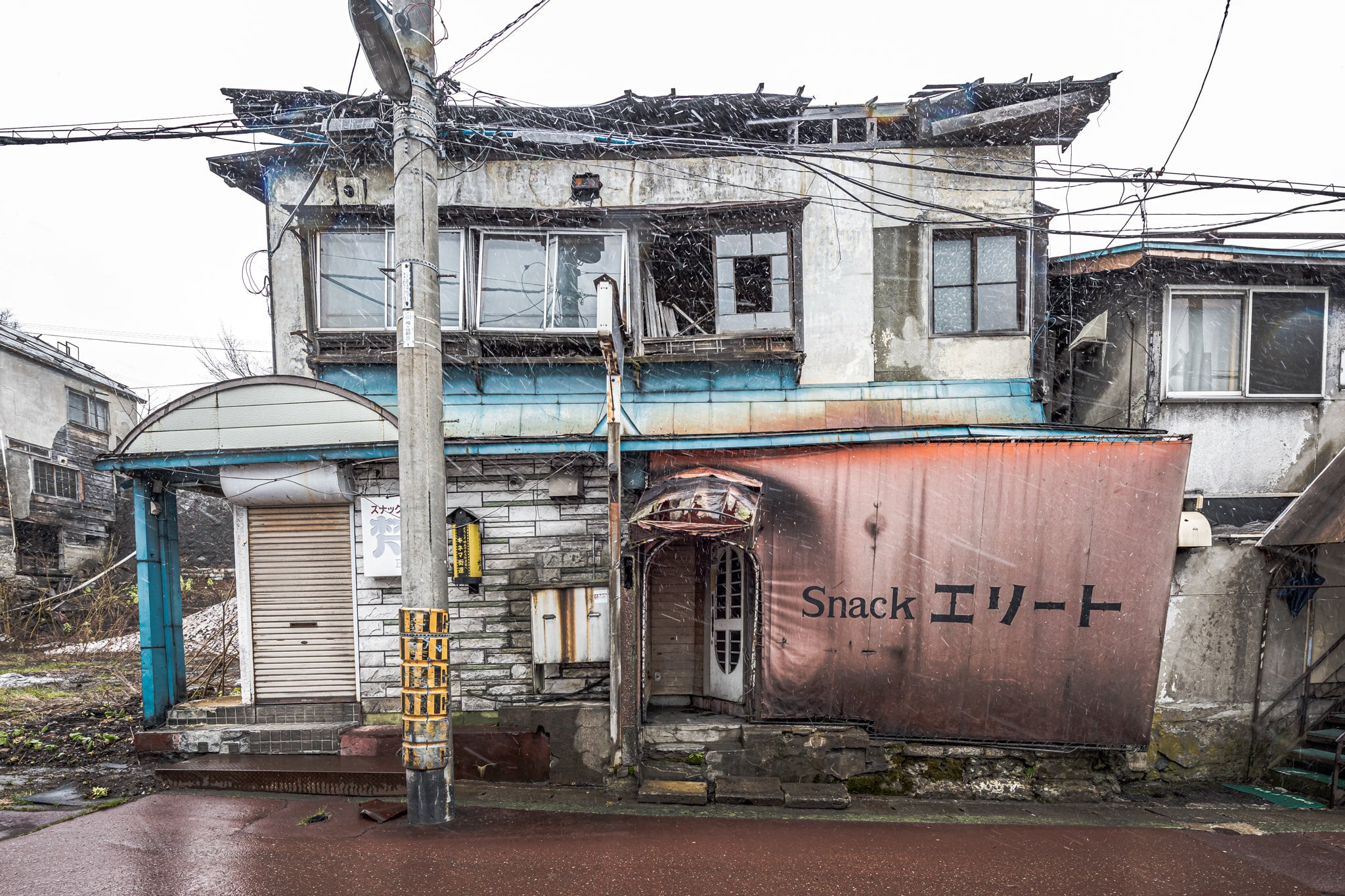
01 Streetscapes of YubariYubari2016
ISO 5001/60f/8.014mm
Series · 54 prints
Map · Mapbox · OpenStreetMap
Yūbari is a coal-mining city in central Hokkaido. Founded in 1943, its population peaked at around 120,000 in the 1960s and now sits at about 6,400. The colliery closed in the 1980s. The city's attempt to recover through tourism failed; in 2007 it became the first Japanese municipality to declare bankruptcy, owing 35.3 billion yen. These streetscapes were taken between the houses, shops, and schools the town no longer needs - most empty, some half-collapsed, some still in use by the people who stayed.
Hand-signed and numbered, printed from the original RAW file. Open editions in the two smallest sizes; limited editions of 100, 50 and 25 in the three larger, never reissued once they sell through.


Made to order by Brett in Sydney, from the original RAW file. Each print is hand-signed and numbered before it ships.
Paper
Ilford Galerie cotton rag, 310 gsm. Acrylic on metallic gloss, 260 gsm.
Lead time
Unframed: 5 to 10 business days. Framed and acrylic: 10 to 20.
The Mitsubishi Minami-Oyubari station is one of the remaining examples of the Mitsubishi mining empire in the Sorachi region and Yubari's industrial past.
Read the note