Wooden Panels

Provenance

Camera
NIKON D810
Lens
14.0-24.0 mm f/2.8
Settings
20mm · f/8.0 · 1/100 · ISO 500
Paper
Ilford Galerie Smooth Cotton Rag 310 gsm

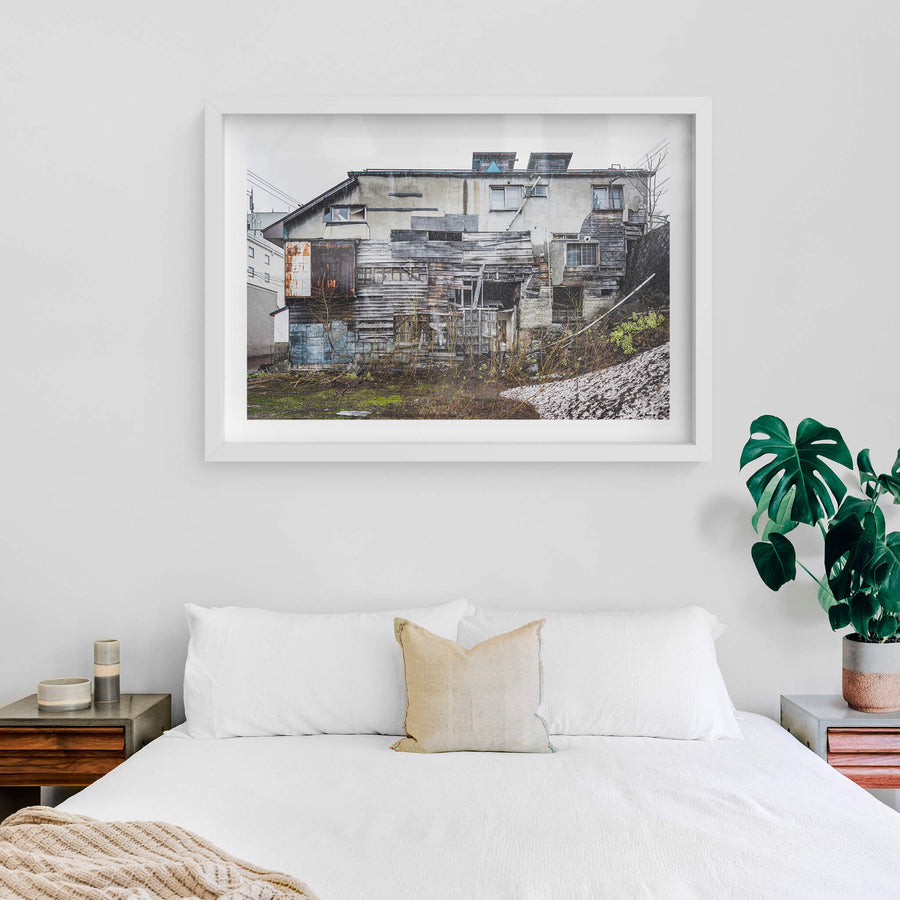
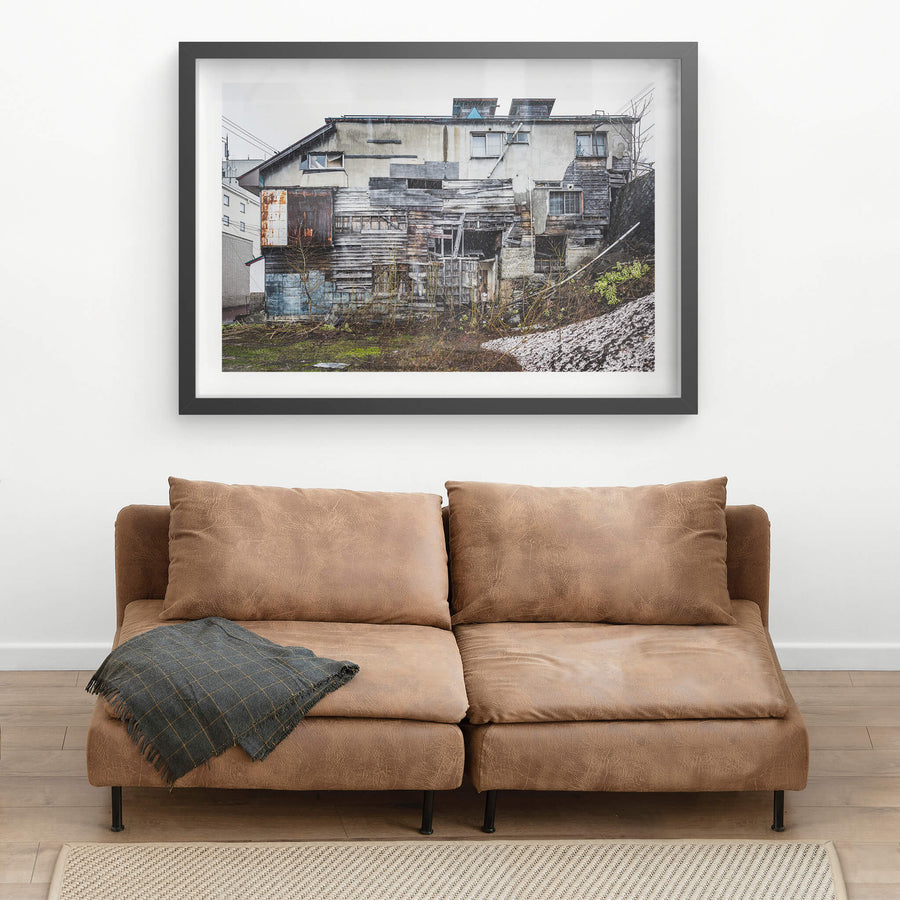
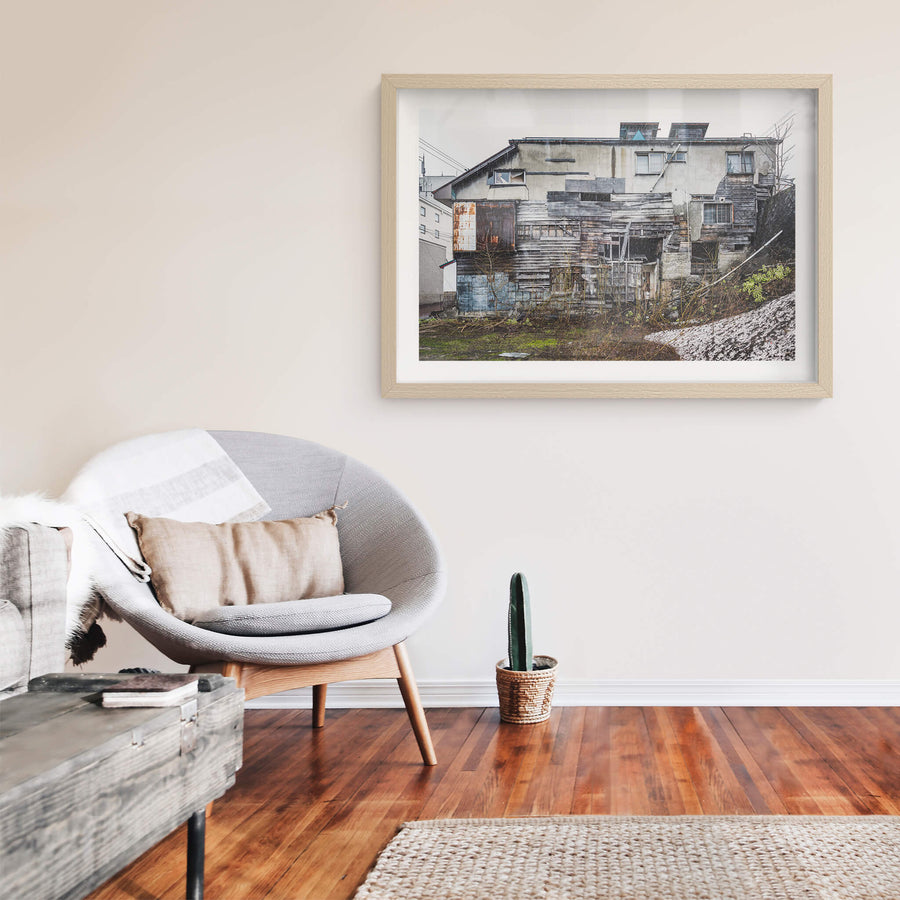
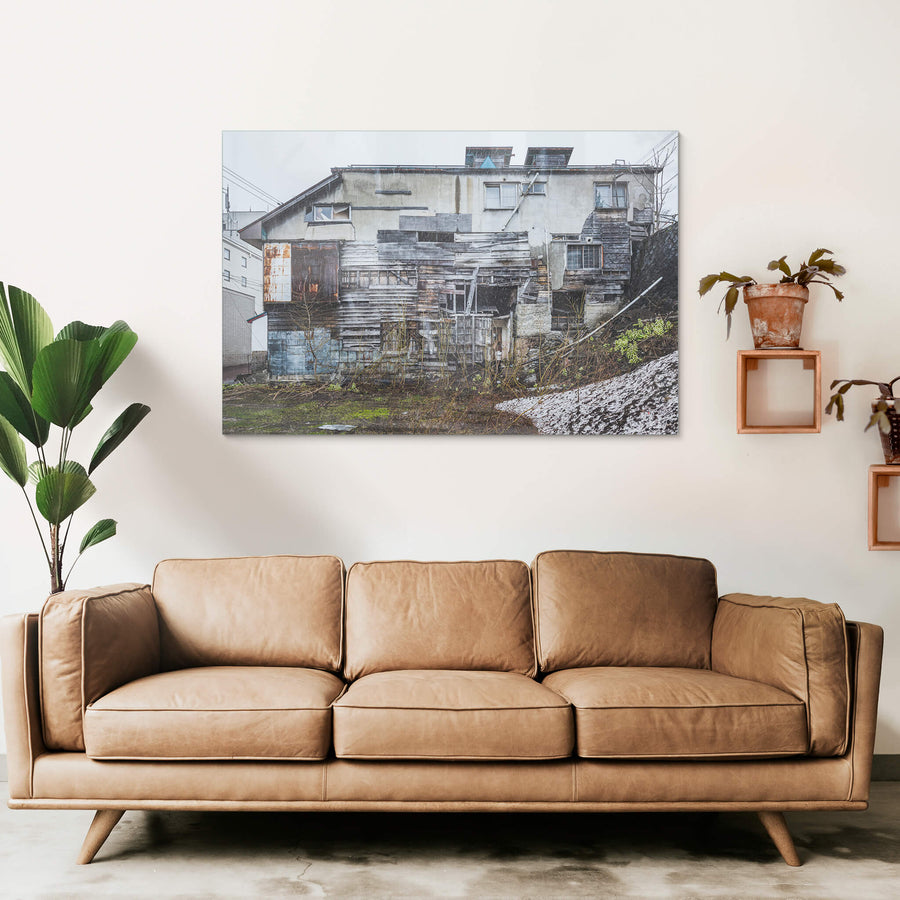
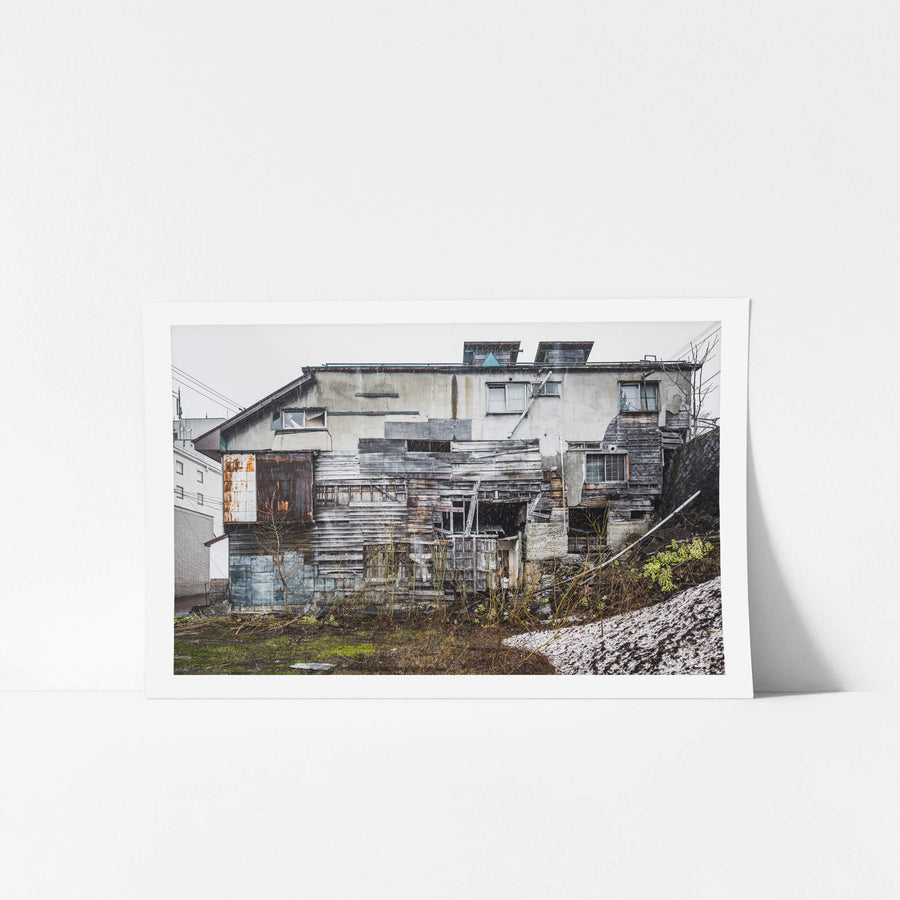
Rusted metal sheets cover the lower left section of the upper storey, laid over broken concrete and horizontal timber planks in what reads as a sequence of repairs that eventually stopped. A diagonal white pipe drops from the roofline into a snowy embankment below, and a broken window above the patching exposes a dark interior. Snow settles across the facade and the bare branches in front of it.

Edition
Open edition

Open edition
Printed to order, no fixed quantity. Each print is hand-signed by the photographer.

Limited edition
A fixed number of prints exist. Once sold, the edition closes permanently. Each print is individually numbered and signed.

$100.00 AUD
Size
Type
Colour
Signed, numbered, with COA. Made to order in 5 to 10 business days (unframed). Shipped in protective packaging with edition certificate, paper-stock reference and a printed care guide.
See certificate sample →

Shipping Free shipping over $250. Ships worldwide, rates calculated at checkout.

Returns Damaged in transit? We replace it. Full policy →

Ships within 10 business days · signed & numbered

In situ
Wooden Panels at Streetscapes of Yubari, unframed print displayed in situ on a wall.Wooden Panels at Streetscapes of Yubari, white-framed print displayed in situ on a wall.Wooden Panels at Streetscapes of Yubari, black-framed print displayed in situ on a wall.Wooden Panels at Streetscapes of Yubari, raw timber-framed print displayed in situ on a wall.Wooden Panels at Streetscapes of Yubari, glass print displayed in situ on a wall.
01 PROVENANCE

Print datasheet

Title
Wooden Panels
Series
Streetscapes of Yubari
Catalogue
SYU-048
Process
Giclée
Captured
28 April 2016
Camera
NIKON D810
Lens
14.0-24.0 mm f/2.8
Aperture
f/8.0
Shutter
1/100 s
ISO
500
Focal length
20 mm
Paper
Ilford Galerie Smooth Cotton Rag 310 gsm
Paper size
290 × 200 mm
Location
Yubari, Hokkaido, Japan
Recognised by
Highly Commended in Multimedia at the 2016 National Trust of Australia (NSW) Heritage Awards
02 LOCATION

Yubari, Hokkaido, Japan

Map · Mapbox · OpenStreetMap

03 THE STORY

About this print

The lower facade of this two-storey building is covered in horizontal timber boards, each strip weathered to a flat grey, overlapping like the scales of something that has forgotten what it was protecting. Render clings to the upper walls in irregular patches, the rest gone to the ground below. Bare scrub has taken hold at the base. Snow falls lightly across the whole scene. Rusted metal sheets cover the lower left section of the upper storey, laid over broken concrete and horizontal timber planks in what reads as a sequence of repairs that eventually stopped. A diagonal white pipe drops from the roofline into a snowy embankment below, and a broken window above the patching exposes a dark interior. Timber-frame housing of this type was the dominant residential form across Yubari from the 1920s through the 1960s, constructed to house the workers and families drawn by the coal mines that once operated across the city's mountainous basin. At the industry's peak in 1960, over 107,000 people lived in Yubari. The coal seams that had drawn them were first identified in 1888, and mining commenced under the Hokkaido Colliery and Railway Company in the early 1890s. By the mid-twentieth century, between 24 and 30 mines were operating across the region. The last, Mitsubishi Minami-Oyubari Mine, closed on 30 March 1990. What the research file describes as "snow load as primary decay mechanism" is visible in Yubari's streetscapes everywhere, and this building is part of that record. Every unheated winter, the weight of accumulated snow buckles roofs, drives moisture into timber frames, and advances the structural clock. The buildings that held on through the 1990s and 2000s are losing ground to the climate as much as to economics. When this photograph was made in 2016, Yubari's population had already fallen below 10,000. The city had been under fiscal rehabilitation since 2007, carrying a debt of approximately 35.3 billion yen. The timber cladding in this frame is not remarkable by Yubari's standards. It is simply one more building doing what unoccupied buildings do in a Hokkaido winter.

04 FROM THE FIELD NOTES

Rusted metal sheets cover the lower left section of the upper storey.

Brett Patman

Streetscapes of Yubari

The series

Streetscapes of Yubari

2018 · 54 photographs

Yūbari is a coal-mining city in central Hokkaido. Founded in 1943, its population peaked at around 120,000 in the 1960s and now sits at about 6,400. The colliery closed in the 1980s. The city's attempt to recover through tourism failed; in 2007 it became the first Japanese municipality to declare bankruptcy, owing 35.3 billion yen. These streetscapes were taken between the houses, shops, and schools the town no longer needs - most empty, some half-collapsed, some still in use by the people who stayed.

View all in this series →

05 SIZE GUIDE

Print sizes

The anatomy view shows what this finish is as a physical object: paper margin, mat band, frame depth, acrylic profile. The comparison strip shows how each size sits relative to the others at true scale. Click a size or a finish to update both.

Anatomy · true ratio
TypeSizeWidthHeight
08 BY POST · NO SPAM

Read the full story

Articles when they're published. The history behind a place. The day of a shoot. The work between prints. No marketing, no schedule.

You're subscribed.