
Restaurant
Provenance
- Camera
- NIKON D810
- Lens
- 14.0-24.0 mm f/2.8
- Settings
- 24mm · f/8.0 · 1/400 · ISO 100
- Paper
- Ilford Galerie Smooth Cotton Rag 310 gsm
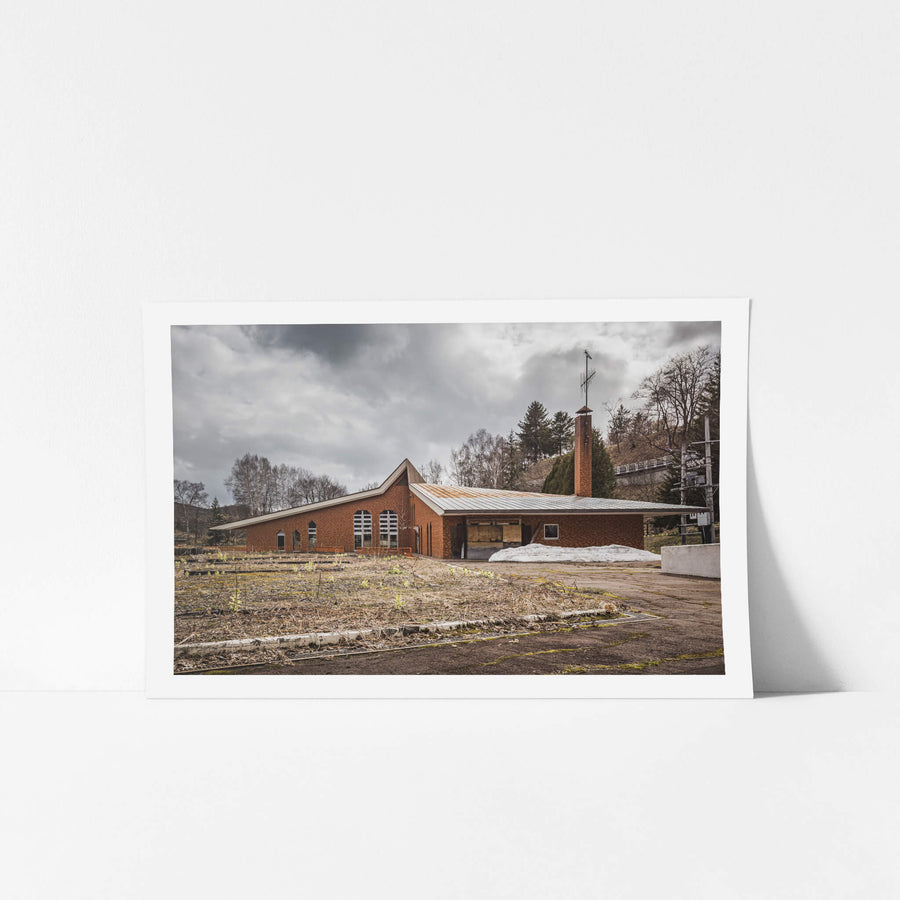
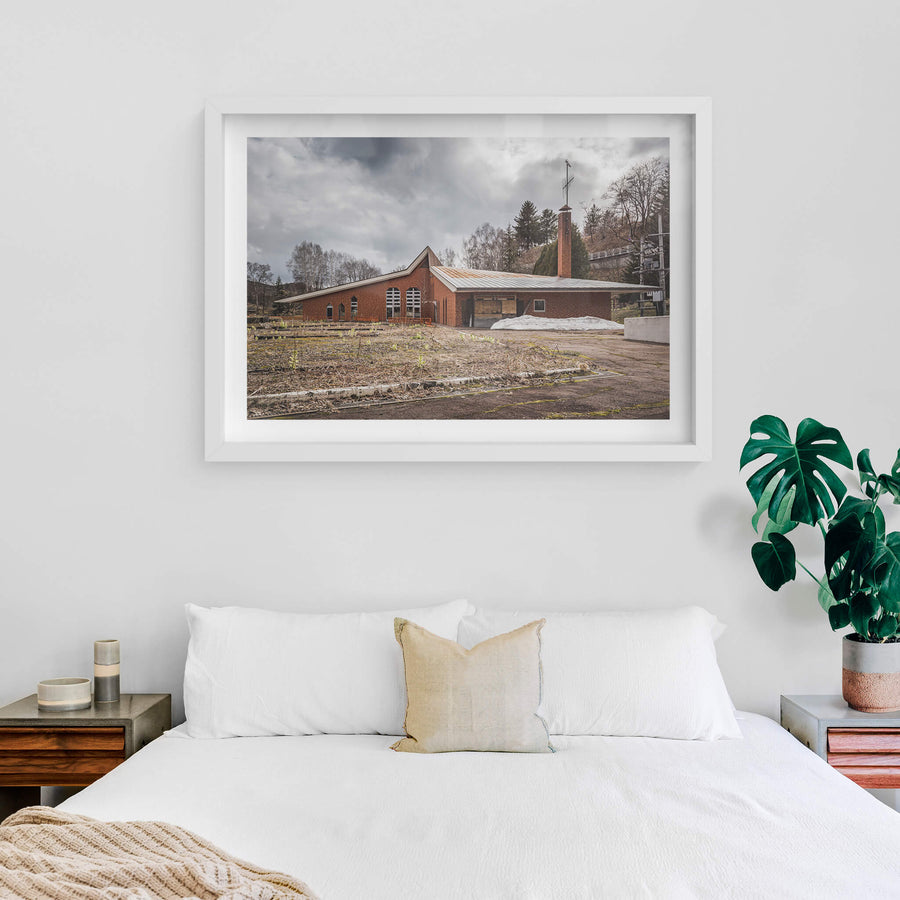
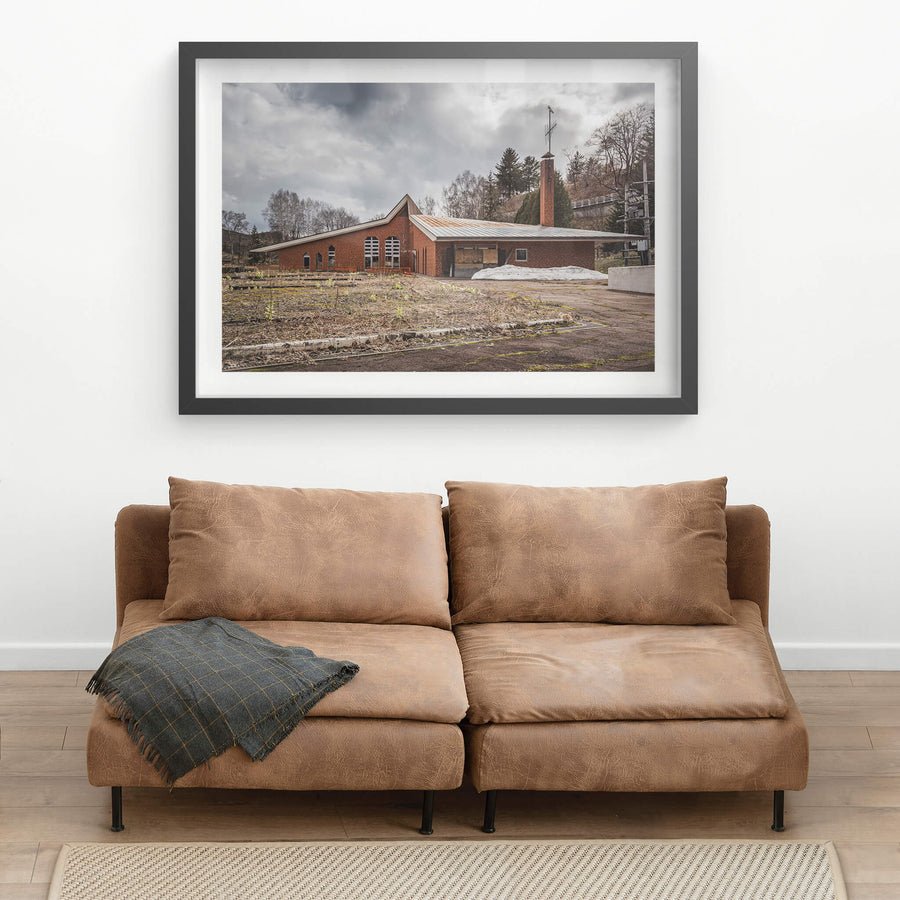
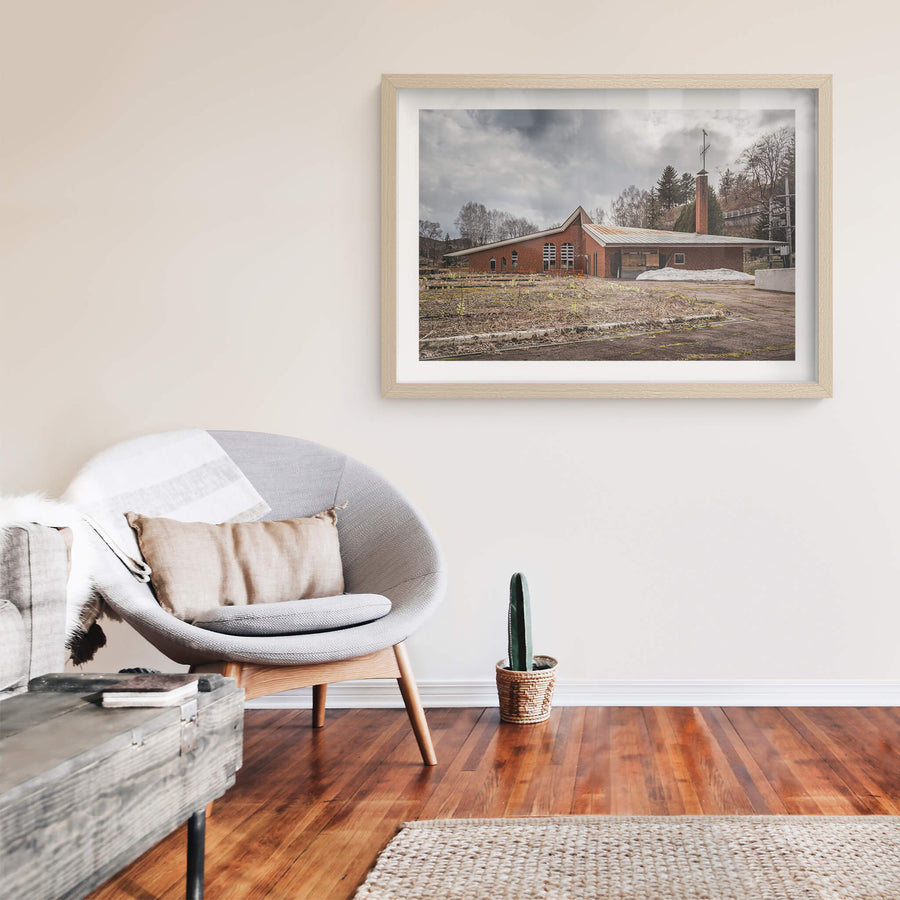
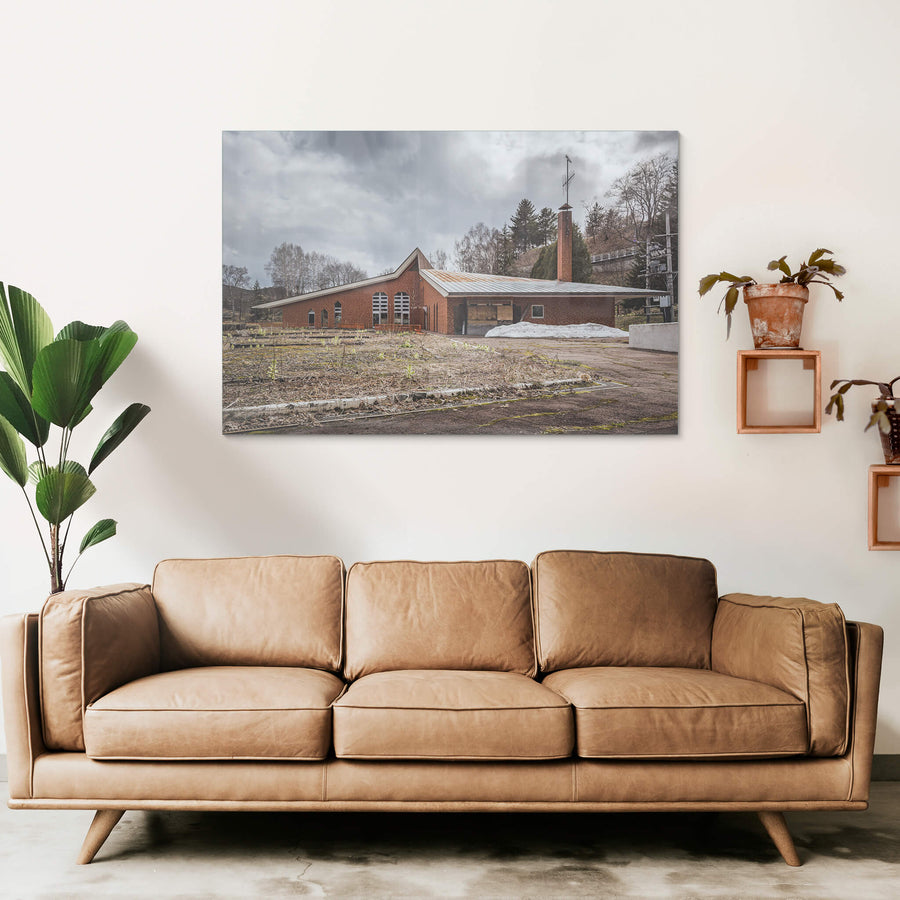
Brick walls and a tall chimney capped with a multi-directional antenna mark the entrance restaurant of Sekitan no Rekishi Mura, the Coal Mining History Village at Yubari. The windows are boarded and the vegetation in front is dry and overgrown, with small patches of snow still holding in the building's shadow. Bare trees frame the angular roofline against a low overcast sky.
Open edition
Printed to order, no fixed quantity. Each print is hand-signed by the photographer.
Limited edition
A fixed number of prints exist. Once sold, the edition closes permanently. Each print is individually numbered and signed.
Shipping Free shipping over $250. Ships worldwide, rates calculated at checkout.
Returns Damaged in transit? We replace it. Full policy →
Ships within 10 business days · signed & numbered
In situ
Print datasheet
- Title
- Restaurant
- Series
- Streetscapes of Yubari
- Catalogue
- SYU-029
- Process
- Giclée
- Captured
- 28 April 2016
- Camera
- NIKON D810
- Lens
- 14.0-24.0 mm f/2.8
- Aperture
- f/8.0
- Shutter
- 1/400 s
- ISO
- 100
- Focal length
- 24 mm
- Paper
- Ilford Galerie Smooth Cotton Rag 310 gsm
- Paper size
- 297 × 210 mm
- Location
- Yubari, Hokkaido, Japan
- Authenticity
- C2PA verified provenance →
- Recognised by
- Highly Commended in Multimedia at the 2016 National Trust of Australia (NSW) Heritage Awards
Yubari, Hokkaido, Japan
Map · Mapbox · OpenStreetMap
About this print
A former restaurant stands on a Yubari street, its signage faded and windows unlit. The building is part of a commercial streetscape that once served a city of more than 107,000 people at its 1960 census peak. Coal mining drove that growth; when the last mine closed in 1990, the population was already below 21,000. Yubari filed for fiscal rehabilitation in 2007 with debts of approximately 35.3 billion yen. Today fewer than 6,000 residents remain, and buildings like this one are reshaped each winter by snowfall and the cold.
Brett Patman

The series
Streetscapes of Yubari
Yūbari is a coal-mining city in central Hokkaido. Founded in 1943, its population peaked at around 120,000 in the 1960s and now sits at about 6,400. The colliery closed in the 1980s. The city's attempt to recover through tourism failed; in 2007 it became the first Japanese municipality to declare bankruptcy, owing 35.3 billion yen. These streetscapes were taken between the houses, shops, and schools the town no longer needs - most empty, some half-collapsed, some still in use by the people who stayed.
Print sizes
The anatomy view shows what this finish is as a physical object: paper margin, mat band, frame depth, acrylic profile. The comparison strip shows how each size sits relative to the others at true scale. Click a size or a finish to update both.
| Type | Size | Width | Height |
|---|


