
Side Facade
Provenance
- Camera
- NIKON D810
- Lens
- 14.0-24.0 mm f/2.8
- Settings
- 14mm · f/8.0 · 1/50 · ISO 500
- Paper
- Ilford Galerie Smooth Cotton Rag 310 gsm
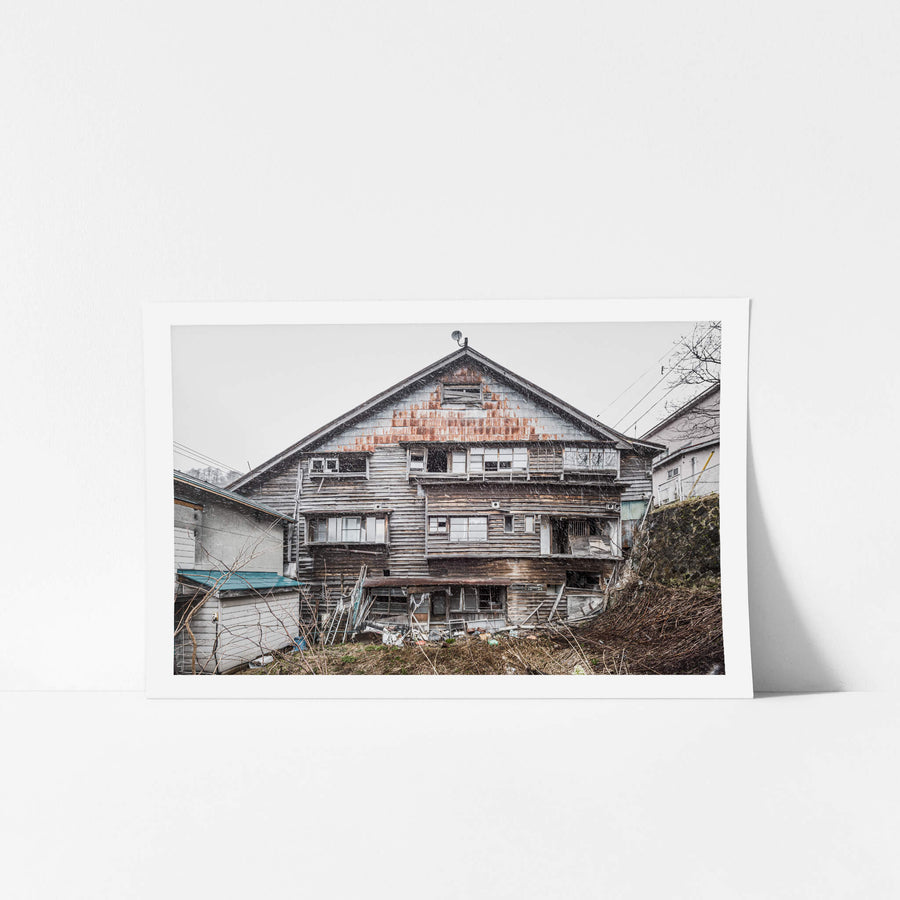
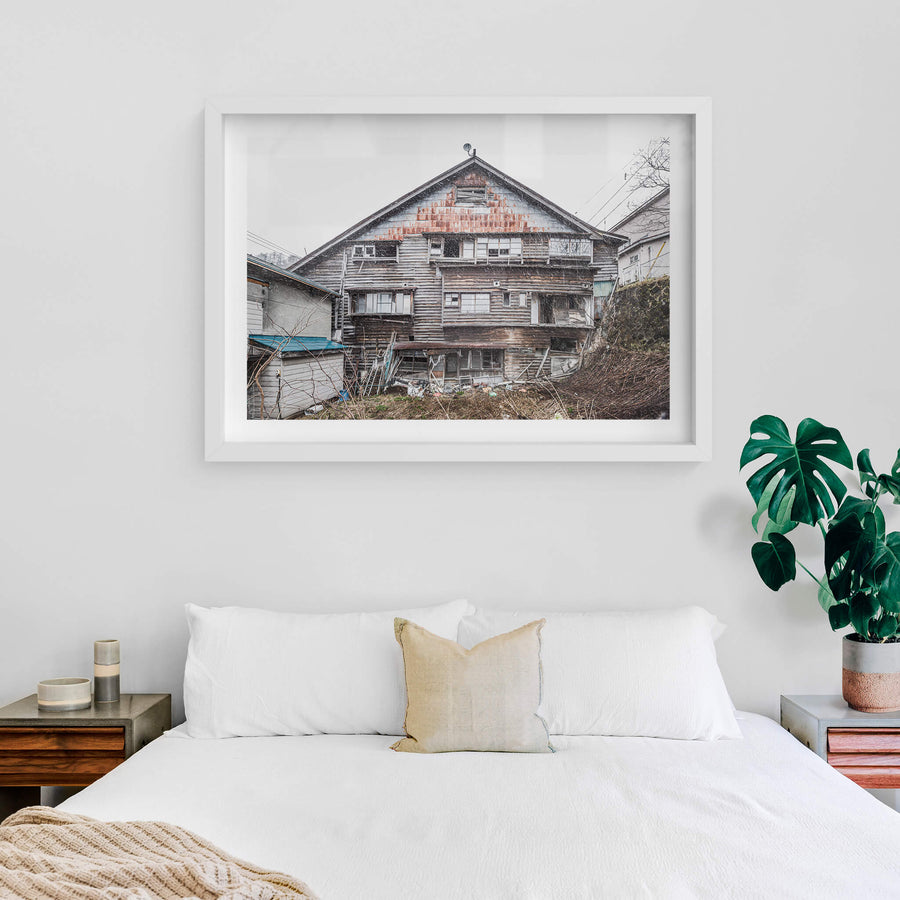
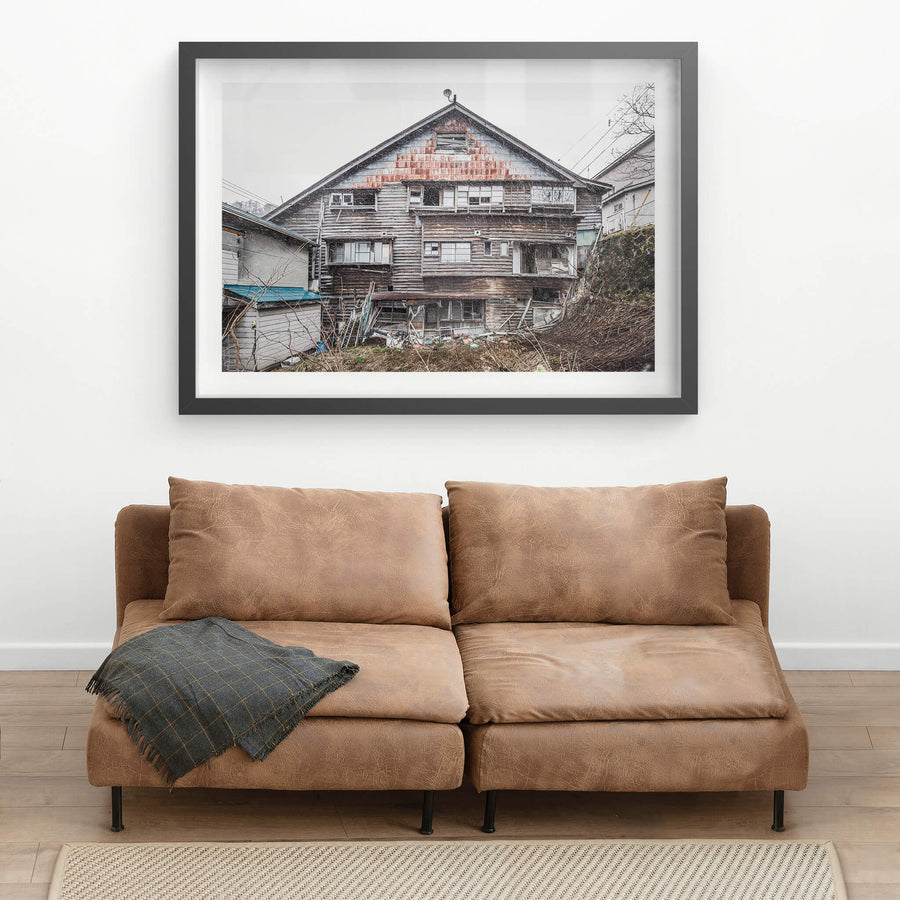
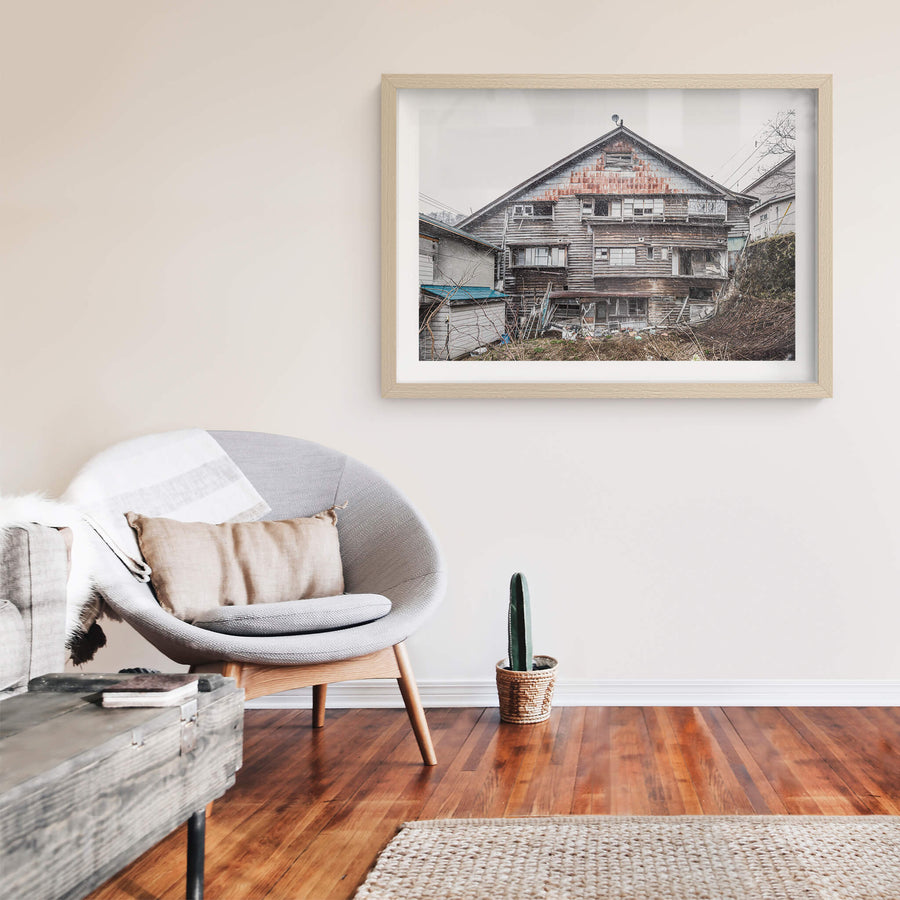
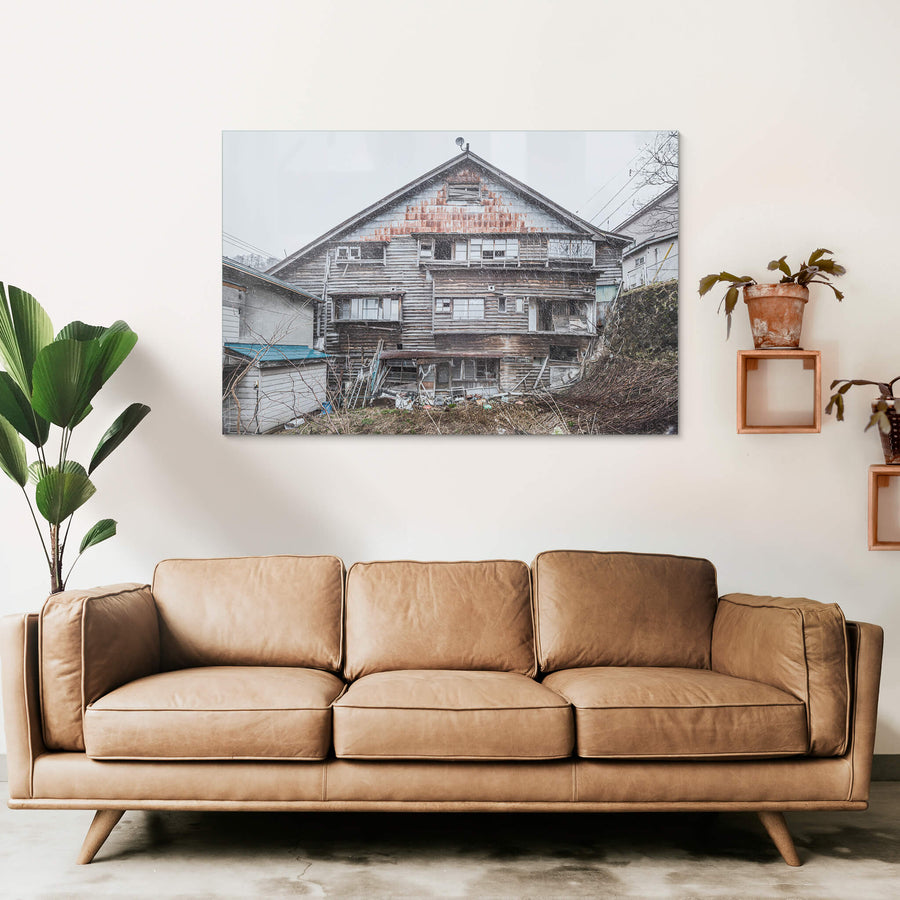
Rusted corrugated iron covers the full gable end of a derelict multi-storey timber building in Yubari, a satellite dish still fixed at the peak above broken and boarded windows. Snow falls through a grey sky, the same accumulation that bears down on the roof each winter. Weathered boards, overgrown vegetation at the base and a small blue-roofed shed to the left fill out the rest of the frame.
Open edition
Printed to order, no fixed quantity. Each print is hand-signed by the photographer.
Limited edition
A fixed number of prints exist. Once sold, the edition closes permanently. Each print is individually numbered and signed.
Shipping Free shipping over $250. Ships worldwide, rates calculated at checkout.
Returns Damaged in transit? We replace it. Full policy →
Ships within 10 business days · signed & numbered
In situ
Print datasheet
- Title
- Side Facade
- Series
- Streetscapes of Yubari
- Catalogue
- SYU-037
- Process
- Giclée
- Captured
- 28 April 2016
- Camera
- NIKON D810
- Lens
- 14.0-24.0 mm f/2.8
- Aperture
- f/8.0
- Shutter
- 1/50 s
- ISO
- 500
- Focal length
- 14 mm
- Paper
- Ilford Galerie Smooth Cotton Rag 310 gsm
- Paper size
- 297 × 210 mm
- Location
- Yubari, Hokkaido, Japan
- Authenticity
- C2PA verified provenance →
- Recognised by
- Highly Commended in Multimedia at the 2016 National Trust of Australia (NSW) Heritage Awards
Yubari, Hokkaido, Japan
Map · Mapbox · OpenStreetMap
About this print
In Yubari, Hokkaido, the side facade of a derelict building presents itself under an overcast sky, paint peeling in long strips from walls that have endured too many winters without maintenance or heat. Timber-frame construction clad in painted panels is the dominant residential building type across the city, much of it put up between the 1920s and 1960s to house the workers and families of a coal industry that once employed close to 19,500 miners. When the last mine closed in 1990, and when the city filed for fiscal rehabilitation in 2007, the buildings that remained were left to the climate. Each unheated winter accelerates the process: moisture enters, timber rots, paint lifts. What this photograph records is the ordinary cumulative result of that sequence.
Brett Patman

The series
Streetscapes of Yubari
Yūbari is a coal-mining city in central Hokkaido. Founded in 1943, its population peaked at around 120,000 in the 1960s and now sits at about 6,400. The colliery closed in the 1980s. The city's attempt to recover through tourism failed; in 2007 it became the first Japanese municipality to declare bankruptcy, owing 35.3 billion yen. These streetscapes were taken between the houses, shops, and schools the town no longer needs - most empty, some half-collapsed, some still in use by the people who stayed.
Print sizes
The anatomy view shows what this finish is as a physical object: paper margin, mat band, frame depth, acrylic profile. The comparison strip shows how each size sits relative to the others at true scale. Click a size or a finish to update both.
| Type | Size | Width | Height |
|---|


