
Pulveriser
Provenance
- Camera
- NIKON D7000
- Lens
- 24.0-70.0 mm f/2.8
- Settings
- 24mm · f/8.0 · 1/6 · ISO 100
- Paper
- Ilford Galerie Smooth Cotton Rag 310 gsm
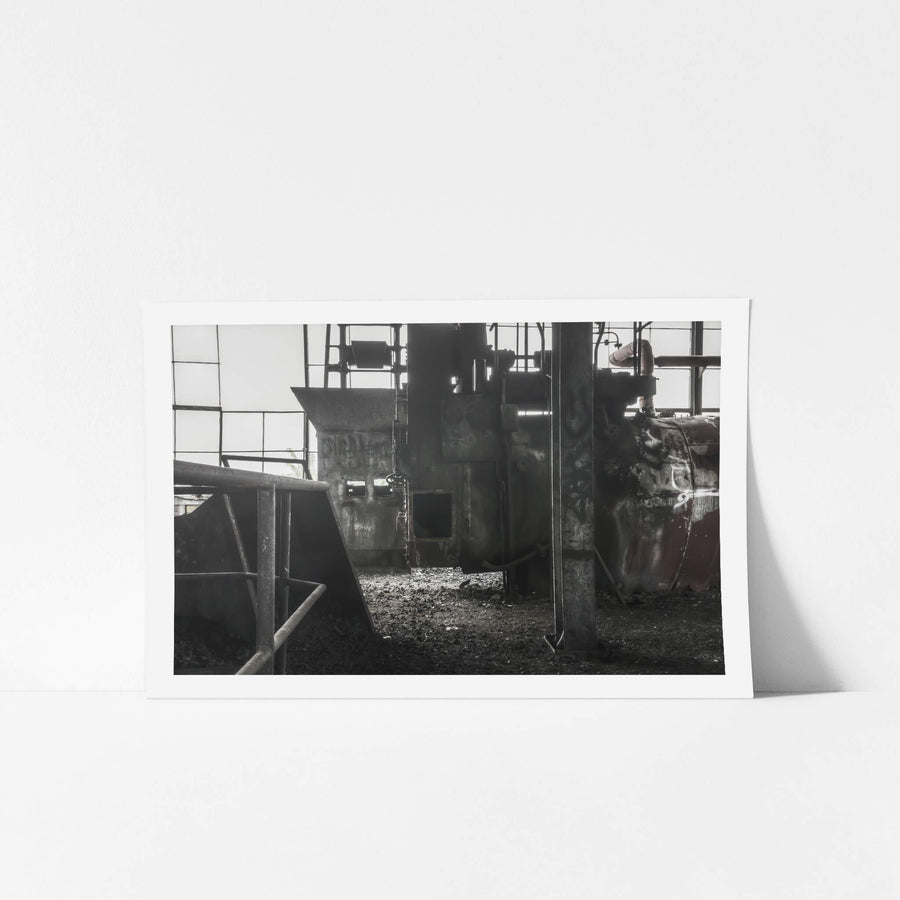
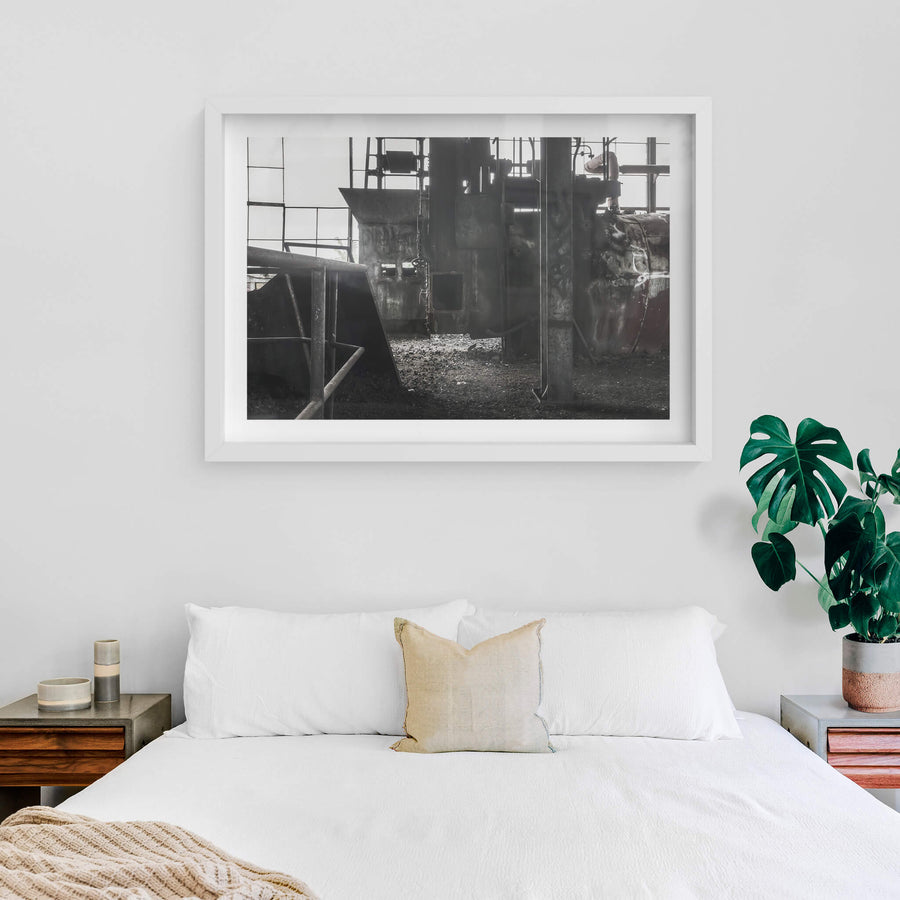
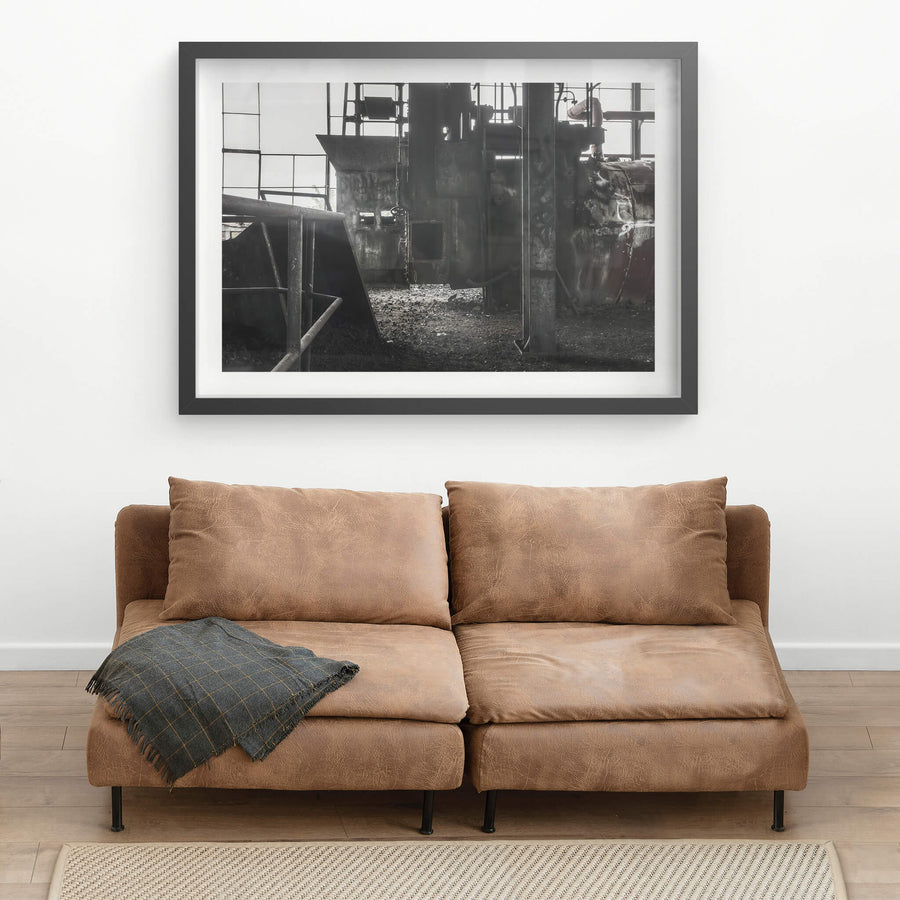
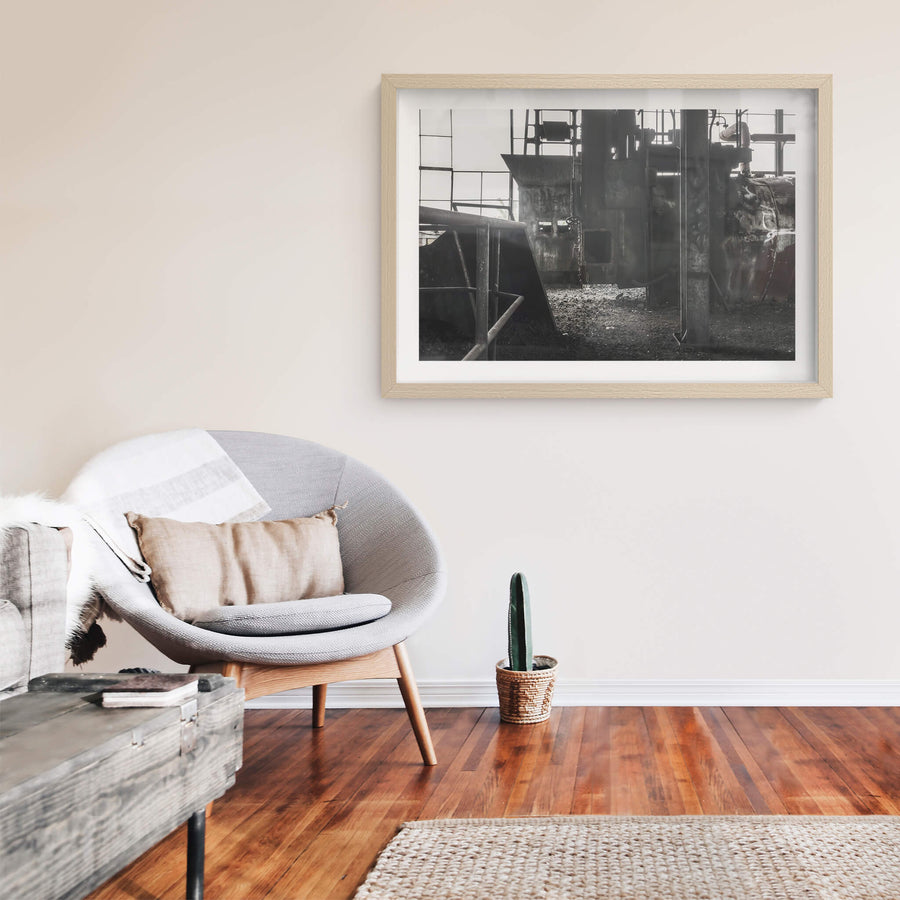
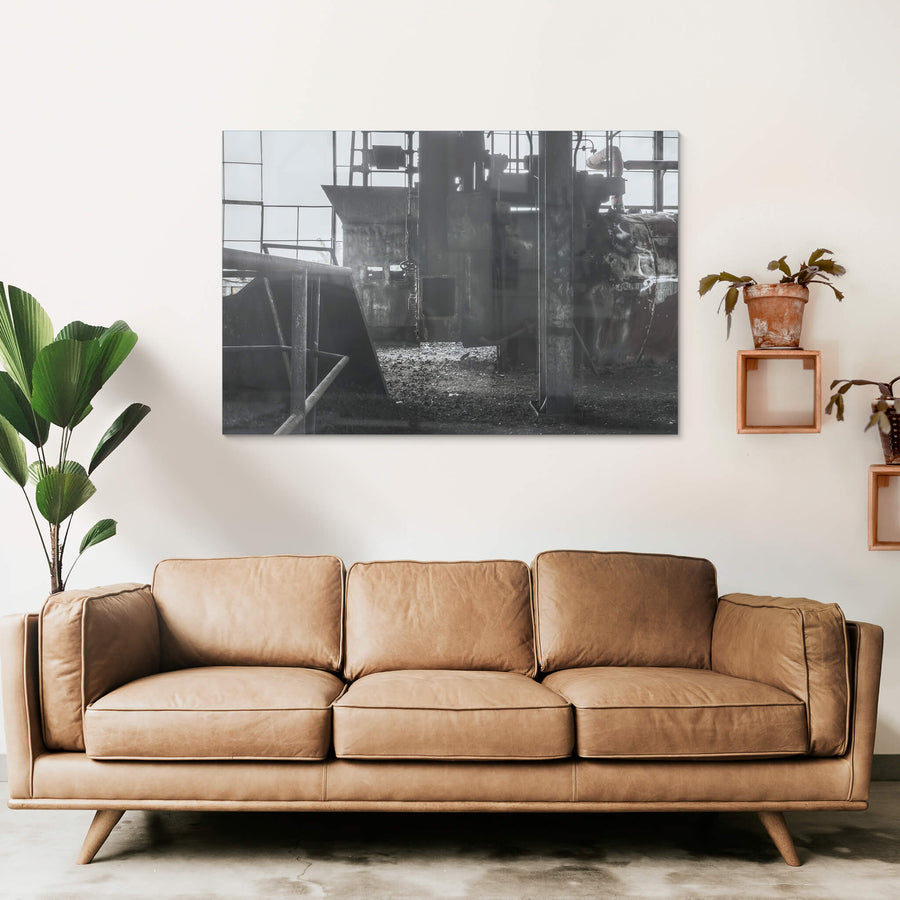
Coal and debris sit banked against a rusted railing on the factory floor at the Bathurst Gasworks, below a large square opening in the central machinery. A handwheel and chain control mechanism is still in place on the left flank, and gridded windows throw hard rectangles of light across the shadowed interior, picking out a corroded cylindrical tank to the right. The access hatch on the front face marks where belts could be reached for replacement.
Open edition
Printed to order, no fixed quantity. Each print is hand-signed by the photographer.
Limited edition
A fixed number of prints exist. Once sold, the edition closes permanently. Each print is individually numbered and signed.
Shipping Free shipping over $250. Ships worldwide, rates calculated at checkout.
Returns Damaged in transit? We replace it. Full policy →
Ships within 10 business days · signed & numbered
In situ
Print datasheet
- Title
- Pulveriser
- Series
- Bathurst Gasworks
- Catalogue
- BGA-007
- Process
- Giclée
- Captured
- 2 January 2016
- Camera
- NIKON D7000
- Lens
- 24.0-70.0 mm f/2.8
- Aperture
- f/8.0
- Shutter
- 1/6 s
- ISO
- 100
- Focal length
- 24 mm
- Paper
- Ilford Galerie Smooth Cotton Rag 310 gsm
- Paper size
- 297 × 210 mm
- Location
- Bathurst, New South Wales, Australia
- Authenticity
- C2PA verified provenance →
- Recognised by
- Highly Commended in Multimedia at the 2016 National Trust of Australia (NSW) Heritage Awards
Bathurst, New South Wales, Australia
Map · Mapbox · OpenStreetMap
About this print
A steel pulverising unit stands centre frame, its heavy casing blackened with soot and scale. A small access hatch sits open on the front face. Pipework and chain mechanisms climb the body of the machine. To the right, a large cylindrical vessel shows deep corrosion, its painted surface blistered and peeling to bare metal. Broken glass and rubite litter the concrete floor. Diffused light presses through tall industrial windows behind, flattening everything to grey.
Brett Patman

The series
Bathurst Gasworks
Bathurst Gasworks ran on Russell Street from 1888 to 1987, producing town gas for Bathurst, Orange, and Lithgow under a three-council partnership for 91 years before being leased to AGL in 1979. Town gas production ceased in 1987, when Bathurst was switched onto the state natural gas grid. The site shows the standard pattern of a 19th-century country gasworks: a coal-fired retort house, byproduct storage, and a service yard. Coal tar from the gas-making process produced significant ground contamination, and the site has been partly remediated by Bathurst Regional Council with funding from the NSW Environmental Trust in 2008 and 2009. The retort building is the most prominent surviving structure and is documented in the Bathurst Regional Council heritage layer.
Print sizes
The anatomy view shows what this finish is as a physical object: paper margin, mat band, frame depth, acrylic profile. The comparison strip shows how each size sits relative to the others at true scale. Click a size or a finish to update both.
| Type | Size | Width | Height |
|---|


