
Train Line
Provenance
- Camera
- NIKON D7000
- Lens
- 24.0-70.0 mm f/2.8
- Settings
- 24mm · f/8.0 · 1/3 · ISO 100
- Paper
- Ilford Galerie Smooth Cotton Rag 310 gsm
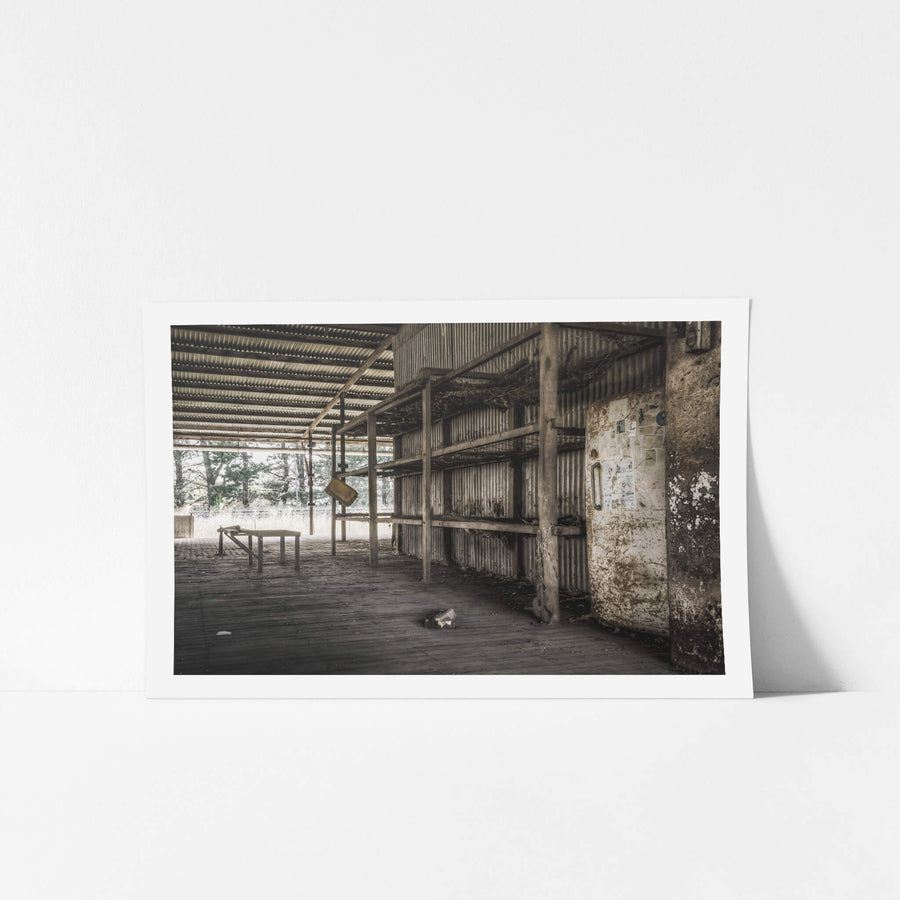
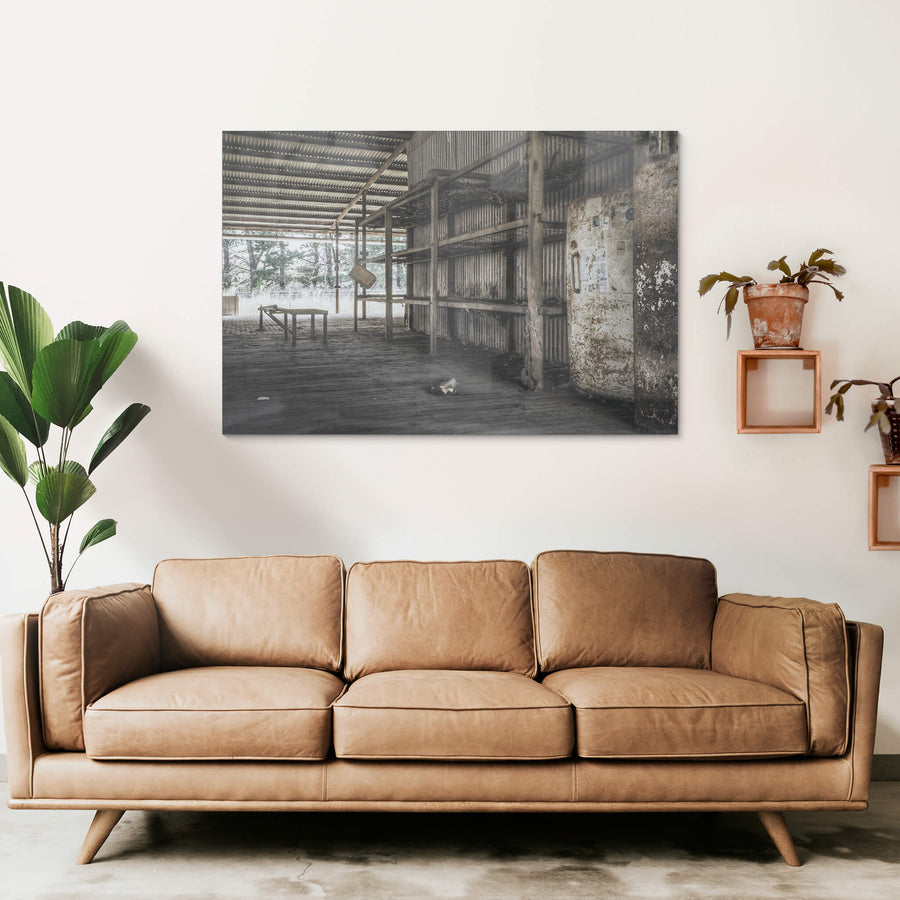
The train line area at Blayney Abattoir, Central West NSW. The corrugated iron and timber structure was used for hanging sheepskins to dry on overhead mesh before trucking off site. The abattoir operated from 1957 to 1998, one of the largest employers in the Central West.
Open edition
Printed to order, no fixed quantity. Each print is hand-signed by the photographer.
Limited edition
A fixed number of prints exist. Once sold, the edition closes permanently. Each print is individually numbered and signed.
Shipping Free shipping over $250. Ships worldwide, rates calculated at checkout.
Returns Damaged in transit? We replace it. Full policy →
Ships within 10 business days · signed & numbered
In situ
Print datasheet
- Title
- Train Line
- Series
- Blayney Abattoir
- Catalogue
- BAB-020
- Process
- Giclée
- Captured
- 1 January 2016
- Camera
- NIKON D7000
- Lens
- 24.0-70.0 mm f/2.8
- Aperture
- f/8.0
- Shutter
- 1/3 s
- ISO
- 100
- Focal length
- 24 mm
- Paper
- Ilford Galerie Smooth Cotton Rag 310 gsm
- Paper size
- 297 × 210 mm
- Location
- Blayney, New South Wales, Australia
- Authenticity
- C2PA verified provenance →
- Recognised by
- Highly Commended in Multimedia at the 2016 National Trust of Australia (NSW) Heritage Awards
Blayney, New South Wales, Australia
Map · Mapbox · OpenStreetMap
About this print
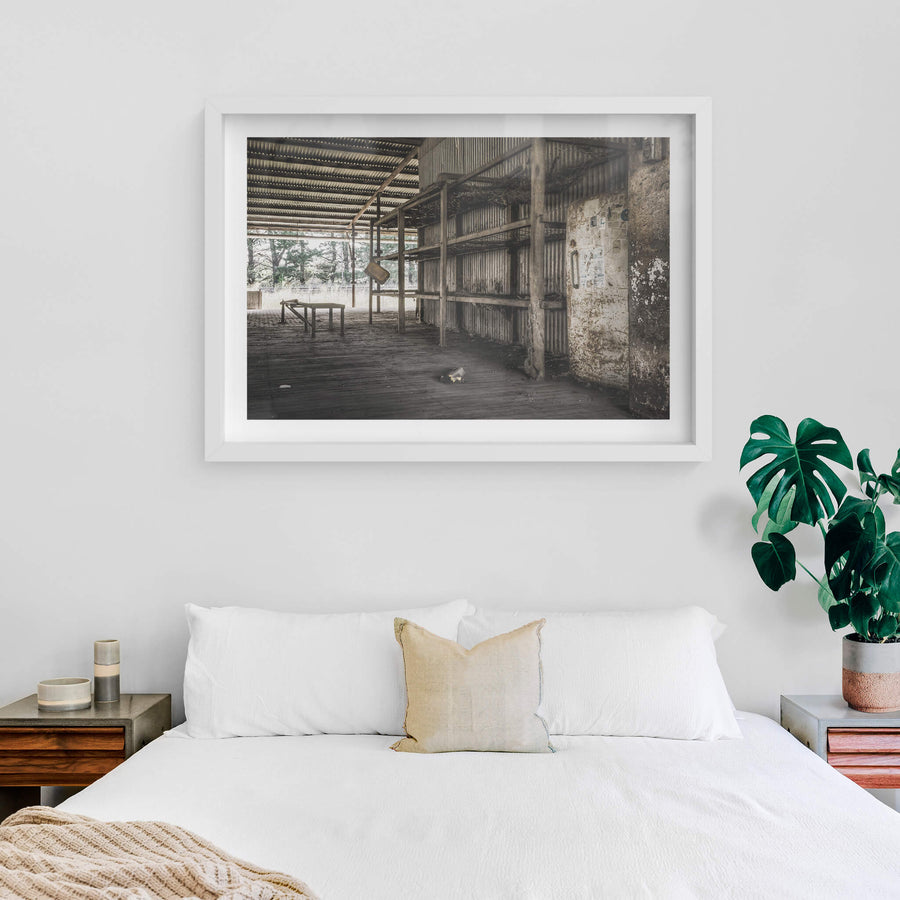
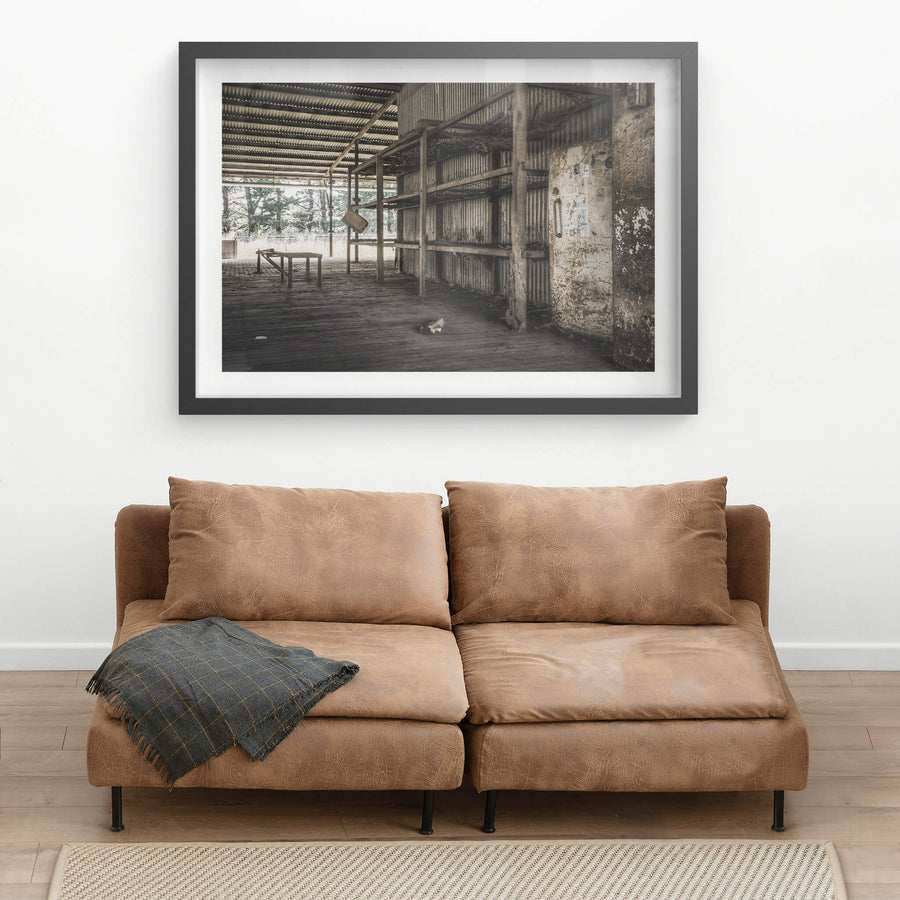
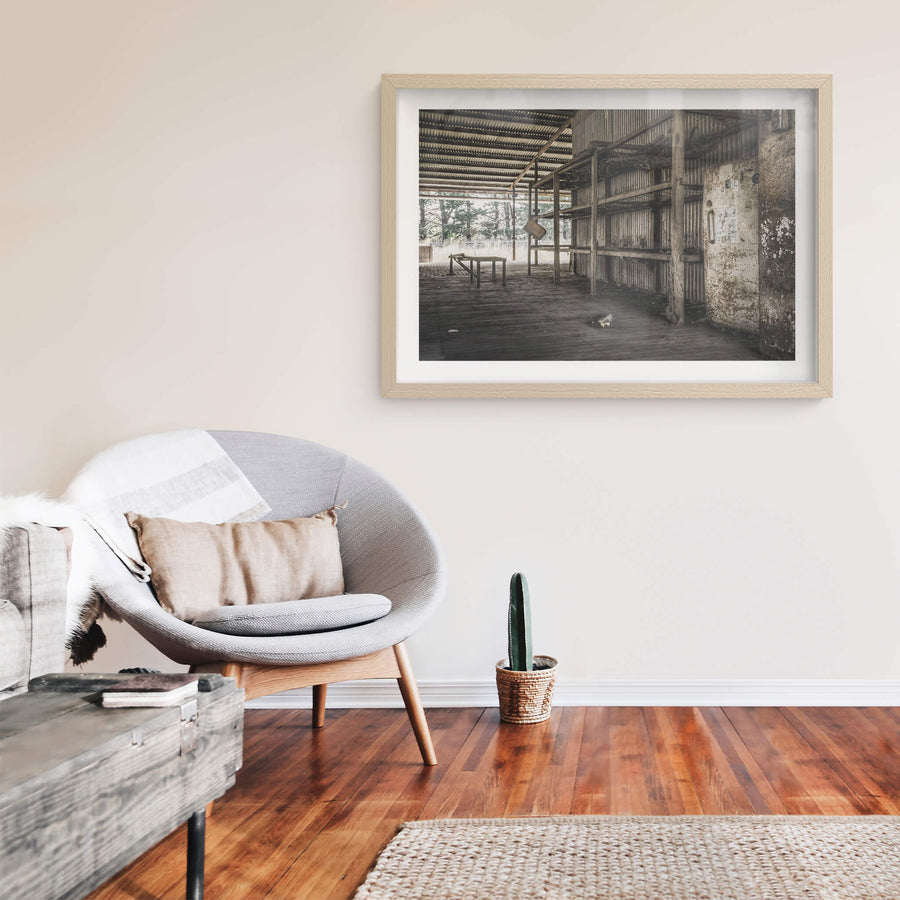
Corrugated iron roofing stretches over a timber-framed open bay. Rough-sawn posts support tiered shelving racks along the back wall. The floorboards are dark with decades of grime. A yellow jerry can hangs from the overhead structure. To the right, a heavy coolroom door sits recessed into stained concrete, its surface blistered and peeling. Faded safety notices cling to the wall beside it. Dry grass and pine trees fill the background beyond a low brick wall.
Brett Patman

The series
Blayney Abattoir
At peak the Blayney Abattoir employed about 1,600 people, one of the largest workforces in Central West New South Wales. The site had been a butter factory and freezing works from at least 1900, converted to an abattoir in 1957. ANZCO Foods, the New Zealand owner since 1996, announced closure in March 1998 with about 600 workers given a week's pay.
Print sizes
The anatomy view shows what this finish is as a physical object: paper margin, mat band, frame depth, acrylic profile. The comparison strip shows how each size sits relative to the others at true scale. Click a size or a finish to update both.
| Type | Size | Width | Height |
|---|


