
Feeder Bin
Provenance
- Camera
- NIKON D7000
- Lens
- AF-S Zoom-Nikkor 24-70mm f/2.8G ED
- Settings
- 46mm · f/8.0 · 3s · ISO 100
- Paper
- Ilford Galerie Smooth Cotton Rag 310 gsm
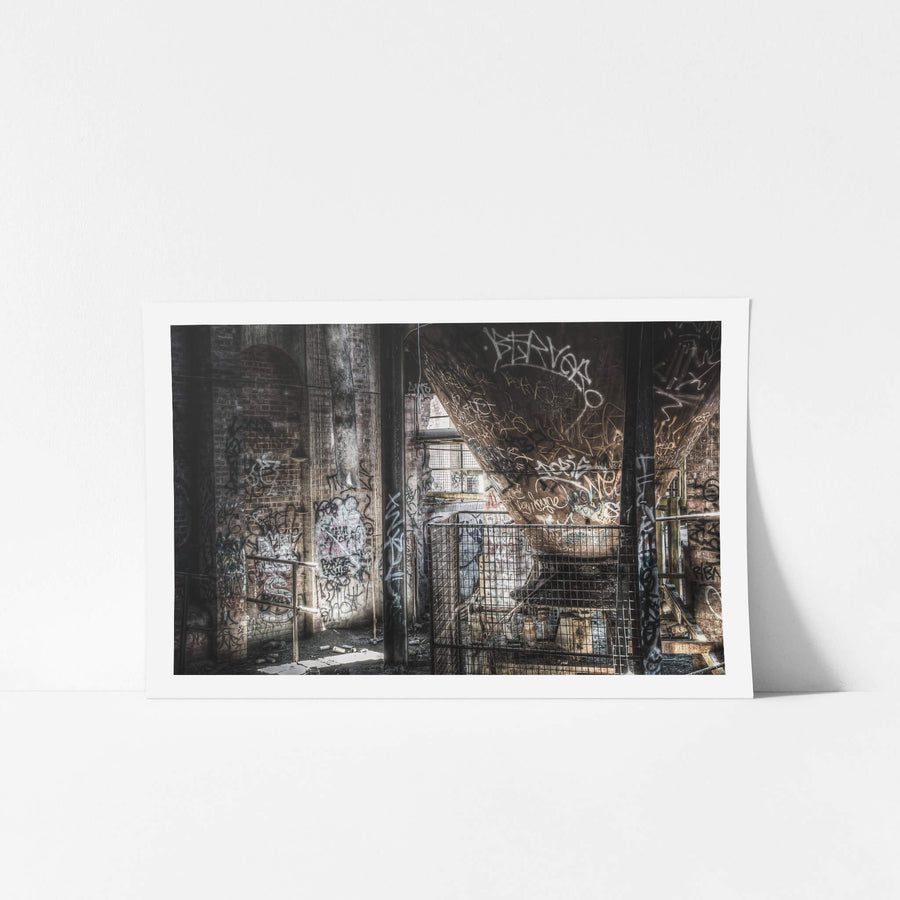
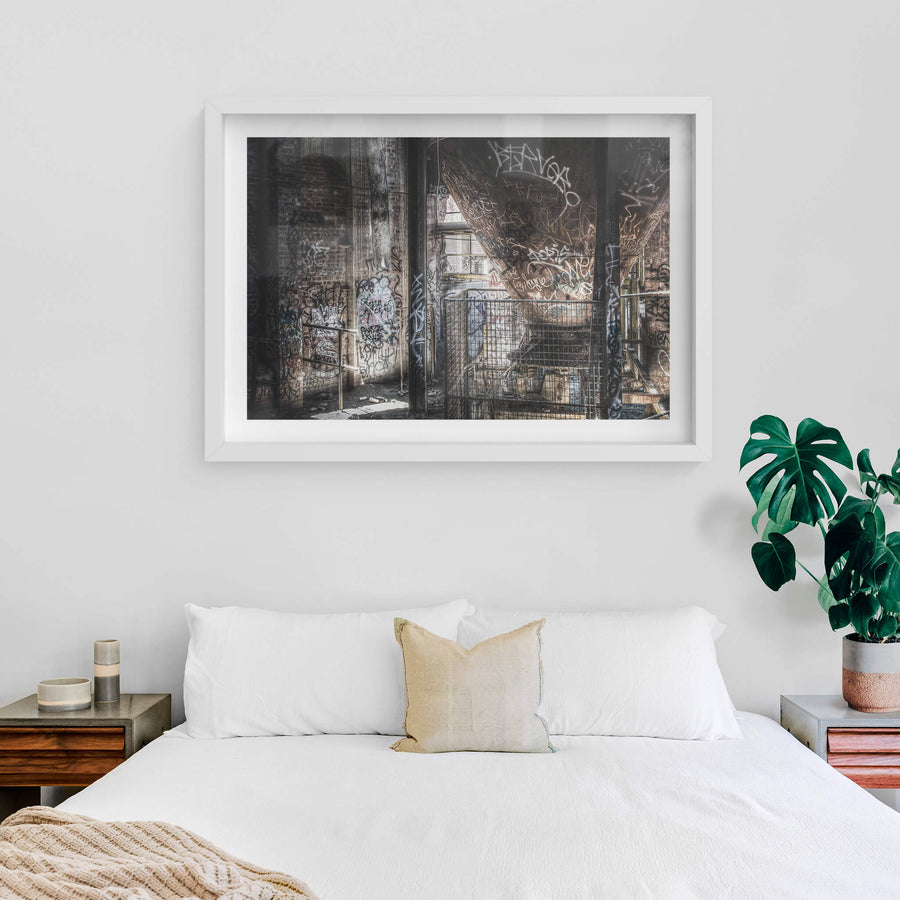
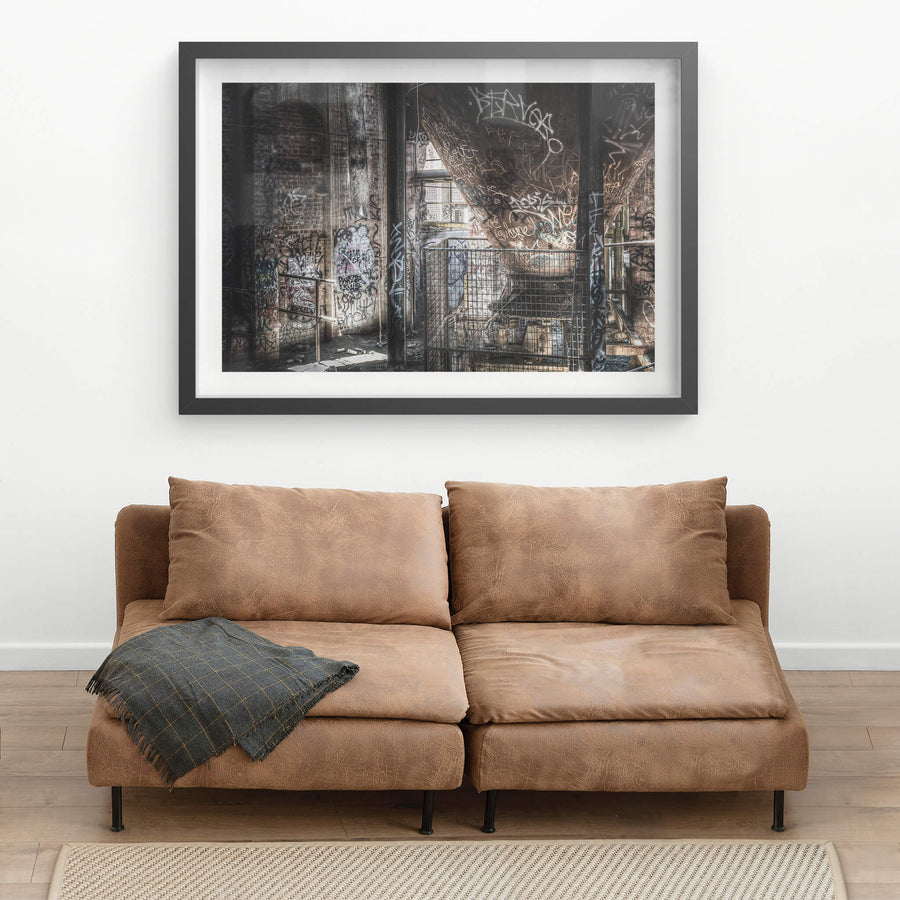
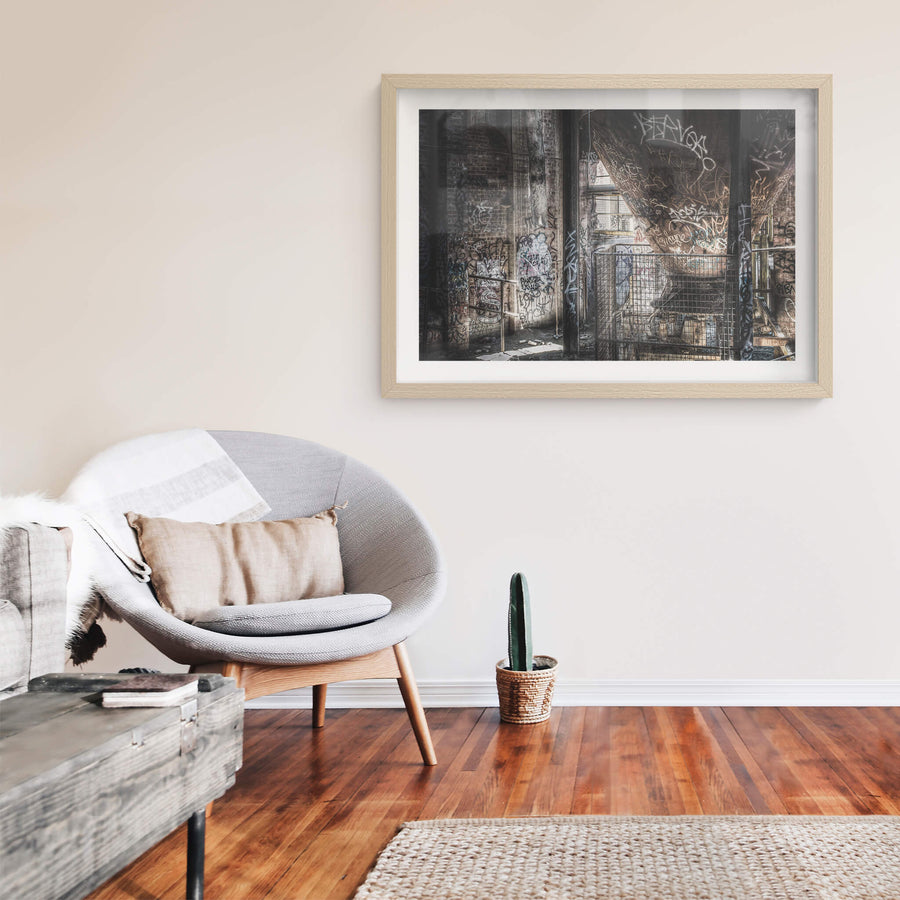
The conical feed bin that once delivered clay to the brick presses stands rust-stained and tagged from base to rim, its surface layered with white and black spray work including a bold 'Beavor' tag high on the right. A metal mesh fence runs across the front of it. Midday light cuts across the brick wall to the left, throwing the graffiti into relief and picking out scattered cans and debris on the concrete floor.
Open edition
Printed to order, no fixed quantity. Each print is hand-signed by the photographer.
Limited edition
A fixed number of prints exist. Once sold, the edition closes permanently. Each print is individually numbered and signed.
Shipping Free shipping over $250. Ships worldwide, rates calculated at checkout.
Returns Damaged in transit? We replace it. Full policy →
Ships within 10 business days · signed & numbered
In situ

Print datasheet
- Title
- Feeder Bin
- Series
- Box Hill Brickworks
- Catalogue
- BHB-003
- Process
- Giclée
- Captured
- 24 December 2011
- Camera
- NIKON D7000
- Lens
- AF-S Zoom-Nikkor 24-70mm f/2.8G ED
- Aperture
- f/8.0
- Shutter
- 3s s
- ISO
- 100
- Focal length
- 46 mm
- Paper
- Ilford Galerie Smooth Cotton Rag 310 gsm
- Paper size
- 297 × 210 mm
- Location
- Box Hill, Victoria, Australia
- Authenticity
- C2PA verified provenance →
- Recognised by
- Highly Commended in Multimedia at the 2016 National Trust of Australia (NSW) Heritage Awards
Box Hill, Victoria, Australia
Map · Mapbox · OpenStreetMap
About this print
The feeder bin at Box Hill Brickworks sits where the production line began, raw clay arriving before it moved on to the grinding pans and brick presses. The works operated under several names across more than a century: Haughton Park Brick Company, Standard Brick and Tile Co. Ltd, Co-operative Brick Company, and finally Brick and Pipe Industries, which closed the site permanently in August 1988. The bin's rusted metal and heavy shadow record what was left behind when the last shift walked out.
Brett Patman

The series
Box Hill Brickworks
Box Hill Brickworks ran intermittently for almost a century at the corner of Elgar and Canterbury Roads in Box Hill, east Melbourne. The Haughton Park Brick Company Ltd issued its prospectus in 1884 to make machine and hand-made bricks, tiles, earthenware, and porcelain on a 30-acre site, and renamed itself the Box Hill Brick Co Ltd in 1886. The 1890s industry collapse forced production to suspend in 1892. Standard Brickworks reopened the kilns in the mid-1910s. The Co-operative Brick Company took over in 1938. Wartime conditions closed the works between 1942 and 1946. Production resumed and continued until 1988, when the works were finally abandoned. The site is on the Victorian Heritage Database (place 154). Almost every interior surface has accumulated graffiti since the 1988 closure.
Print sizes
The anatomy view shows what this finish is as a physical object: paper margin, mat band, frame depth, acrylic profile. The comparison strip shows how each size sits relative to the others at true scale. Click a size or a finish to update both.
| Type | Size | Width | Height |
|---|


