Cell Doors

Provenance

Camera
NIKON D850
Lens
14.0-24.0 mm f/2.8
Settings
14mm · f/8.0 · 2.5s · ISO 100
Paper
Ilford Galerie Smooth Cotton Rag 310 gsm

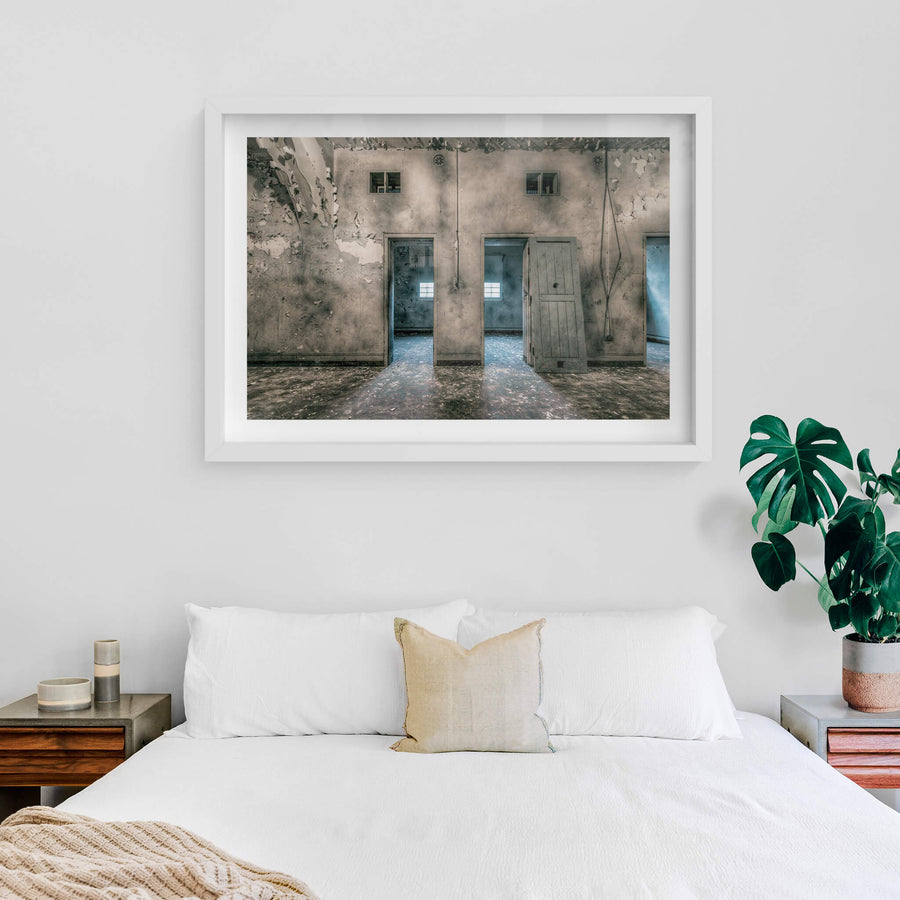
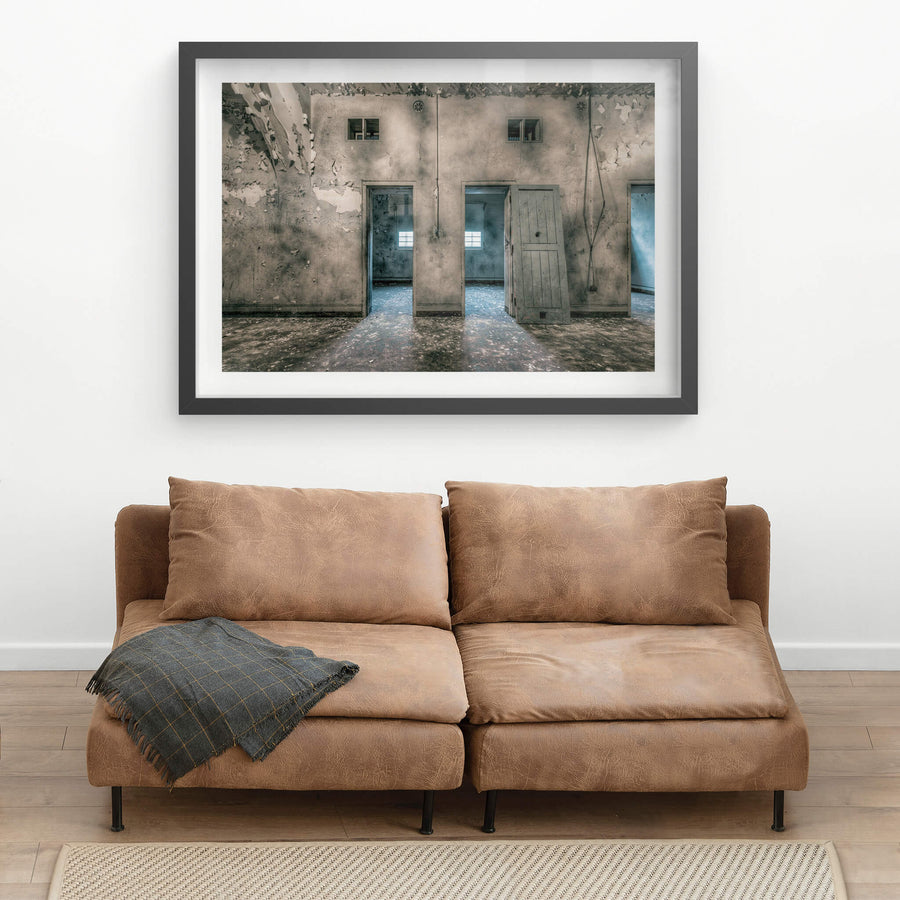
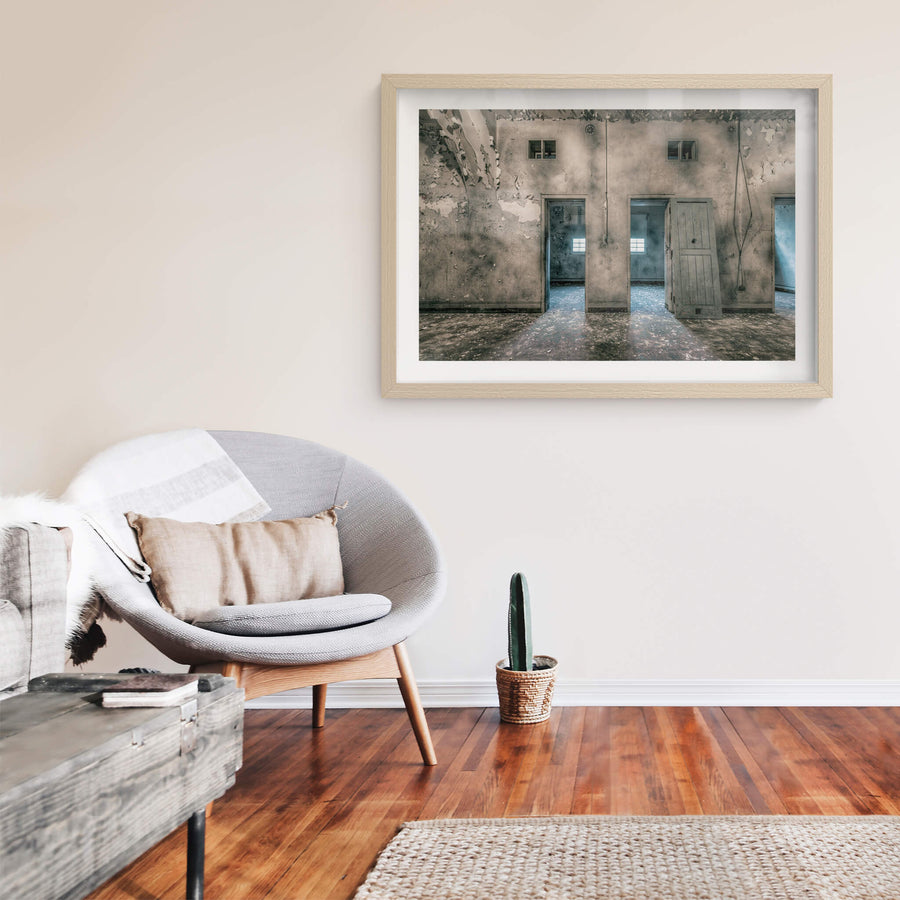
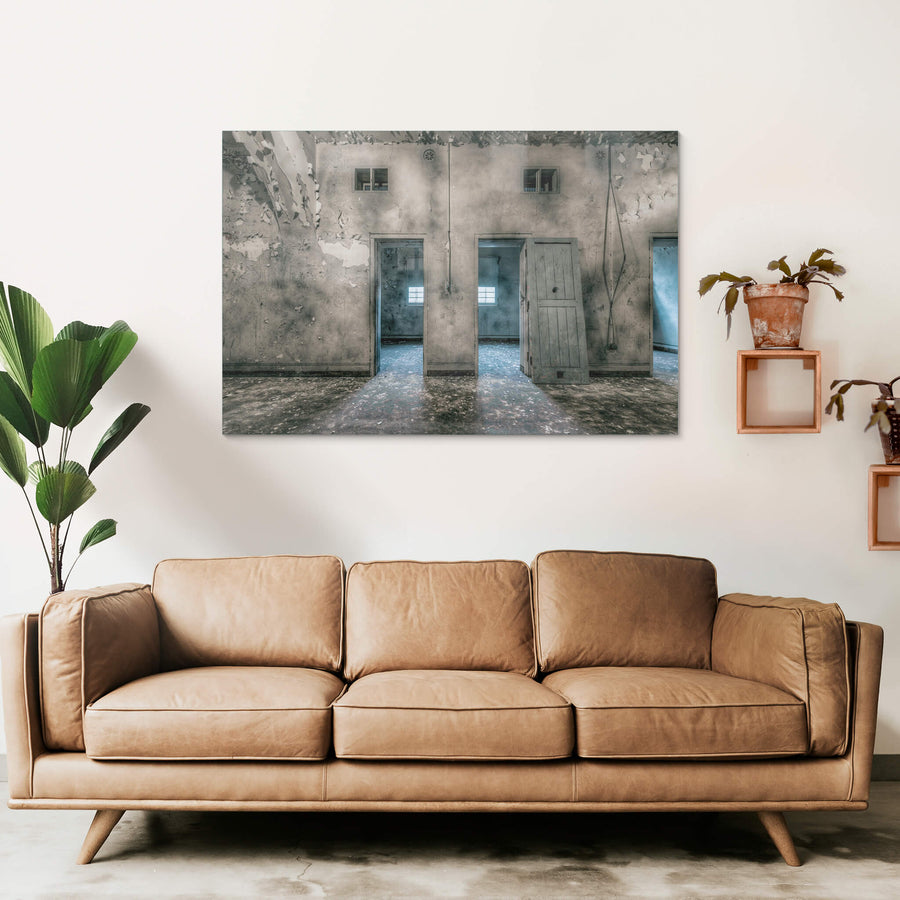
A row of heavy steel cell doors, closed, within a decaying ward corridor. Rust streaks run down the metal surfaces. Paint has peeled away in sections, exposing multiple layers beneath. Debris on the floor. Natural light falls from one direction, casting the corridor in partial shadow.

Edition
Open edition

Open edition
Printed to order, no fixed quantity. Each print is hand-signed by the photographer.

Limited edition
A fixed number of prints exist. Once sold, the edition closes permanently. Each print is individually numbered and signed.

$100.00 AUD
Size
Type
Colour
Signed, numbered, with COA. Made to order in 10 to 20 business days (framed). Shipped in protective packaging with edition certificate, paper-stock reference and a printed care guide.
See certificate sample →

Shipping Free shipping over $250. Ships worldwide, rates calculated at checkout.

Returns Damaged in transit? We replace it. Full policy →

Ships within 10 business days · signed & numbered

In situ
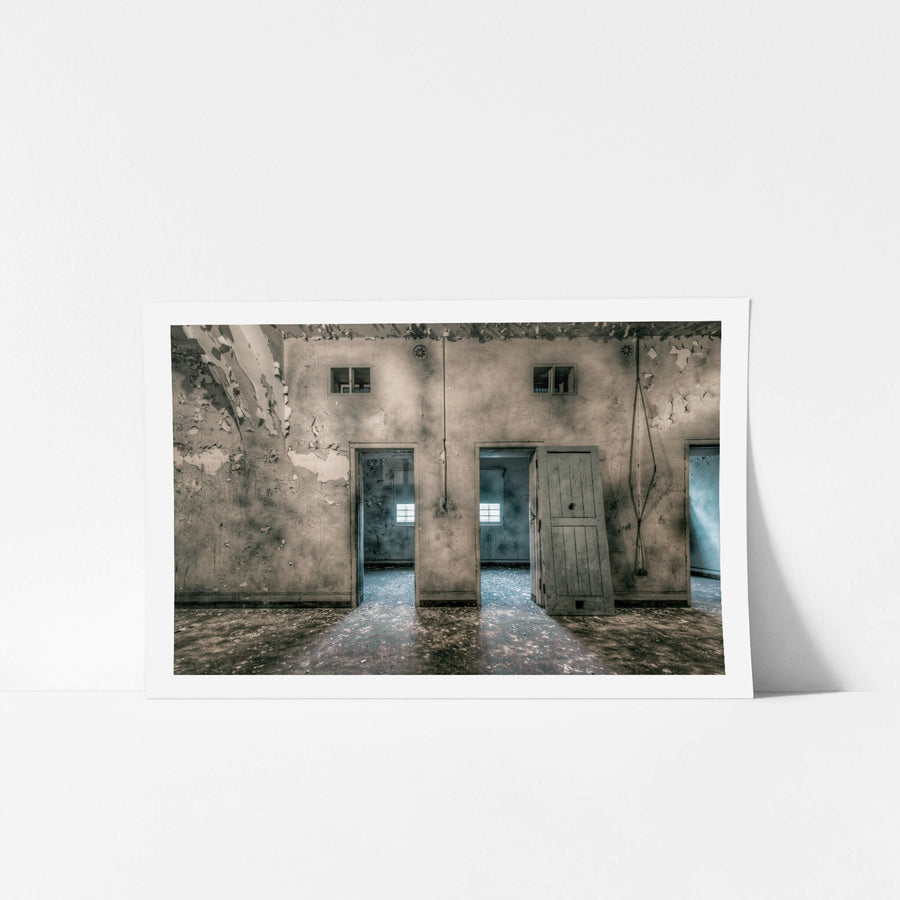
Cell Doors at Female Ward 9 & 10, open doors showing inside the tiny patient rooms of the Female Ward 9 and 10 of Callan.Cell Doors at Female Ward 9 & 10, open doors showing inside the tiny patient rooms of the Female Ward 9 and 10 of Callan.Cell Doors at Female Ward 9 & 10, open doors showing inside the tiny patient rooms of the Female Ward 9 and 10 of Callan.Cell Doors at Female Ward 9 & 10, open doors showing inside the tiny patient rooms of the Female Ward 9 and 10 of Callan.Cell Doors at Female Ward 9 & 10, open doors showing inside the tiny patient rooms of the Female Ward 9 and 10 of Callan.
01 PROVENANCE

Print datasheet

Title
Cell Doors
Series
Callan Park
Catalogue
CPA-001
Process
Giclée
Captured
10 December 2018
Camera
NIKON D850
Lens
14.0-24.0 mm f/2.8
Aperture
f/8.0
Shutter
2.5s s
ISO
100
Focal length
14 mm
Paper
Ilford Galerie Smooth Cotton Rag 310 gsm
Paper size
290 × 200 mm
Location
Rozelle, New South Wales, Australia
Recognised by
Highly Commended in Multimedia at the 2016 National Trust of Australia (NSW) Heritage Awards
02 LOCATION

Rozelle, New South Wales, Australia

Map · Mapbox · OpenStreetMap

03 THE STORY

About this print

Female Ward 9 and 10 occupied one of the ten ward blocks that make up the Kirkbride Complex at Callan Park in Rozelle. The corridor holds its original steel cell doors, still closed. Rust has spread across the metal in long stains. Paint has peeled away in sections, exposing the layers underneath: colours applied one over another through decades of maintenance rounds, each coat a record of a different era of the building's use. The Kirkbride Complex was built between 1880 and 1885 by the NSW Colonial Government. Ground was broken on 11 February 1880, the first stone laid on 22 April 1880, and the first ward opened on 1 July 1884. Total construction cost came to £235,539. The design was a collaboration between Colonial Architect James Barnet, Inspector General of the Insane Frederic Norton Manning, and Charles Moore, Director of the Royal Botanic Gardens, who designed the grounds and landscape. Manning had toured England, France, Germany and the United States in 1876, returning with drawings of Chartham Down Hospital in Canterbury as the planning model. He adapted that design for the New South Wales climate, adding extensive verandah spaces to the pavilion layout. The hospital was proclaimed as Callan Park Hospital for the Insane on 1 August 1878. It was Australia's first purpose-built hospital for moral therapy treatment: the idea that the built environment itself, its light, its scale, its landscape, was the treatment. The complex was designed for approximately 766 patients across 30 buildings. By 1930, it held 1,500. The building was proclaimed on the NSW State Heritage Register on 2 April 1999 as part of SHR 00818, the Callan Park Conservation Area and Buildings. The ward doors photographed in 2018 remain in place, peeling and rusted, inside a complex that has stood largely unchanged since the 1880s.

04 FROM THE FIELD NOTES

Female Ward 9 and 10 inside the Kirkbride Complex at Callan Park, photographed in 2018. Heavy steel cell doors remain shut, rust staining the metal, paint peeling back through layers of institutional colour applied over more than a century of use. The Kirkbride Complex was built between 1880 and 1885 at a total construction cost of £235,539, designed as Australia's first purpose-built hospital for moral therapy. By 1930, it held 1,500 patients against a designed capacity of around 600 to 766. The ward doors record what that overcrowding eventually produced.

Brett Patman
Callan Park

The series

Callan Park

2016–2018 · 94 photographs

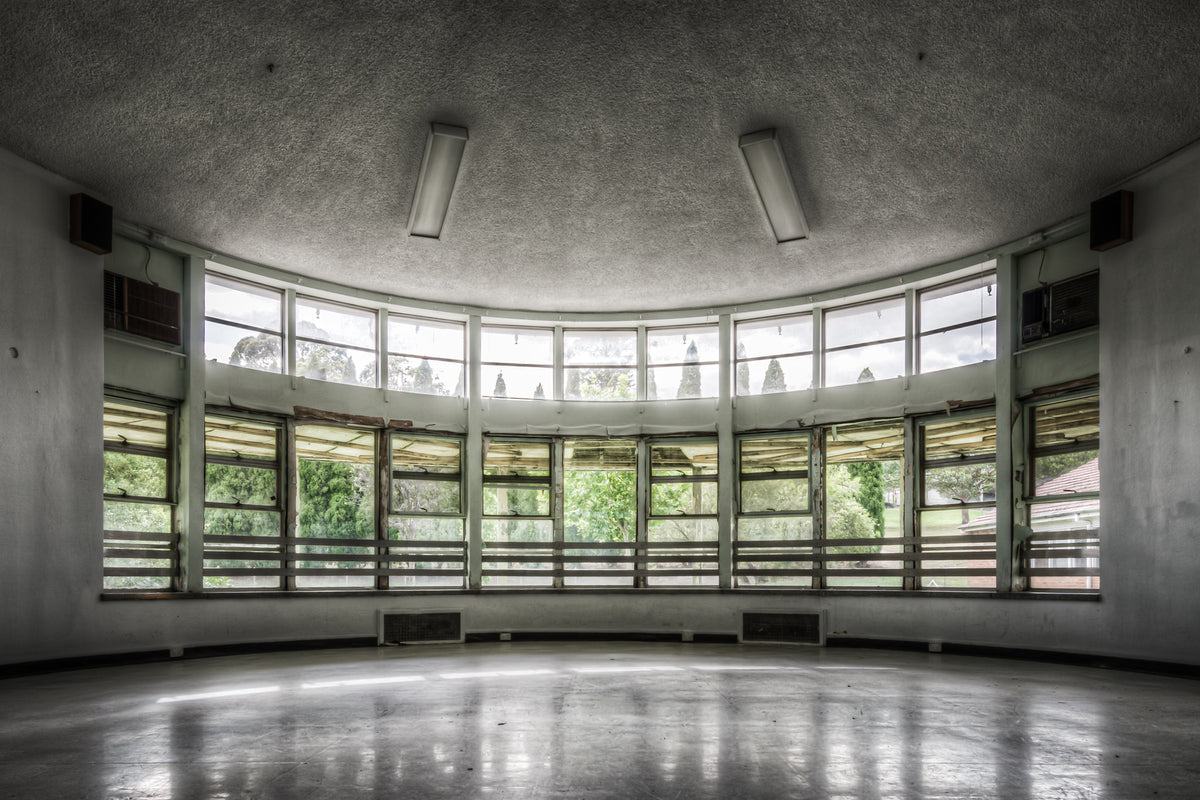
Dr Frederic Norton Manning rejected the asylum as 'a cemetery for deceased intellects'. In 1876 he toured asylums in England, France, Germany and the United States, returning with drawings of Chartham Down Hospital in Kent. Working with Colonial Architect James Barnet and Botanic Gardens director Charles Moore, he built Australia's first hospital purpose-built for moral therapy treatment on the Iron Cove foreshore.

View all in this series →

05 SIZE GUIDE

Print sizes

The anatomy view shows what this finish is as a physical object: paper margin, mat band, frame depth, acrylic profile. The comparison strip shows how each size sits relative to the others at true scale. Click a size or a finish to update both.

Anatomy · true ratio
TypeSizeWidthHeight
08 BY POST · NO SPAM

Read the full story

Articles when they're published. The history behind a place. The day of a shoot. The work between prints. No marketing, no schedule.

You're subscribed.