
Heater
Provenance
- Camera
- NIKON D7000
- Lens
- 14.0-24.0 mm f/2.8
- Settings
- 21mm · f/8.0 · 0.8s · ISO 100
- Paper
- Ilford Galerie Smooth Cotton Rag 310 gsm
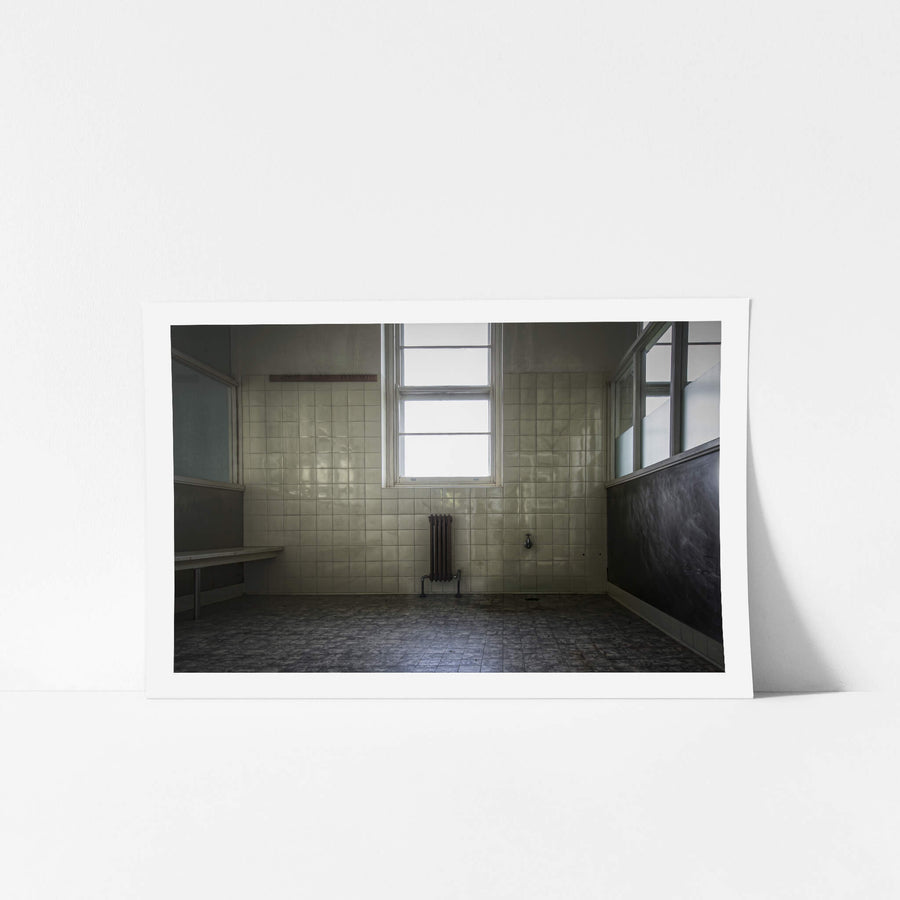
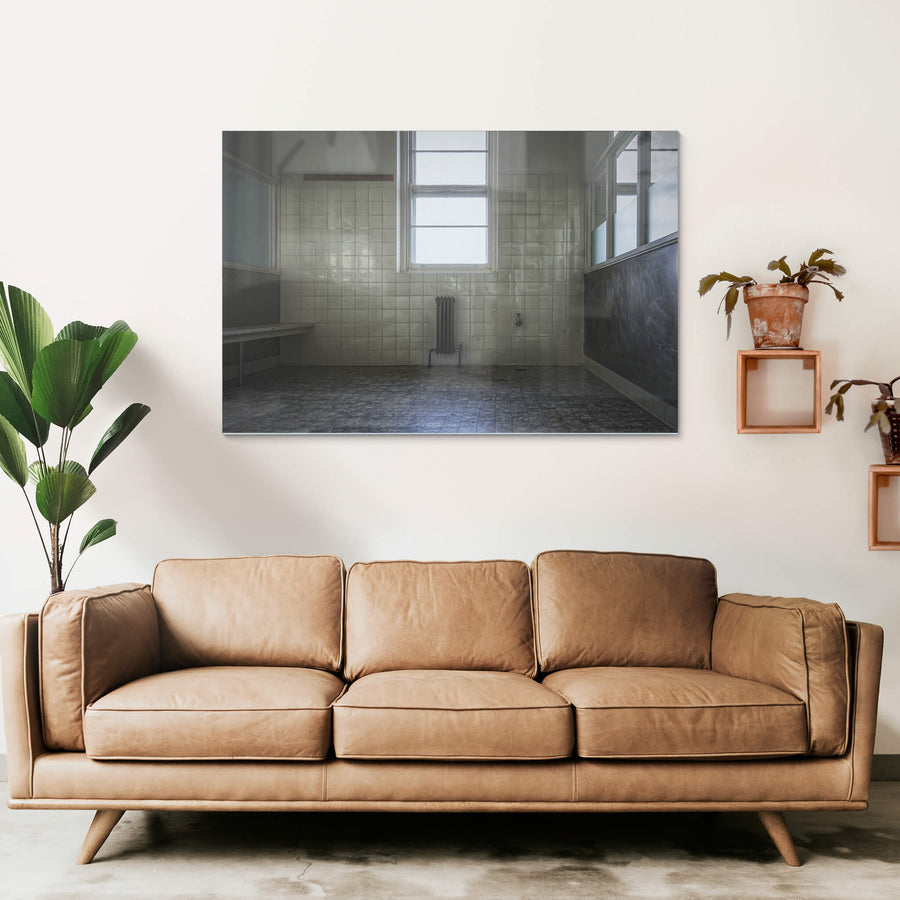
A cast iron radiator sits beneath a large multi-paned window in the Kirkbride Block at Callan Park, its white paint flaking against pale tiled walls. A wooden coat rack with metal hooks occupies the upper left wall, and a long bench runs below it along the same side. Worn linoleum covers the floor, debris scattered across its surface.
Open edition
Printed to order, no fixed quantity. Each print is hand-signed by the photographer.
Limited edition
A fixed number of prints exist. Once sold, the edition closes permanently. Each print is individually numbered and signed.
Shipping Free shipping over $250. Ships worldwide, rates calculated at checkout.
Returns Damaged in transit? We replace it. Full policy →
Ships within 10 business days · signed & numbered
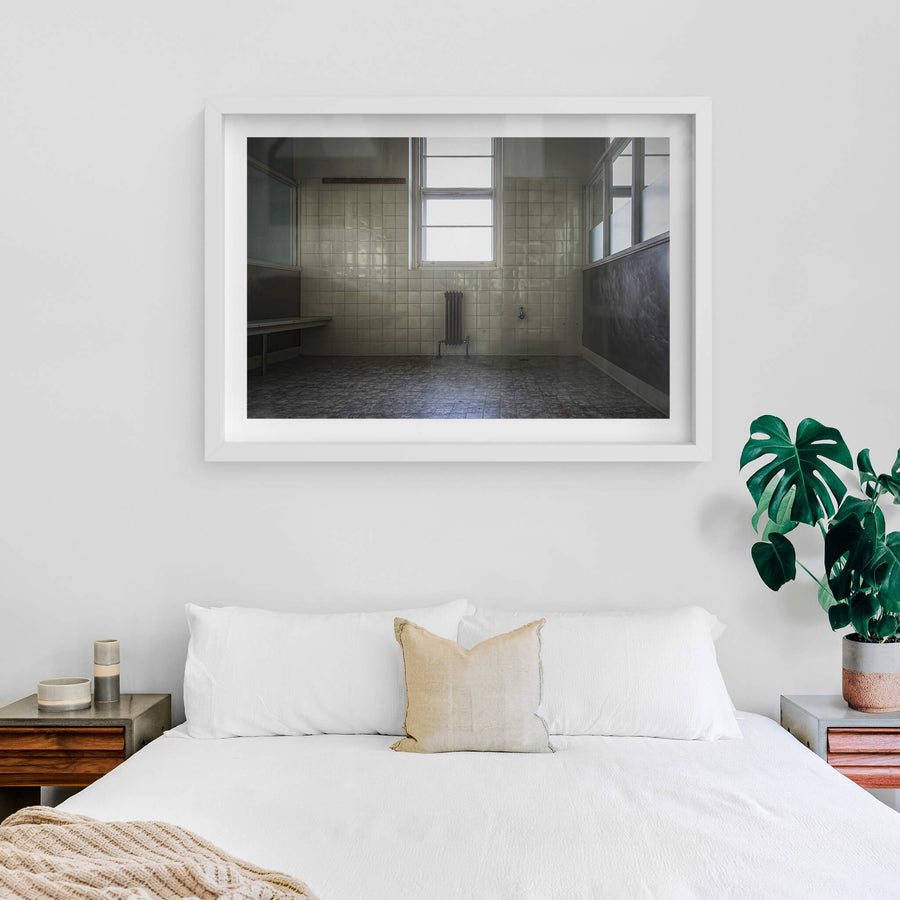
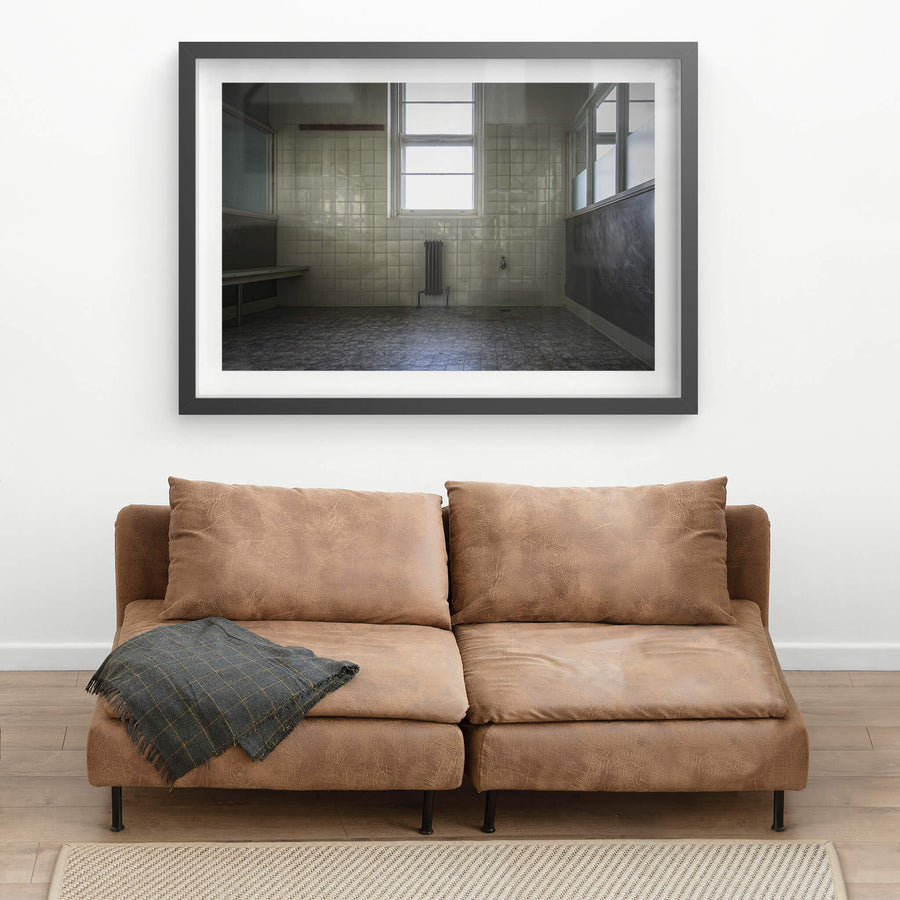
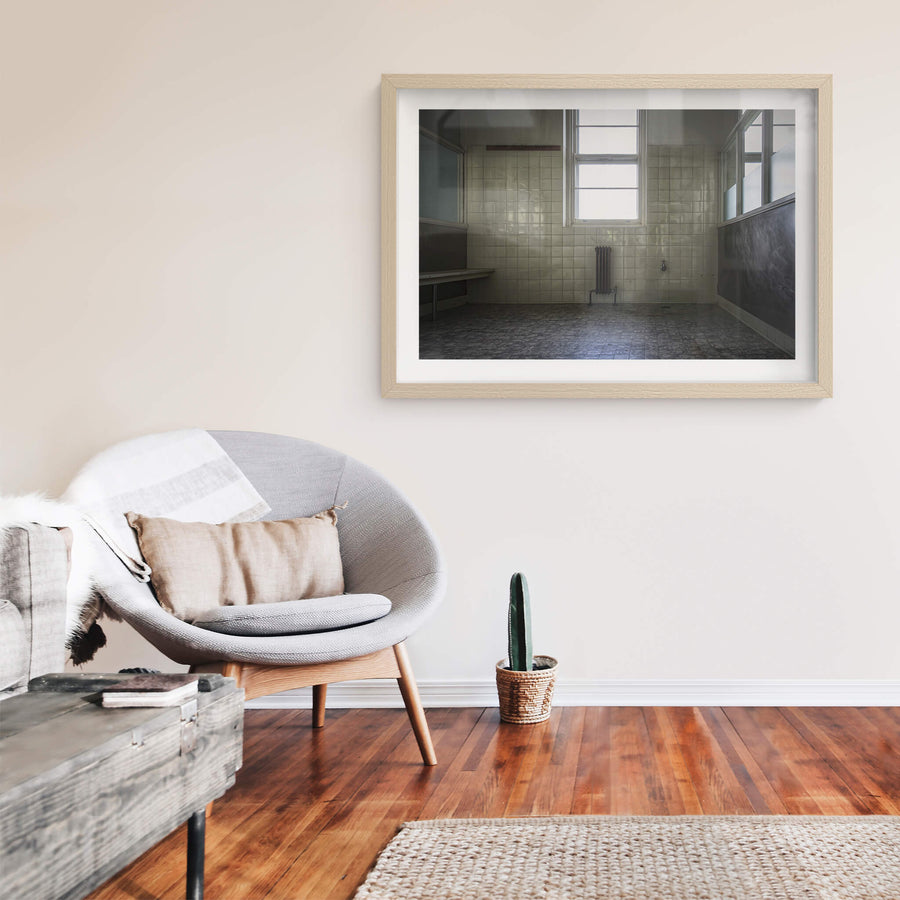
In situ
Print datasheet
- Title
- Heater
- Series
- Callan Park
- Catalogue
- CPA-025
- Process
- Giclée
- Captured
- 29 October 2015
- Camera
- NIKON D7000
- Lens
- 14.0-24.0 mm f/2.8
- Aperture
- f/8.0
- Shutter
- 0.8s s
- ISO
- 100
- Focal length
- 21 mm
- Paper
- Ilford Galerie Smooth Cotton Rag 310 gsm
- Paper size
- 297 × 210 mm
- Location
- Rozelle, New South Wales, Australia
- Authenticity
- C2PA verified provenance →
- Recognised by
- Highly Commended in Multimedia at the 2016 National Trust of Australia (NSW) Heritage Awards
Rozelle, New South Wales, Australia
Map · Mapbox · OpenStreetMap
About this print
Glazed ceramic tiles line the walls from floor to ceiling, their surface catching pale light from a high window. A cast-iron column radiator sits centred beneath the sill, bolted to the floor. To the right, a single tap valve protrudes from the tile. A metal bench runs along the left wall. The floor is grey vinyl, scuffed and lifting at the edges. The room is small, clinical, cold.
Brett Patman
The series
Callan Park
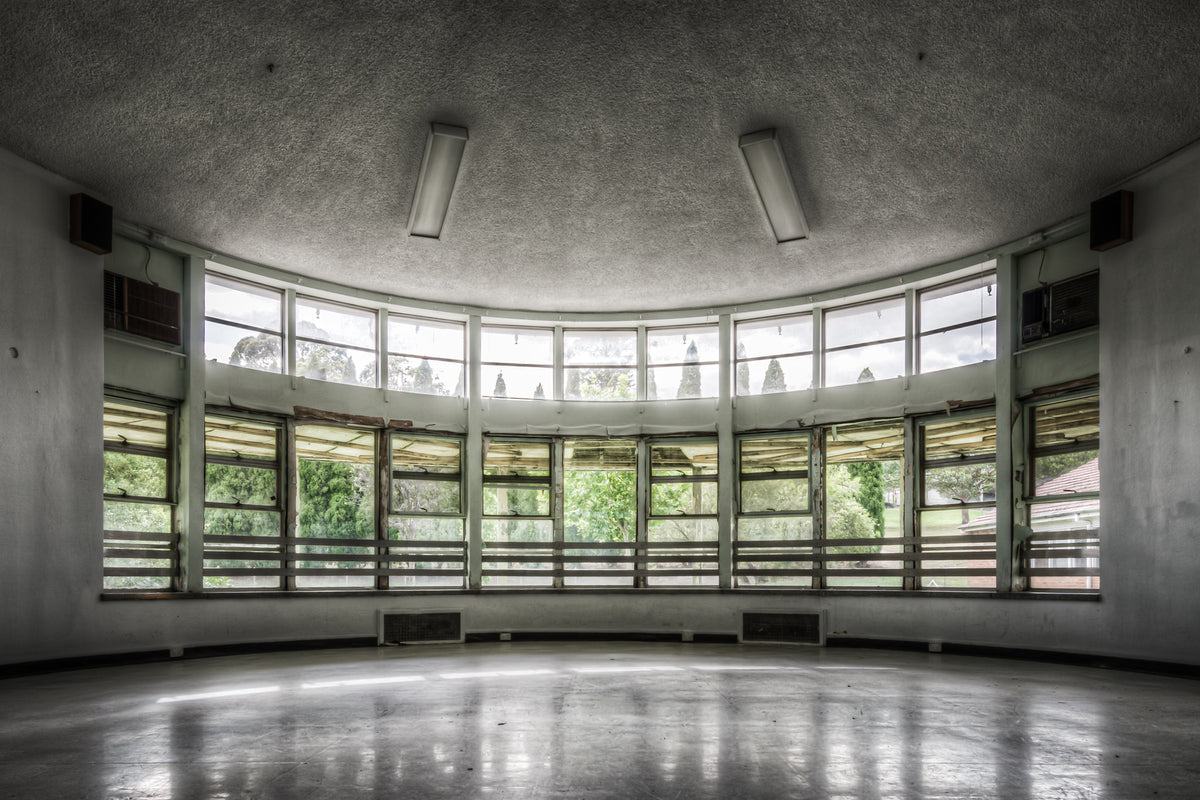
Dr Frederic Norton Manning rejected the asylum as 'a cemetery for deceased intellects'. In 1876 he toured asylums in England, France, Germany and the United States, returning with drawings of Chartham Down Hospital in Kent. Working with Colonial Architect James Barnet and Botanic Gardens director Charles Moore, he built Australia's first hospital purpose-built for moral therapy treatment on the Iron Cove foreshore.
Print sizes
The anatomy view shows what this finish is as a physical object: paper margin, mat band, frame depth, acrylic profile. The comparison strip shows how each size sits relative to the others at true scale. Click a size or a finish to update both.
| Type | Size | Width | Height |
|---|


