
Patch and Peel
Provenance
- Camera
- NIKON D850
- Lens
- 14.0-24.0 mm f/2.8
- Settings
- 14mm · f/8.0 · 2.5s · ISO 100
- Paper
- Ilford Galerie Smooth Cotton Rag 310 gsm
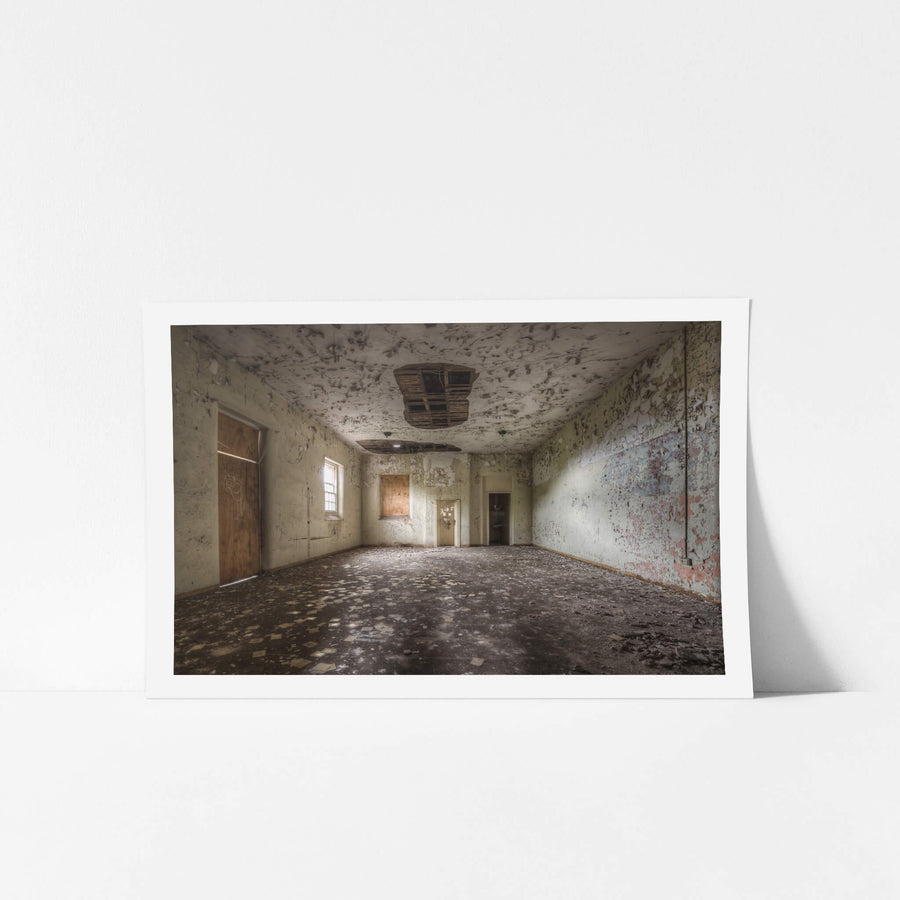
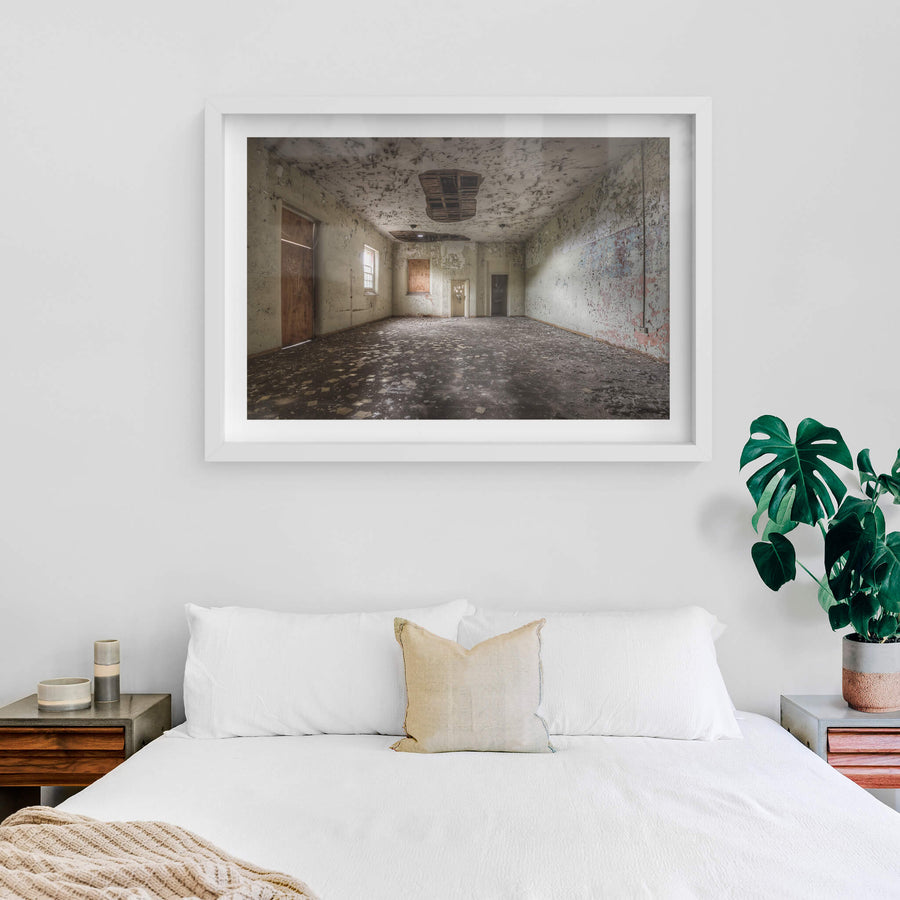
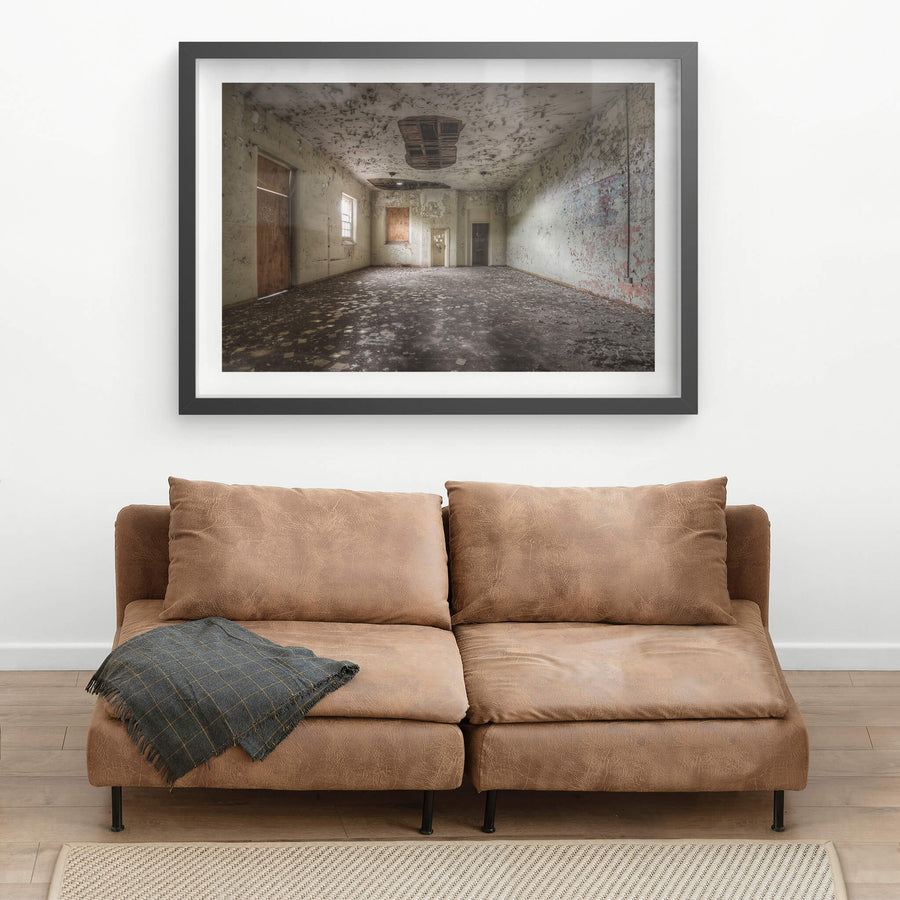
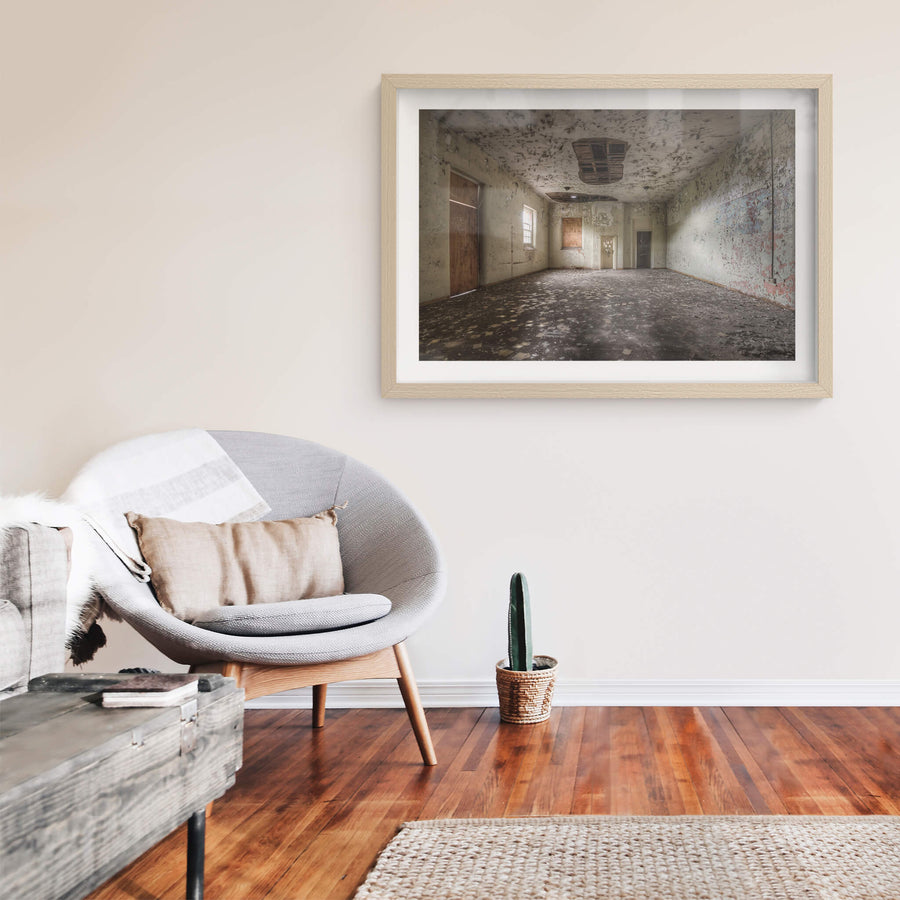
Close-up of a wall surface in Female Ward 9 at Callan Park. Multiple layers of paint in varying colours are visible, lifting and separating from the plaster beneath. The plaster itself has pulled away in places, exposing earlier surfaces. Peeling sections curl at the edges. The damage is uneven, with intact patches sitting alongside areas of significant loss.
Open edition
Printed to order, no fixed quantity. Each print is hand-signed by the photographer.
Limited edition
A fixed number of prints exist. Once sold, the edition closes permanently. Each print is individually numbered and signed.
Shipping Free shipping over $250. Ships worldwide, rates calculated at checkout.
Returns Damaged in transit? We replace it. Full policy →
Ships within 10 business days · signed & numbered
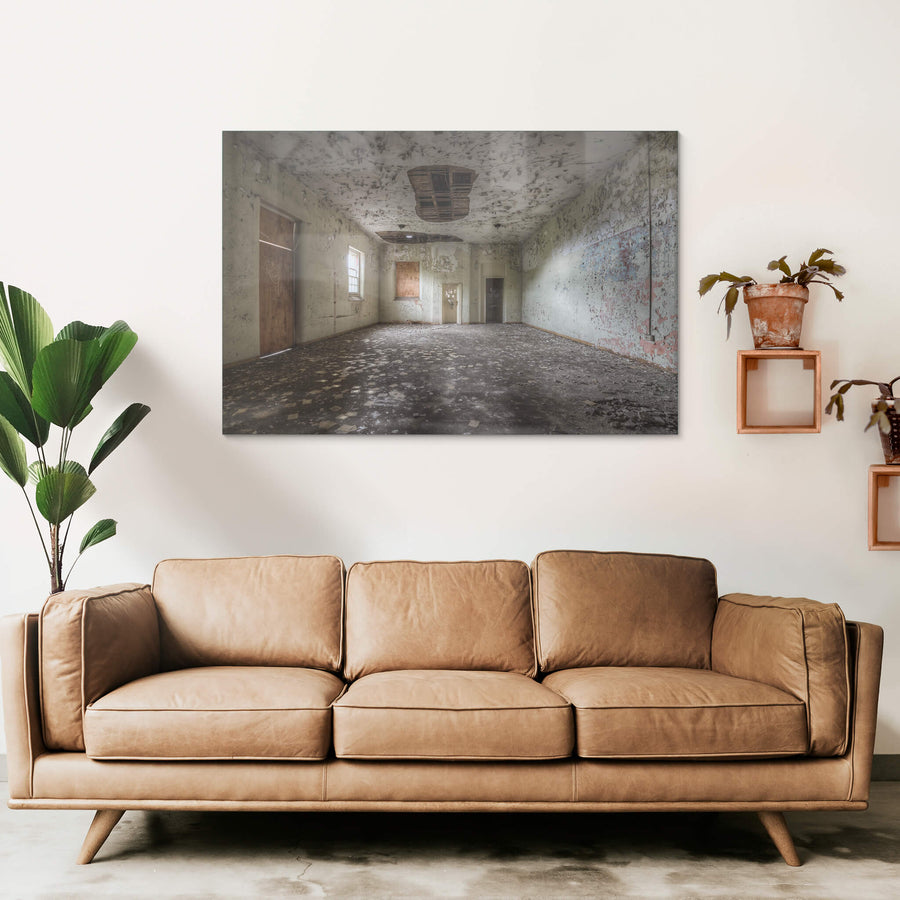
In situ
Print datasheet
- Title
- Patch and Peel
- Series
- Callan Park
- Catalogue
- CPA-094
- Process
- Giclée
- Captured
- 13 March 2019
- Camera
- NIKON D850
- Lens
- 14.0-24.0 mm f/2.8
- Aperture
- f/8.0
- Shutter
- 2.5s s
- ISO
- 100
- Focal length
- 14 mm
- Paper
- Ilford Galerie Smooth Cotton Rag 310 gsm
- Paper size
- 297 × 210 mm
- Location
- Rozelle, New South Wales, Australia
- Authenticity
- C2PA verified provenance →
- Recognised by
- Highly Commended in Multimedia at the 2016 National Trust of Australia (NSW) Heritage Awards
Rozelle, New South Wales, Australia
Map · Mapbox · OpenStreetMap
About this print
In Female Ward 9 at Callan Park, the wall tells its own history in layers. Paint applied over paint over plaster, each coat a different decade, now peeling back in sequence. The Kirkbride Complex was completed in 1885 at a cost of £235,539, its seventeen sandstone pavilions designed as a curative environment built on the principles of moral therapy. What the wall holds now is the long aftermath of that idea: a century of occupation, then closure, then silence, then the slow return of the building to its own materials.
Brett Patman
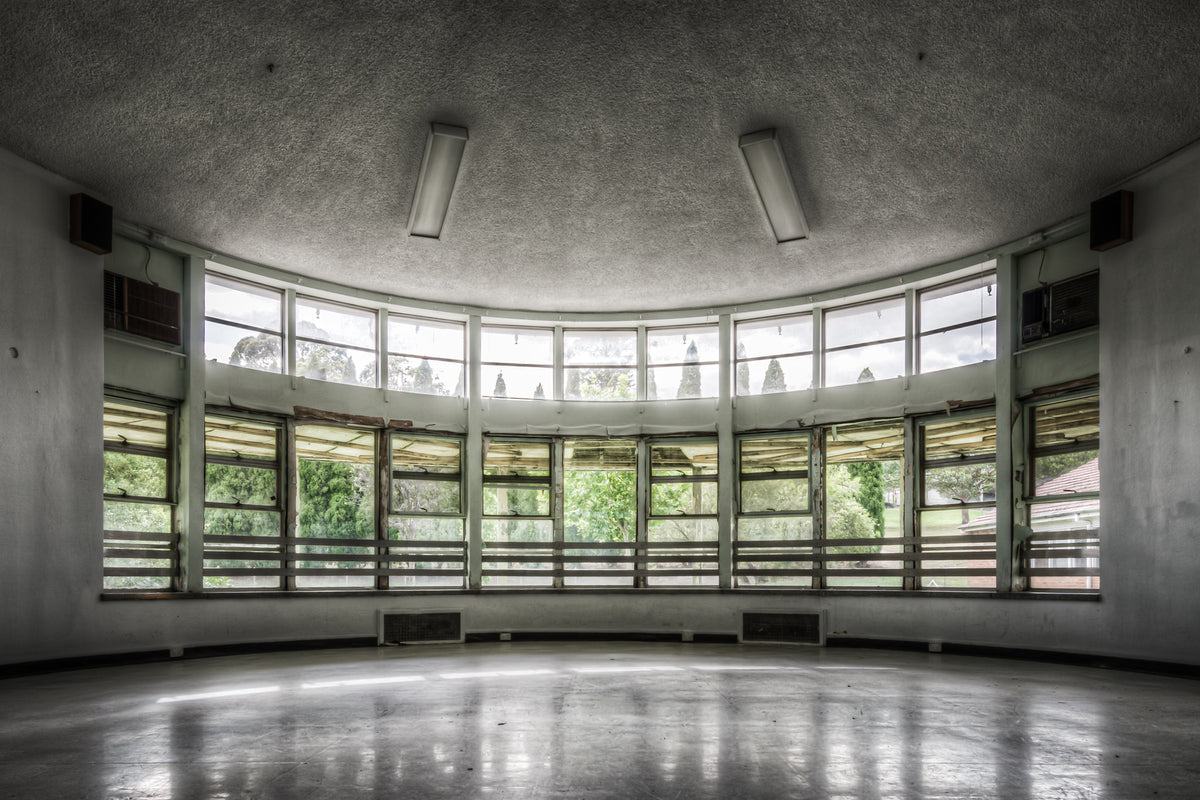
The series
Callan Park
Dr Frederic Norton Manning rejected the asylum as 'a cemetery for deceased intellects'. In 1876 he toured asylums in England, France, Germany and the United States, returning with drawings of Chartham Down Hospital in Kent. Working with Colonial Architect James Barnet and Botanic Gardens director Charles Moore, he built Australia's first hospital purpose-built for moral therapy treatment on the Iron Cove foreshore.
Print sizes
The anatomy view shows what this finish is as a physical object: paper margin, mat band, frame depth, acrylic profile. The comparison strip shows how each size sits relative to the others at true scale. Click a size or a finish to update both.
| Type | Size | Width | Height |
|---|


