
Tea Room
Provenance
- Camera
- NIKON D7000
- Lens
- 14.0-24.0 mm f/2.8
- Settings
- 14mm · f/8.0 · 1s · ISO 100
- Paper
- Ilford Galerie Smooth Cotton Rag 310 gsm
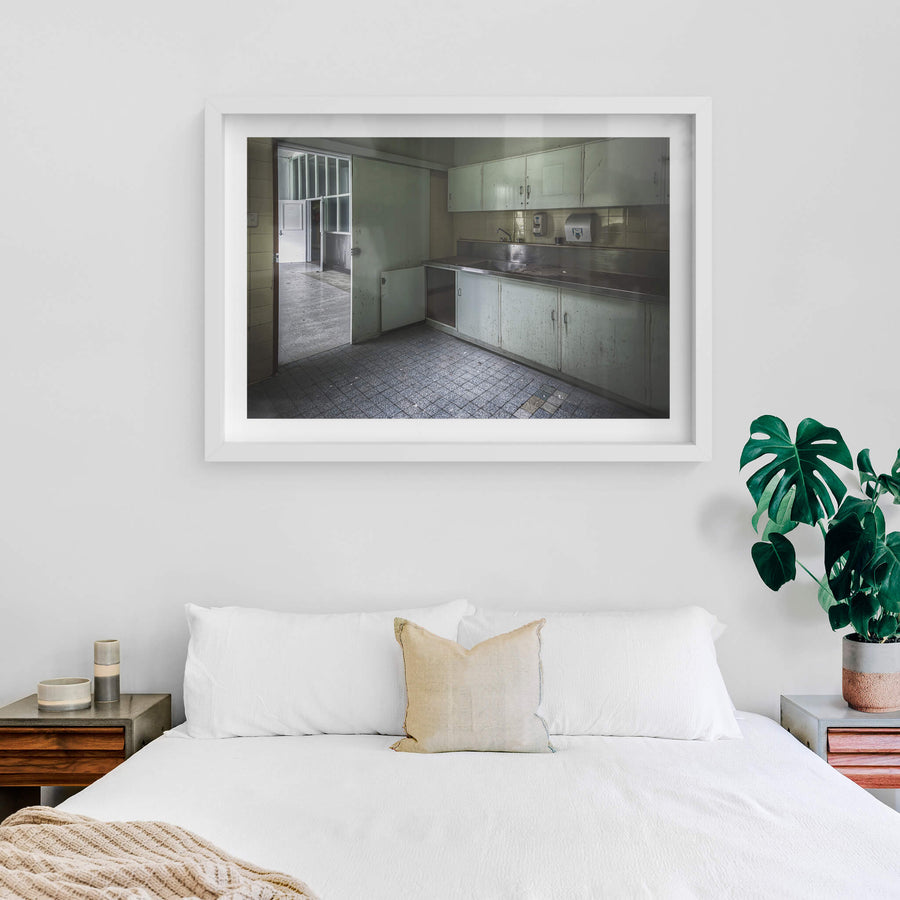
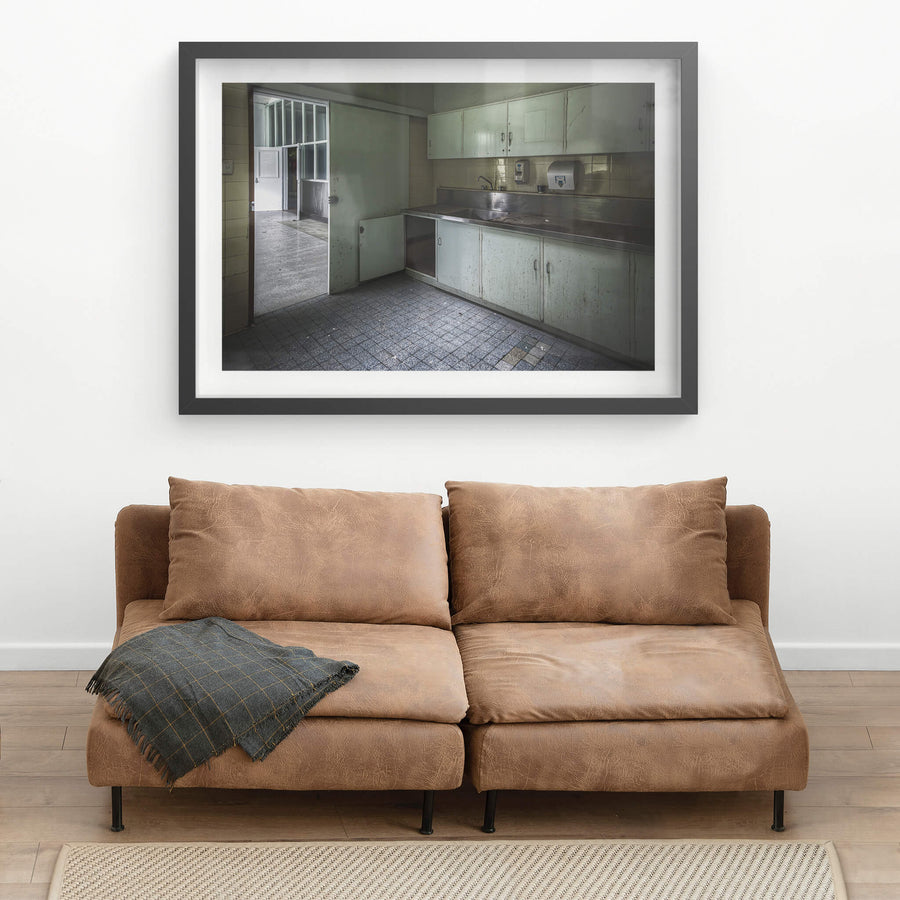
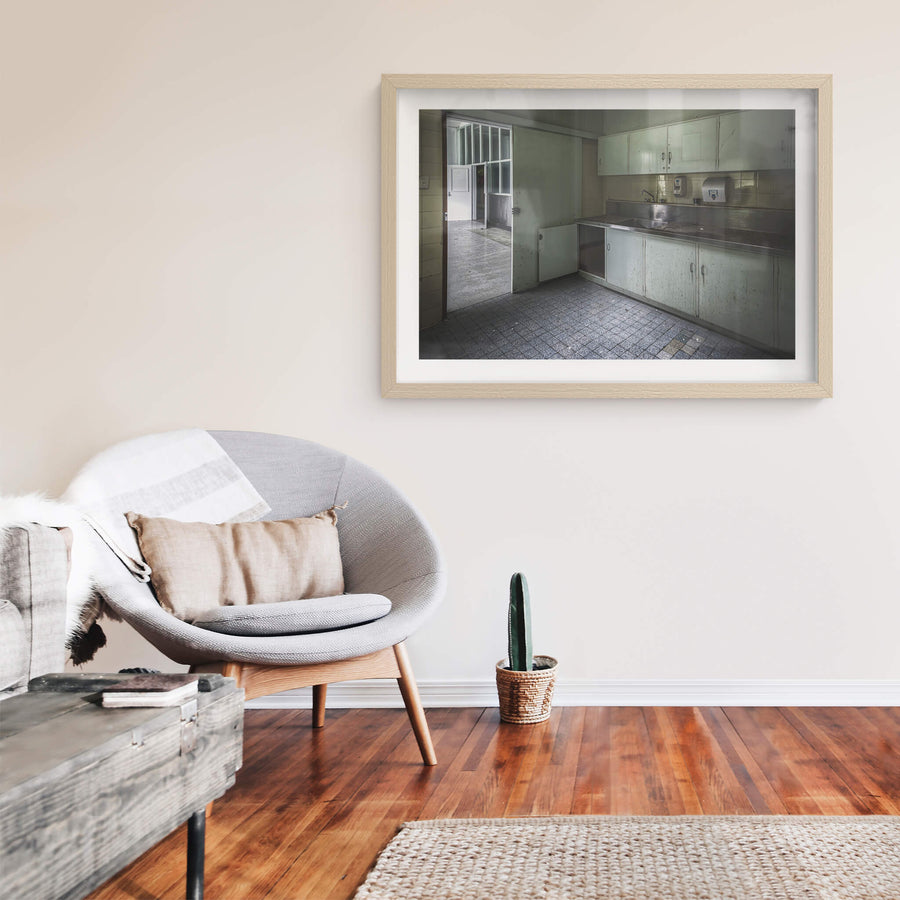
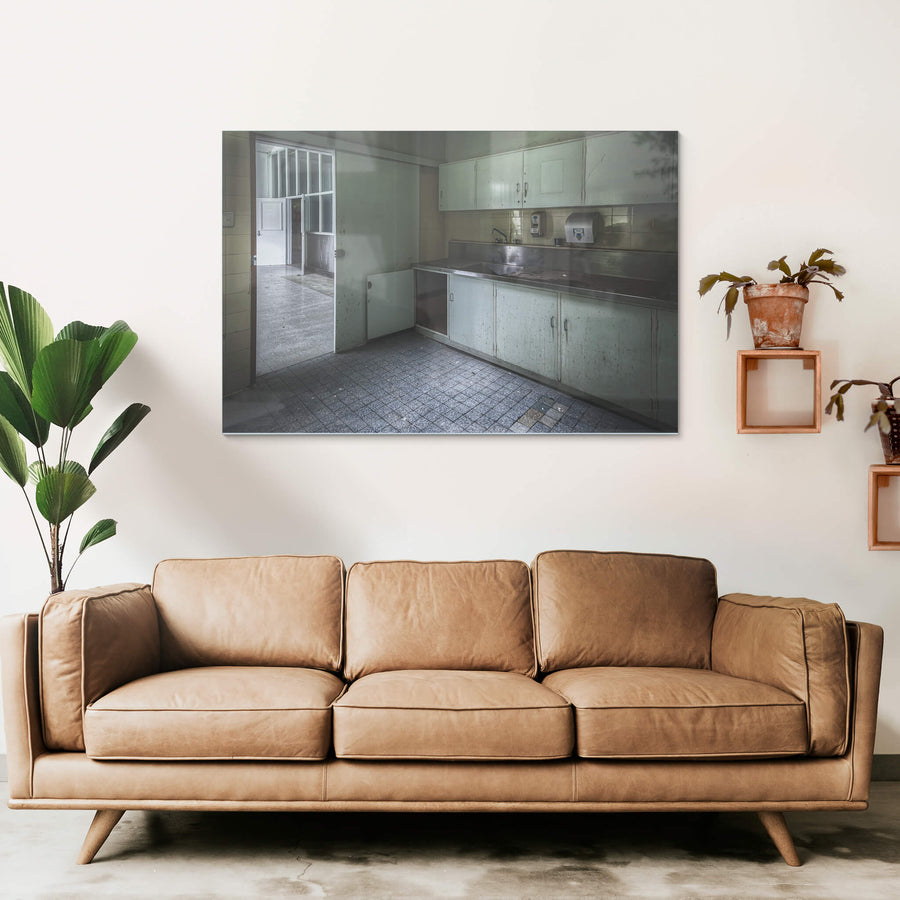
Stainless steel benchtops run the length of a narrow utility room at Callan Park, twin basins stained with grime and a paper towel dispenser still mounted above. Cabinet doors hang open below the bench, exposing unfinished wooden interiors. Through a partially open door at the far end, a corridor lined with glass-paned doors recedes into the building.
Open edition
Printed to order, no fixed quantity. Each print is hand-signed by the photographer.
Limited edition
A fixed number of prints exist. Once sold, the edition closes permanently. Each print is individually numbered and signed.
Shipping Free shipping over $250. Ships worldwide, rates calculated at checkout.
Returns Damaged in transit? We replace it. Full policy →
Ships within 10 business days · signed & numbered
In situ

Print datasheet
- Title
- Tea Room
- Series
- Callan Park
- Catalogue
- CPA-054
- Process
- Giclée
- Captured
- 29 October 2015
- Camera
- NIKON D7000
- Lens
- 14.0-24.0 mm f/2.8
- Aperture
- f/8.0
- Shutter
- 1s s
- ISO
- 100
- Focal length
- 14 mm
- Paper
- Ilford Galerie Smooth Cotton Rag 310 gsm
- Paper size
- 297 × 210 mm
- Location
- Rozelle, New South Wales, Australia
- Authenticity
- C2PA verified provenance →
- Recognised by
- Highly Commended in Multimedia at the 2016 National Trust of Australia (NSW) Heritage Awards
Rozelle, New South Wales, Australia
Map · Mapbox · OpenStreetMap
About this print
A staff tea room inside one of Callan Park's institutional buildings. Pale green cabinetry lines the far wall, doors speckled with mould. Stainless steel benchtops run the length of the counter, dull under a film of grime. A soap dispenser and paper towel unit remain fixed to the tiled splashback. One lower cupboard hangs open, shelves bare. Terrazzo-style floor tiles are cracked in places, a few missing entirely. Through the open doorway, another empty room glows with cold light from tall windows.
Brett Patman
The series
Callan Park
Dr Frederic Norton Manning rejected the asylum as 'a cemetery for deceased intellects'. In 1876 he toured asylums in England, France, Germany and the United States, returning with drawings of Chartham Down Hospital in Kent. Working with Colonial Architect James Barnet and Botanic Gardens director Charles Moore, he built Australia's first hospital purpose-built for moral therapy treatment on the Iron Cove foreshore.
Print sizes
The anatomy view shows what this finish is as a physical object: paper margin, mat band, frame depth, acrylic profile. The comparison strip shows how each size sits relative to the others at true scale. Click a size or a finish to update both.
| Type | Size | Width | Height |
|---|


