
Number Six Raw Mill
Provenance
- Camera
- NIKON D7000
- Lens
- 14.0-24.0 mm f/2.8
- Settings
- 14mm · f/8.0 · 6s · ISO 100
- Paper
- Ilford Galerie Smooth Cotton Rag 310 gsm
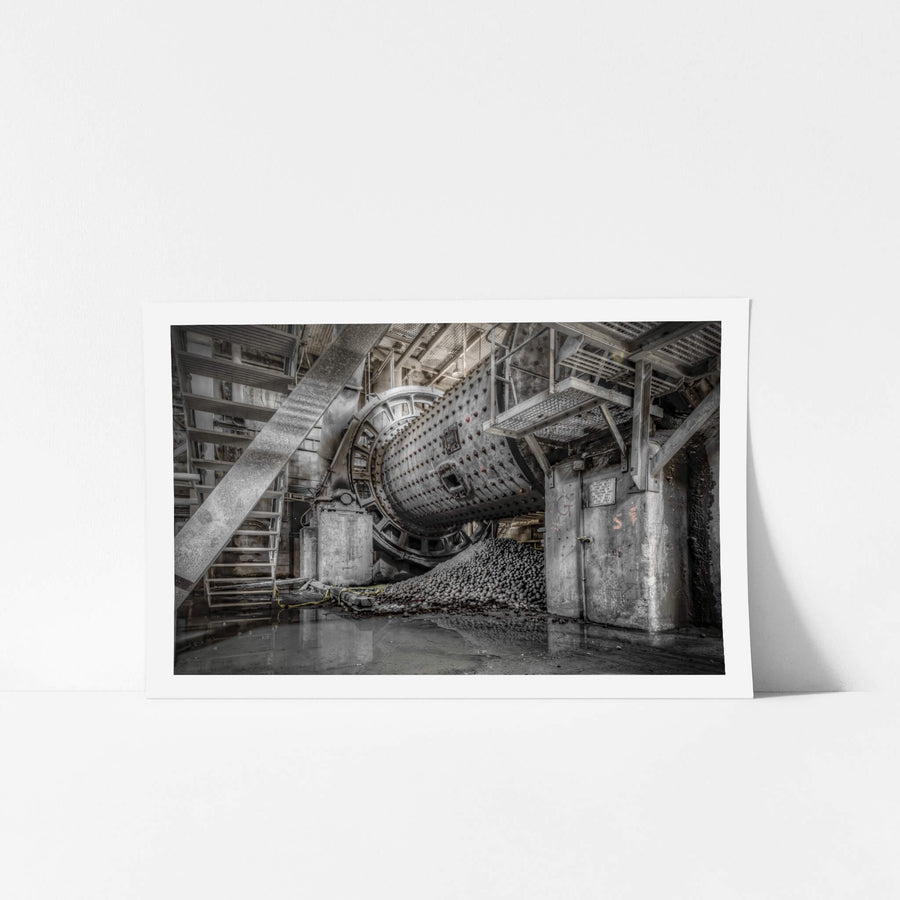
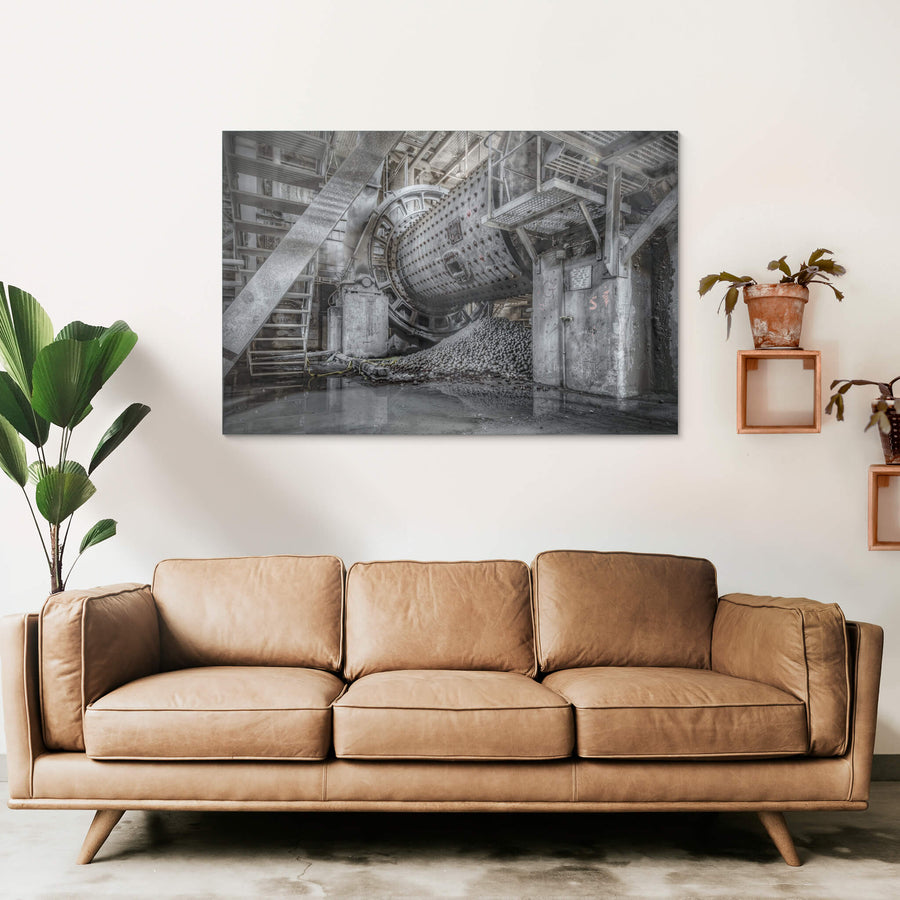
Grinding balls heap across the wet concrete below the Number Six raw mill at Kandos Cement Works, the studded drum angled downward as though mid-pour. A shallow pool on the floor catches the reflection of the cylinder and the metal staircase beside it, yellow caution tape still threaded through the scatter of spheres. Partial signage remains fixed to a concrete pillar, the lettering faded.
Open edition
Printed to order, no fixed quantity. Each print is hand-signed by the photographer.
Limited edition
A fixed number of prints exist. Once sold, the edition closes permanently. Each print is individually numbered and signed.
Shipping Free shipping over $250. Ships worldwide, rates calculated at checkout.
Returns Damaged in transit? We replace it. Full policy →
Ships within 10 business days · signed & numbered
In situ
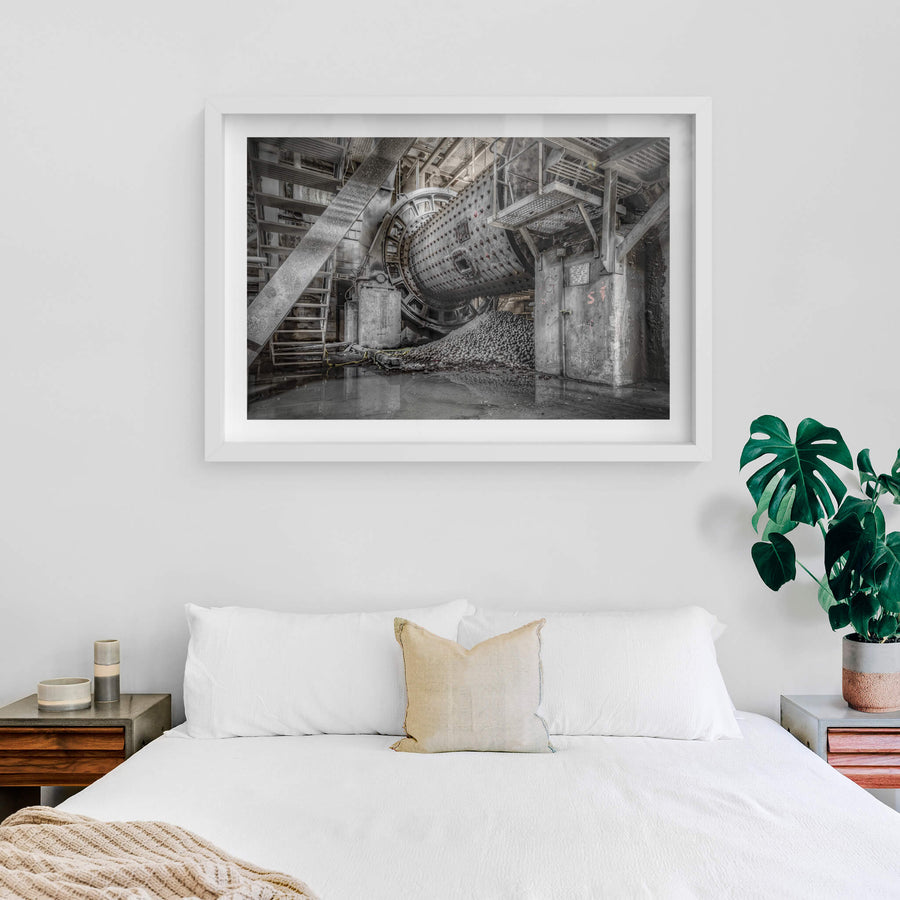
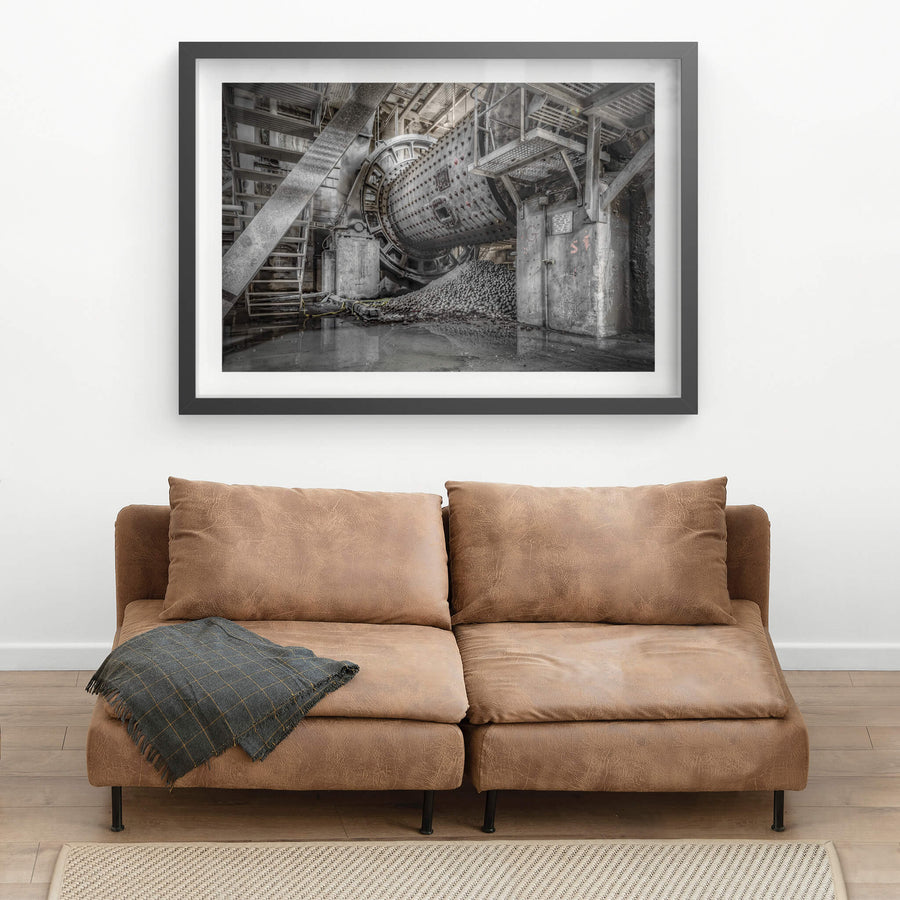
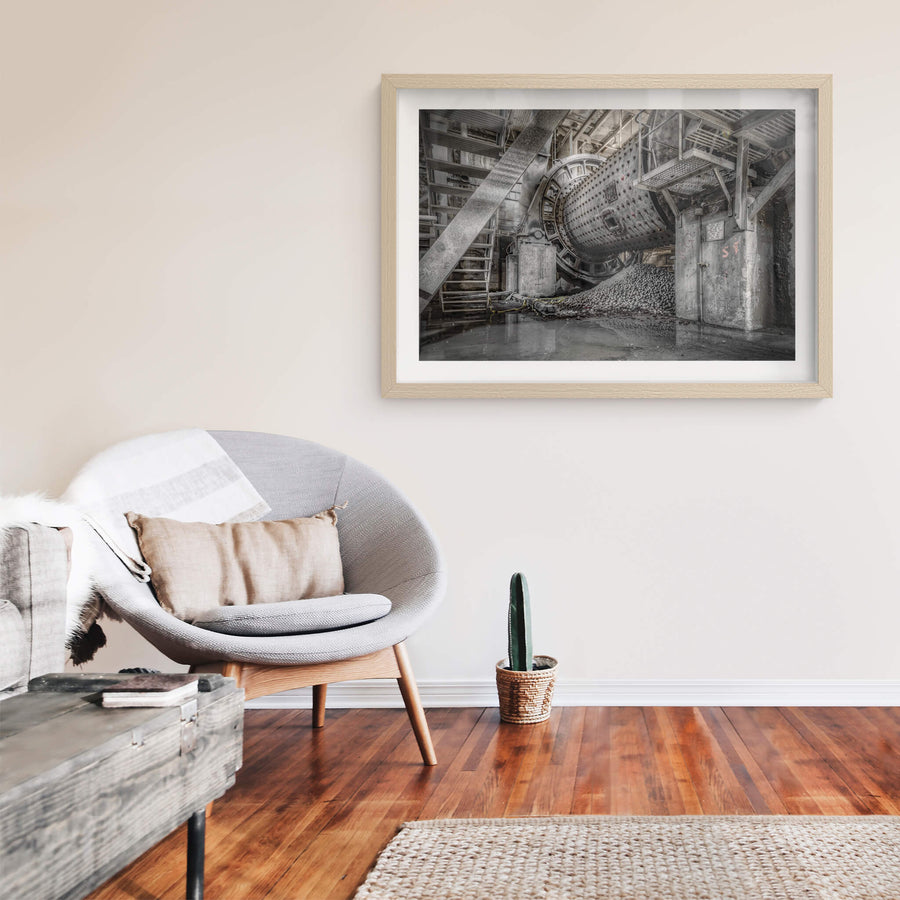
Print datasheet
- Title
- Number Six Raw Mill
- Series
- Kandos Cement Works
- Catalogue
- KCW-031
- Process
- Giclée
- Captured
- 13 February 2016
- Camera
- NIKON D7000
- Lens
- 14.0-24.0 mm f/2.8
- Aperture
- f/8.0
- Shutter
- 6s s
- ISO
- 100
- Focal length
- 14 mm
- Paper
- Ilford Galerie Smooth Cotton Rag 310 gsm
- Paper size
- 297 × 210 mm
- Location
- Kandos, New South Wales, Australia
- Authenticity
- C2PA verified provenance →
- Recognised by
- Highly Commended in Multimedia at the 2016 National Trust of Australia (NSW) Heritage Awards
Kandos, New South Wales, Australia
Map · Mapbox · OpenStreetMap
About this print
A ball mill sits heavy in the half-light, its riveted steel drum tilted toward the wet concrete floor. Hundreds of grinding balls have spilled from the open end, forming a dark mound that spreads across the ground. Steel gantries and mesh walkways crowd the space above. Water pools on the floor, reflecting dull grey from the structure overhead. Orange spray-paint marks the concrete pillars. Everything carries a film ofite dust.
Brett Patman

The series
Kandos Cement Works
The town's first name was Candos, an acronym of the directors' surnames at the NSW Cement Lime and Coal Company. They bought 100 acres from local farmer John Lloyd Junior for £2,000 in 1913 and had surveyor James Dawson lay out the township. The Postmaster General ruled the name change to Kandos in 1915, and by August 1916 the kilns at the new cement works were firing.
Print sizes
The anatomy view shows what this finish is as a physical object: paper margin, mat band, frame depth, acrylic profile. The comparison strip shows how each size sits relative to the others at true scale. Click a size or a finish to update both.
| Type | Size | Width | Height |
|---|


