
Wireless
Provenance
- Camera
- NIKON D850
- Lens
- 70.0-200.0 mm f/2.8
- Settings
- 70mm · f/8.0 · 1.3s · ISO 100
- Paper
- Ilford Galerie Smooth Cotton Rag 310 gsm
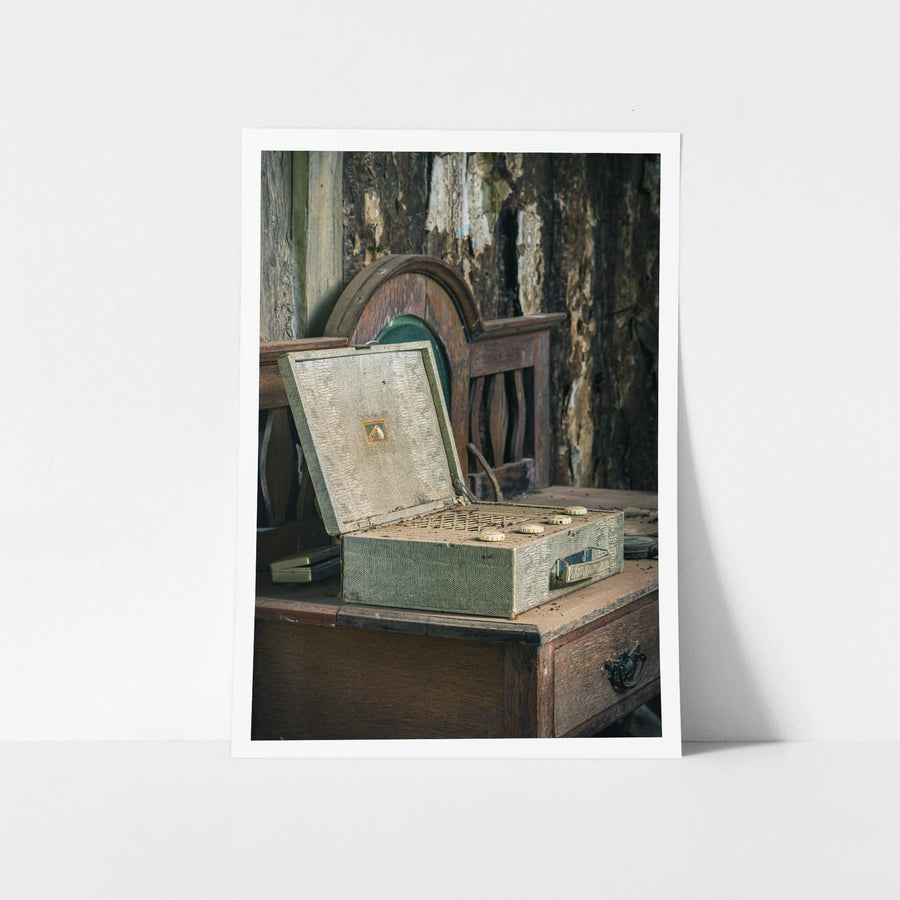
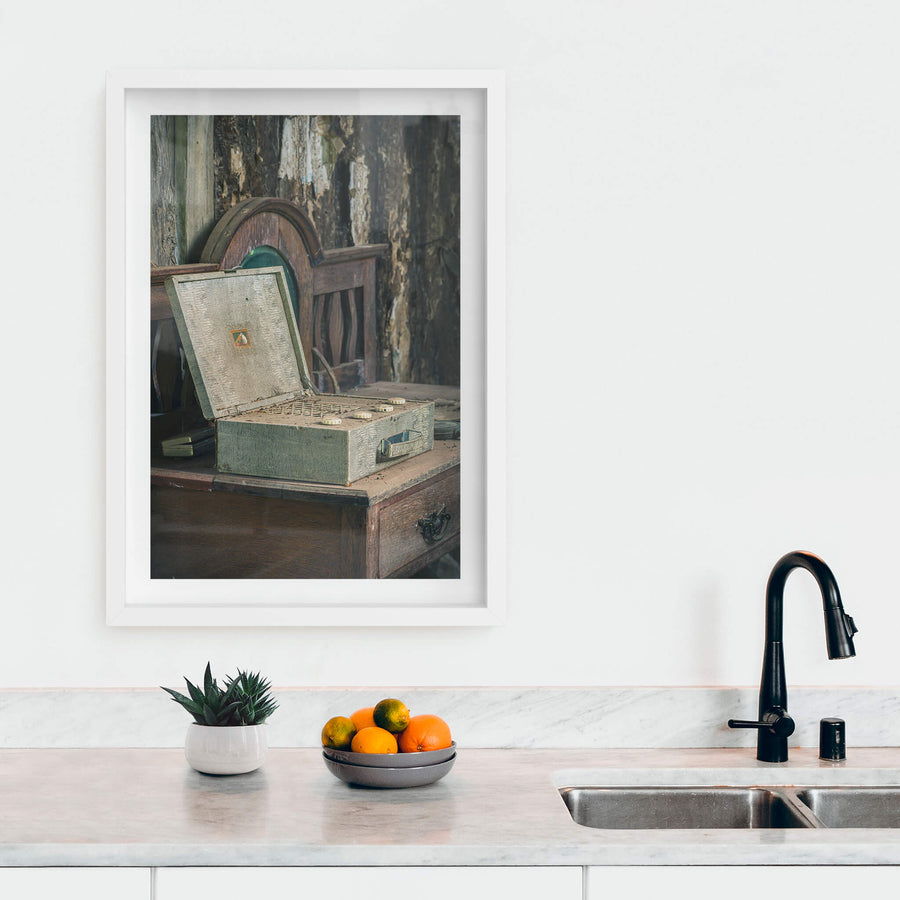
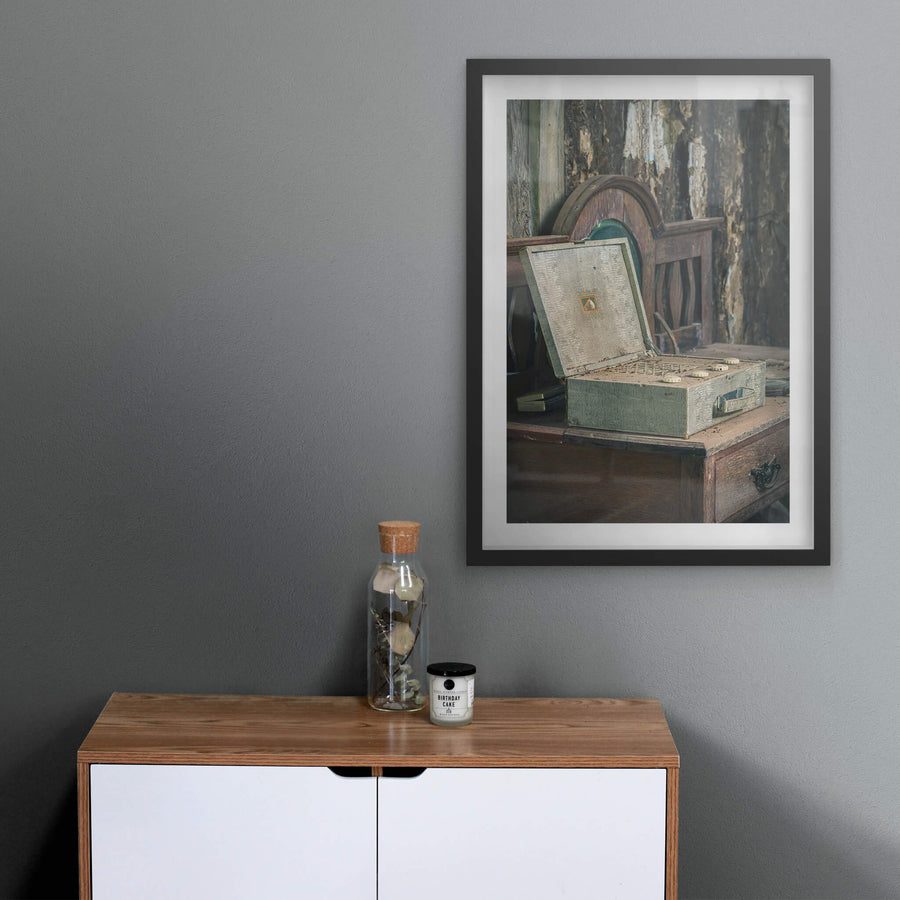
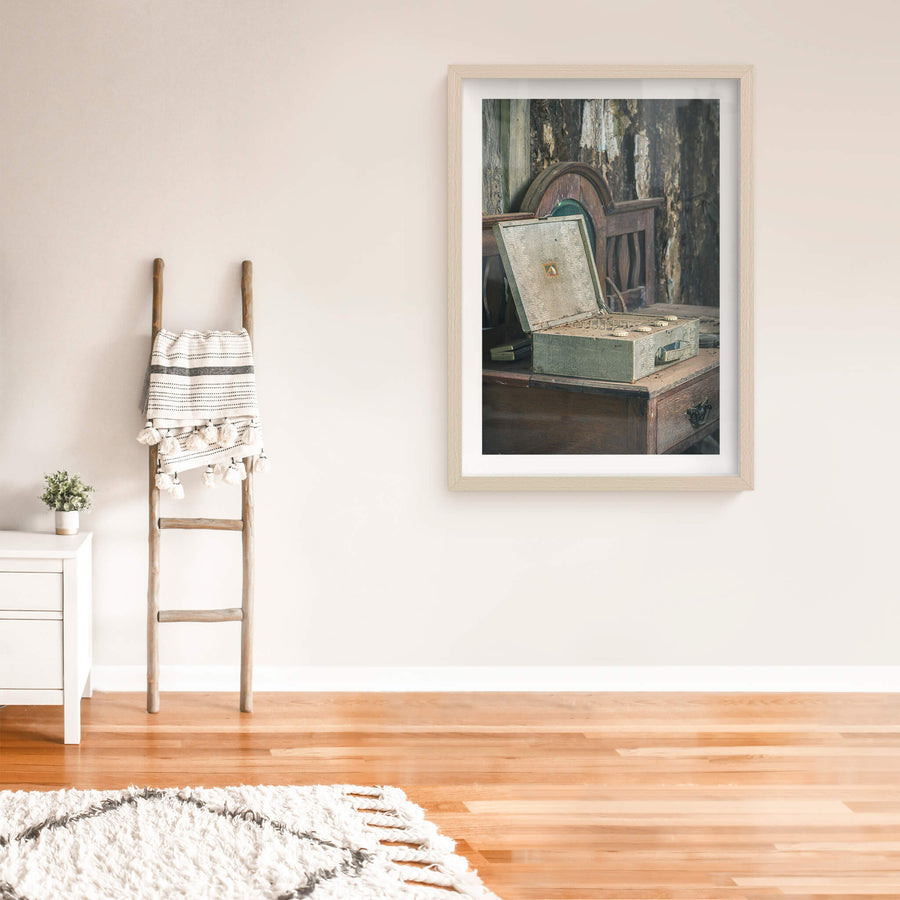
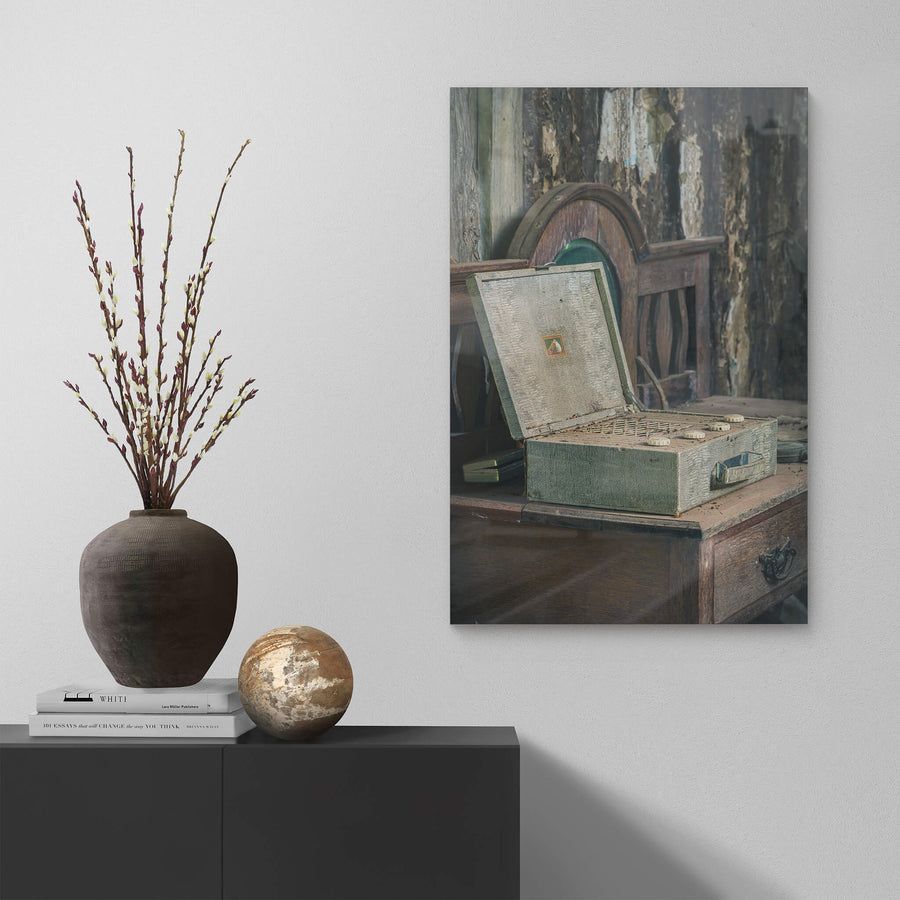
An open portable wireless set in a lizard-grain case rests on a timber chest of drawers, its raised lid carrying a His Master's Voice dog and horn badge. Cream control knobs sit beside a metal speaker grille, and a carry handle is fitted to the case. An oval mirror and a carved timber chair stand behind it against rough-sawn slab walls. Dust covers every surface.
Open edition
Printed to order, no fixed quantity. Each print is hand-signed by the photographer.
Limited edition
A fixed number of prints exist. Once sold, the edition closes permanently. Each print is individually numbered and signed.
Shipping Free shipping over $250. Ships worldwide, rates calculated at checkout.
Returns Damaged in transit? We replace it. Full policy →
Ships within 10 business days · signed & numbered
In situ
Print datasheet
- Title
- Wireless
- Series
- Leichhardt House
- Catalogue
- LEH-017
- Process
- Giclée
- Captured
- 13 June 2020
- Camera
- NIKON D850
- Lens
- 70.0-200.0 mm f/2.8
- Aperture
- f/8.0
- Shutter
- 1.3s s
- ISO
- 100
- Focal length
- 70 mm
- Paper
- Ilford Galerie Smooth Cotton Rag 310 gsm
- Paper size
- 297 × 210 mm
- Location
- Southern Tablelands, New South Wales, Australia
- Authenticity
- C2PA verified provenance →
- Recognised by
- Highly Commended in Multimedia at the 2016 National Trust of Australia (NSW) Heritage Awards
Southern Tablelands, New South Wales, Australia
Photographed under access arrangement. The exact location is held in the catalogue but not published on this page. The site is not publicly accessible.
Region · access by arrangement
About this print
An open portable wireless set in a lizard-grain case rests on a timber chest of drawers, its raised lid carrying a His Master's Voice dog and horn badge.
Brett Patman

The series
Leichhardt House
Leichhardt House is a slab hut cottage in the New South Wales Southern Tablelands, around 130 years old. The building has outlasted what was built around it. A larger family home built close by in the early 1900s was destroyed in the 1964-65 fires that swept the Southern Tablelands, and a new home went up in its place. The slab hut survived. The end wall, where the chimney once stood, has been taken out and replaced with large doors so the building can keep working as a shed. The owners hold a photograph from around 1920 showing two young boys standing out the front of the same cottage, against the same slab walls. The Lost Collective photographs sit alongside that older record as a second century-on view of the same place. The exact location and the family who hold it have asked to remain unnamed.
Print sizes
The anatomy view shows what this finish is as a physical object: paper margin, mat band, frame depth, acrylic profile. The comparison strip shows how each size sits relative to the others at true scale. Click a size or a finish to update both.
| Type | Size | Width | Height |
|---|


