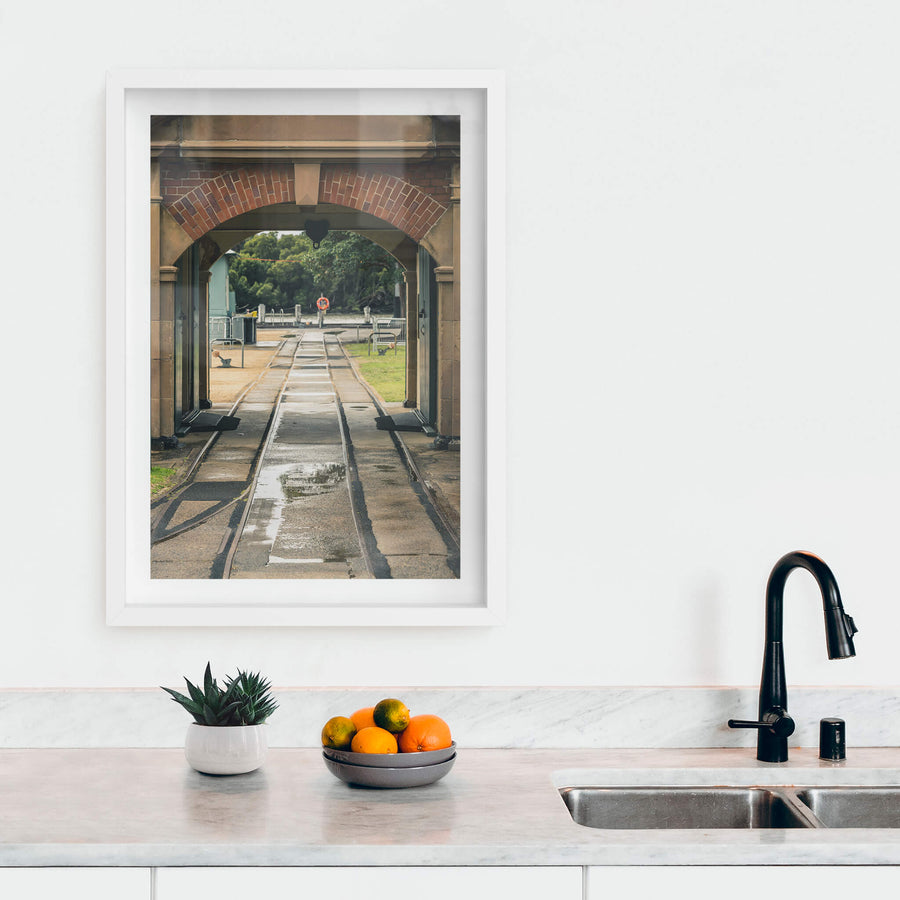
Entrance Rails

Provenance

Camera
NIKON D850
Lens
70.0-200.0 mm f/2.8
Settings
130mm · f/8.0 · 1/160 · ISO 140
Paper
Ilford Galerie Smooth Cotton Rag 310 gsm

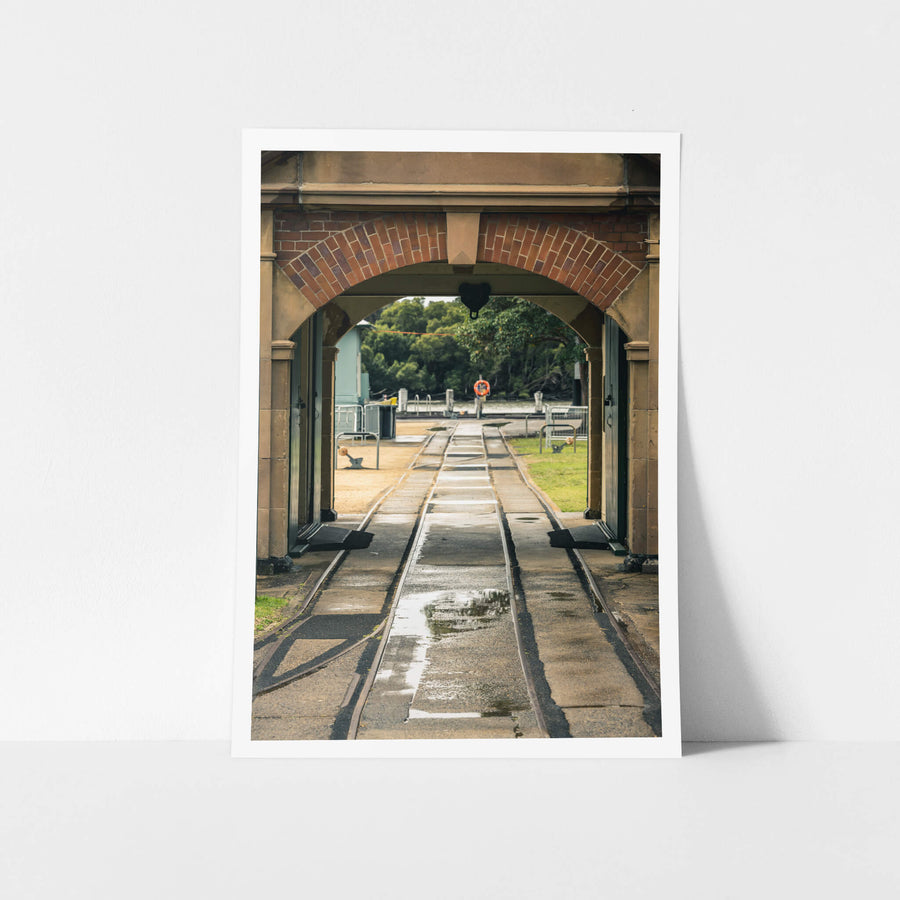
Heavy iron rails frame an entrance point, surfaces rusted from long exposure to the elements. The metal shows pitting and surface corrosion consistent with years of weathering. No paint or treatment remains visible on the rails. The ground and surrounding area are visible at the base of the structure.

Edition
Open edition

Open edition
Printed to order, no fixed quantity. Each print is hand-signed by the photographer.

Limited edition
A fixed number of prints exist. Once sold, the edition closes permanently. Each print is individually numbered and signed.

$100.00 AUD
Size
Type
Colour
Signed, numbered, with COA. Made to order in 5 to 10 business days (unframed). Shipped in protective packaging with edition certificate, paper-stock reference and a printed care guide.
See certificate sample →

Shipping Free shipping over $250. Ships worldwide, rates calculated at checkout.

Returns Damaged in transit? We replace it. Full policy →

Ships within 10 business days · signed & numbered

In situ
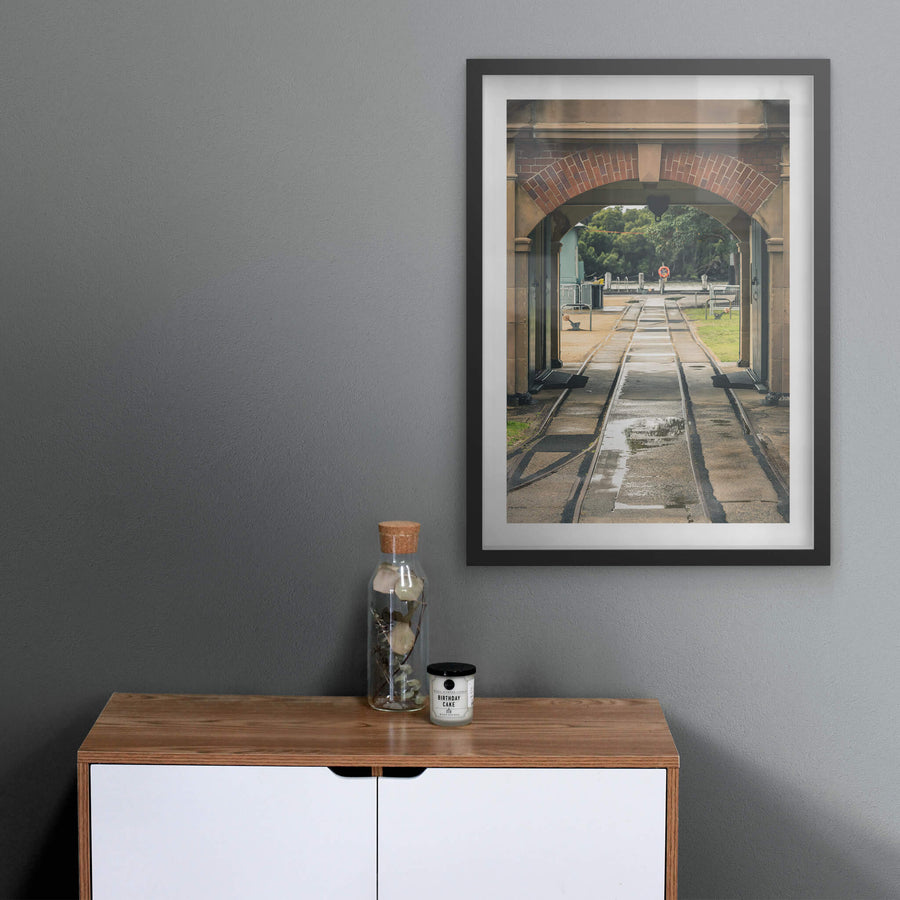
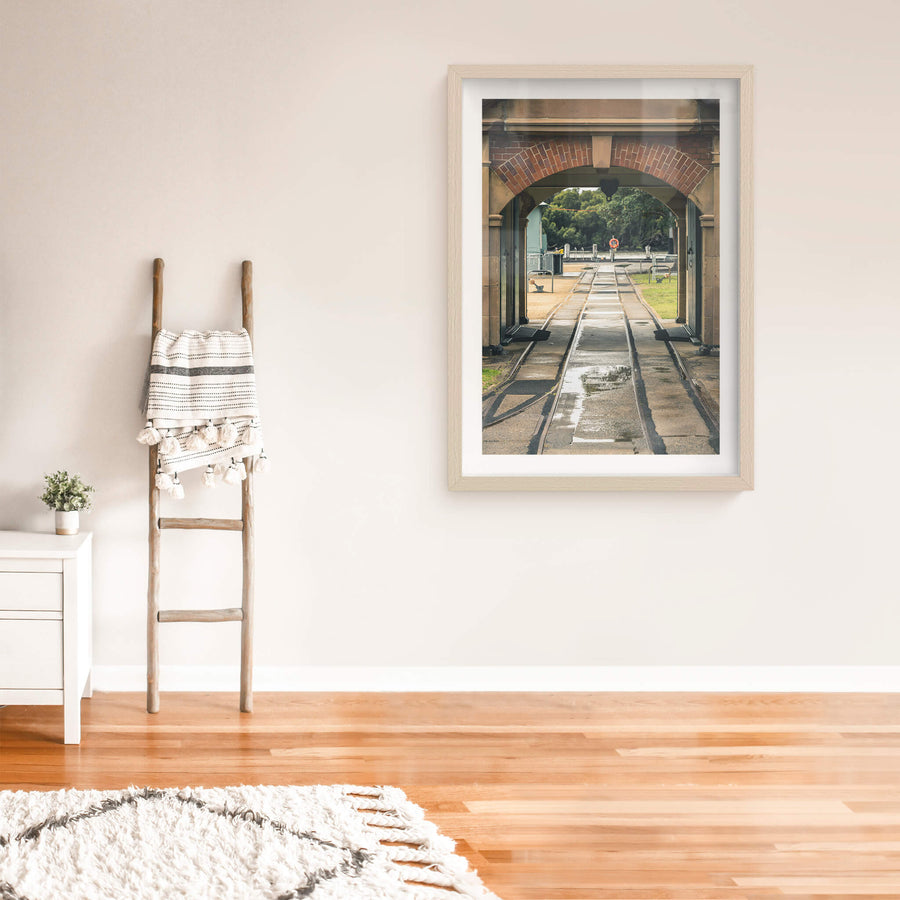
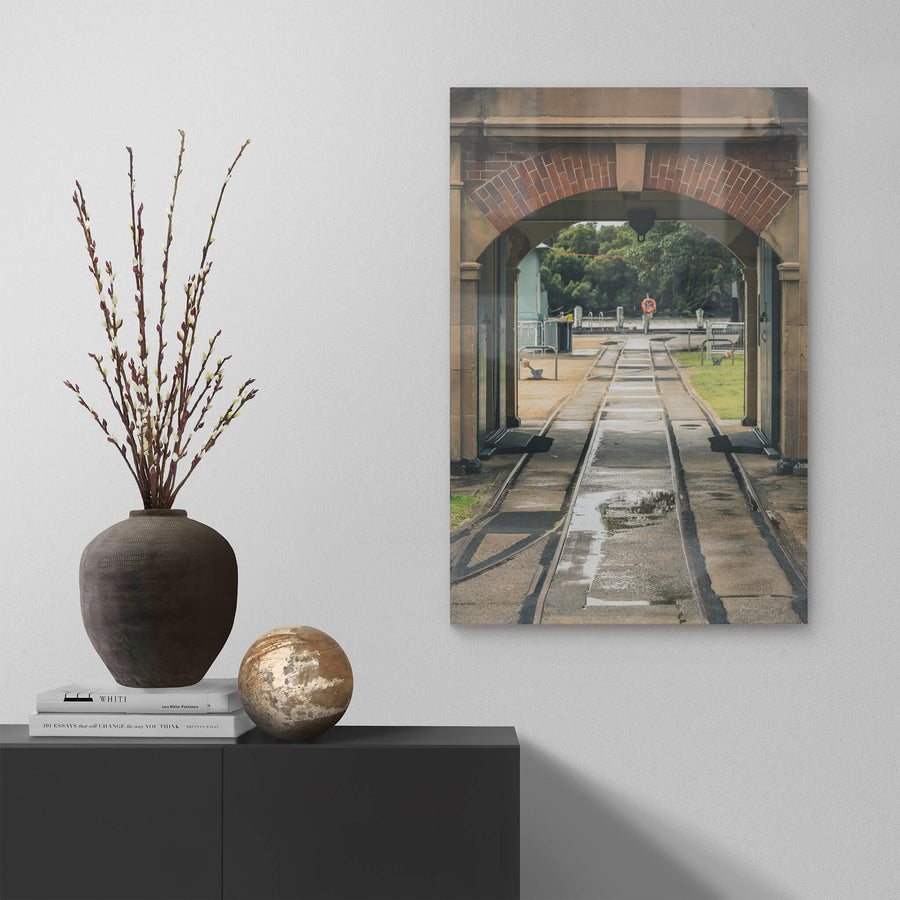
Entrance Rails at Newington Armory, unframed print displayed in situ on a wall.Entrance Rails at Newington Armory, white-framed print displayed in situ on a wall.Entrance Rails at Newington Armory, black-framed print displayed in situ on a wall.Entrance Rails at Newington Armory, raw timber-framed print displayed in situ on a wall.Entrance Rails at Newington Armory, glass print displayed in situ on a wall.
01 PROVENANCE

Print datasheet

Title
Entrance Rails
Series
Newington Armory
Catalogue
NAR-007
Process
Giclée
Captured
11 October 2019
Camera
NIKON D850
Lens
70.0-200.0 mm f/2.8
Aperture
f/8.0
Shutter
1/160 s
ISO
140
Focal length
130 mm
Paper
Ilford Galerie Smooth Cotton Rag 310 gsm
Paper size
290 × 200 mm
Location
Silverwater, New South Wales, Australia
Recognised by
Highly Commended in Multimedia at the 2016 National Trust of Australia (NSW) Heritage Awards
02 LOCATION

Silverwater, New South Wales, Australia

Map · Mapbox · OpenStreetMap

03 THE STORY

About this print

The iron rails in this photograph mark an entrance point at Newington Armament Depot and Nature Reserve, the site known publicly as Newington Armory. They are part of the boundary infrastructure that has defined this precinct since its original establishment in 1897, when the 25-acre magazine area was enclosed by an 8-foot iron rail fence. The rust covering the metal today is the result of more than a century of exposure to the Parramatta River climate, with no evidence of protective treatment remaining on the surface. The depot was established by the NSW Military Forces following a long process of land acquisition that began with a government board recommendation in 1875 and a parliamentary vote of £20,000 for the magazine in 1883. Construction commenced in 1897 under master builder John Howie, and the buildings were completed in 1898 across four contracts totalling £17,793. Management transferred from the Commonwealth Military Forces to the Royal Australian Navy on 22 July 1921. Over the following decades the site expanded considerably, reaching its greatest extent of approximately 259 hectares around 1950. During the Second World War, the depot serviced 5,127 Navy ship dockings, including vessels from the Australian, British, and United States Navies, which each maintained separate operational areas on the site. Armaments stored and processed included gunpowder, explosive shells, cordite, depth charges, torpedoes, and rockets. Every feature of the site, including its fencing, its rail infrastructure, and its building layouts, was designed around the constant presence of explosive material. The iron rail fence that enclosed the magazine area was not decorative; it marked the boundary of a zone where a single spark could be catastrophic. The Royal Australian Navy conducted its last ammunition operation over the wharf on 14 December 1999 and vacated the depot that December. The site passed to the NSW State Government in January 2000 and was listed on the NSW State Heritage Register on 14 January 2011. These rails, photographed in 2019, record what that boundary infrastructure looks like after more than 120 years in place.

04 FROM THE FIELD NOTES

The iron rails at Newington Armament Depot and Nature Reserve have been standing since the site's original establishment in 1897, when the 25-acre magazine area was enclosed by an 8-foot iron rail fence. For 102 years the depot operated as the primary naval armament storage and distribution point for Australian, British, and United States Navy ships, handling everything from gunpowder to torpedoes. When the Royal Australian Navy vacated in December 1999, the rails stayed. The rust visible today is the result of more than a century of exposure along the Parramatta River.

Brett Patman

Newington Armory

The series

Newington Armory

2019 · 21 photographs

The Newington Armory operated as a Royal Australian Navy munitions depot from 1897 until decommissioning in 1999. Sandstone and brick magazines line the Parramatta River foreshore, their walls a metre thick in places, engineered to contain the force of an accidental detonation. The site now sits within Sydney Olympic Park, its original stores largely intact, paint peeling from heavy timber doors, river light filtering through narrow vents cut into stone.

View all in this series →

05 SIZE GUIDE

Print sizes

The anatomy view shows what this finish is as a physical object: paper margin, mat band, frame depth, acrylic profile. The comparison strip shows how each size sits relative to the others at true scale. Click a size or a finish to update both.

Anatomy · true ratio
TypeSizeWidthHeight
08 BY POST · NO SPAM

Read the full story

Articles when they're published. The history behind a place. The day of a shoot. The work between prints. No marketing, no schedule.

You're subscribed.