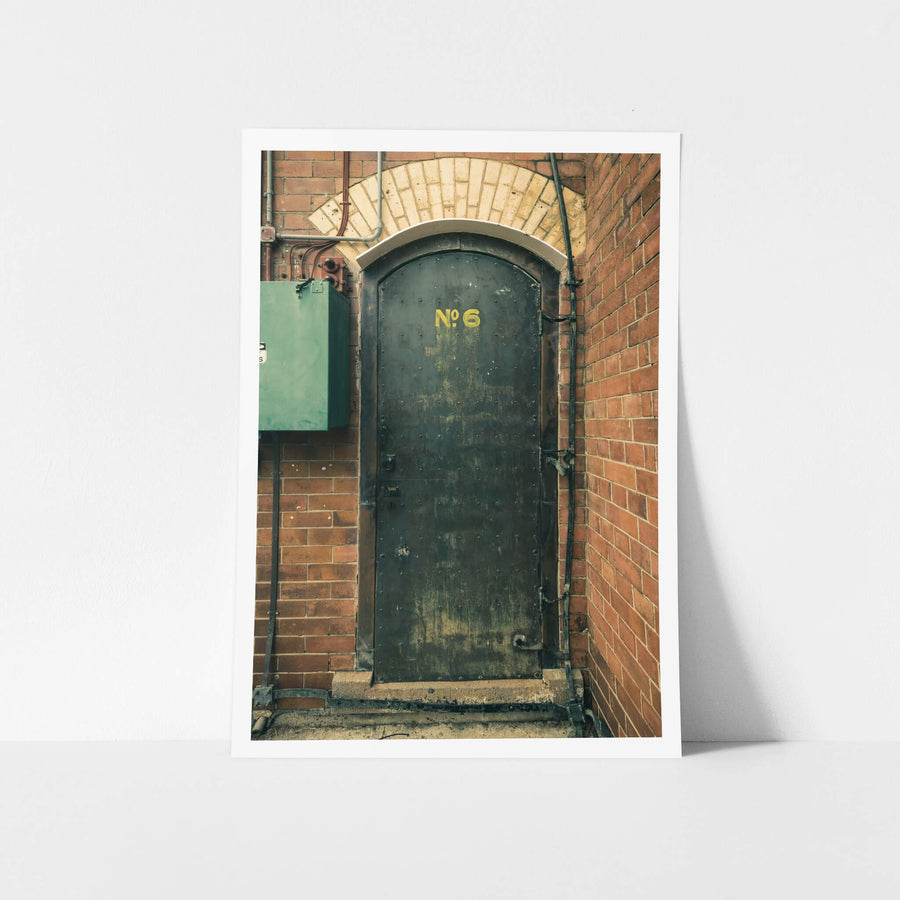
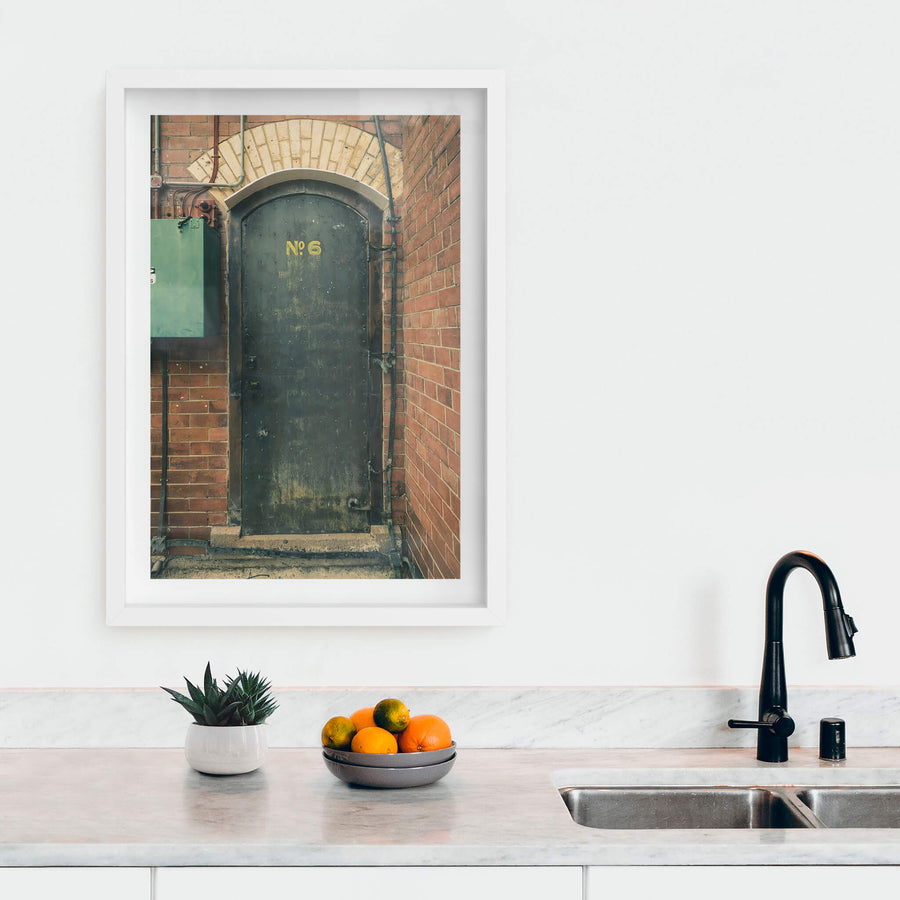
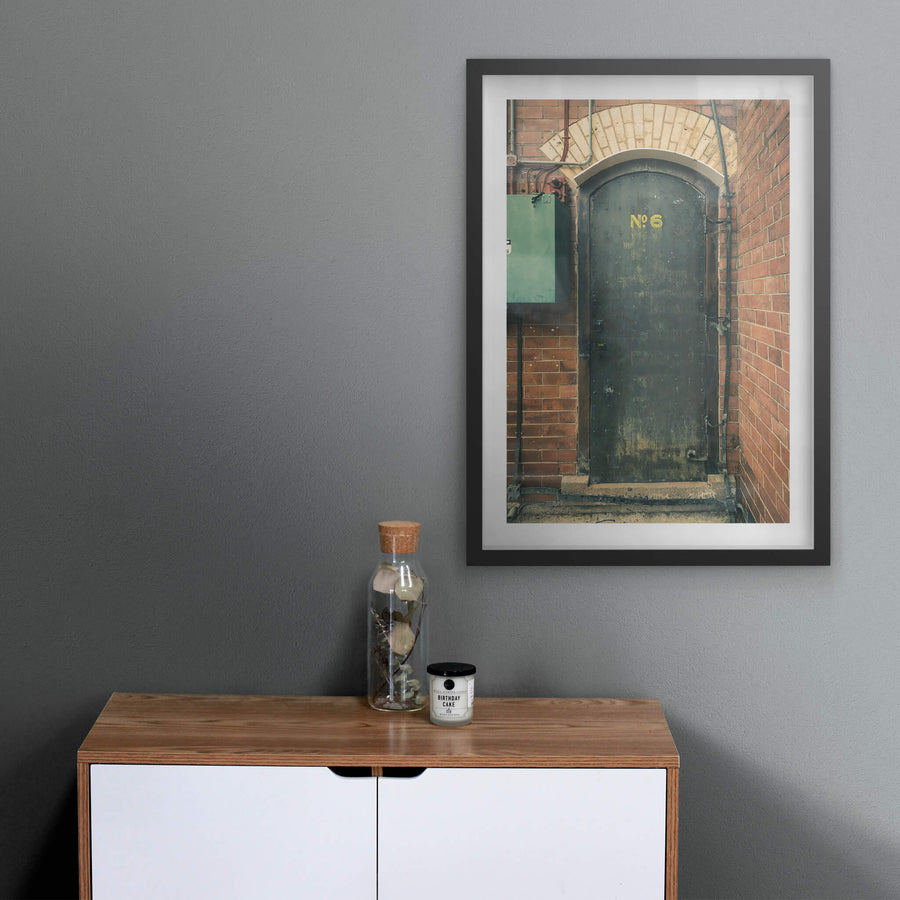
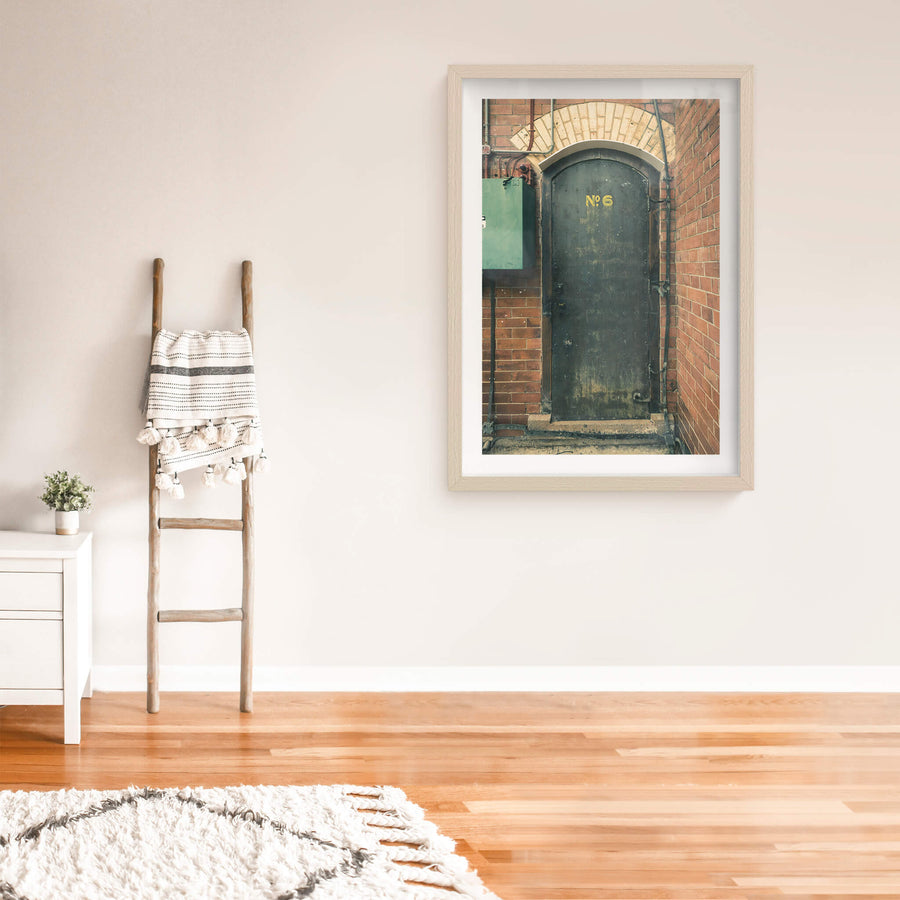
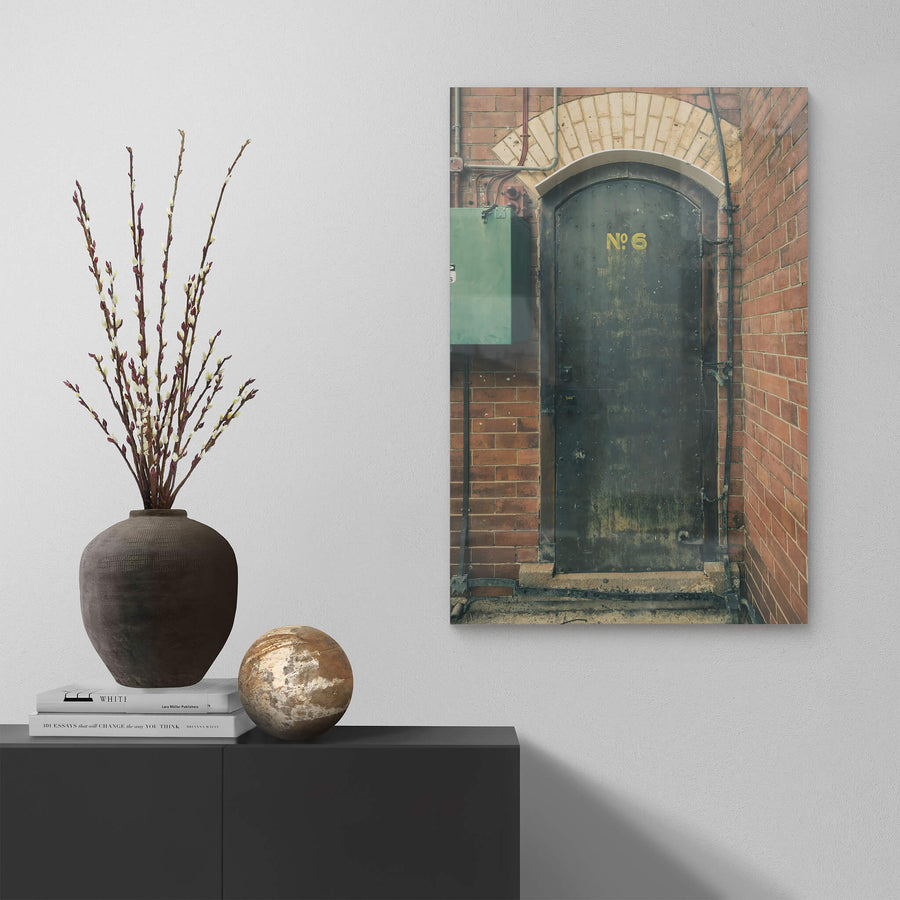
A heavy riveted iron magazine door stands partially open. Rust runs in long streaks across the surface. Paint has lifted and flaked across much of the face. The interior beyond is dark. The door frame is solid, the metal thick.
Edition
Open edition
Open edition Printed to order, no fixed quantity. Each print is hand-signed by the photographer.
Limited edition A fixed number of prints exist. Once sold, the edition closes permanently. Each print is individually numbered and signed.
$100.00 AUD
Size
Type
Colour
✓
Signed, numbered, with COA. Made to order in 5 to 10 business days (unframed). Shipped in protective packaging with edition certificate, paper-stock reference and a printed care guide.
Magazine Door 6 stands partially open, a heavy riveted iron door, its face running with rust stains and shedding paint in broad, dry flakes. The gap it offers onto the interior is narrow, the space beyond dark and silent. The door is heavy construction, built to seal a storehouse against the consequences of what was kept inside. Newington Armament Depot and Nature Reserve was established in 1897 on the Parramatta River at Homebush, following a land resumption in 1882 for the express purpose of storing gunpowder and other explosives away from the crowded facilities at Goat Island. Four construction contracts totalling £17,793 were let, with master builder John Howie erecting the original buildings. The completed facility included a powder magazine, gun cotton store, laboratory, examining room, cooperage, quarters, guard house, and associated infrastructure, all in federation face brick with cream brick trim and sandstone-capped gable ends. Management transferred from the Commonwealth Military Forces to the Royal Australian Navy on 22 July 1921, enabling the transfer of high explosive ammunition from Spectacle Island. Through the following decades the depot expanded steadily, taking in additional land and new storehouses. During the Second World War, Australian, British, and United States Navy operations ran simultaneously across four separate precincts, with wartime employment across the depot peaking at 1,141 workers in October 1945. The armaments stored here across those 102 years included gunpowder, explosive shells, cordite, fuses, depth charges, torpedoes, and rockets. Every surface, every fitting, every piece of hardware was specified to eliminate ignition risk. The iron of a magazine door, the darkness of the space beyond it, the silence now filling both, all of it carries that weight. The Royal Australian Navy conducted its last ammunition operation over the wharf on 14 December 1999, and vacated the depot that same month. Newington Armament Depot and Nature Reserve was listed on the NSW State Heritage Register on 14 January 2011.
04·FROM THE FIELD NOTES
A heavy riveted iron magazine door stands partially open. Rust runs in long streaks across the surface. Paint has lifted and flaked across much of the face.
Brett Patman
The series
Newington Armory
2019 · 21
photographs
The Newington Armory operated as a Royal Australian Navy munitions depot from 1897 until decommissioning in 1999. Sandstone and brick magazines line the Parramatta River foreshore, their walls a metre thick in places, engineered to contain the force of an accidental detonation. The site now sits within Sydney Olympic Park, its original stores largely intact, paint peeling from heavy timber doors, river light filtering through narrow vents cut into stone.
The anatomy view shows what this finish is as a physical object: paper margin, mat band, frame depth, acrylic profile. The comparison strip shows how each size sits relative to the others at true scale. Click a size or a finish to update both.