Magazine Wall

Provenance

Camera
NIKON D850
Lens
14.0-24.0 mm f/2.8
Settings
24mm · f/8.0 · 1/25 · ISO 320
Paper
Ilford Galerie Smooth Cotton Rag 310 gsm

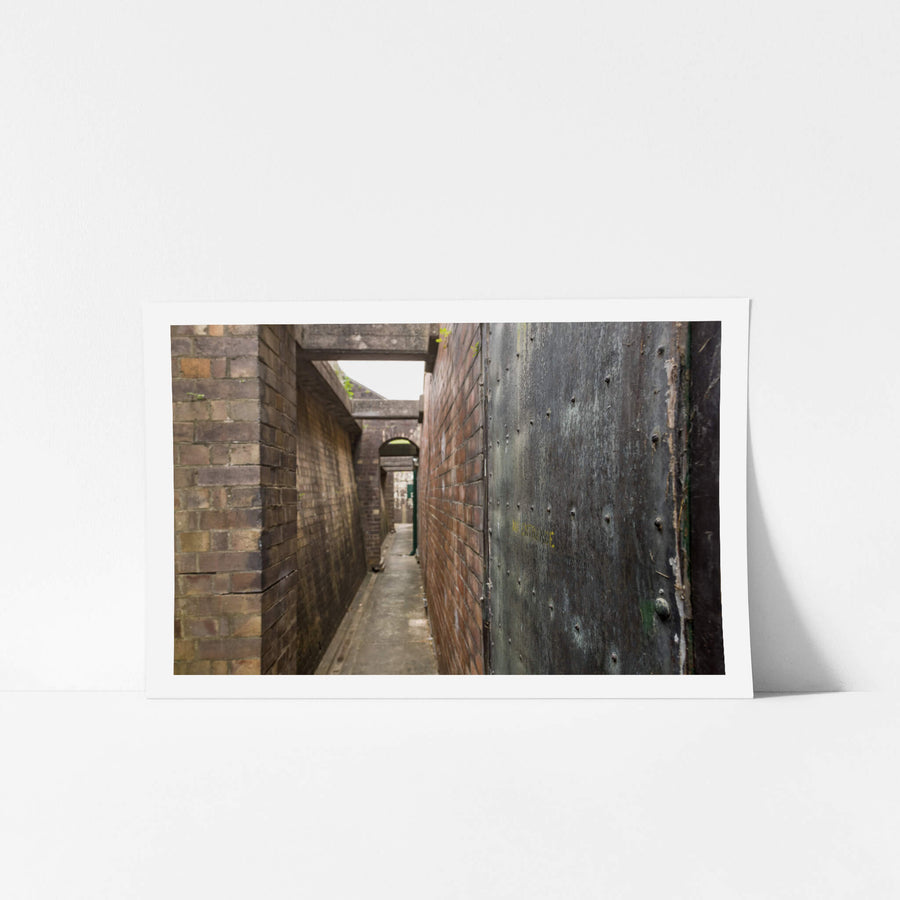
Sunlight falls across a concrete wall with heavily peeled paint, layers of colour visible where the surface has lifted and flaked. The texture is coarse and uneven. No fittings or signage are visible in this section. The wall surface records decades of repainting over the original finish.

Edition
Open edition

Open edition
Printed to order, no fixed quantity. Each print is hand-signed by the photographer.

Limited edition
A fixed number of prints exist. Once sold, the edition closes permanently. Each print is individually numbered and signed.

$100.00 AUD
Size
Type
Colour
Signed, numbered, with COA. Made to order in 5 to 10 business days (unframed). Shipped in protective packaging with edition certificate, paper-stock reference and a printed care guide.
See certificate sample →

Shipping Free shipping over $250. Ships worldwide, rates calculated at checkout.

Returns Damaged in transit? We replace it. Full policy →

Ships within 10 business days · signed & numbered

In situ
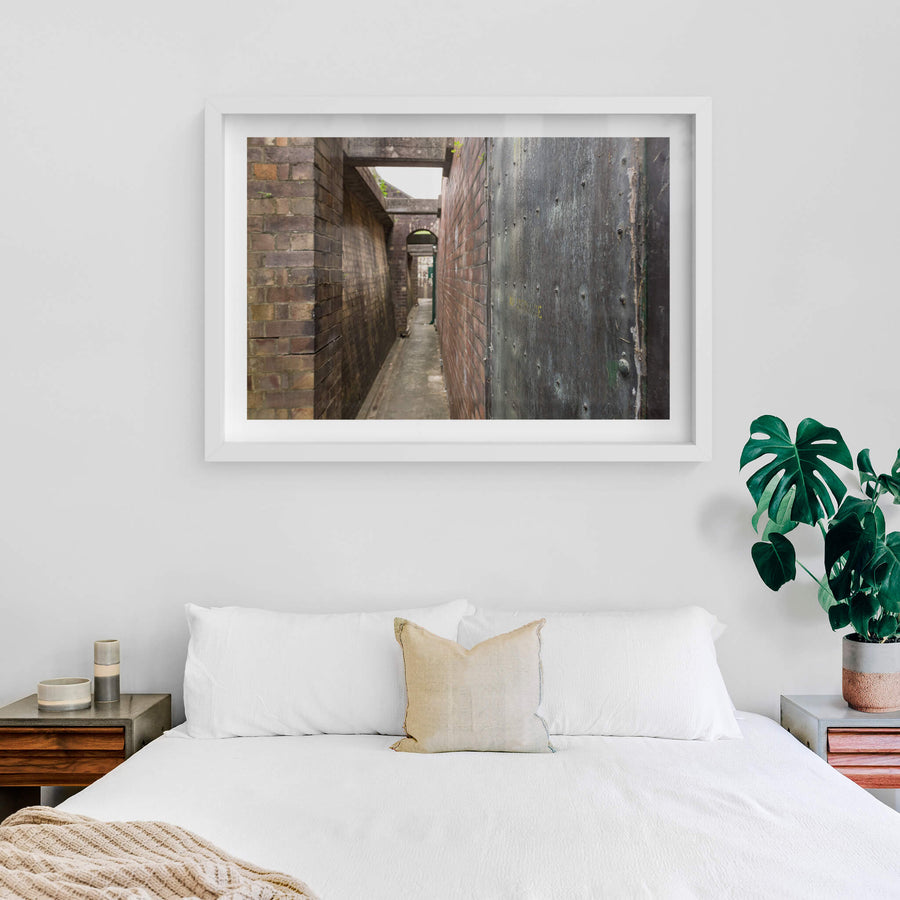
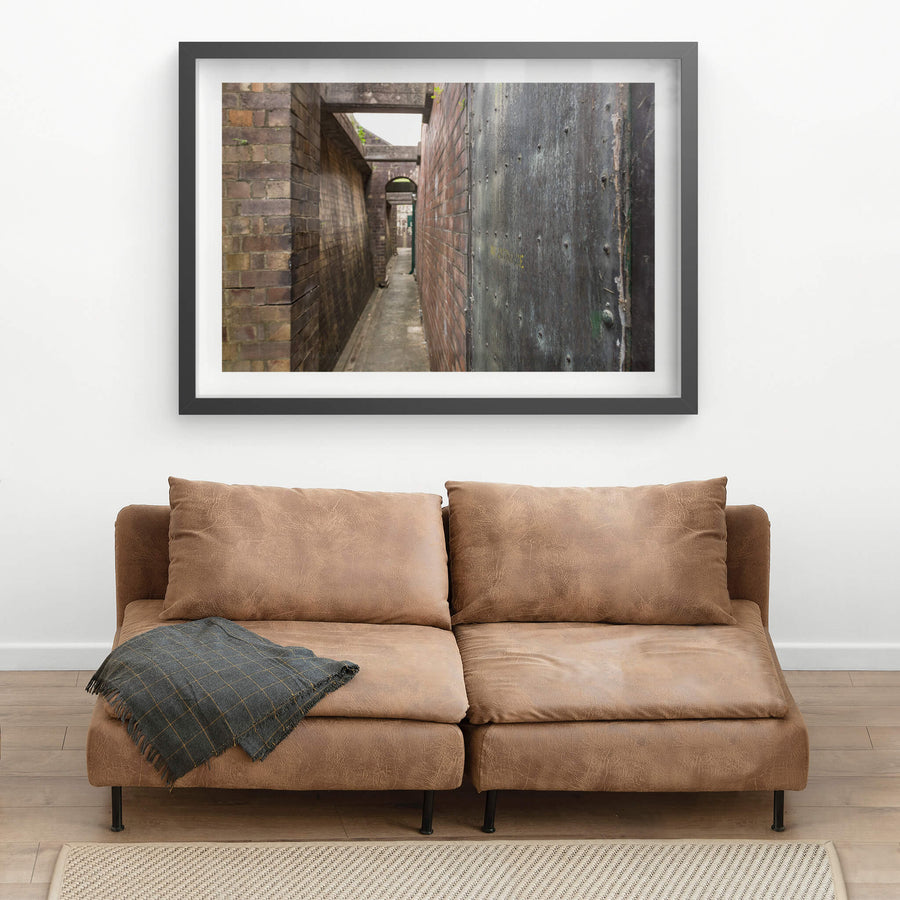
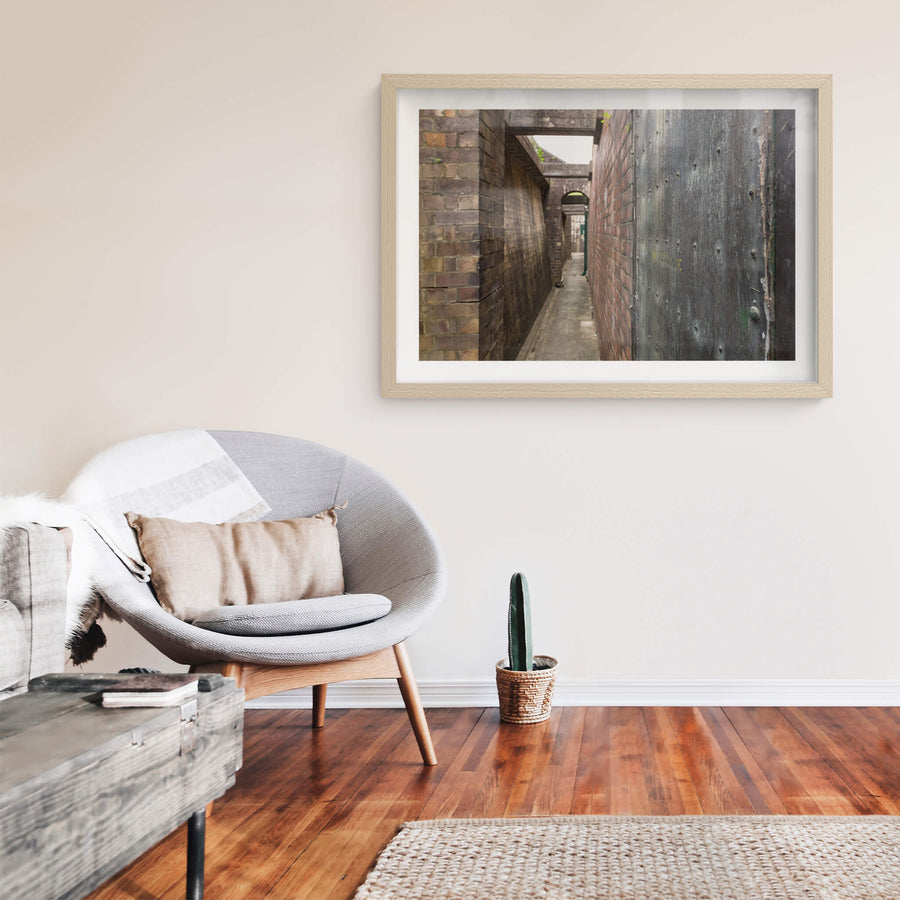
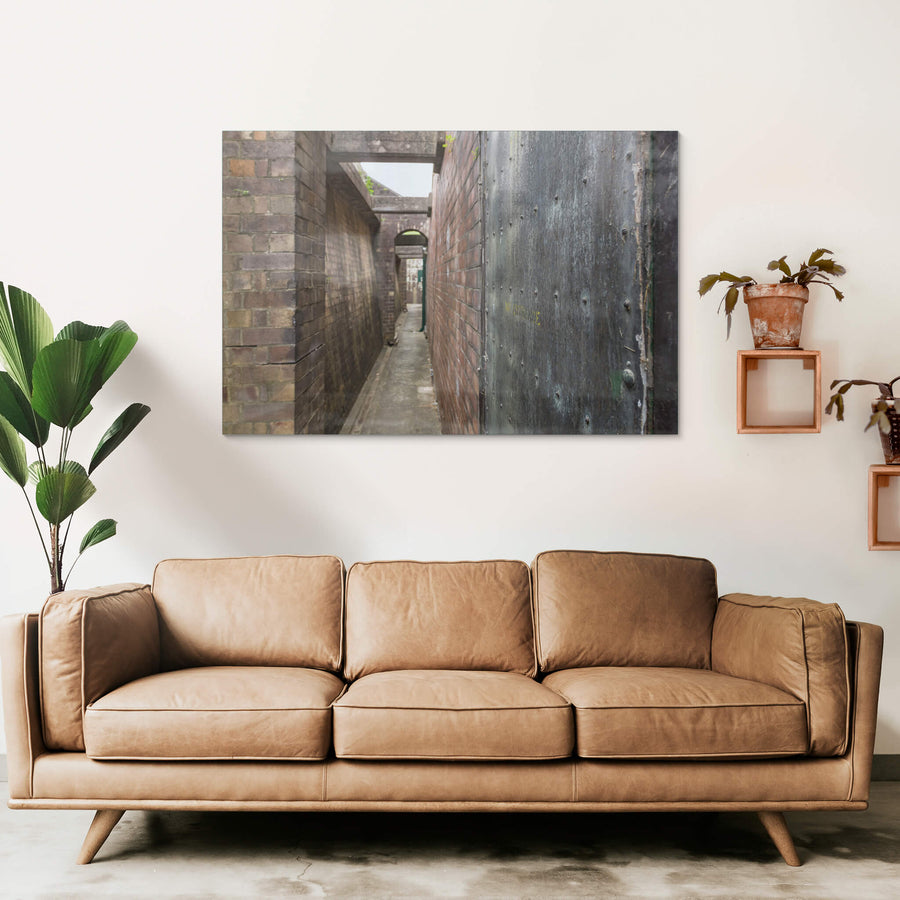
Magazine Wall at Newington Armory, unframed print displayed in situ on a wall.Magazine Wall at Newington Armory, white-framed print displayed in situ on a wall.Magazine Wall at Newington Armory, black-framed print displayed in situ on a wall.Magazine Wall at Newington Armory, raw timber-framed print displayed in situ on a wall.Magazine Wall at Newington Armory, glass print displayed in situ on a wall.
01 PROVENANCE

Print datasheet

Title
Magazine Wall
Series
Newington Armory
Catalogue
NAR-016
Process
Giclée
Captured
11 October 2019
Camera
NIKON D850
Lens
14.0-24.0 mm f/2.8
Aperture
f/8.0
Shutter
1/25 s
ISO
320
Focal length
24 mm
Paper
Ilford Galerie Smooth Cotton Rag 310 gsm
Paper size
290 × 200 mm
Location
Silverwater, New South Wales, Australia
Recognised by
Highly Commended in Multimedia at the 2016 National Trust of Australia (NSW) Heritage Awards
02 LOCATION

Silverwater, New South Wales, Australia

Map · Mapbox · OpenStreetMap

03 THE STORY

About this print

The concrete is not decorated. It was never meant to be. At Newington Armament Depot and Nature Reserve, surfaces existed to contain, to separate, to absorb, and to direct the energy of an accidental detonation safely away from whatever stood nearby. Paint went on for protection and identification. It was not maintained for appearance. The result, photographed in 2019, is a wall that reads like a cross-section of time: paint lifting from paint, decades of reapplication now separating from the surface beneath. The depot itself was established in 1897 under the NSW Military Forces, following a land resumption in 1882 for the purpose of storing gunpowder and other explosives. The original buildings, constructed in four contracts totalling £17,793 by master builder John Howie, were completed in 1898 in Federation face brick with cream trim and sandstone-capped gables. On 22 July 1921, management transferred from the Commonwealth Military Forces to the Royal Australian Navy, enabling the movement of high explosive ammunition from Spectacle Island to this site on the Parramatta River. From that point forward, the depot expanded to meet successive demands. A major construction programme ran through 1925 and 1926. Wartime pressures from 1938 onwards brought further extensions. By October 1945, the broader Royal Australian Navy Armament Depot Sydney employed 1,141 workers. The site handled gunpowder, explosive shells, cordite, fuses, depth charges, torpedoes, and rockets across its operational life, receiving, inspecting, testing, storing, and distributing armaments for Australian, British, and United States Navy vessels. The Royal Australian Navy conducted its last ammunition operation over the wharf on 14 December 1999 and vacated the depot that month. The site transferred to the NSW State Government in January 2000. The magazine wall, its paint still lifting in the sun, was listed on the NSW State Heritage Register on 14 January 2011, as part of a precinct the register identifies as unique in NSW history.

04 FROM THE FIELD NOTES

The magazine wall at Newington Armament Depot and Nature Reserve carries the evidence of its long service in the paint alone. Layers have lifted, cracked, and fallen away from the concrete beneath, each stratum a period of Royal Australian Navy tenure that stretched from 1921 to 1999. The depot stored and distributed gunpowder, explosive shells, cordite, depth charges, torpedoes, and rockets across 102 years of continuous military use. What remains is concrete and peeling paint, lit by afternoon sun, holding the record of all of it.

Brett Patman

Newington Armory

The series

Newington Armory

2019 · 21 photographs

The Newington Armory operated as a Royal Australian Navy munitions depot from 1897 until decommissioning in 1999. Sandstone and brick magazines line the Parramatta River foreshore, their walls a metre thick in places, engineered to contain the force of an accidental detonation. The site now sits within Sydney Olympic Park, its original stores largely intact, paint peeling from heavy timber doors, river light filtering through narrow vents cut into stone.

View all in this series →

05 SIZE GUIDE

Print sizes

The anatomy view shows what this finish is as a physical object: paper margin, mat band, frame depth, acrylic profile. The comparison strip shows how each size sits relative to the others at true scale. Click a size or a finish to update both.

Anatomy · true ratio
TypeSizeWidthHeight
08 BY POST · NO SPAM

Read the full story

Articles when they're published. The history behind a place. The day of a shoot. The work between prints. No marketing, no schedule.

You're subscribed.