Magpie

Provenance

Camera
NIKON D850
Lens
70.0-200.0 mm f/2.8
Settings
185mm · f/8.0 · 1/250 · ISO 100
Paper
Ilford Galerie Smooth Cotton Rag 310 gsm

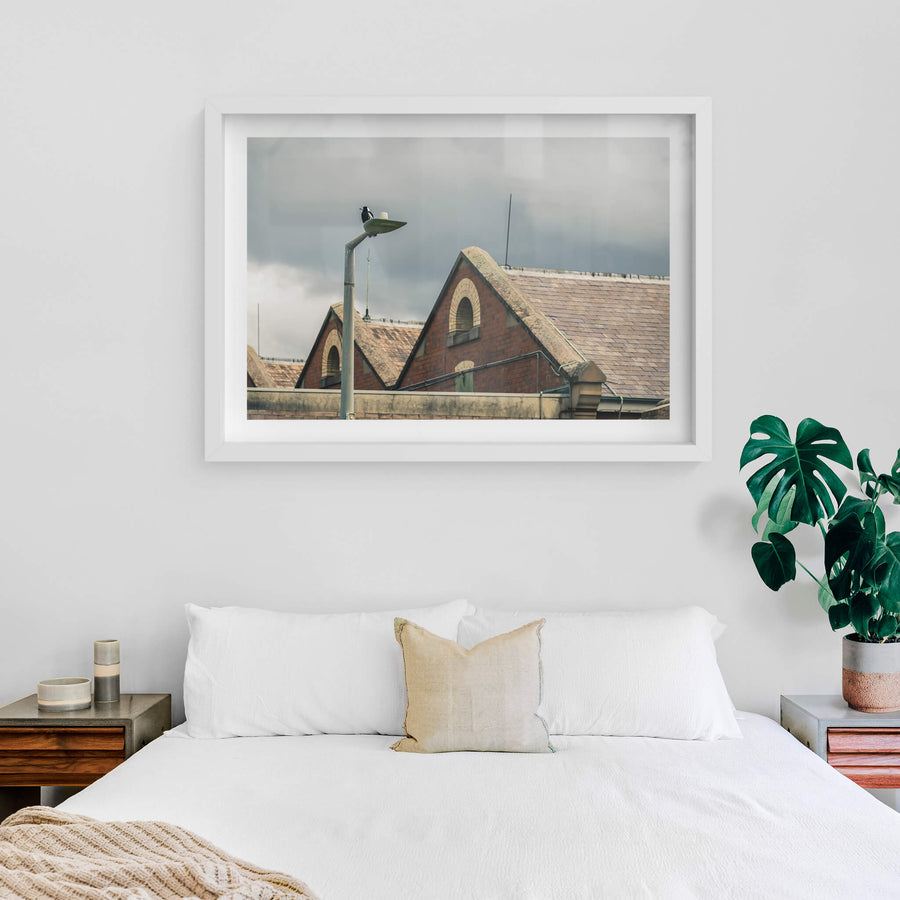
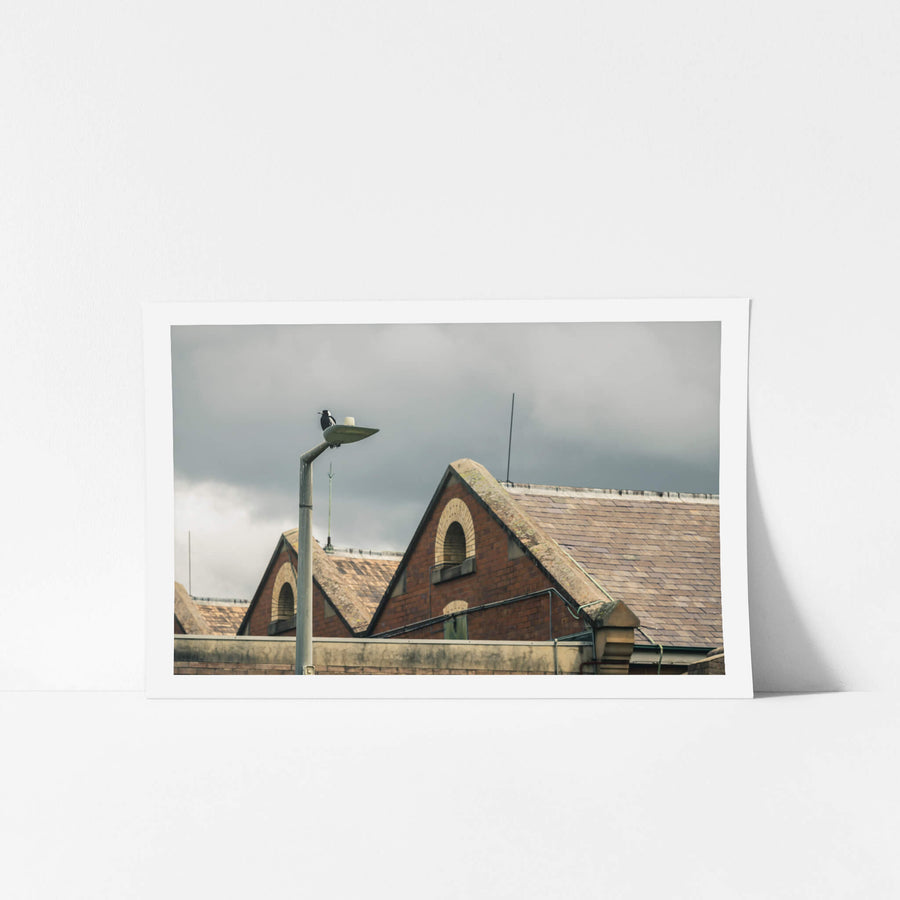
A single magpie stands on weathered concrete in the foreground. The surrounding grounds are overgrown, with vegetation encroaching across the heritage site. The bird's dark eyes face outward. Natural light falls across the scene with no artificial illumination visible.

Edition
Open edition

Open edition
Printed to order, no fixed quantity. Each print is hand-signed by the photographer.

Limited edition
A fixed number of prints exist. Once sold, the edition closes permanently. Each print is individually numbered and signed.

$100.00 AUD
Size
Type
Colour
Signed, numbered, with COA. Made to order in 5 to 10 business days (unframed). Shipped in protective packaging with edition certificate, paper-stock reference and a printed care guide.
See certificate sample →

Shipping Free shipping over $250. Ships worldwide, rates calculated at checkout.

Returns Damaged in transit? We replace it. Full policy →

Ships within 10 business days · signed & numbered

In situ
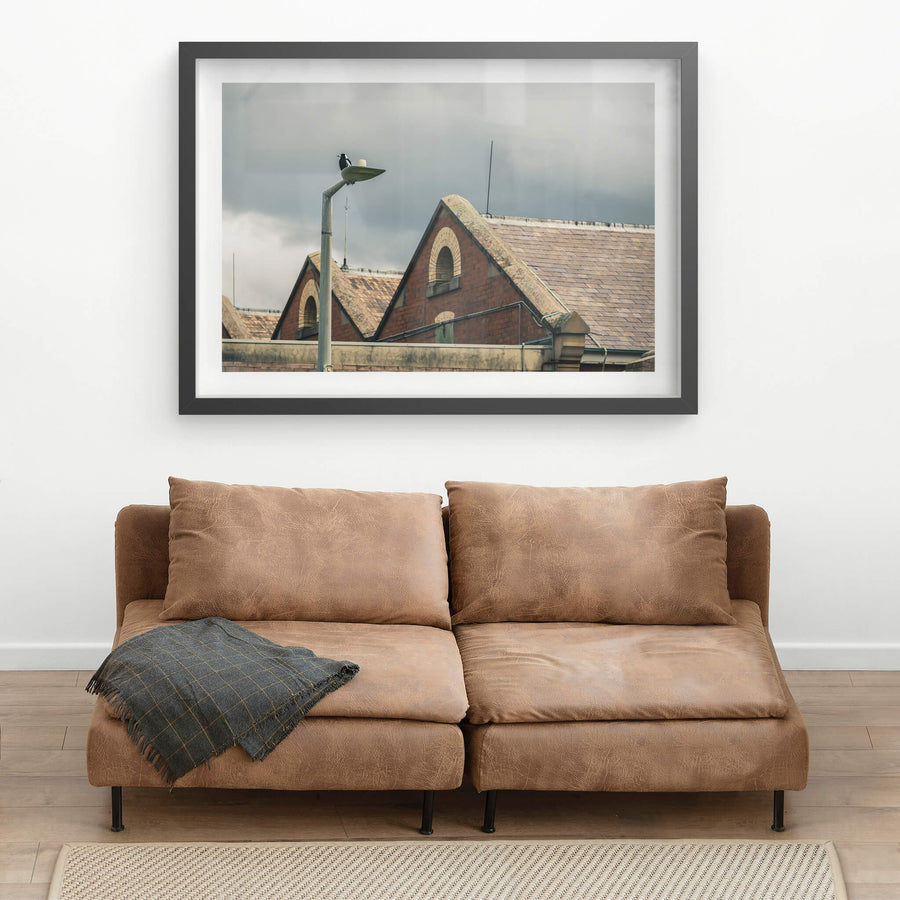
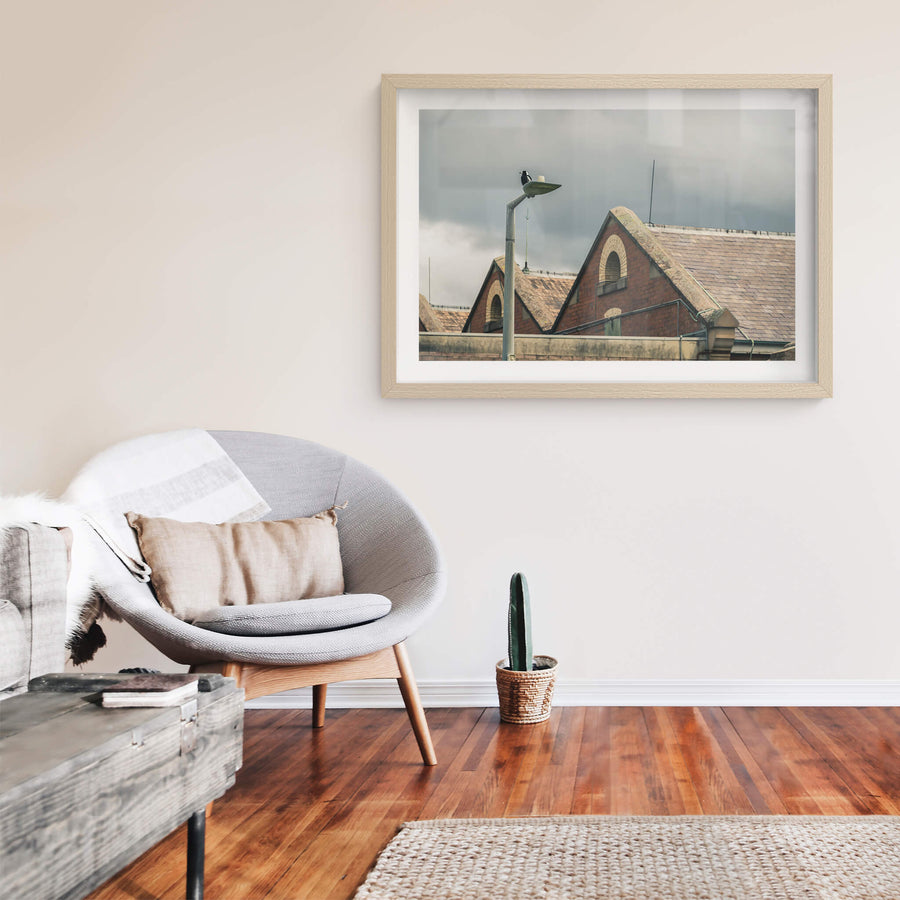
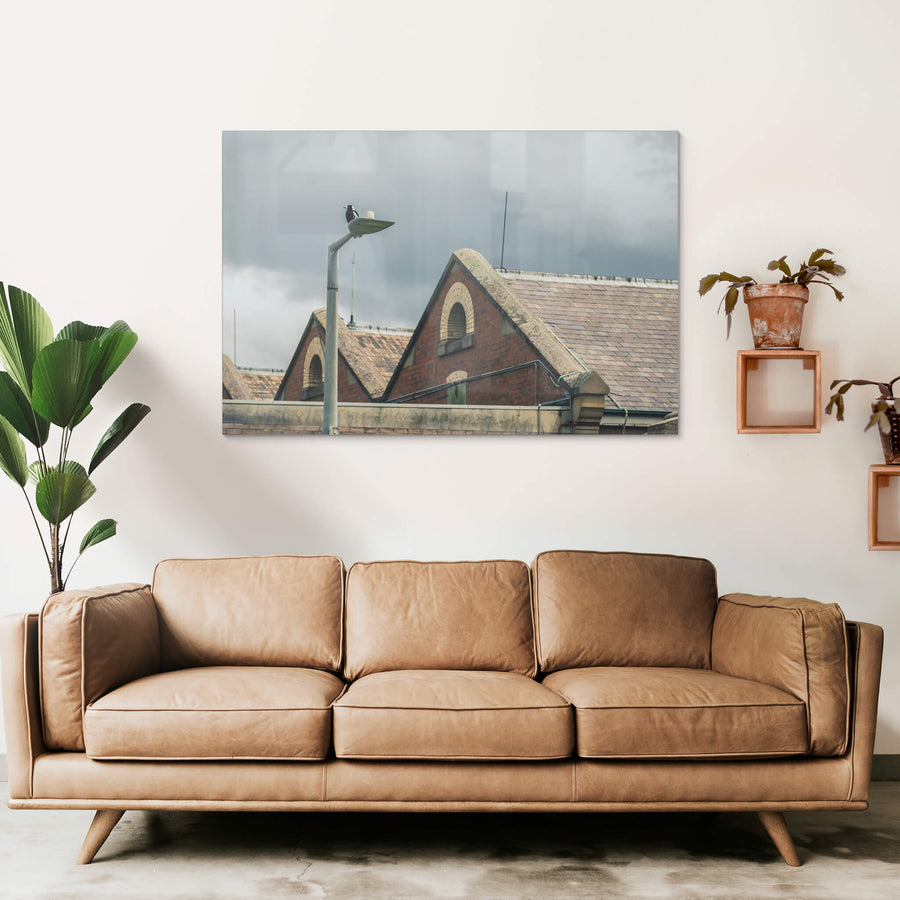
Magpie at Newington Armory, unframed print displayed in situ on a wall.Magpie at Newington Armory, white-framed print displayed in situ on a wall.Magpie at Newington Armory, black-framed print displayed in situ on a wall.Magpie at Newington Armory, raw timber-framed print displayed in situ on a wall.Magpie at Newington Armory, glass print displayed in situ on a wall.
01 PROVENANCE

Print datasheet

Title
Magpie
Series
Newington Armory
Catalogue
NAR-018
Process
Giclée
Captured
11 October 2019
Camera
NIKON D850
Lens
70.0-200.0 mm f/2.8
Aperture
f/8.0
Shutter
1/250 s
ISO
100
Focal length
185 mm
Paper
Ilford Galerie Smooth Cotton Rag 310 gsm
Paper size
290 × 200 mm
Location
Silverwater, New South Wales, Australia
Recognised by
Highly Commended in Multimedia at the 2016 National Trust of Australia (NSW) Heritage Awards
02 LOCATION

Silverwater, New South Wales, Australia

Map · Mapbox · OpenStreetMap

03 THE STORY

About this print

A magpie stands on weathered concrete at Newington Armament Depot and Nature Reserve, looking out across grounds that have been slowly returning to bush since the Royal Australian Navy vacated in December 1999. The bird is entirely at ease. It has no reason not to be. The depot was established in 1897, when the NSW Military Forces called tenders for a powder magazine, laboratory, gun cotton store, and associated buildings on the Parramatta River at Homebush. The original structures, completed in 1898 by master builder John Howie, were Federation face brick with cream brick trim, sandstone-capped gable ends, and polychromatic brickwork on three parapeted gables. The 1897 gunpowder magazine measured 24.4 metres square, its triple-gabled slate roof covering three barrel-vaulted store rooms insulated from any naked flame by a system of double walls and interior lamp passages. Earth banks surrounded the buildings to direct any accidental blast upward rather than outward. The site had been designed, at every level, around the possibility of catastrophic accident. Management transferred from the Commonwealth Military Forces to the Royal Australian Navy on 22 July 1921, and the depot grew steadily through pre-war expansion and wartime demand. By October 1945 the workforce across the Royal Australian Naval Armament Depot totalled 1,141. The site reached its greatest extent of approximately 259 hectares in 1950. The last ammunition operation over the wharf took place on 14 December 1999. Transfer to the NSW State Government was completed in January 2000. The 48-hectare nature reserve was gazetted on 14 September 2000. Today, 144 bird species have been recorded across the grounds. The concrete the magpie stands on is weathered and quiet. The bird does not look particularly impressed by any of this history. That is, in its way, part of the record too.

04 FROM THE FIELD NOTES

A magpie stands on weathered concrete at Newington Armament Depot and Nature Reserve, the former Royal Australian Navy facility on the Parramatta River that handled everything from gunpowder to torpedoes across 102 years of continuous military use. The depot was transferred to the NSW State Government in January 2000, and the 48-hectare nature reserve component was gazetted later that year. With the narrow-gauge railway tours suspended and restricted access still in place across several precincts, the grounds now belong largely to the site's 144 recorded bird species.

Brett Patman

Newington Armory

The series

Newington Armory

2019 · 21 photographs

The Newington Armory operated as a Royal Australian Navy munitions depot from 1897 until decommissioning in 1999. Sandstone and brick magazines line the Parramatta River foreshore, their walls a metre thick in places, engineered to contain the force of an accidental detonation. The site now sits within Sydney Olympic Park, its original stores largely intact, paint peeling from heavy timber doors, river light filtering through narrow vents cut into stone.

View all in this series →

05 SIZE GUIDE

Print sizes

The anatomy view shows what this finish is as a physical object: paper margin, mat band, frame depth, acrylic profile. The comparison strip shows how each size sits relative to the others at true scale. Click a size or a finish to update both.

Anatomy · true ratio
TypeSizeWidthHeight
08 BY POST · NO SPAM

Read the full story

Articles when they're published. The history behind a place. The day of a shoot. The work between prints. No marketing, no schedule.

You're subscribed.