
Bulk Liquids Berth
Provenance
- Camera
- NIKON Z 7
- Lens
- 70.0-200.0 mm f/2.8
- Settings
- 150mm · f/11.0 · 1060s · ISO 100
- Paper
- Ilford Galerie Smooth Cotton Rag 310 gsm
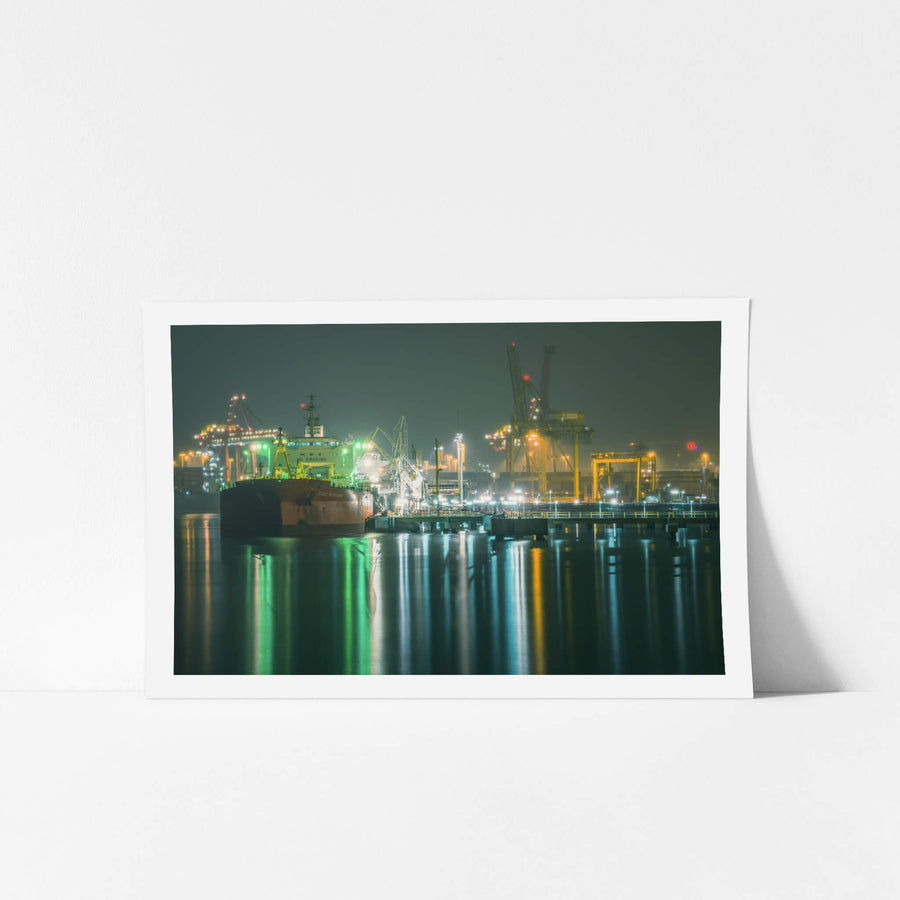
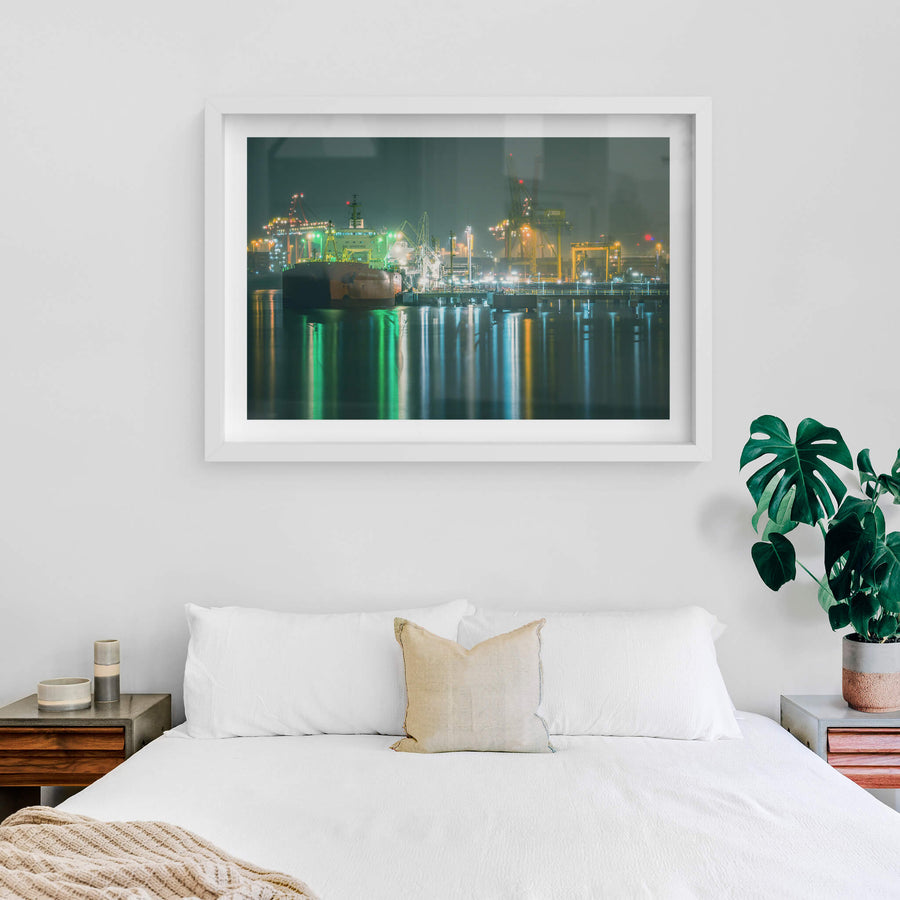
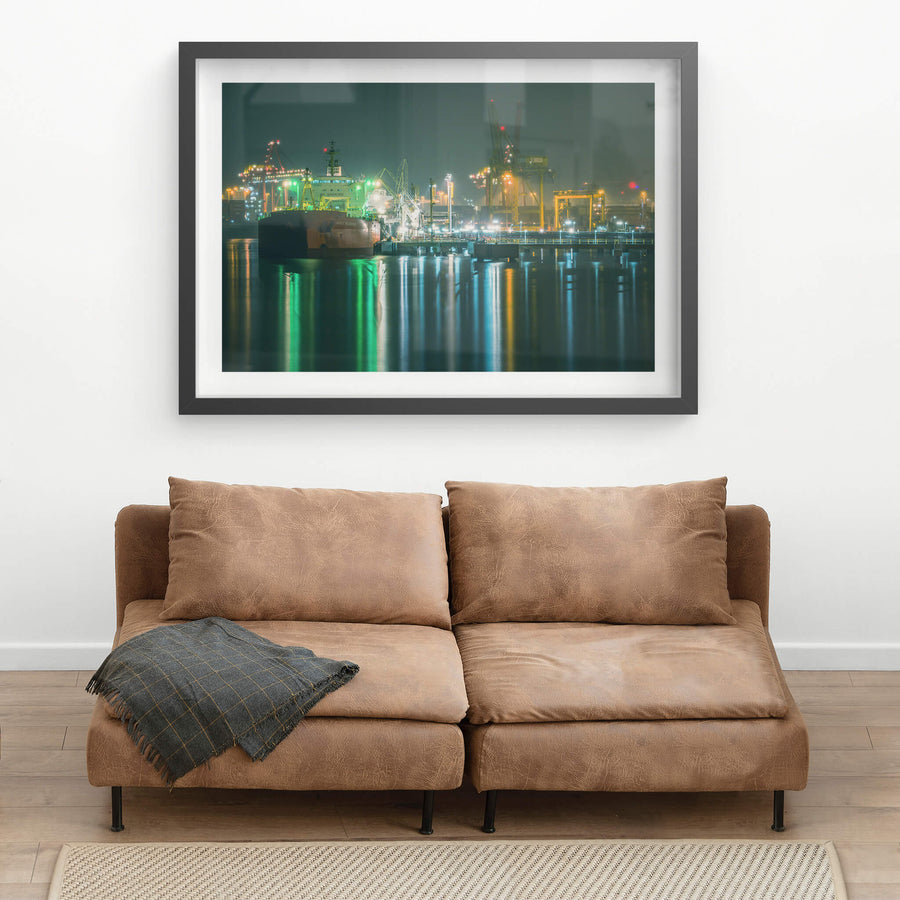
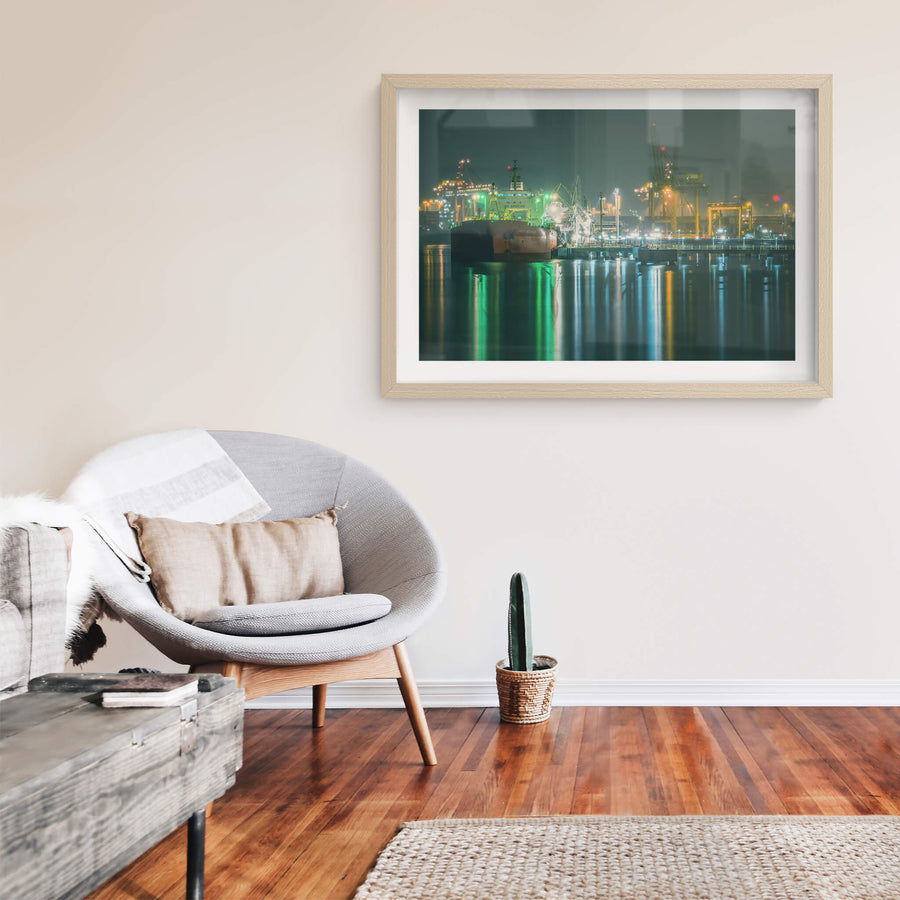
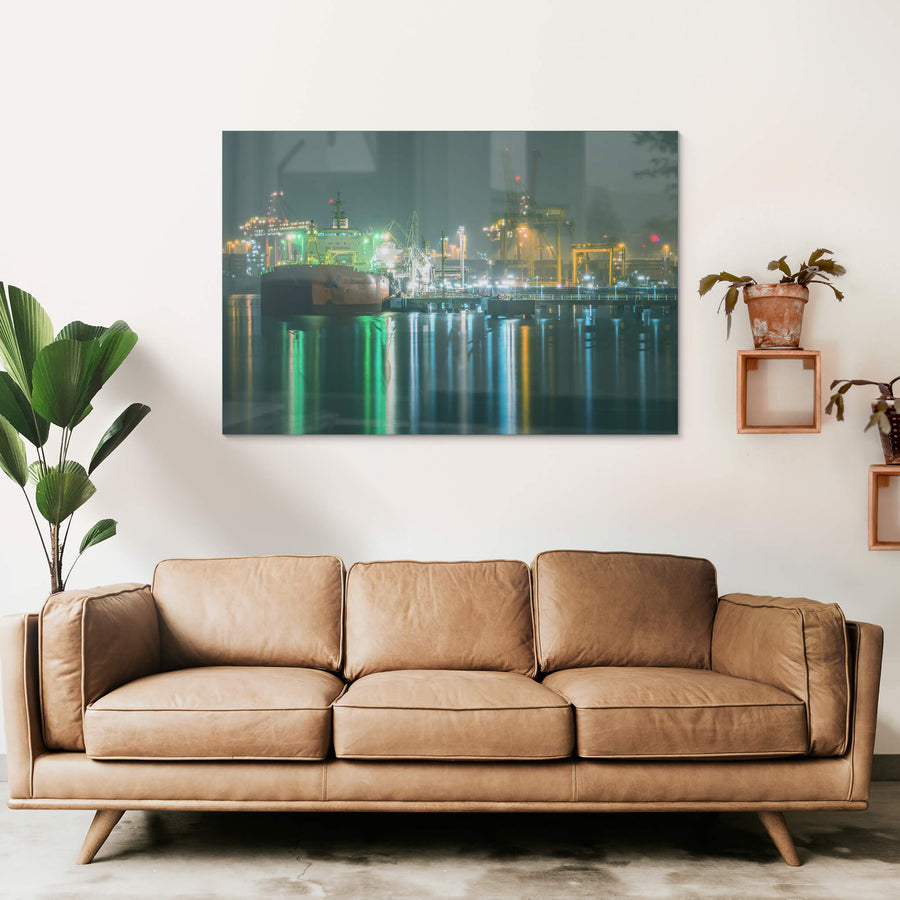
The name Eagle Melbourne runs along the hull of a large cargo vessel docked at Port Botany, its green-lit superstructure throwing long reflections across dark water. A red and white striped crane stands to the left among the yellow port cranes. The still surface of the harbour mirrors the spread of green, yellow and white lights from the surrounding infrastructure.
Open edition
Printed to order, no fixed quantity. Each print is hand-signed by the photographer.
Limited edition
A fixed number of prints exist. Once sold, the edition closes permanently. Each print is individually numbered and signed.
Shipping Free shipping over $250. Ships worldwide, rates calculated at checkout.
Returns Damaged in transit? We replace it. Full policy →
Ships within 10 business days · signed & numbered
In situ
Print datasheet
- Title
- Bulk Liquids Berth
- Series
- Port Botany
- Catalogue
- PBO-001
- Process
- Giclée
- Captured
- 6 July 2019
- Camera
- NIKON Z 7
- Lens
- 70.0-200.0 mm f/2.8
- Aperture
- f/11.0
- Shutter
- 1060s s
- ISO
- 100
- Focal length
- 150 mm
- Paper
- Ilford Galerie Smooth Cotton Rag 310 gsm
- Paper size
- 297 × 210 mm
- Location
- Botany, New South Wales, Australia
- Authenticity
- C2PA verified provenance →
- Recognised by
- Highly Commended in Multimedia at the 2016 National Trust of Australia (NSW) Heritage Awards
Botany, New South Wales, Australia
Map · Mapbox · OpenStreetMap
About this print
At the western end of Port Botany, the Bulk Liquids Berth puts its purpose plainly on display. Gantries reach over the water and heavy pipework runs from shore to berth face, built to transfer bulk chemicals, fuels, and petroleum products between tankers and the terminal's storage infrastructure. Port Botany operates two bulk liquid berths. Together they handle more than 5.5 million kilolitres per year, processing 100 per cent of NSW's bitumen supply, 90 per cent of its bulk chemicals, and around 30 per cent of its refined petroleum.
Brett Patman

The series
Port Botany
Port Botany sits on the northern shore of Botany Bay, immediately east of Sydney Airport, and is Sydney's primary deepwater container port. Container terminal infrastructure was first developed in the early 1970s, with major expansion completed between 2007 and 2012. Since May 2013 the port has been operated under a 99-year lease to NSW Ports. The Lost Collective Port Botany set is a small two-photo collection from the broader port precinct.
Print sizes
The anatomy view shows what this finish is as a physical object: paper margin, mat band, frame depth, acrylic profile. The comparison strip shows how each size sits relative to the others at true scale. Click a size or a finish to update both.
| Type | Size | Width | Height |
|---|
