
Kitchen
Provenance
- Camera
- NIKON D7000
- Lens
- AF-S Zoom-Nikkor 24-70mm f/2.8G ED
- Settings
- 36mm · f/4.0 · 0.4s · ISO 100
- Paper
- Ilford Galerie Smooth Cotton Rag 310 gsm
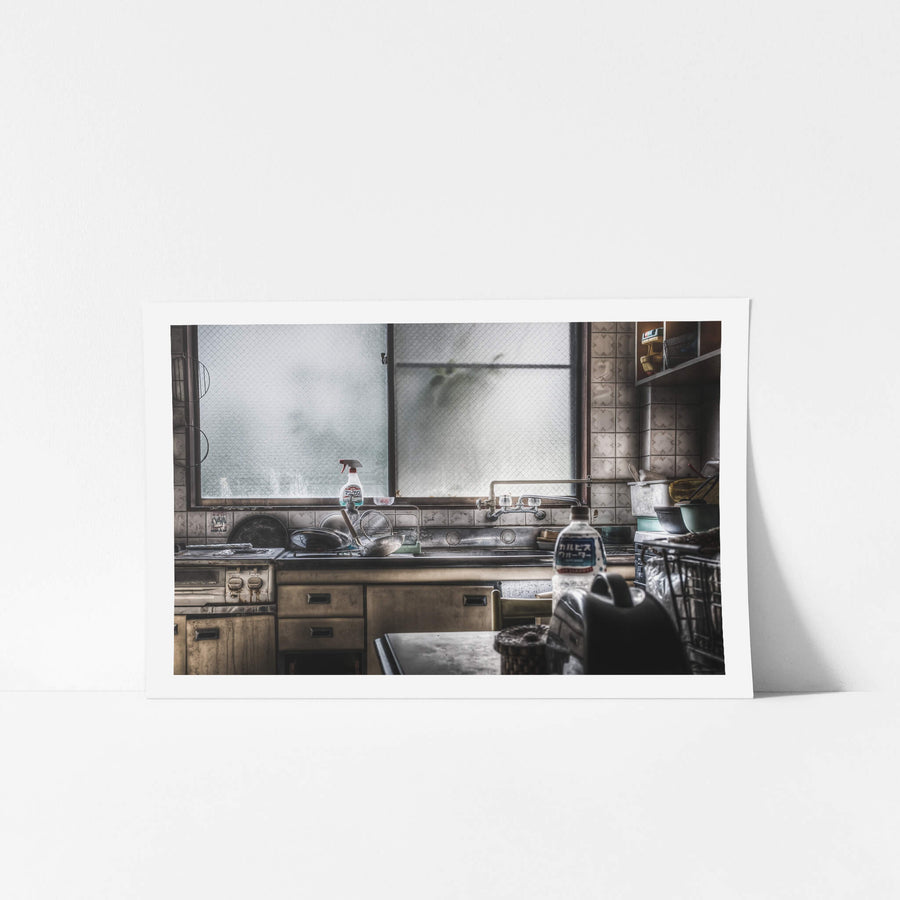
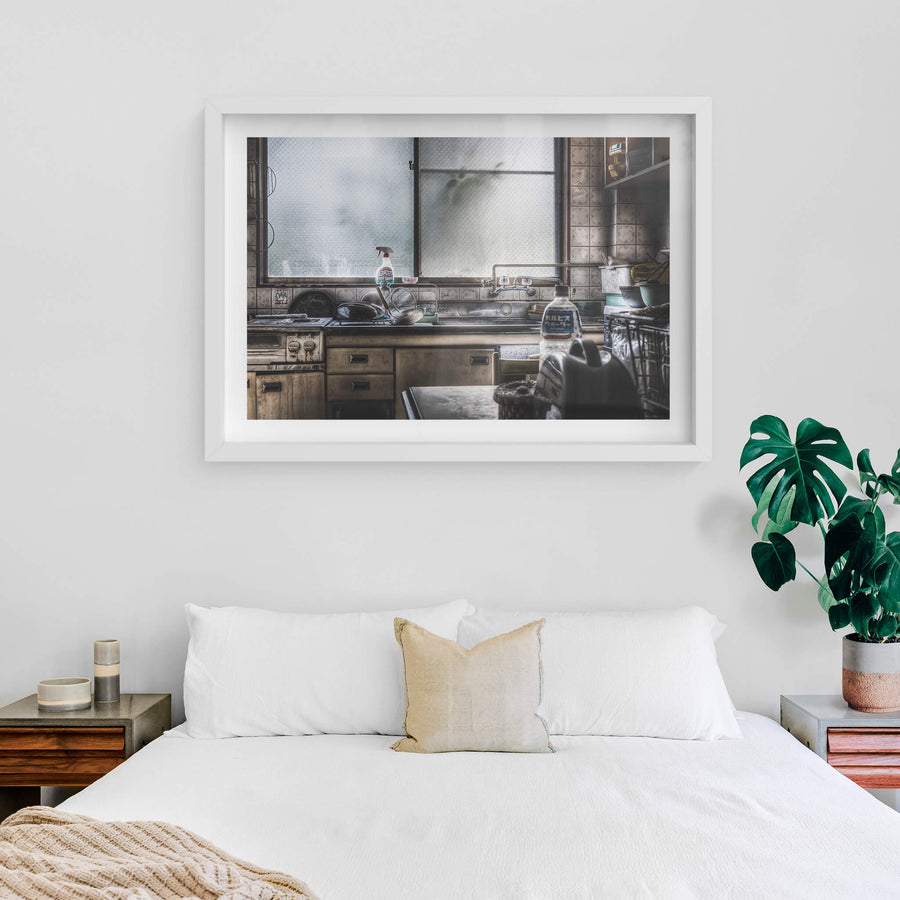
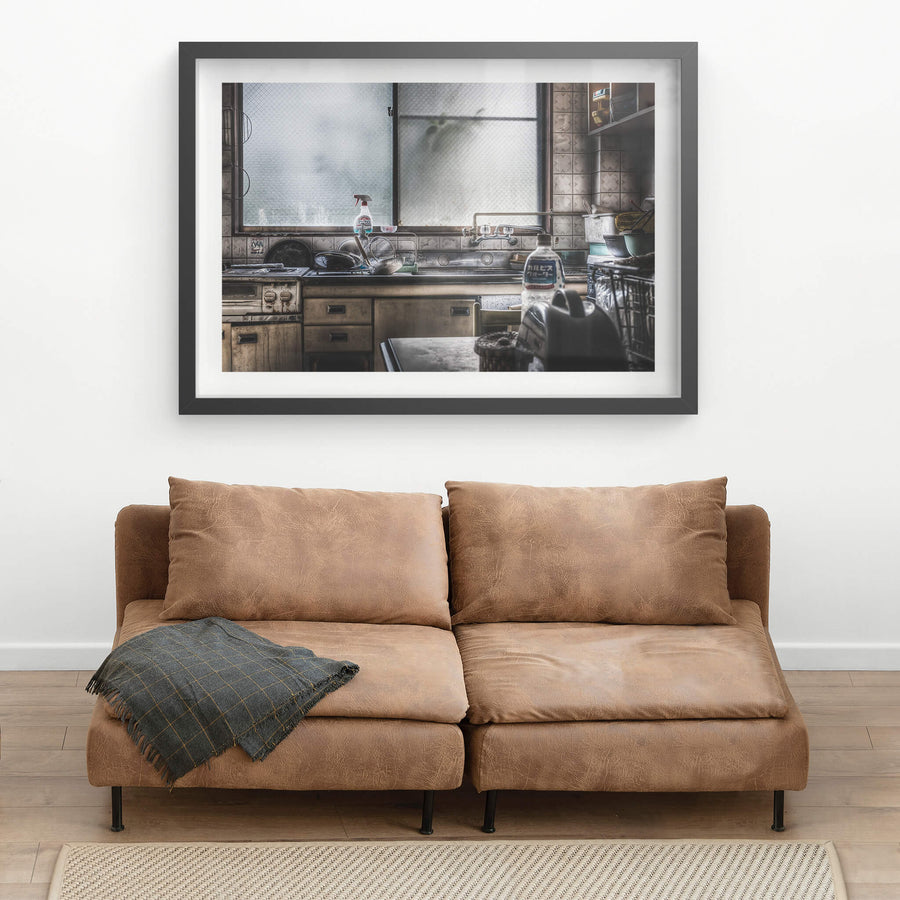
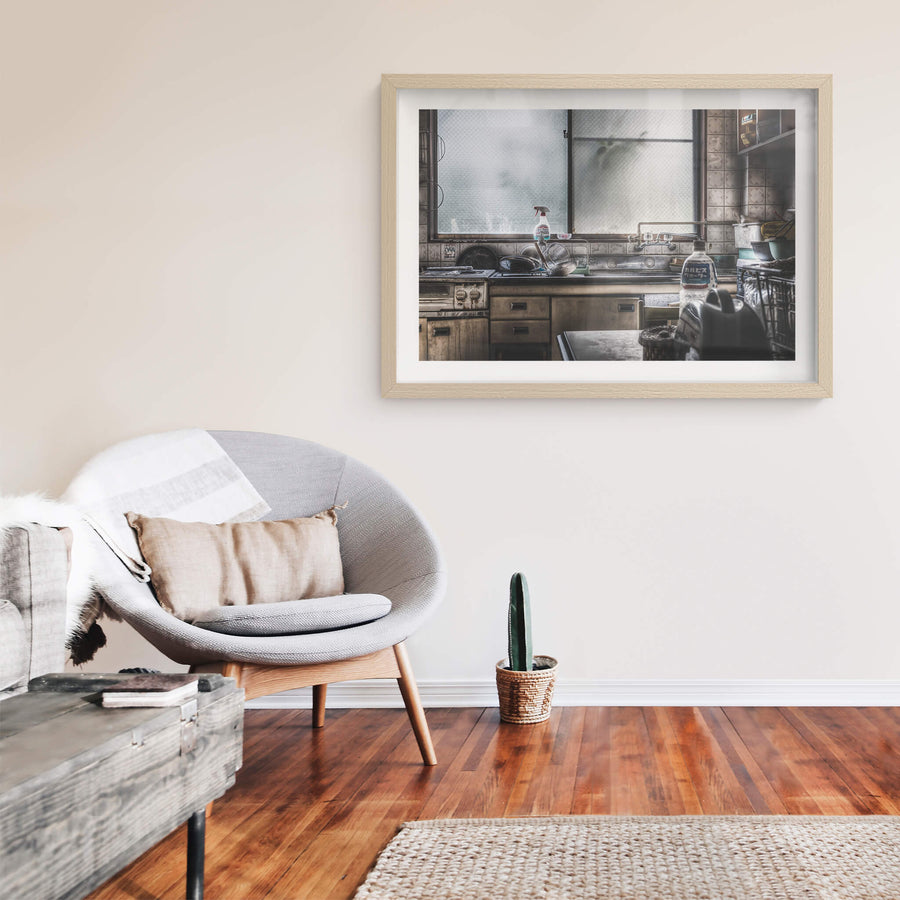
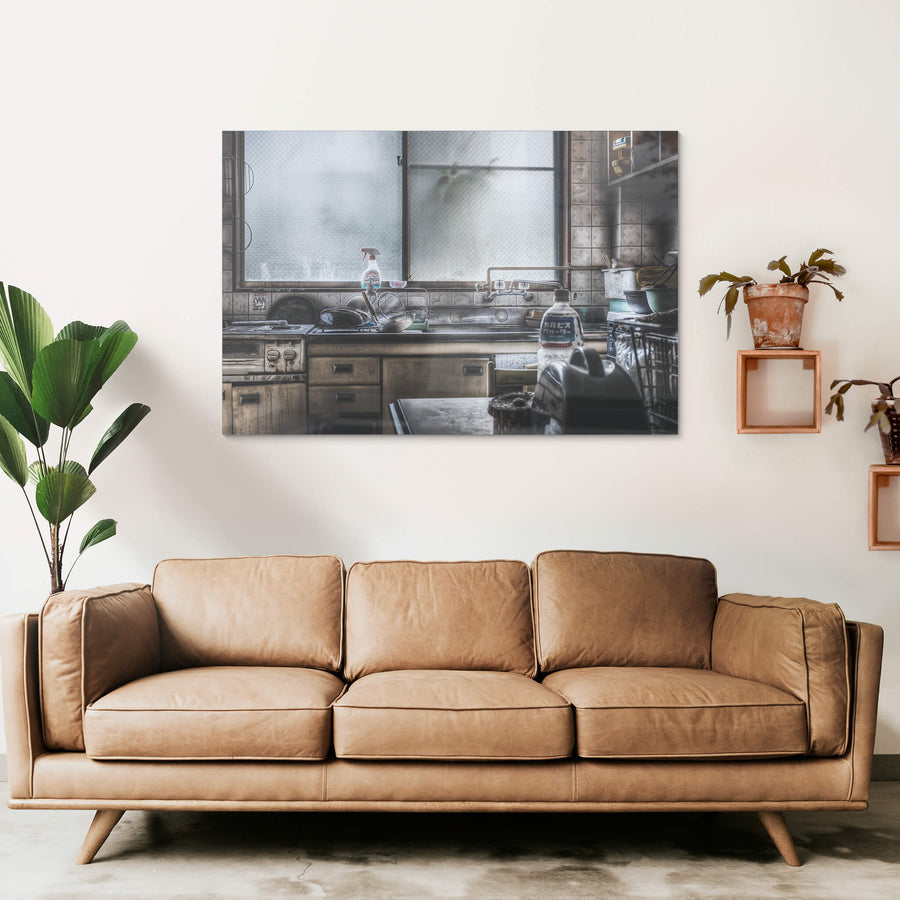
Cookware and a spray bottle sit in the sink below a frosted diamond-grid window in a kitchen at Seika Dormitory, left where they were when a fire displaced the last residents in July 2007. Ornate ceramic tiles line the wall above the bench, dulled by grease and years of standing damp. A drink bottle stands on the table in the foreground, and the gas stove beside it still carries its original control knobs.
Open edition
Printed to order, no fixed quantity. Each print is hand-signed by the photographer.
Limited edition
A fixed number of prints exist. Once sold, the edition closes permanently. Each print is individually numbered and signed.
Shipping Free shipping over $250. Ships worldwide, rates calculated at checkout.
Returns Damaged in transit? We replace it. Full policy →
Ships within 10 business days · signed & numbered
In situ
Print datasheet
- Title
- Kitchen
- Series
- Seika Dormitory
- Catalogue
- SDO-006
- Process
- Giclée
- Captured
- 31 January 2012
- Camera
- NIKON D7000
- Lens
- AF-S Zoom-Nikkor 24-70mm f/2.8G ED
- Aperture
- f/4.0
- Shutter
- 0.4s s
- ISO
- 100
- Focal length
- 36 mm
- Paper
- Ilford Galerie Smooth Cotton Rag 310 gsm
- Paper size
- 297 × 210 mm
- Location
- Bunkyo, Tokyo, Japan
- Authenticity
- C2PA verified provenance →
- Recognised by
- Highly Commended in Multimedia at the 2016 National Trust of Australia (NSW) Heritage Awards
Bunkyo, Tokyo, Japan
Map · Mapbox · OpenStreetMap
About this print
The kitchen at Seika Dormitory in Kohinata, Bunkyo-ku, Tokyo holds the evidence of a life interrupted rather than gradually wound down. Rusting pots and pans remain on the stove where they were left after the July 2007 fire displaced the building's final residents. Built between 1924 and 1925 by the Gakuso Foundation on 3,100 square metres of state-owned land, Seika Dormitory had housed Taiwanese students in Tokyo for decades before becoming home to a mixed community of Taiwanese, Chinese and Japanese residents. By 2012, light was coming through broken windows onto a kitchen no one had returned to.
Brett Patman

The series
Seika Dormitory
Seika Dormitory was a Tokyo student dormitory documented in the haikyo community for the unusual volume of personal belongings left behind by its tenants. A fire at the building killed two residents and injured others, and the dormitory stood unoccupied in the years that followed. The building was demolished in 2013. The interior, while it stood, contained enough intact personal items to reconstruct each tenant's daily life.
Print sizes
The anatomy view shows what this finish is as a physical object: paper margin, mat band, frame depth, acrylic profile. The comparison strip shows how each size sits relative to the others at true scale. Click a size or a finish to update both.
| Type | Size | Width | Height |
|---|


