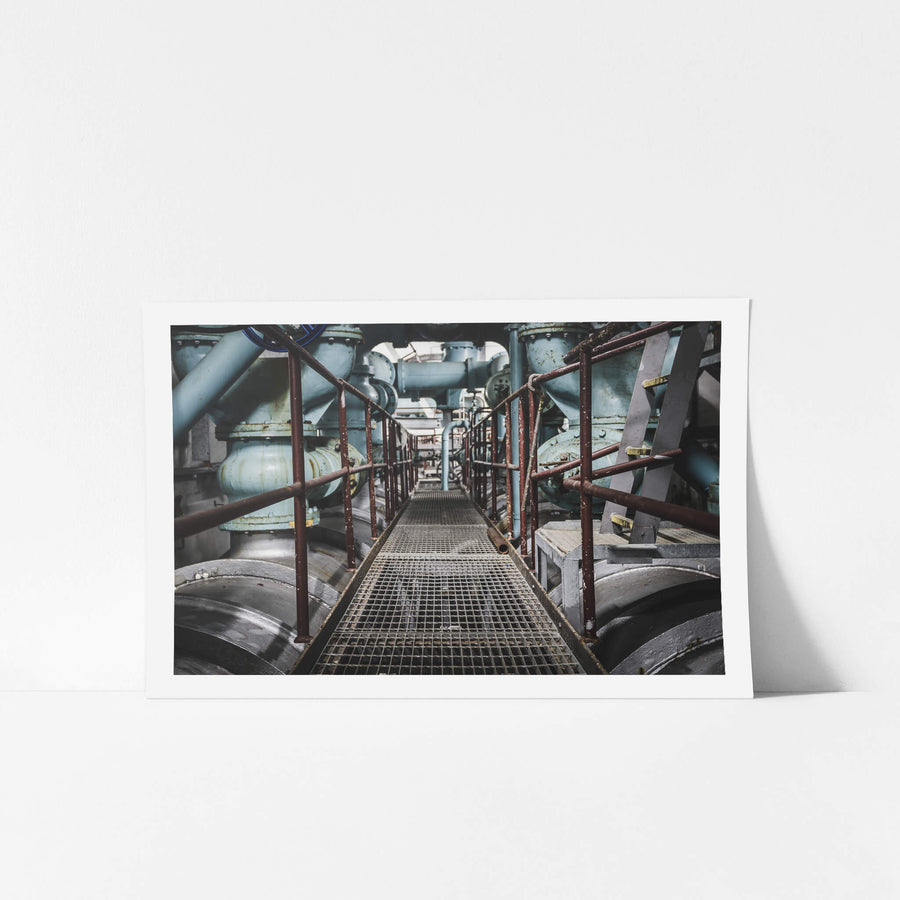
Pump Hall Basement Catwalk

Provenance

Camera
NIKON D7000
Lens
24.0-70.0 mm f/2.8
Settings
36mm · f/3.2 · 2s · ISO 100
Paper
Ilford Galerie Smooth Cotton Rag 310 gsm

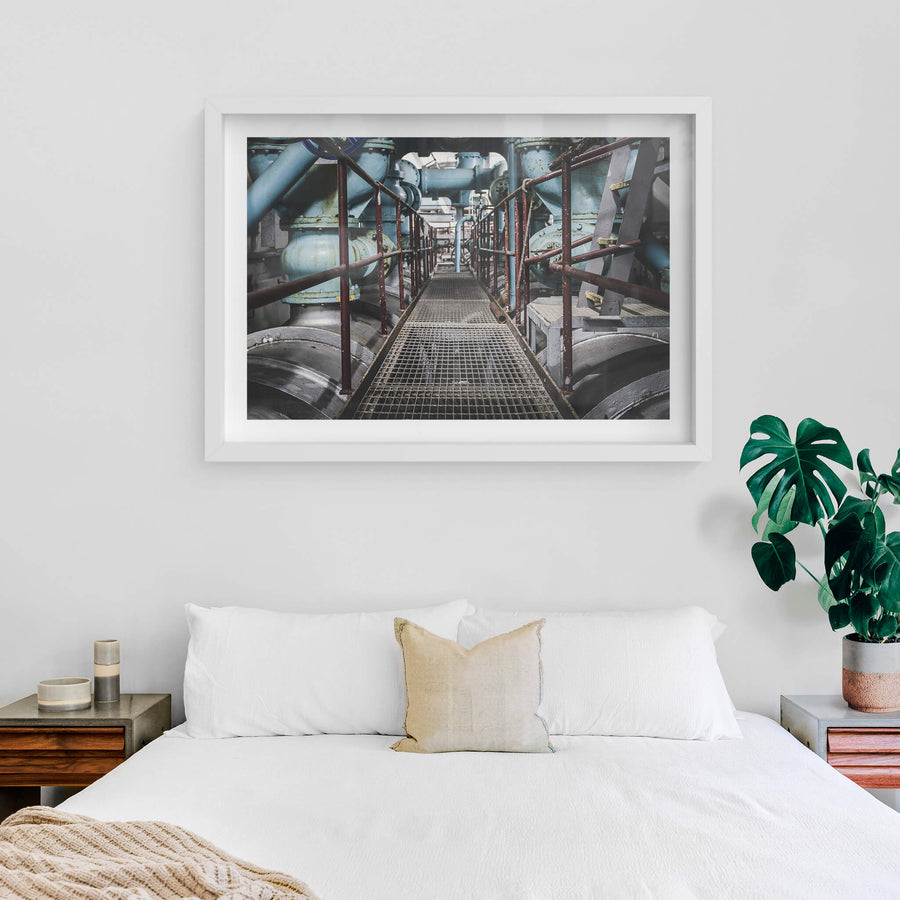
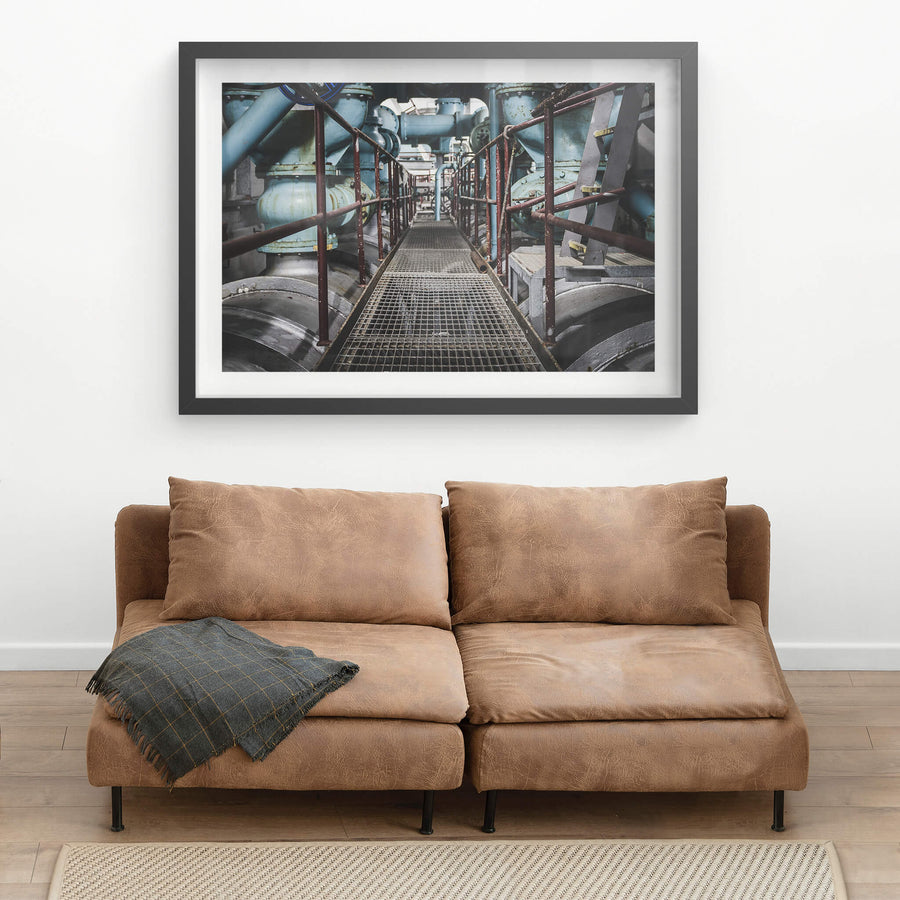
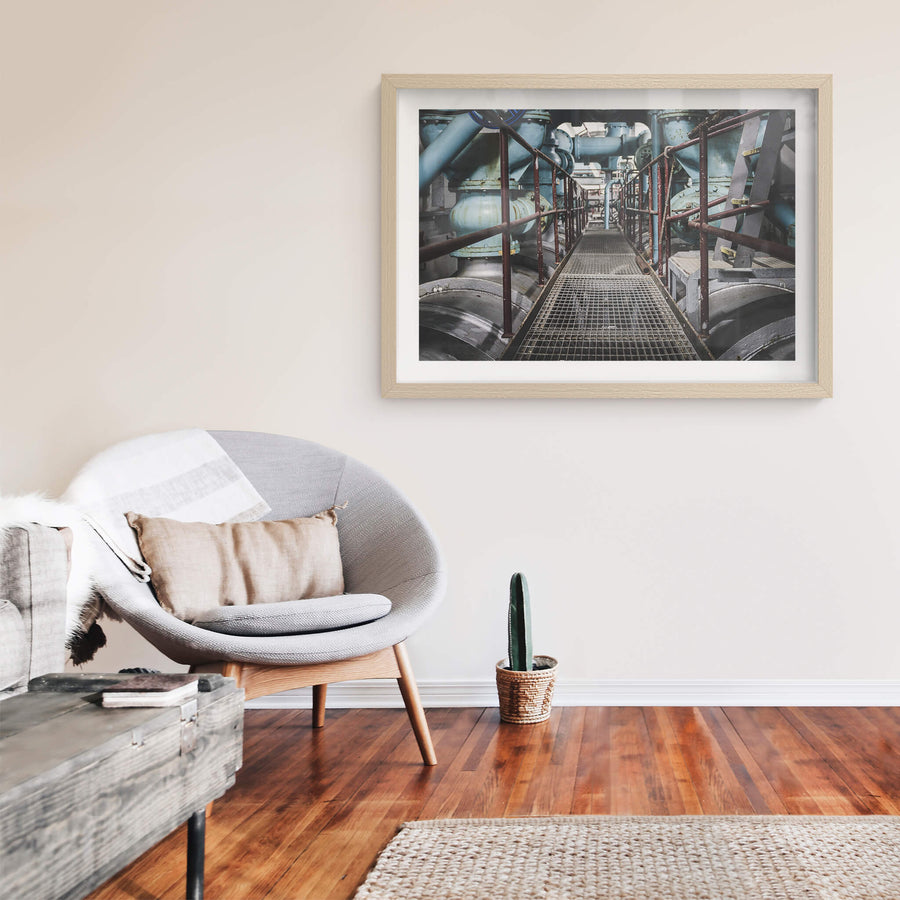
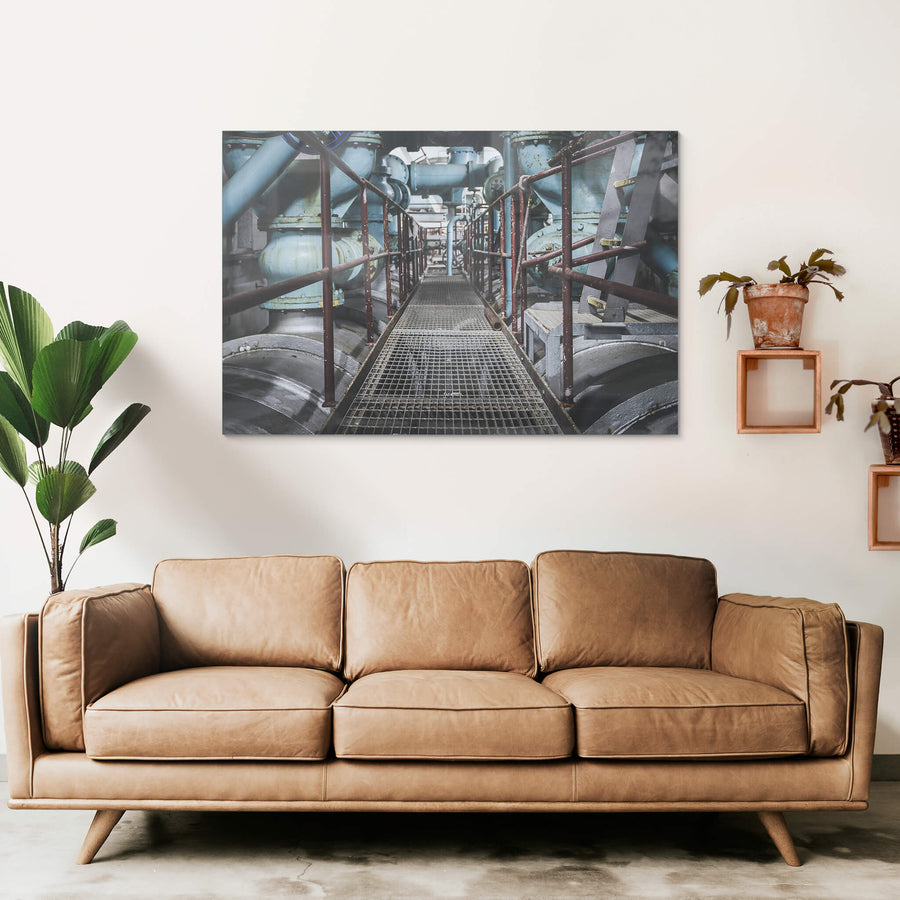
A metal catwalk spans the cavernous basement of the pump hall. Below the walkway, industrial machinery stands silent, surfaces coated in rust and dust. Light enters from above, falling across the machinery and the floor below. Nothing has been cleared or moved.

Edition
Open edition

Open edition
Printed to order, no fixed quantity. Each print is hand-signed by the photographer.

Limited edition
A fixed number of prints exist. Once sold, the edition closes permanently. Each print is individually numbered and signed.

$100.00 AUD
Size
Type
Colour
Signed, numbered, with COA. Made to order in 5 to 10 business days (unframed). Shipped in protective packaging with edition certificate, paper-stock reference and a printed care guide.
See certificate sample →

Shipping Free shipping over $250. Ships worldwide, rates calculated at checkout.

Returns Damaged in transit? We replace it. Full policy →

Ships within 10 business days · signed & numbered

In situ
Pump Hall Basement Catwalk at West Ryde Pumping Station, unframed print displayed in situ on a wall.Pump Hall Basement Catwalk at West Ryde Pumping Station, white-framed print displayed in situ on a wall.Pump Hall Basement Catwalk at West Ryde Pumping Station, black-framed print displayed in situ on a wall.Pump Hall Basement Catwalk at West Ryde Pumping Station, raw timber-framed print displayed in situ on a wall.Pump Hall Basement Catwalk at West Ryde Pumping Station, glass print displayed in situ on a wall.
01 PROVENANCE

Print datasheet

Title
Pump Hall Basement Catwalk
Series
West Ryde Pumping Station
Catalogue
WRP-011
Process
Giclée
Captured
26 August 2015
Camera
NIKON D7000
Lens
24.0-70.0 mm f/2.8
Aperture
f/3.2
Shutter
2s s
ISO
100
Focal length
36 mm
Paper
Ilford Galerie Smooth Cotton Rag 310 gsm
Paper size
290 × 200 mm
Location
West Ryde, New South Wales, Australia
Recognised by
Highly Commended in Multimedia at the 2016 National Trust of Australia (NSW) Heritage Awards
02 LOCATION

West Ryde, New South Wales, Australia

Map · Mapbox · OpenStreetMap

03 THE STORY

About this print

A metal catwalk crosses the basement of the pump hall at West Ryde Pumping Station, suspended above machinery that has settled into rust and dust. Light filters down into the space, picking out the surfaces of equipment that once drove water across Sydney's North Shore. Nothing has been cleared. What the frame shows is what was left. Station No. 2, the building that contains this space, was commissioned on 15 September 1921, constructed by William Adams and Co. Ltd., State Monier Works, and Refshaw and O'Brien for the Metropolitan Board of Water Supply and Sewerage. At completion it was the largest steam-powered water pumping station in Australia. The engine house sits at the heart of the complex, its basement and sub-basement originally housing turbine condenser pits below the main plant floor. The arched-headed steel windows above, the timber-louvred monitor roof at the ridge, and the reinforced concrete structure throughout are all original fabric from that 1916 to 1921 construction phase. The station came to its steam configuration after decades of engineering firsts. In 1906, Station No. 1 on the same site became the first pumping station in Australia to house steam turbine engines and the first to generate its own electric power for independent operation. By the late 1960s, West Ryde Pumping Station was the last remaining steam-powered station in the Sydney Water system. Full electrification conversion was completed in 1982, replacing the steam plant with 13 electric pumping units plus one standby, at a combined capacity of 700 ML/day. The engine house shell that enclosed the steam plant now contains mid-to-late 20th century electric machinery. The site was listed on the NSW State Heritage Register on 15 November 2002, and received an Engineering Heritage National Marker from Engineers Australia in October 2017. This photograph, made in 2015, records the pump hall basement before any conservation works reached that level of the building.

04 FROM THE FIELD NOTES

A metal catwalk crosses the basement of the West Ryde Pumping Station pump hall, suspended above machinery that sits coated in rust and dust. Station No. 2 was commissioned on 15 September 1921 as the largest steam-powered water pumping station in Australia. The engine house, with its basement and sub-basement housing former turbine condenser pits, forms the operational core of a site that has pumped water continuously to Sydney's northern suburbs since that year.

Brett Patman

West Ryde Pumping Station

The series

West Ryde Pumping Station

2015 · 17 photographs

Ryde Pumping Station, on the corner of Victoria Road and Hermitage Road in West Ryde, was the largest pumping station in Australia when its 1921 building was completed. The first station on the site went up in 1891, taking water from Potts Hill Reservoir and lifting it to Ryde tank and Chatswood through a pair of 146-horsepower vertical compound pumping engines moving 3,400 gallons a minute. The second and larger station was commissioned on 15 September 1921 and absorbed the work; the original station ceased pumping in November 1930 and was demolished in 1961. The 1921 station continues to operate as a working water utility, and was added to the NSW State Heritage Register on 15 November 2002. Engineering Heritage Australia recognised the place in 2017. The Lost Collective photographs are of the heritage interior of the working station.

View all in this series →

05 SIZE GUIDE

Print sizes

The anatomy view shows what this finish is as a physical object: paper margin, mat band, frame depth, acrylic profile. The comparison strip shows how each size sits relative to the others at true scale. Click a size or a finish to update both.

Anatomy · true ratio
TypeSizeWidthHeight
08 BY POST · NO SPAM

Read the full story

Articles when they're published. The history behind a place. The day of a shoot. The work between prints. No marketing, no schedule.

You're subscribed.