Slab Hut Verandah

Provenance

Camera
NIKON D850
Lens
14.0-24.0 mm f/2.8
Settings
14mm · f/8.0 · 1/500 sec · ISO 100
Paper
Ilford Galerie Smooth Cotton Rag 310 gsm

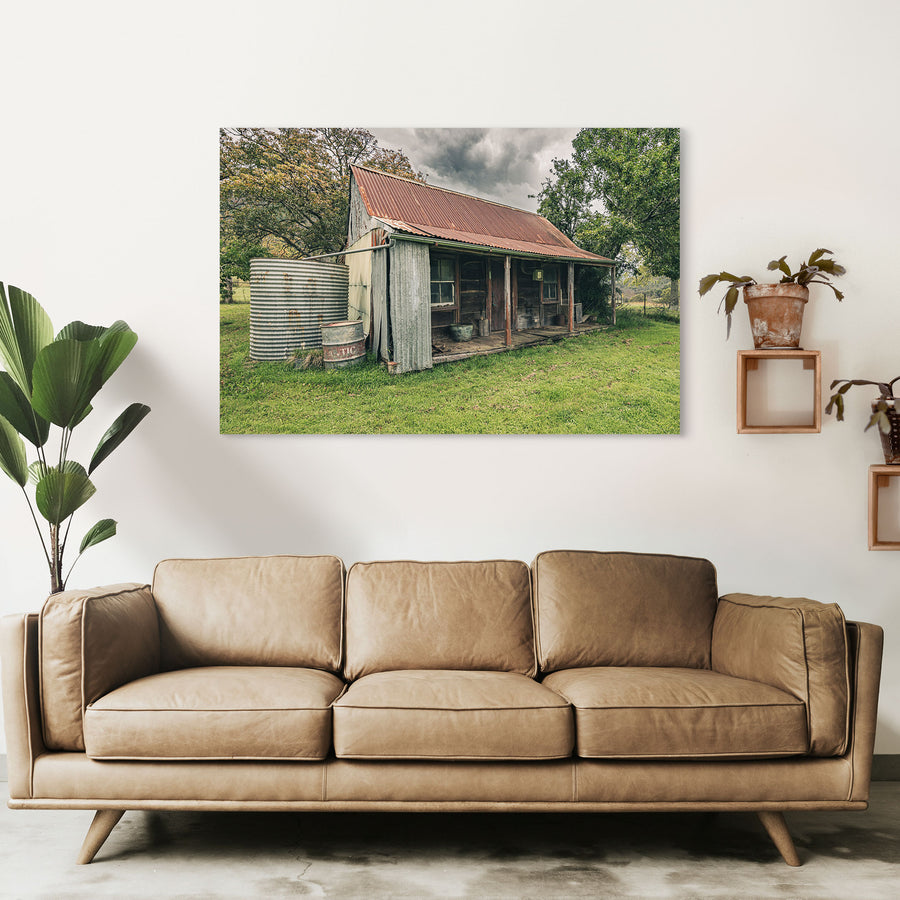
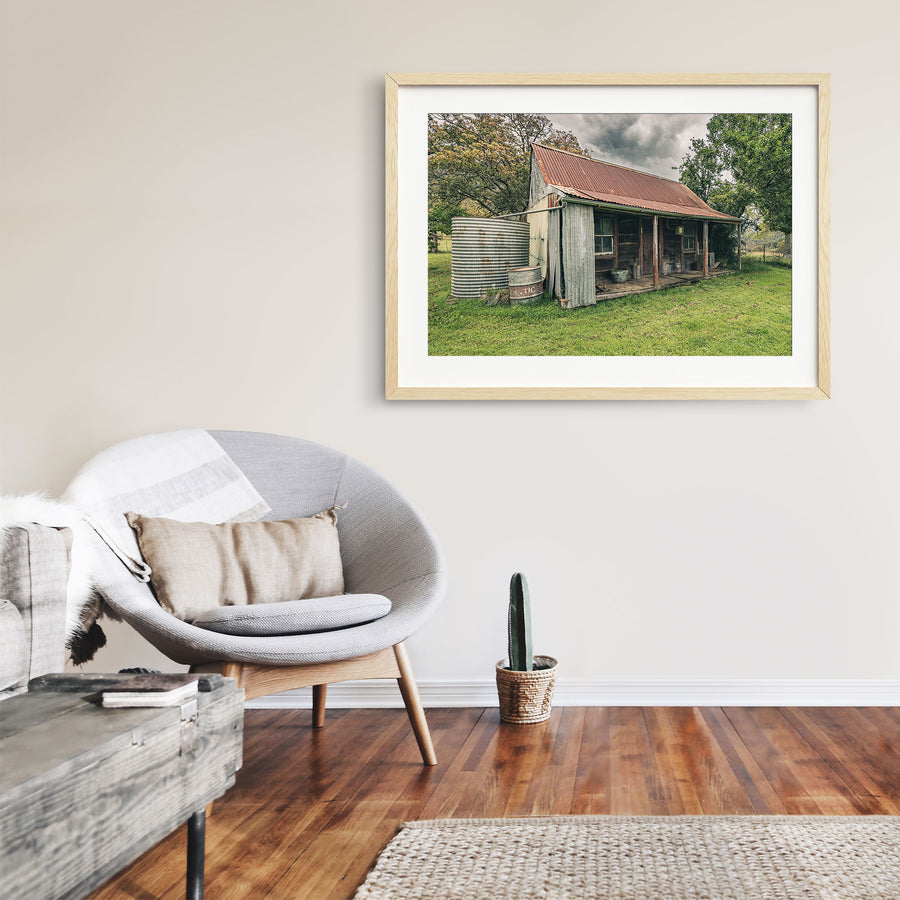
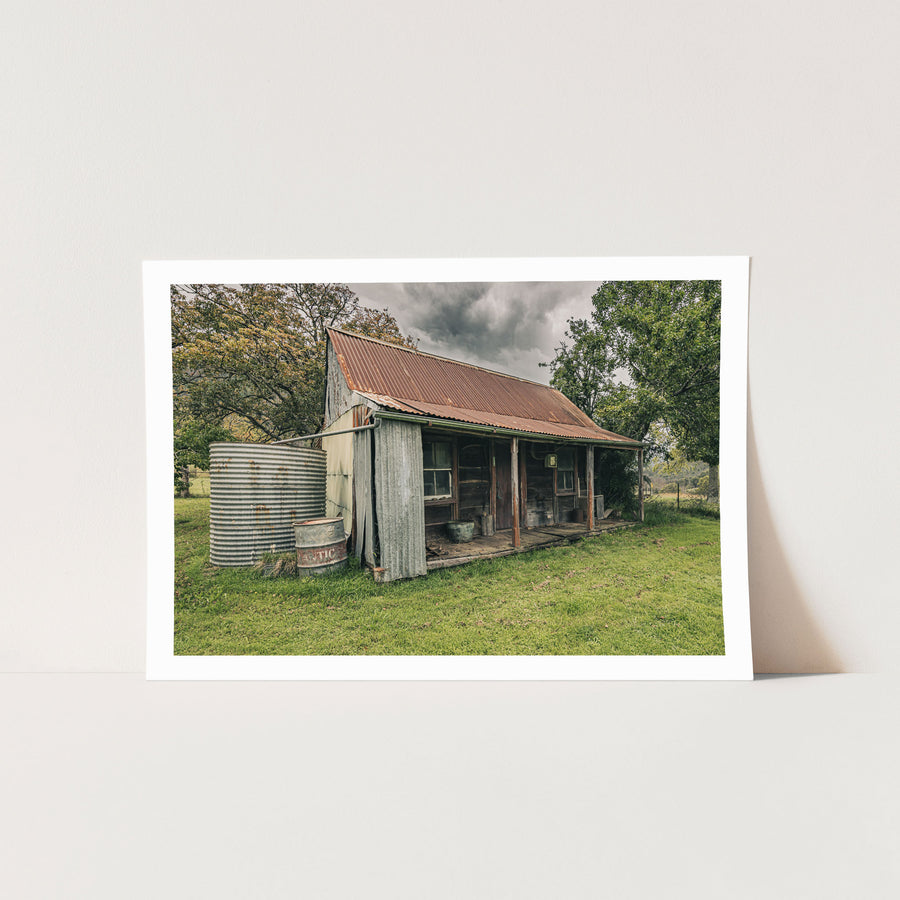
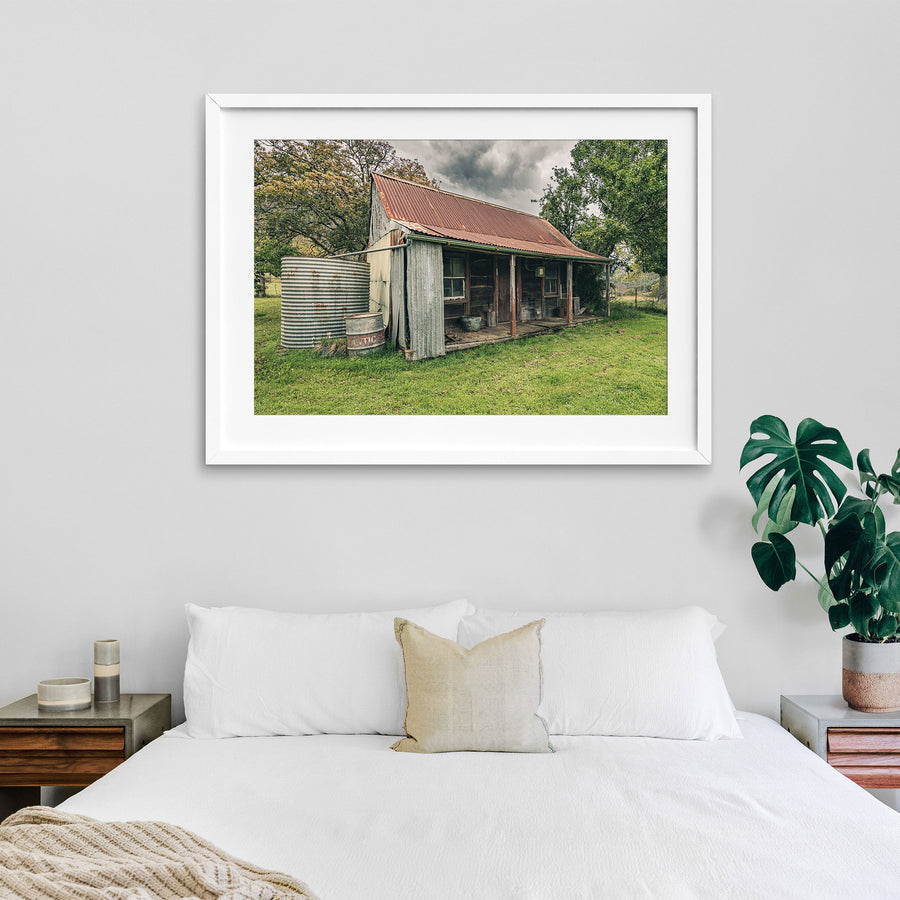
A timber slab hut with a rusting corrugated iron roof and a covered front verandah. A galvanised corrugated water tank stands at the gable end alongside an old steel drum. The ground around the hut is mown grass with trees beyond. Natural light falls across the weathered timber walls and iron roof.

Edition
Open edition

Open edition
Printed to order, no fixed quantity. Each print is hand-signed by the photographer.

Limited edition
A fixed number of prints exist. Once sold, the edition closes permanently. Each print is individually numbered and signed.

$100.00 AUD
Size
Type
Colour
Signed, numbered, with COA. Made to order in 10 to 20 business days (framed). Shipped in protective packaging with edition certificate, paper-stock reference and a printed care guide.
See certificate sample →

Shipping Free shipping over $250. Ships worldwide, rates calculated at checkout.

Returns Damaged in transit? We replace it. Full policy →

Ships within 10 business days · signed & numbered

In situ
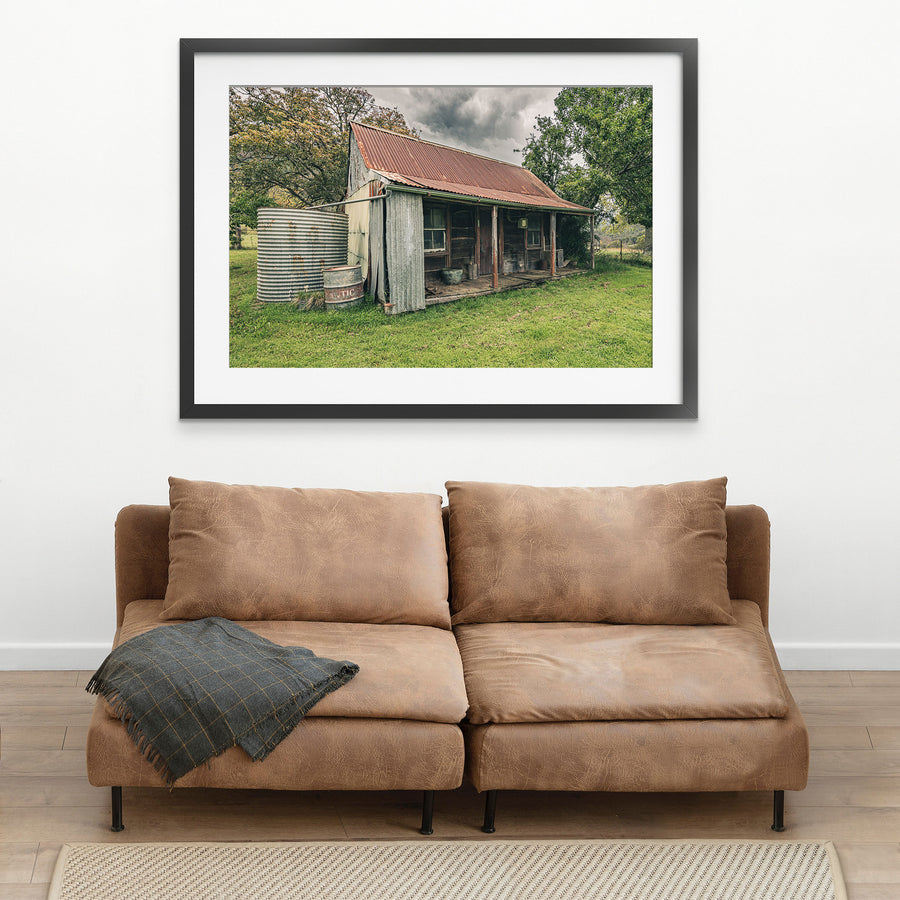
The weathered timber slab hut and covered front verandah at Woolla, with a galvanised corrugated water tank and steel drum standing at the gable end on mown grass among trees near Braidwood.The weathered timber slab hut and covered front verandah at Woolla, with a galvanised corrugated water tank and steel drum standing at the gable end on mown grass among trees near Braidwood.The weathered timber slab hut and covered front verandah at Woolla, with a galvanised corrugated water tank and steel drum standing at the gable end on mown grass among trees near Braidwood.The weathered timber slab hut and covered front verandah at Woolla, with a galvanised corrugated water tank and steel drum standing at the gable end on mown grass among trees near Braidwood.The weathered timber slab hut and covered front verandah at Woolla, with a galvanised corrugated water tank and steel drum standing at the gable end on mown grass among trees near Braidwood.
01 PROVENANCE

Print datasheet

Title
Slab Hut Verandah
Series
Woolla
Process
Giclée
Captured
20 January 2022
Camera
NIKON D850
Lens
14.0-24.0 mm f/2.8
Aperture
f/8.0
Shutter
1/500 sec s
ISO
100
Focal length
14 mm
Paper
Ilford Galerie Smooth Cotton Rag 310 gsm
Location
Deua River Valley, NSW, Australia
Recognised by
Highly Commended in Multimedia at the 2016 National Trust of Australia (NSW) Heritage Awards
02 LOCATION

Deua River Valley, NSW, Australia

Map · Mapbox · OpenStreetMap

03 THE STORY

About this print

The verandah on the front of the Woolla slab hut is the first thing you would have reached after the long ride in from Waddell's on the Araluen-Moruya road. The Deua River Track ran nearly 50 kilometres from the Araluen Creek confluence south to Bendethera and was, according to research by Braidwood and District Historical Society president Peter C. Smith, the only means of access for the Davis family of Woolla until the 1960s. This verandah was at the end of that ride.

The huts at Woolla were completed in 1927, hand-split from timber standing on the property. The walls are slab construction, with newsprint pasted behind the wallpaper to close the gaps. Helena (Nellie) Davis had taken up freehold title to the land in 1910, and when the huts were finished she moved in with her son Everid and daughter Neta. The two huts sit under a single large tree on a bend of the Deua River south of Braidwood: the kitchen in the first, three rooms of sleeping quarters in the second. The configuration is documented in a measured architectural drawing made by Phil Rose in January 2008.

At the gable end of the hut, a galvanised corrugated water tank and an old steel drum stand on mown grass. These are the kinds of objects that accumulate across decades of continuous use and stay put when the use stops. Neta Davis died at Woolla in 1990. Her son Vern, born at the huts in 1928, was diagnosed with Parkinson's the same year and moved to a nursing home in Braidwood. He died there in 2004, the last of the Davis family to hold the property, ending an unbroken ownership that ran from 1910.

The people who hold Woolla now are keeping the huts from falling down. That is a different thing from restoration. Emergency remediation has been done; maintenance continues. The huts survived the 2019-2020 Black Summer bushfires that swept the NSW south coast. When this photograph was made in 2021, the grass around them was mown, the tank was still standing, and the verandah was still there to reach.

04 FROM THE FIELD NOTES

The slab hut at Woolla sits on the Deua River near Braidwood, its front verandah shading weathered hand-split timber walls beneath a corrugated iron roof gone deep with rust. A galvanised water tank and old steel drum stand at the gable end, functional objects that stayed long after the work that needed them slowed. Helena (Nellie) Davis took up freehold title here in 1910. The huts were completed in 1927, cut from timber standing on the property, and the Davis family lived in them without interruption until Neta Davis died at Woolla in 1990 and her son Vern was moved to a nursing home in Braidwood. The owners who hold the property now have kept the huts from falling, not restored them.

Brett Patman

Woolla

The series

Woolla

2021 · 20 photographs

Woolla is a property on the Deua River near Braidwood in southern New South Wales. The slab huts under a single large tree were built and inhabited by the Davis family across four generations from 1910 to 1990. The family held freehold title to the property continuously through 2004.

View all in this series →

05 SIZE GUIDE

Print sizes

The anatomy view shows what this finish is as a physical object: paper margin, mat band, frame depth, acrylic profile. The comparison strip shows how each size sits relative to the others at true scale. Click a size or a finish to update both.

Anatomy · true ratio
TypeSizeWidthHeight
08 BY POST · NO SPAM

Read the full story

Articles when they're published. The history behind a place. The day of a shoot. The work between prints. No marketing, no schedule.

You're subscribed.