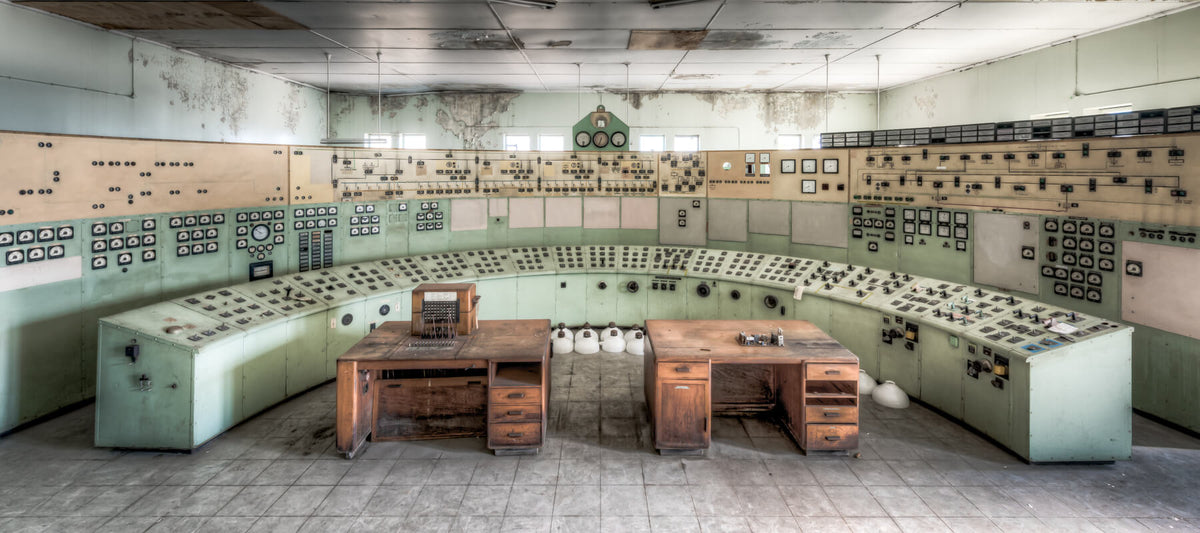
There is a difference between a photograph that records a place and one that gives you the experience of being there. The difference is not technical. It is not about resolution or dynamic range or any measurable quality. It is about whether the photographer understood what the place was doing to them while they were in it, and found a way to put that into a frame.
The buildings in the Lost Collective catalogue cover power stations, hospitals, industrial yards, hotels, flour mills. None of them are picturesque in any conventional sense. They are large, often dark, frequently damaged. The floors are uneven. The air carries the residue of whatever was produced or stored there. What they have, consistently, is presence. A quality of accumulated time that is difficult to describe and immediately recognisable when you are standing in it.
The photographs that work are the ones where that presence is legible in the image. Where the scale of the space is communicated without a figure for reference. Where the light, industrial buildings admit light in particular ways, through skylights and clerestory windows and gaps in deteriorating roofing iron, does something that makes the space visible rather than just recorded.
Fine art printing on archival cotton rag paper is the correct medium for this kind of image. The archival cotton rag paper that Lost Collective uses has a surface texture and tonal depth that screen-based reproduction cannot approximate. The shadow detail in a large format print of a turbine hall or a boiler house is what makes the image dimensional rather than flat.
The editions are limited because reproduction devalues the object. Once an edition is closed, it is closed. The print you buy is one of 25 or 50 or 100 that will ever exist of that image at that size. That is not a sales mechanism. It is a constraint that gives the object meaning.
The catalogue covers more than 60 series across Australia and Japan. Industrial sites, heritage buildings, rural properties, urban landscapes. Each series documents a specific place at a specific moment in its history.

