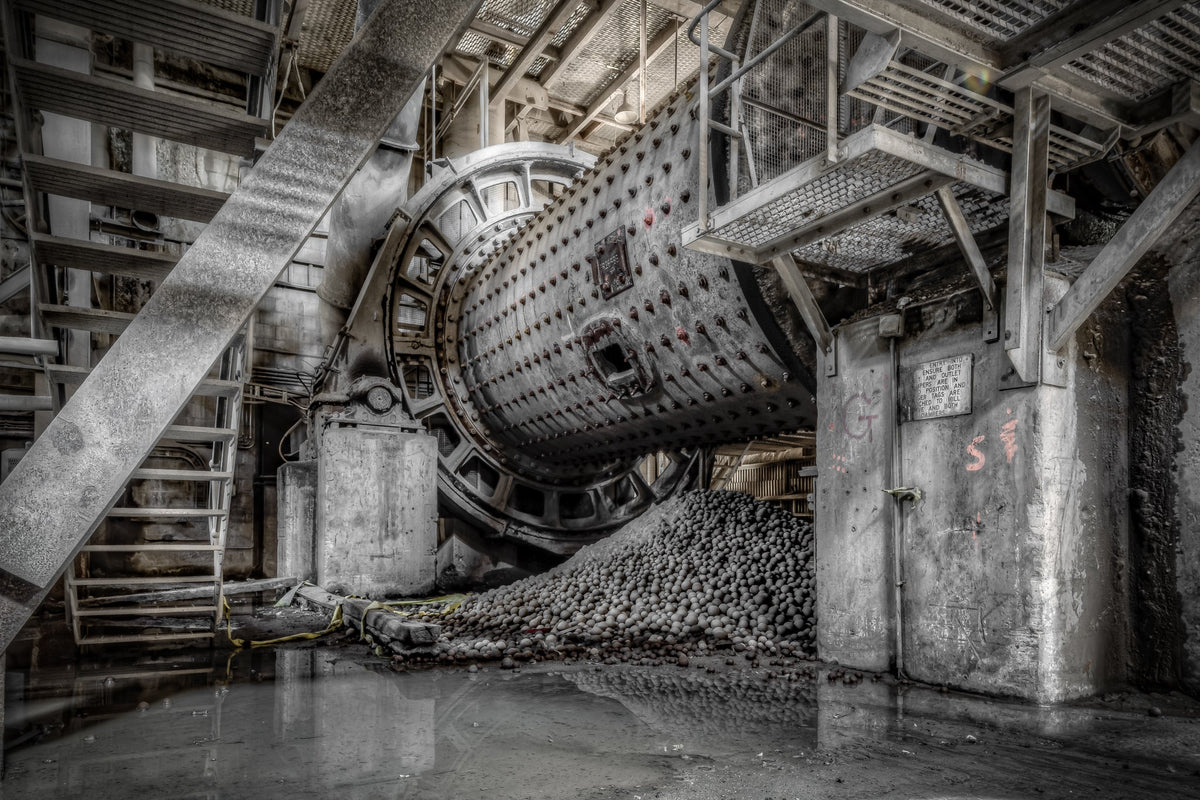
Cement production at Kandos began in August 1916, in a valley in the central west of New South Wales, under the limestone ridge that fed the plant for nearly a century.

The NSW Cement Lime and Coal Company had been registered three years earlier, in May 1913, and had purchased 100 acres from local farmer John Lloyd Junior for £2,000. Original plant machinery was ordered from Krupp Bremen, but when World War I broke out that machinery was interned in Portuguese West Africa. Managing director Frank Oakden travelled to the United States and England to source replacement equipment. The plant that finally opened in 1916 was the second one Kandos installed.

The town of Kandos was built alongside the works. Streets were named for the company directors: Angus Avenue, Buchanan, White, Rodgers, Jaques. The town itself was named for them too. It was first proclaimed Candos, an acronym of the directors' surnames, then respelled Kandos in 1915 when the Postmaster General required a change to avoid confusion with Chandos in South Australia. In 1920 it became the first place in Australia with concrete electricity poles.

Between 1928 and 1932, Kandos was the sole cement supplier to the Sydney Harbour Bridge, under contract to Dorman Long and Co. The Tasmanian Goliath plant at Railton had held a 1924 contract but was excluded; the bridge's Director of Construction, Lawrence Ennis, stated publicly in July 1929 that "Railton cement is not used in the Sydney Harbour Bridge." His 1932 souvenir booklet, Bond of Empire: Story of Construction of Bridge, page 48, lists the suppliers. Kandos Cement Company Ltd is there.

In 2007, Cement Australia invested $10 million in plant modernisation, including a new Kiln 6 stack. It was not enough. On the morning of Thursday 7 July 2011, CEO Chris Leon told the Kandos workforce the plant would close. Production ceased in September 2011. Ninety-five years after the first cement left the kilns. Ninety-eight redundancies, with 34 workers offered transfers to plants at Gladstone, Bulwer Island, or Railton. The reasons given: dated technology, high fixed costs, considerable distance from market.

Kiln 5, the kiln that made Harbour Bridge cement, was partly salvaged in 2011. Sibelco took the mid-section for the Charbon lime plant, which has since also closed. The remainder is the subject of an ongoing Kandos Museum preservation campaign. The site was sold in June 2025 to Cenagen, which has proposed a waste-to-methanol plant on the 50-hectare footprint. A $1 billion project that would convert 1,500 tonnes of municipal waste per day into approximately 91,000 tonnes of green methanol per year.

The Cementa contemporary art festival has run in Kandos since 2013, founded by writer and curator Ann Finegan. It has made Kandos a point on Australia's contemporary art circuit. That is the town now: the kiln silhouette on the ridge, the festival, and the proposal for something new on the old footprint. The story is still going.

References
The Harbour Bridge supply. Lawrence Ennis, Bond of Empire: Story of Construction of Bridge (1932), page 48, lists Kandos Cement Company Ltd among the suppliers; Ennis's July 1929 statement excluding Railton cement is documented at Kandos History.
The plant and its closure. Town origin, the Candos name and the 1916 plant via Kandos, New South Wales (indexing Bruce A. Fleming's print histories held by the Kandos Museum) and Kandos History; the September 2011 closure, the 98 redundancies and the reasons via International Cement Review, which reports the workforce was told "in a meeting on Thursday morning" in the week to 11 July 2011. The Western Advocate carried the union response on the morning of Friday 8 July.
The site today. The 2025 sale and the waste-to-methanol proposal via the Cenagen fact sheet and the Mudgee Guardian; the Cementa festival; and the Kandos Museum preservation work documented at Kandos History.


