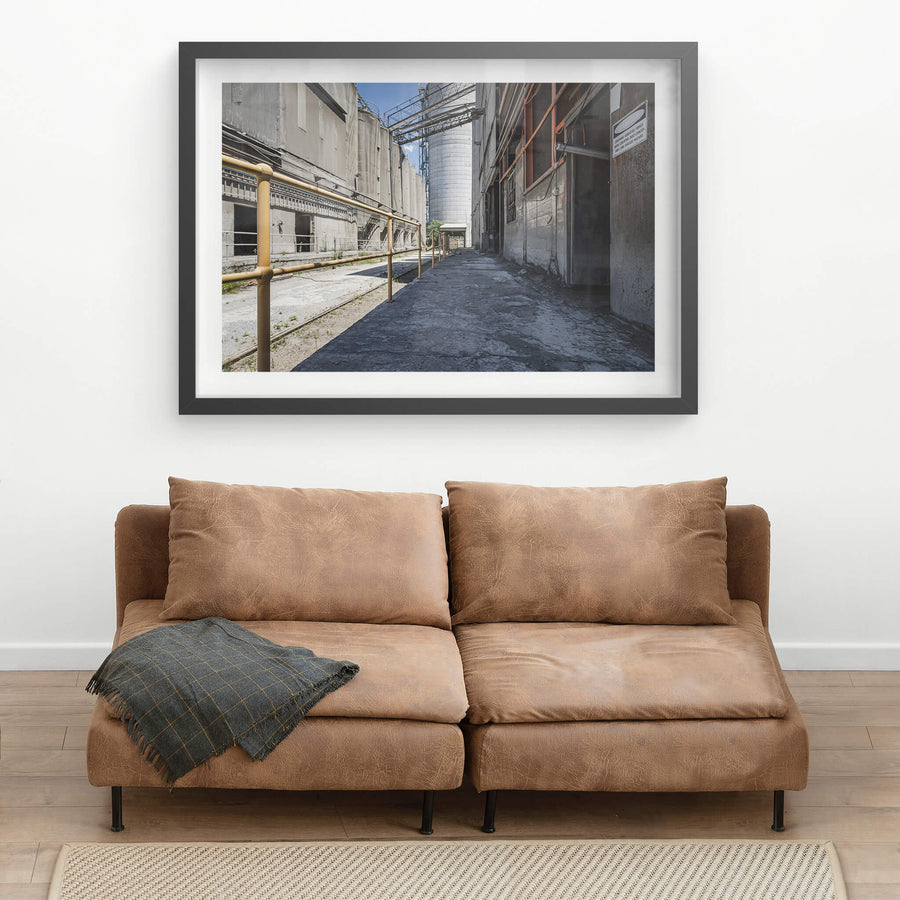
New Cement Silo

Provenance

Camera
NIKON D7000
Lens
14.0-24.0 mm f/2.8
Settings
21mm · f/8.0 · 1/250 · ISO 100
Paper
Ilford Galerie Smooth Cotton Rag 310 gsm

The new cement silo at Kandos Cement Works, built to replace the original storage silos during a plant upgrade. The single structure houses multiple silos within. Trains moved directly underneath for loading. The plant operated from 1916 until September 2011.

Edition
Open edition

Open edition
Printed to order, no fixed quantity. Each print is hand-signed by the photographer.

Limited edition
A fixed number of prints exist. Once sold, the edition closes permanently. Each print is individually numbered and signed.

$100.00 AUD
Size
Type
Colour
Signed, numbered, with COA. Made to order in 10 to 20 business days (framed). Shipped in protective packaging with edition certificate, paper-stock reference and a printed care guide.
See certificate sample →

Shipping Free shipping over $250. Ships worldwide, rates calculated at checkout.

Returns Damaged in transit? We replace it. Full policy →

Ships within 10 business days · signed & numbered

In situ
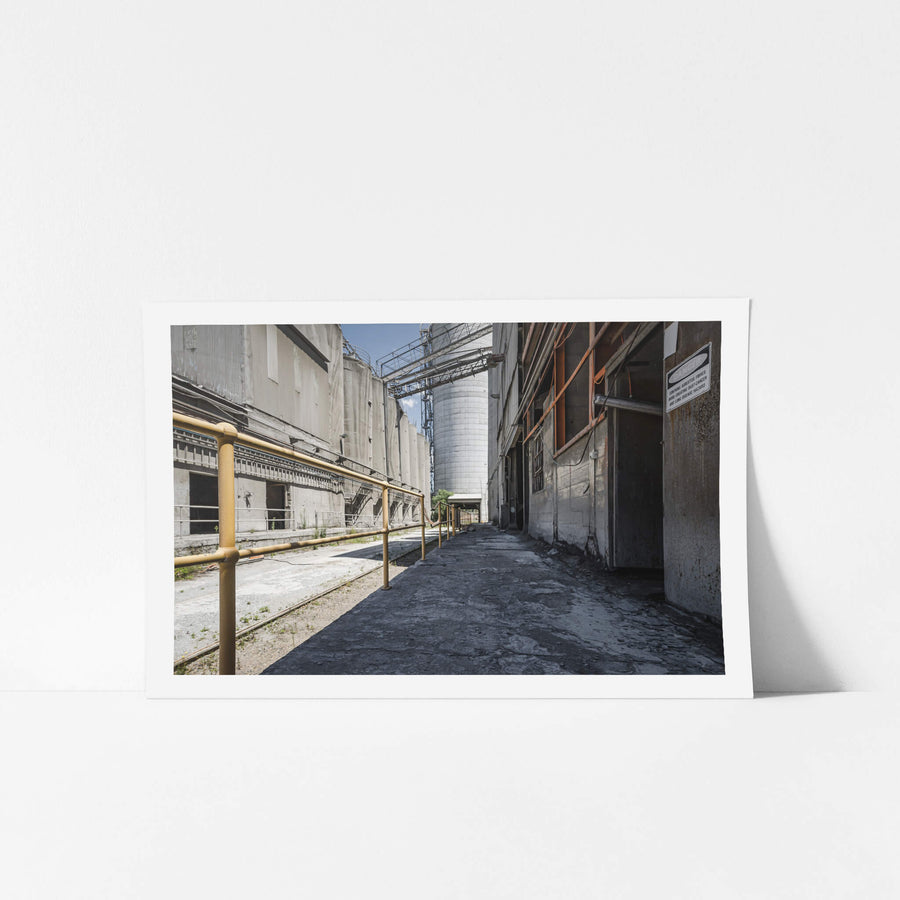
New Cement Silo at Kandos Cement Works, this large silo was built as part of an upgrade that replaced the original cement.New Cement Silo at Kandos Cement Works, this large silo was built as part of an upgrade that replaced the original cement.New Cement Silo at Kandos Cement Works, this large silo was built as part of an upgrade that replaced the original cement.New Cement Silo at Kandos Cement Works, this large silo was built as part of an upgrade that replaced the original cement.New Cement Silo at Kandos Cement Works, this large silo was built as part of an upgrade that replaced the original cement.
01 PROVENANCE

Print datasheet

Title
New Cement Silo
Series
Kandos Cement Works
Catalogue
KCW-022
Process
Giclée
Captured
13 February 2016
Camera
NIKON D7000
Lens
14.0-24.0 mm f/2.8
Aperture
f/8.0
Shutter
1/250 s
ISO
100
Focal length
21 mm
Paper
Ilford Galerie Smooth Cotton Rag 310 gsm
Paper size
290 × 200 mm
Location
Kandos, New South Wales, Australia
Recognised by
Highly Commended in Multimedia at the 2016 National Trust of Australia (NSW) Heritage Awards
02 LOCATION

Kandos, New South Wales, Australia

Map · Mapbox · OpenStreetMap

03 THE STORY

About this print

The newer cement silo at Kandos Cement Works stands taller than the older row alongside it, a single cylindrical concrete tower with a conical roof and a steel stair running up its side. The silo is rendered in plain grey concrete, its surface streaked from rainwater run-off. Conveyor housing connects the top of the silo to the cement-mill discharge across the gantry above. At the base, a small discharge house contains the load-out chutes that fed road tankers parked on the apron alongside. A truck access road runs along one side, and a rail siding runs along the other. The silo's height makes it the most visible structure on the southern side of the plant.

The newer silo at Kandos was part of the plant's progressive expansion across its operational life. As production volumes rose and bulk delivery to road tankers grew alongside the older rail-bag despatch model, larger storage silos like this one were built to buffer the cement against demand. The plant produced cement for 95 years from August 1916 to closure in September 2011. The bulk silo and its discharge house are still in place, but the tankers stopped coming when the works did. The silos are among the structures most likely to remain at the site for the longest, simply because demolishing a concrete cylinder of this scale is expensive and slow.

04 FROM THE FIELD NOTES

This large silo was built as part of an upgrade that replaced the original cement silos. Though it appears as a single structure, it actually houses multiple silos within, designed to optimize storage and efficiency.

Brett Patman

Kandos Cement Works

The series

Kandos Cement Works

2016 · 40 photographs

The town's first name was Candos, an acronym of the directors' surnames at the NSW Cement Lime and Coal Company. They bought 100 acres from local farmer John Lloyd Junior for £2,000 in 1913 and had surveyor James Dawson lay out the township. The Postmaster General ruled the name change to Kandos in 1915, and by August 1916 the kilns at the new cement works were firing.

View all in this series →

05 SIZE GUIDE

Print sizes

The anatomy view shows what this finish is as a physical object: paper margin, mat band, frame depth, acrylic profile. The comparison strip shows how each size sits relative to the others at true scale. Click a size or a finish to update both.

Anatomy · true ratio
TypeSizeWidthHeight
08 BY POST · NO SPAM

Read the full story

Articles when they're published. The history behind a place. The day of a shoot. The work between prints. No marketing, no schedule.

You're subscribed.