
Paint
Provenance
- Camera
- NIKON D7000
- Lens
- AF-S Zoom-Nikkor 24-70mm f/2.8G ED
- Settings
- 105mm · f/9.0 · 2 sec · ISO 100
- Paper
- Ilford Galerie Smooth Cotton Rag 310 gsm
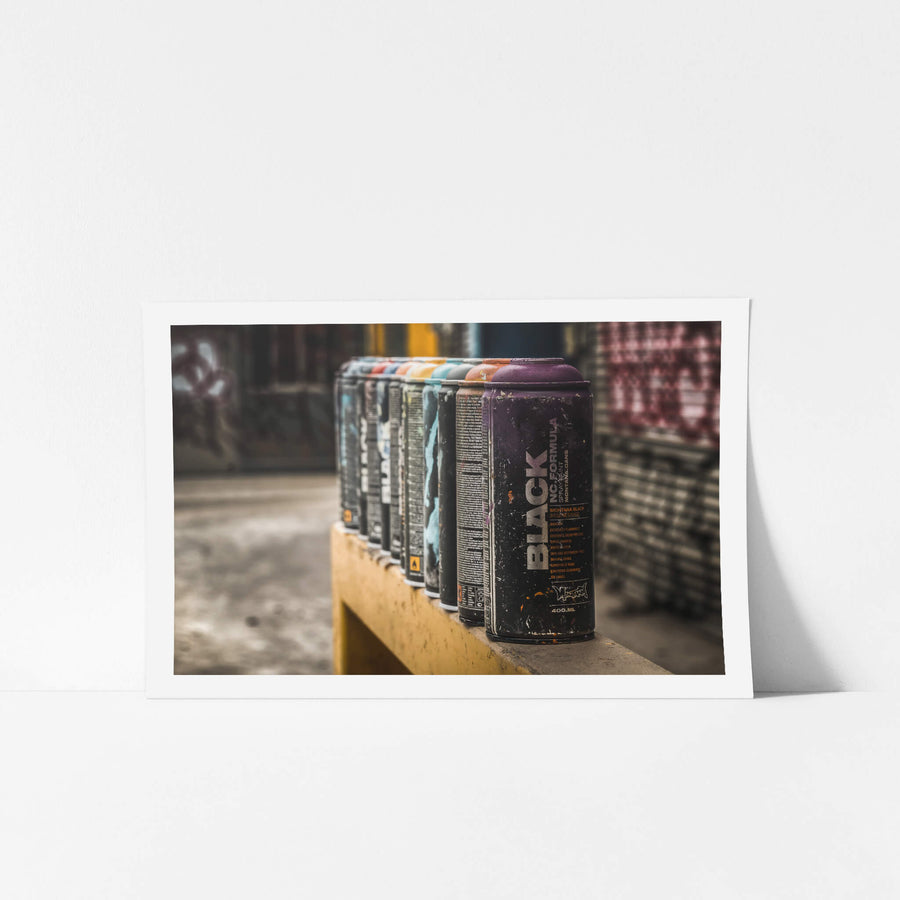
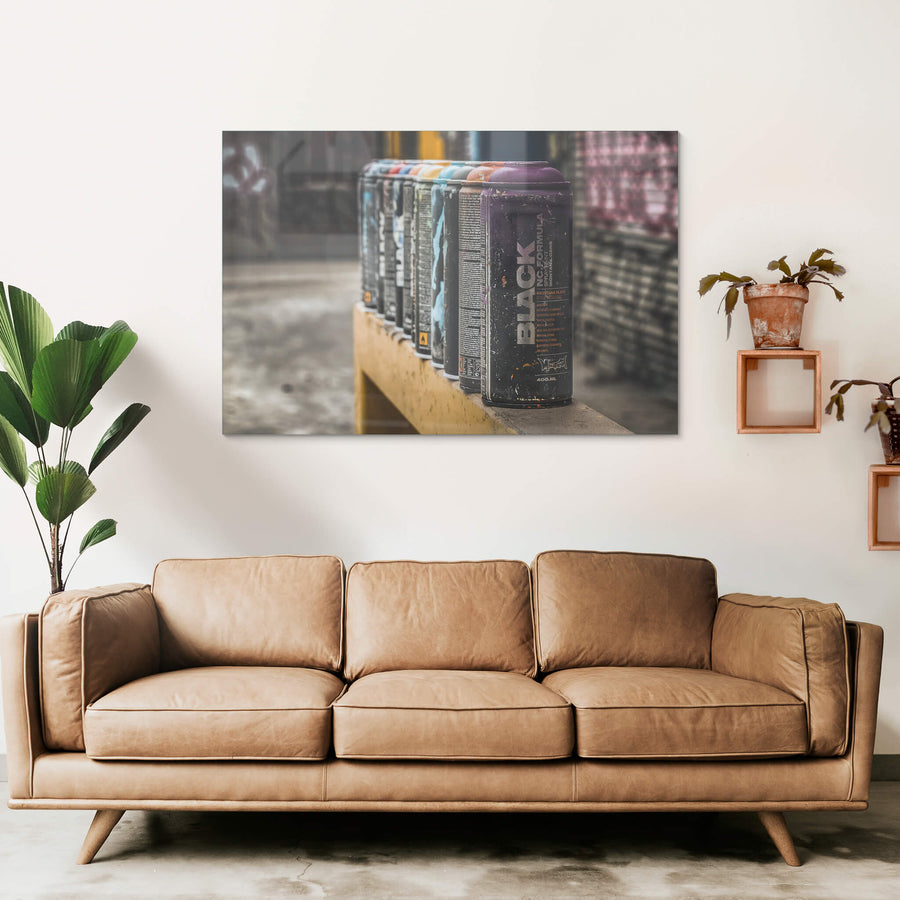
Ten spray paint cans line a worn yellow concrete barrier inside the dormant Bradmill factory at Yarraville, each capped in a different colour. The nearest, capped in purple, still carries its warning labels, a 400ml volume mark and the word Black printed on the side. Paint splatters and grime coat the barrier beneath them.
Open edition
Printed to order, no fixed quantity. Each print is hand-signed by the photographer.
Limited edition
A fixed number of prints exist. Once sold, the edition closes permanently. Each print is individually numbered and signed.
Shipping Free shipping over $250. Ships worldwide, rates calculated at checkout.
Returns Damaged in transit? We replace it. Full policy →
Ships within 10 business days · signed & numbered
In situ
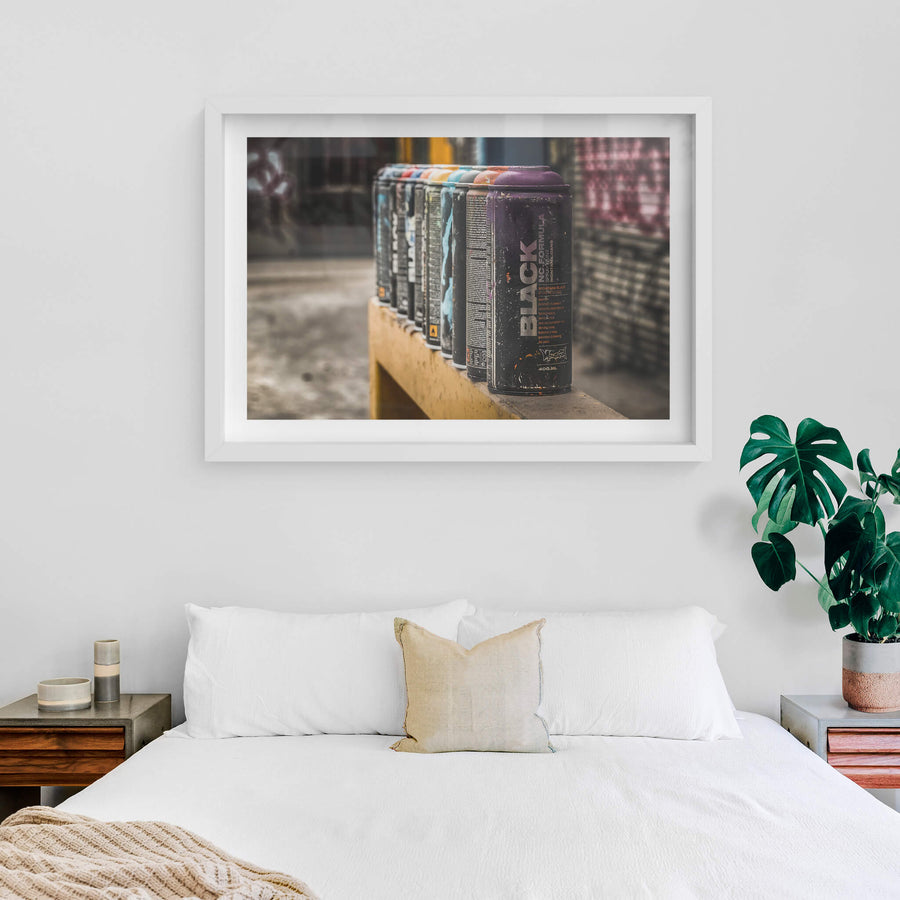
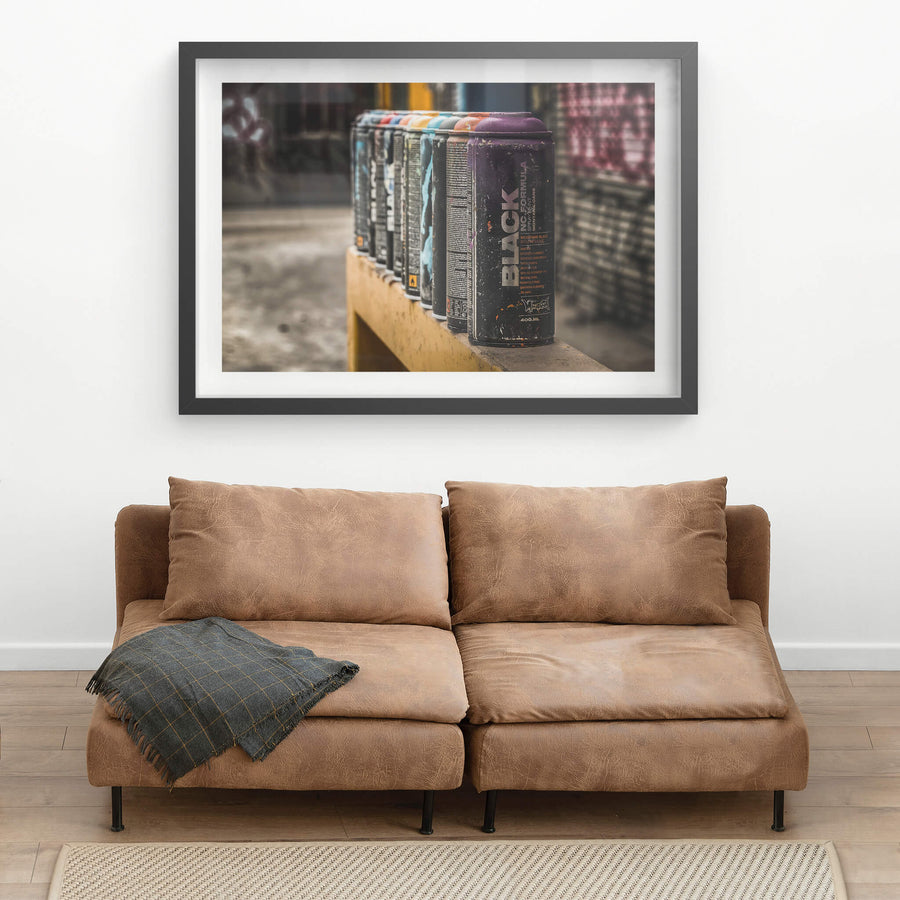
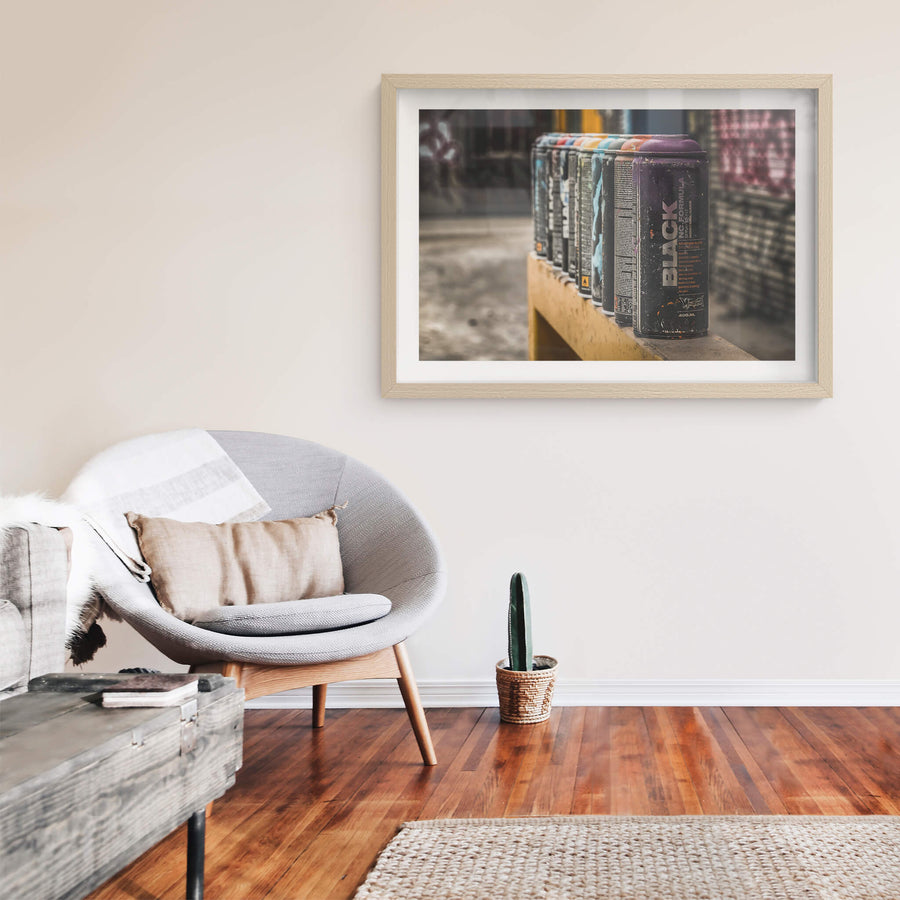
Print datasheet
- Title
- Paint
- Series
- Bradmill Denim
- Catalogue
- BDE-019
- Process
- Giclée
- Captured
- 18 March 2012
- Camera
- NIKON D7000
- Lens
- AF-S Zoom-Nikkor 24-70mm f/2.8G ED
- Aperture
- f/9.0
- Shutter
- 2 sec s
- ISO
- 100
- Focal length
- 105 mm
- Paper
- Ilford Galerie Smooth Cotton Rag 310 gsm
- Paper size
- 297 × 210 mm
- Location
- Yarraville, Victoria, Australia
- Authenticity
- C2PA verified provenance →
- Recognised by
- Highly Commended in Multimedia at the 2016 National Trust of Australia (NSW) Heritage Awards
Yarraville, Victoria, Australia
Map · Mapbox · OpenStreetMap
About this print
Montana Black 400ml cans lined up on a concrete ledge, labels spattered and worn. Purple, blue, red, orange. Paint residue coats the steel bodies in colours that don't match their caps. Behind them, a graffiti-covered wall catches filtered light through corrugated sheeting. The concrete floor is grey with dust and grit. The air in here smells like solvent and damp brick.
Brett Patman

The series
Bradmill Denim
The former Davies Coop / Bradmill factory, Yarraville, was a textile works on Francis Street in Melbourne's western suburbs, built as the dyeing and finishing plant of the cotton spinner Davies Coop & Co. Ltd. It followed a 1952 agreement with the Bradford Dyers' Association of England and was in production by the middle of 1955. Bradmill Industries bid for Davies Coop in 1969 and owned it outright by 1973. The steel-framed, red brick boiler house is the building the heritage listing names as a large and dominant local landmark.
Print sizes
The anatomy view shows what this finish is as a physical object: paper margin, mat band, frame depth, acrylic profile. The comparison strip shows how each size sits relative to the others at true scale. Click a size or a finish to update both.
| Type | Size | Width | Height |
|---|


