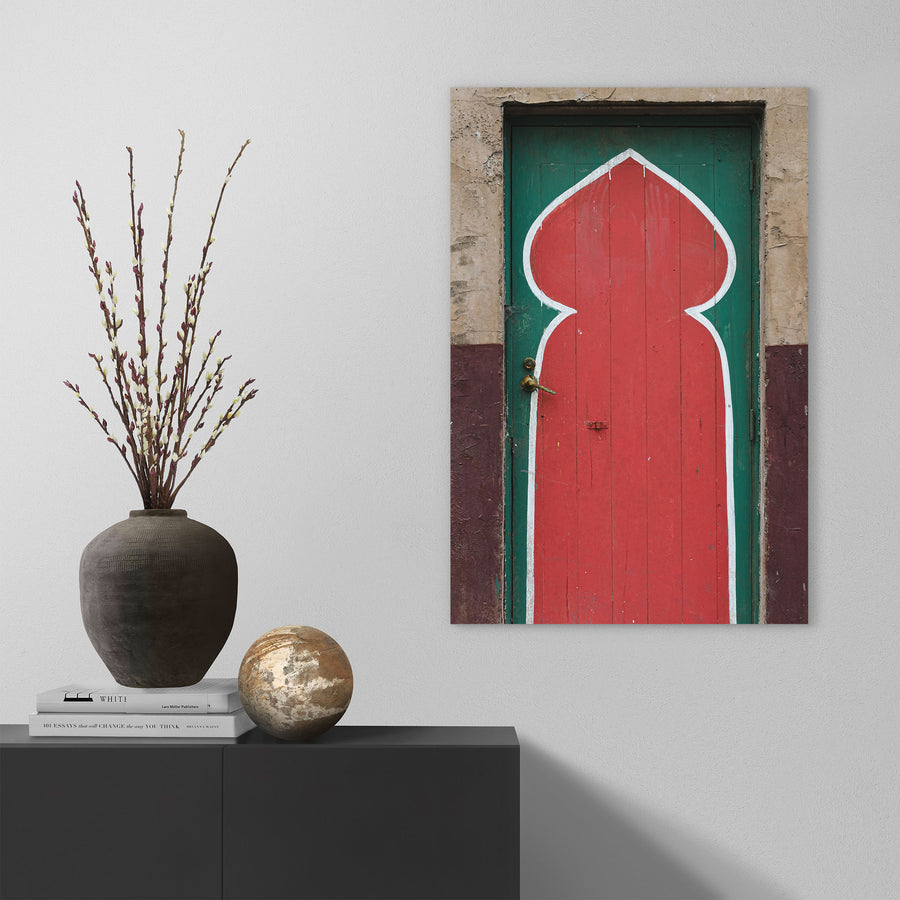
Painted Arch Door

Provenance

Camera
NIKON D7000
Lens
24.0-70.0 mm f/2.8
Settings
45mm · f/9.0 · 1/25 sec · ISO 400
Paper
Ilford Galerie Smooth Cotton Rag 310 gsm

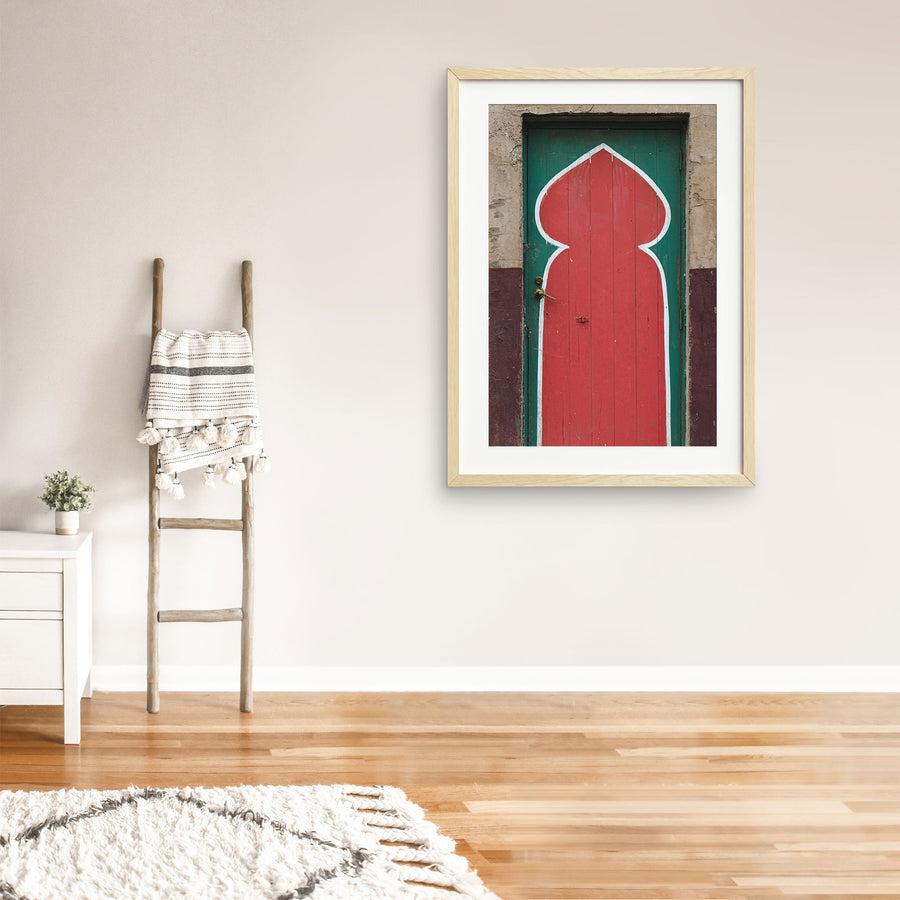
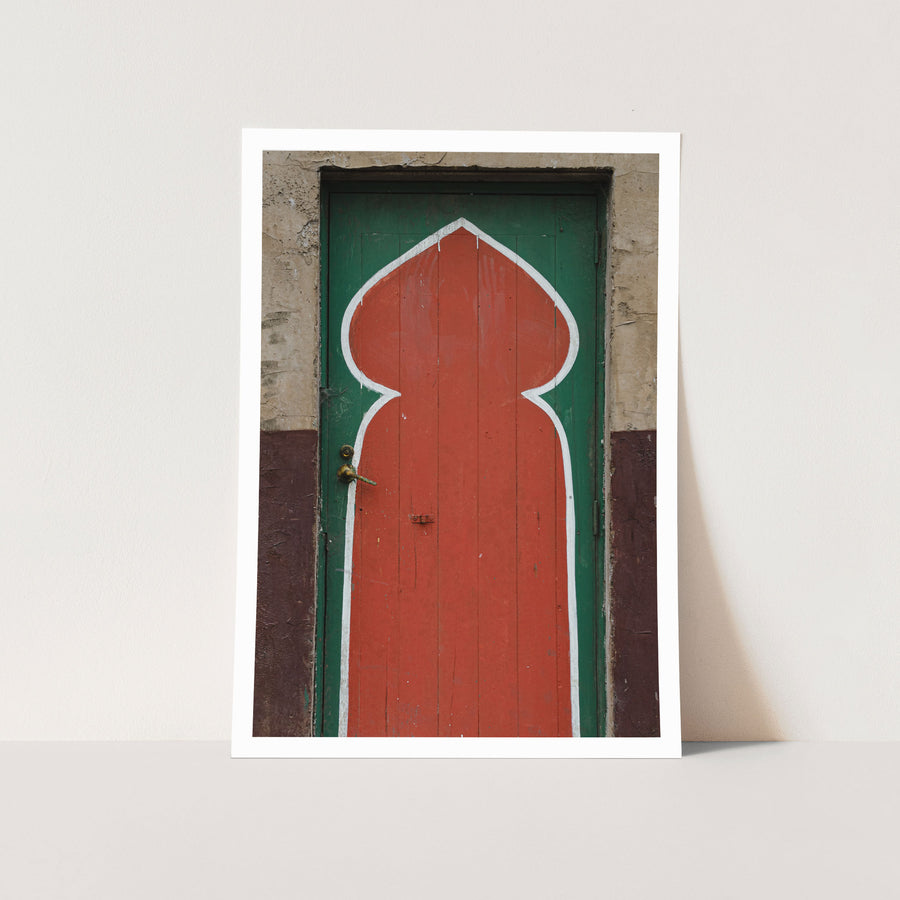
A timber door painted with a tall keyhole arch in red, outlined in white, set against a green-painted border. A brass lever handle sits on the left side of the door. The surrounding render is cracked and peeling. A dark painted dado flanks the frame on both sides.

Edition
Open edition

Open edition
Printed to order, no fixed quantity. Each print is hand-signed by the photographer.

Limited edition
A fixed number of prints exist. Once sold, the edition closes permanently. Each print is individually numbered and signed.

$100.00 AUD
Size
Type
Colour
Signed, numbered, with COA. Made to order in 10 to 20 business days (framed). Shipped in protective packaging with edition certificate, paper-stock reference and a printed care guide.
See certificate sample →

Shipping Free shipping over $250. Ships worldwide, rates calculated at checkout.

Returns Damaged in transit? We replace it. Full policy →

Ships within 10 business days · signed & numbered

In situ
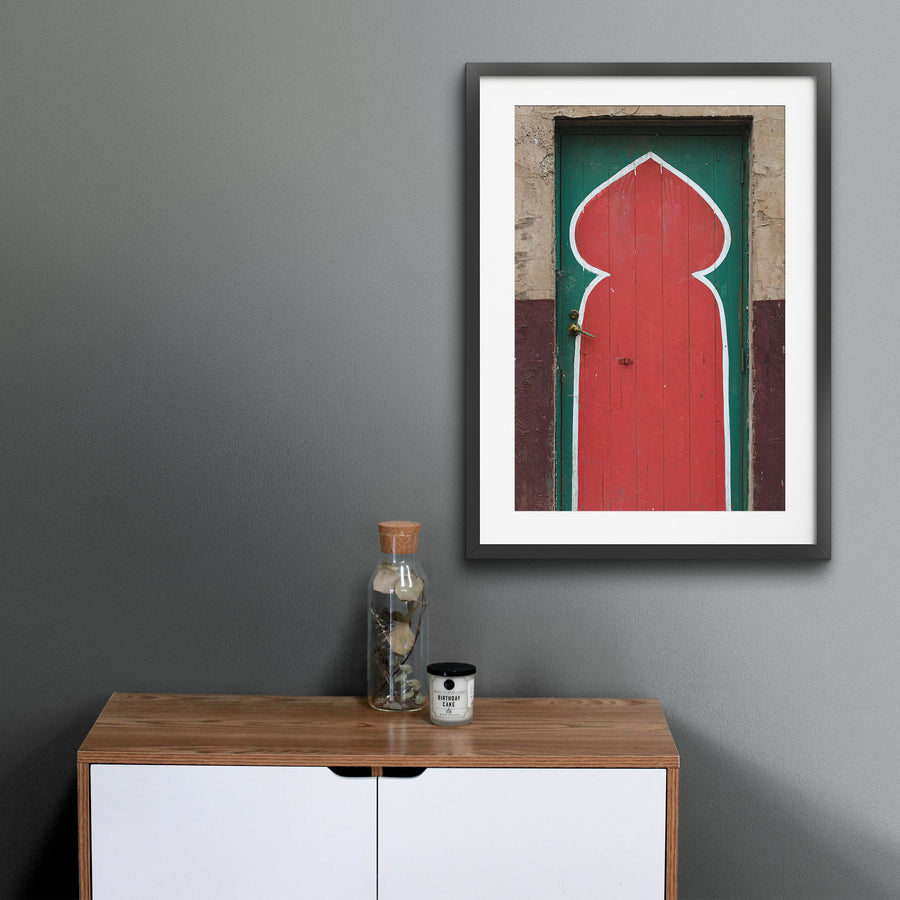
A painted timber door at the former Bradmill factory in Yarraville, with a tall red keyhole arch outlined in white on a green background, a worn brass lever handle on the left, and cracked render surrounding the frame.A painted timber door at the former Bradmill factory in Yarraville, with a tall red keyhole arch outlined in white on a green background, a worn brass lever handle on the left, and cracked render surrounding the frame.A painted timber door at the former Bradmill factory in Yarraville, with a tall red keyhole arch outlined in white on a green background, a worn brass lever handle on the left, and cracked render surrounding the frame.A painted timber door at the former Bradmill factory in Yarraville, with a tall red keyhole arch outlined in white on a green background, a worn brass lever handle on the left, and cracked render surrounding the frame.A painted timber door at the former Bradmill factory in Yarraville, with a tall red keyhole arch outlined in white on a green background, a worn brass lever handle on the left, and cracked render surrounding the frame.
01 PROVENANCE

Print datasheet

Title
Painted Arch Door
Series
Bradmill Denim
Catalogue
BDE-042
Process
Giclée
Captured
6 November 2011
Camera
NIKON D7000
Lens
24.0-70.0 mm f/2.8
Aperture
f/9.0
Shutter
1/25 sec s
ISO
400
Focal length
45 mm
Paper
Ilford Galerie Smooth Cotton Rag 310 gsm
Location
Yarraville, VIC, Australia
Recognised by
Highly Commended in Multimedia at the 2016 National Trust of Australia (NSW) Heritage Awards
02 LOCATION

Yarraville, VIC, Australia

Map · Mapbox · OpenStreetMap

03 THE STORY

About this print

The door sits inside one of the manufacturing buildings at the former Davies Coop / Bradmill factory on Francis Street, Yarraville. Someone, at some point during the building's working life, painted a tall keyhole arch on its face in red, outlined in white, set against a border of green. The brass lever handle is worn at the grip. The render around the frame has cracked and pulled away in places, and a dark painted dado runs along the wall on either side. It is the kind of detail that accumulates in a large industrial workplace over time, a practical marker that also became, without anyone planning it, a piece of folk decoration. The Francis Street site has its origins in a 1952 agreement between Davies Coop & Co. Ltd, an established Australian cotton spinning, weaving and finishing company, and the Bradford Dyers' Association Ltd of England. Davies Coop formed a wholly owned subsidiary, Davies Coop (B.D.A.) Pty. Ltd., to run dyeing and finishing operations on property already acquired at West Footscray, using the Bradford Dyers' Association's proprietary "Rigmel" shrink-control process. The dye house, begun in 1952, was expected to be complete by late 1954. The company had purchased 40 acres at West Footscray for the purpose. The earliest manufacturing buildings on the site, including the sawtooth-roofed sheds designed to flood weaving floors with even daylight from the south, date from this early period. The site later operated under the Bradmill name and became a significant Australian denim and workwear fabric manufacturer. Textile operations ceased around 2001 as tariff protection was wound back and import competition intensified, and the site was vacated around 2007. By the time Brett Patman photographed it in 2011, the factory had been empty for several years, its interiors accumulating graffiti and the slow damage of disuse. The painted door records something more ordinary than the boiler house or the sawtooth rooflines: the texture of daily life inside a large factory, where a door is also a landmark, and paint is also a signal.

04 FROM THE FIELD NOTES

Inside the former Davies Coop / Bradmill factory on Francis Street, Yarraville, interior doors were painted with simple arch motifs to distinguish spaces across the manufacturing complex. This door, its red arch outlined in white against a green border, carries a worn brass lever handle and sits within cracked render and a dark dado. The West Footscray site began with a dye house established by Davies Coop & Co. Ltd in 1952 and grew into one of Melbourne's largest textile plants, operating under the Bradmill name into the early 2000s before the site was vacated around 2007.

Brett Patman

Bradmill Denim

The series

Bradmill Denim

2011 · 52 photographs

The Bradford family founded Bradford Cotton Mills in Sydney in 1927. The company expanded into Victoria in 1940, began producing denim in 1945, and grew into Bradmill Industries Ltd. The Yarraville factory on Francis Street was the country's only indigo denim mill.

View all in this series →

05 SIZE GUIDE

Print sizes

The anatomy view shows what this finish is as a physical object: paper margin, mat band, frame depth, acrylic profile. The comparison strip shows how each size sits relative to the others at true scale. Click a size or a finish to update both.

Anatomy · true ratio
TypeSizeWidthHeight
08 BY POST · NO SPAM

Read the full story

Articles when they're published. The history behind a place. The day of a shoot. The work between prints. No marketing, no schedule.

You're subscribed.