
Carpeted Room
Provenance
- Camera
- NIKON D810
- Lens
- 14.0-24.0 mm f/2.8
- Settings
- 14mm · f/9.0 · 1/3 · ISO 80
- Paper
- Ilford Galerie Smooth Cotton Rag 310 gsm
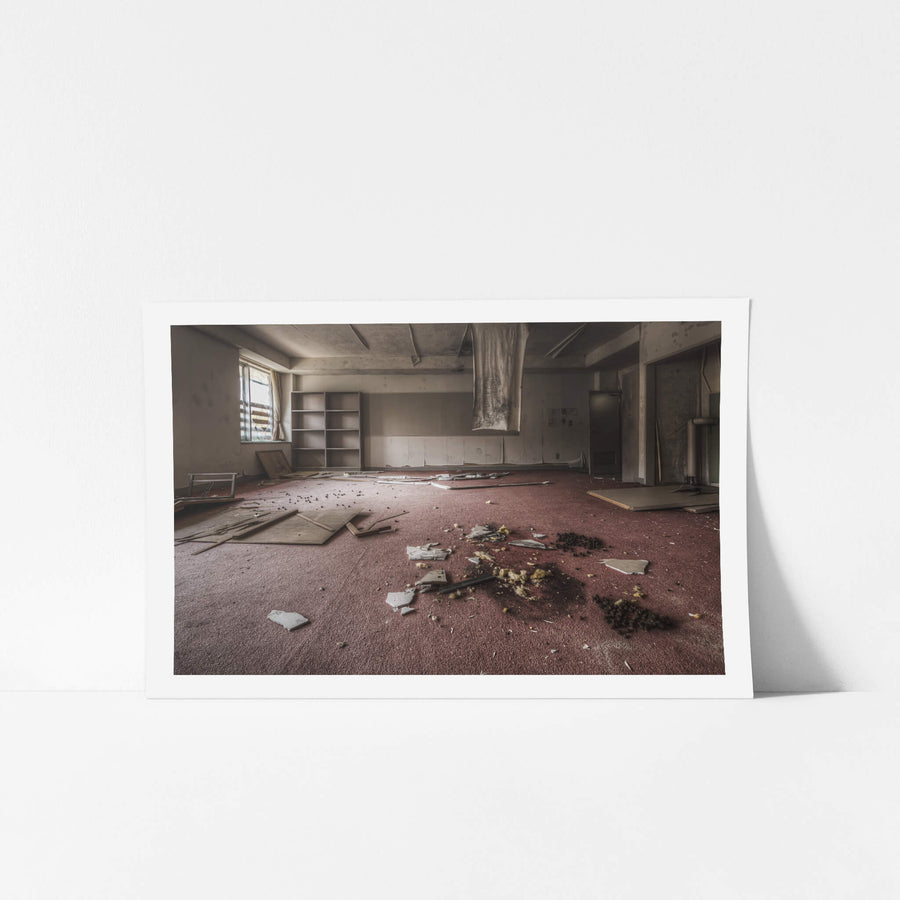
Dark pellets, insulation scraps, and splintered wood blanket the red-pink carpet of a classroom at Family School Fureai in Yubari, Hokkaido, the debris dense enough to obscure most of the floor. An empty 5-shelf bookcase stands to the left, and a large board leans against the wall below a broken window whose missing panes let in the only steady light. Droppings scattered across the carpet indicate animals have used the room. The lodging closed in 2006 and the building is now abandoned.
Open edition
Printed to order, no fixed quantity. Each print is hand-signed by the photographer.
Limited edition
A fixed number of prints exist. Once sold, the edition closes permanently. Each print is individually numbered and signed.
Shipping Free shipping over $250. Ships worldwide, rates calculated at checkout.
Returns Damaged in transit? We replace it. Full policy →
Ships within 10 business days · signed & numbered
In situ
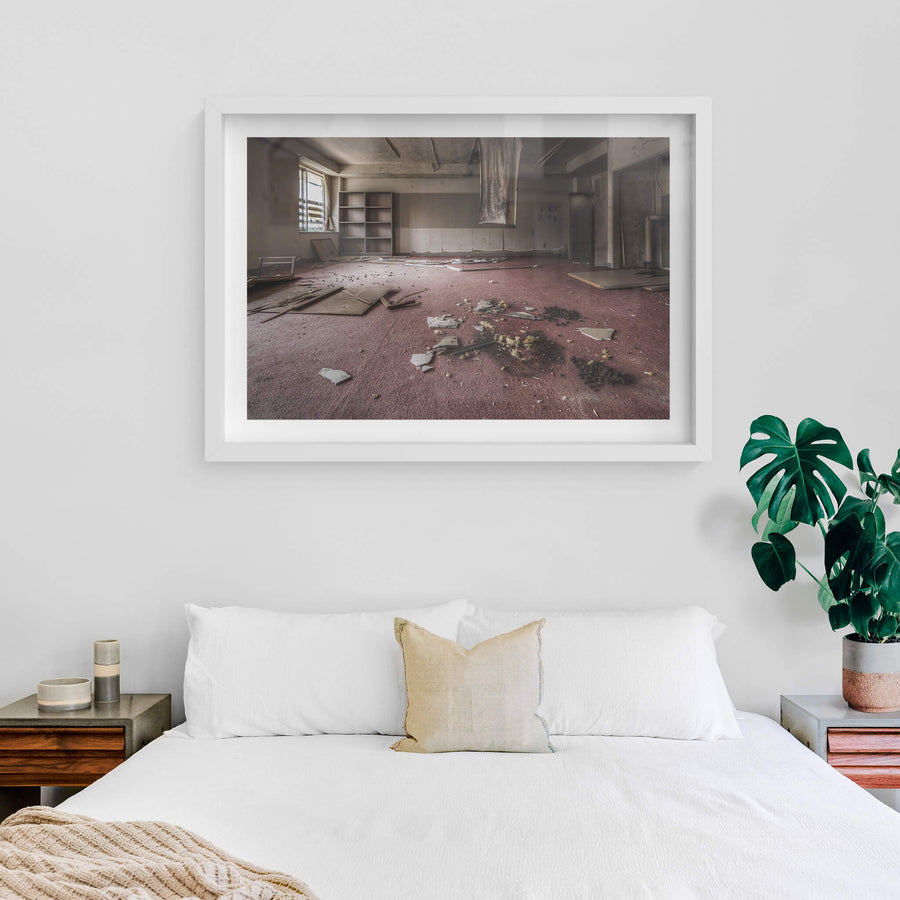
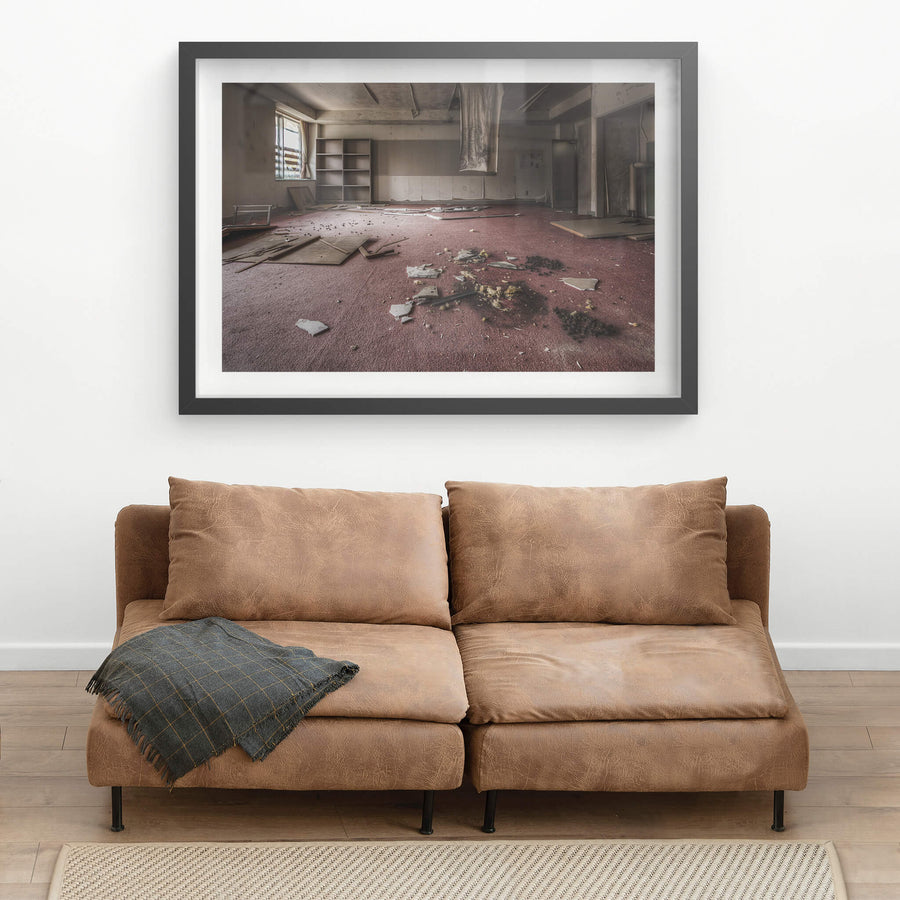
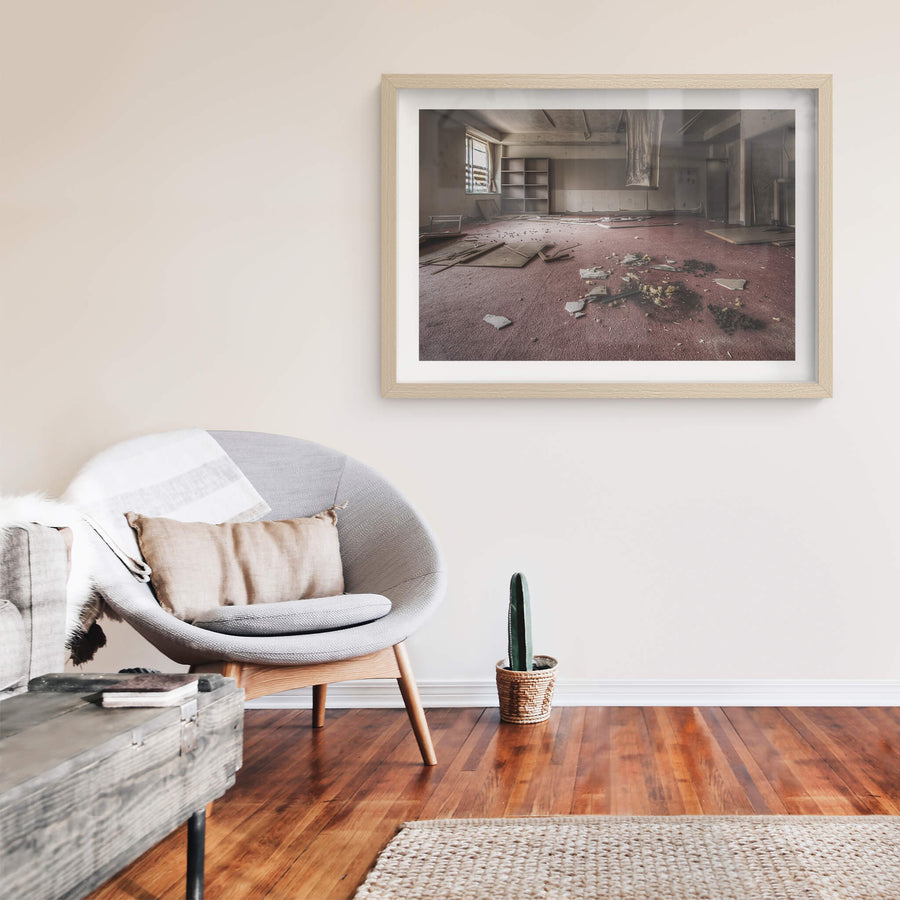
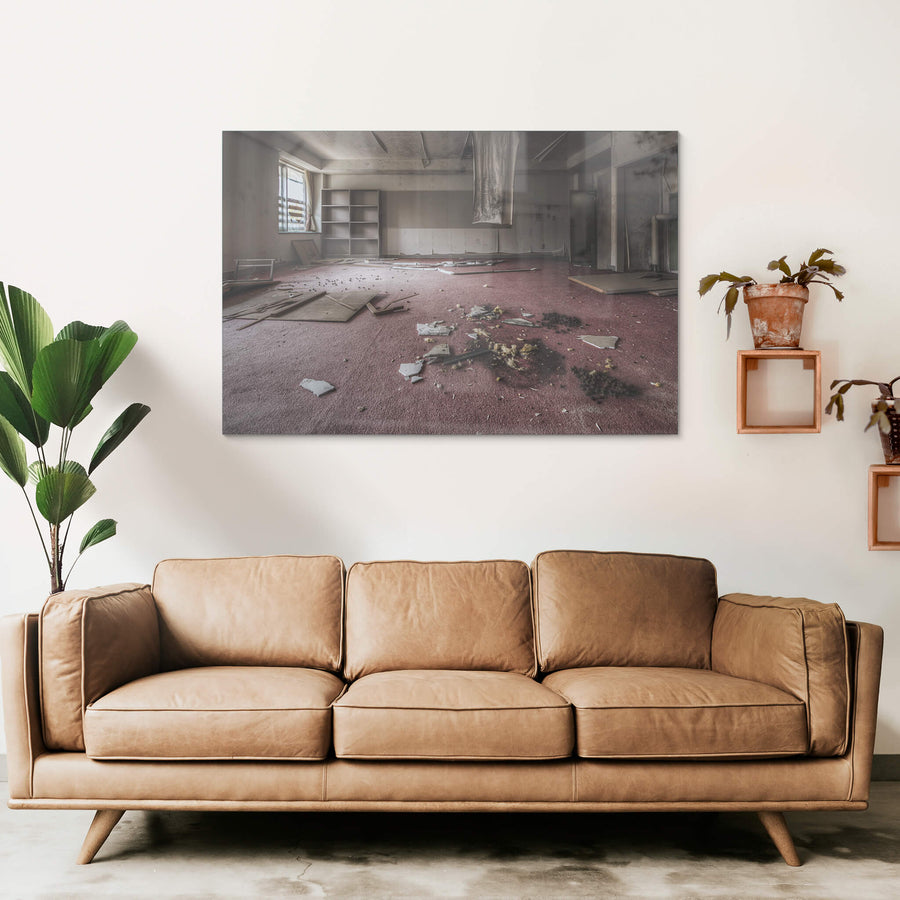
Print datasheet
- Title
- Carpeted Room
- Series
- Family School Fureai
- Catalogue
- FSF-006
- Process
- Giclée
- Captured
- 28 April 2016
- Camera
- NIKON D810
- Lens
- 14.0-24.0 mm f/2.8
- Aperture
- f/9.0
- Shutter
- 1/3 s
- ISO
- 80
- Focal length
- 14 mm
- Paper
- Ilford Galerie Smooth Cotton Rag 310 gsm
- Paper size
- 297 × 210 mm
- Location
- Yubari, Hokkaido, Japan
- Authenticity
- C2PA verified provenance →
- Recognised by
- Highly Commended in Multimedia at the 2016 National Trust of Australia (NSW) Heritage Awards
Yubari, Hokkaido, Japan
Map · Mapbox · OpenStreetMap
About this print
The carpeted room sits inside the former Family School Fureai, a reinforced-concrete three-storey building in Fukuzumi, Yubari, Hokkaido. Originally built in 1975 as Asahi Elementary School, consolidating three predecessor schools whose combined enrolment had once numbered in the thousands, it opened with 351 students across 13 classes and closed just eight years later as Yubari's coal industry entered its final decline. The building was repurposed as group accommodation from 1983. The facility ceased accepting guests in 2006 and has sat unoccupied since.
Brett Patman

The series
Family School Fureai
Family School Fureai stands on a hillside at the northern end of Yubari in Hokkaido. The building opened on 1 April 1975 as Asahi Elementary School, a new three-storey reinforced-concrete structure built on the site of the demolished wooden Yubari Second Elementary (Daini). It consolidated three local schools - Daini, Fukuzumi and Teibi - that had lost most of their students as Yubari's coal industry shrank. By the early 1980s enrolment had collapsed; the school closed on 31 March 1983 after just eight years. In 1983 the building was repurposed as the Family School Fureai public dormitory. In June 2006 Yubari City announced its fiscal collapse; the city formally entered financial reconstruction status on 6 March 2007. The building has sat empty since. Inside there is no graffiti - only kanji on the chalkboards. Deer and foxes use it now.
Print sizes
The anatomy view shows what this finish is as a physical object: paper margin, mat band, frame depth, acrylic profile. The comparison strip shows how each size sits relative to the others at true scale. Click a size or a finish to update both.
| Type | Size | Width | Height |
|---|


