Mountain View

Provenance

Camera
NIKON D810
Lens
14.0-24.0 mm f/2.8
Settings
14mm · f/9.0 · 1/125 · ISO 100
Paper
Ilford Galerie Smooth Cotton Rag 310 gsm

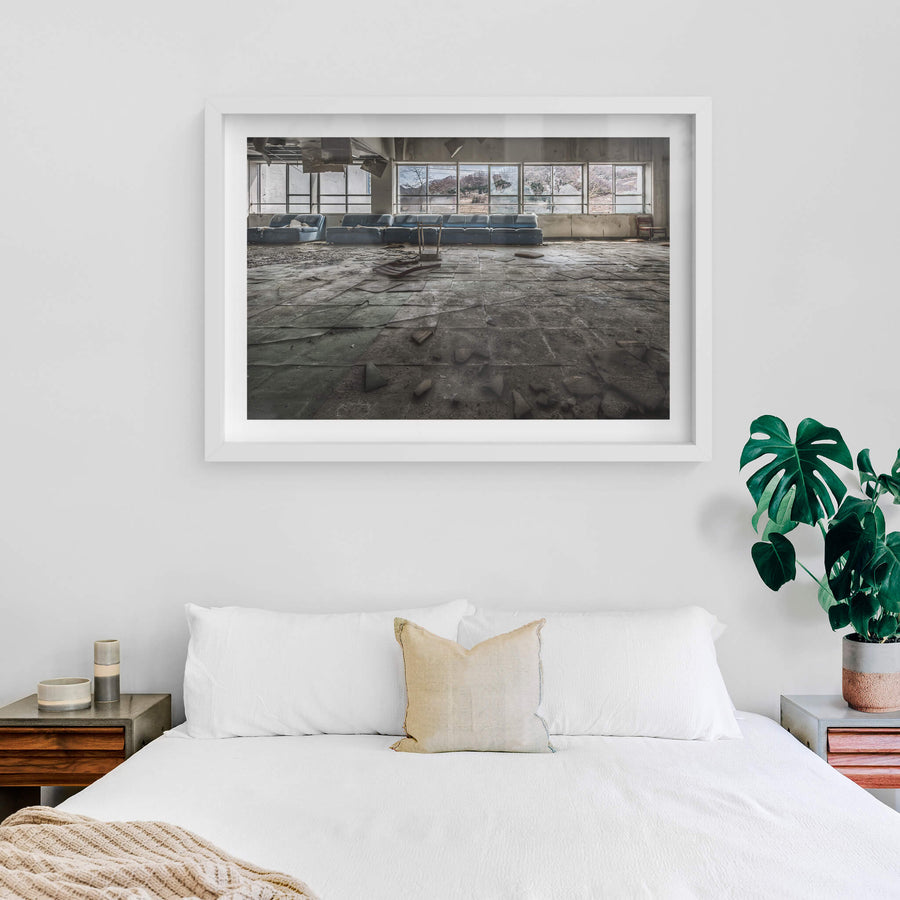
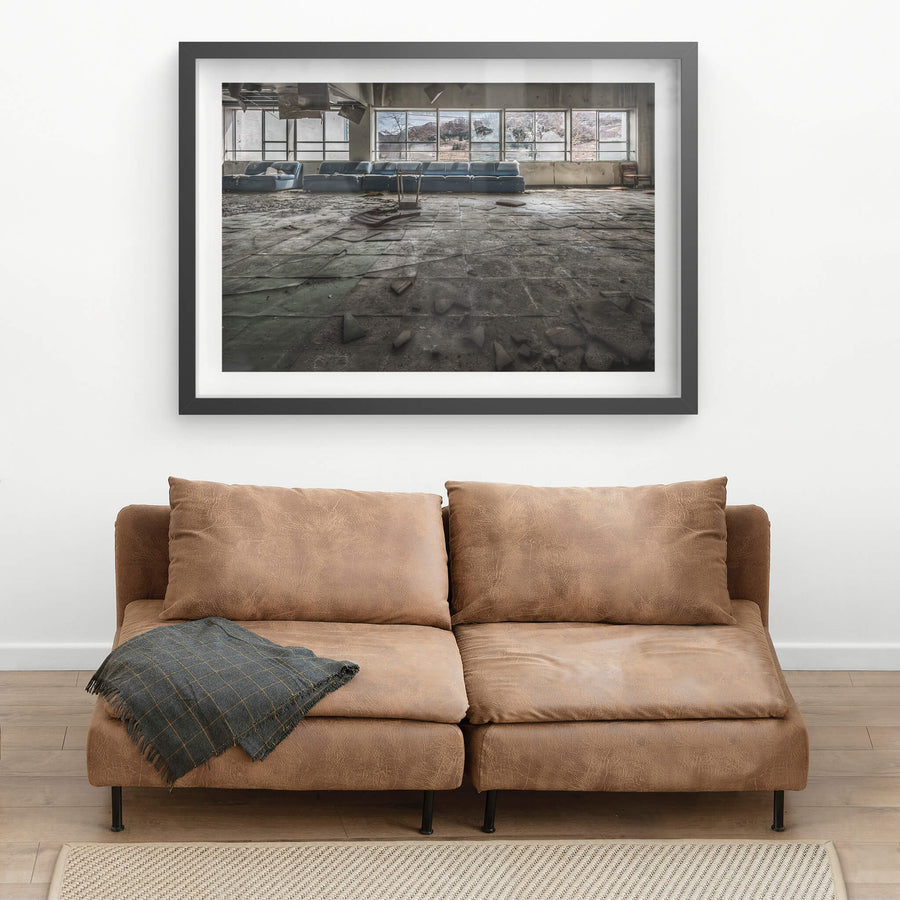
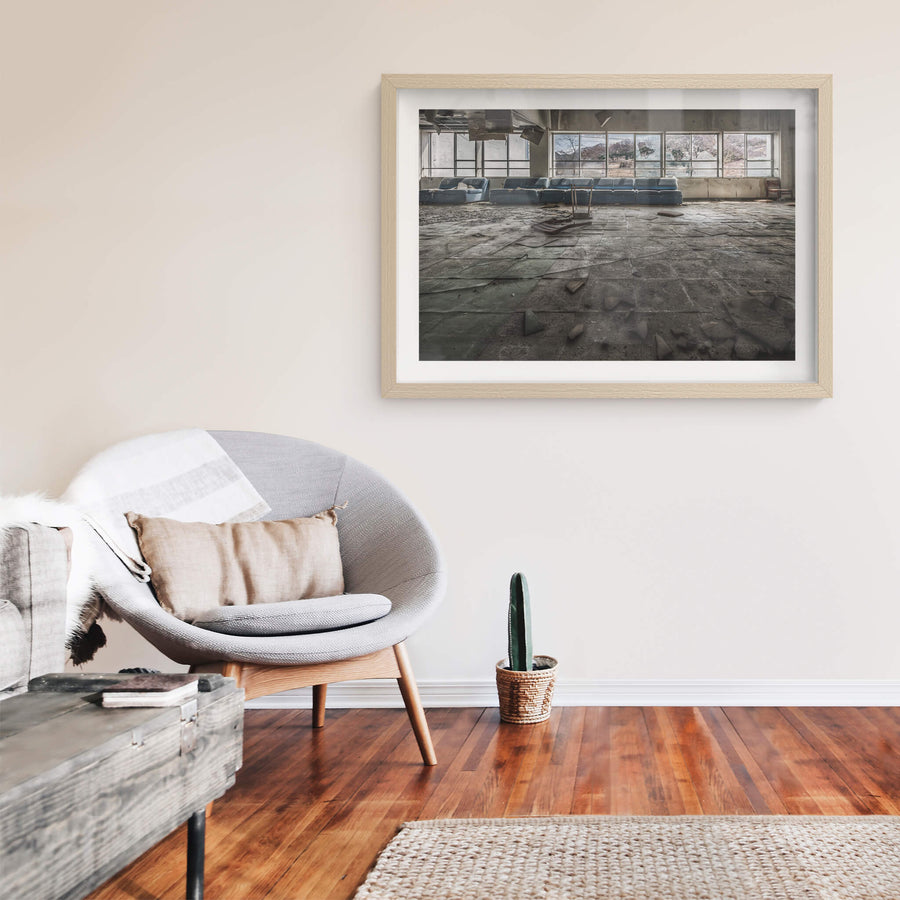
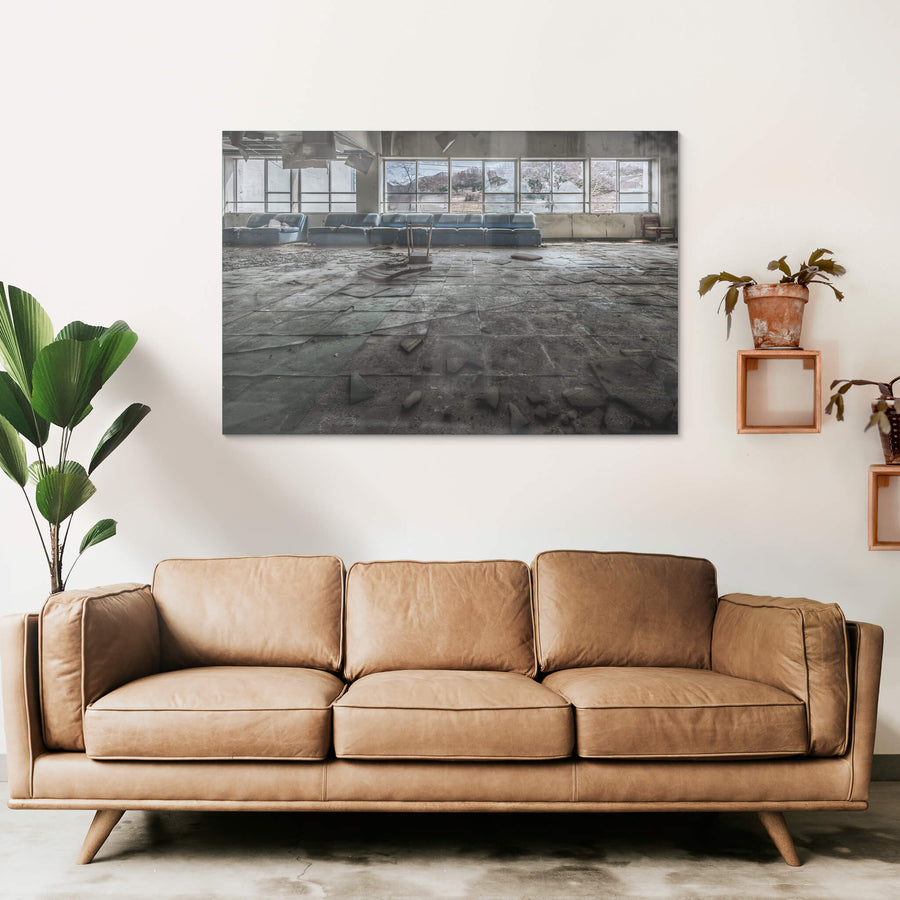
Empty timber desks arranged in rows face a bank of windows, their glass clouded with grime and age. Natural light filters through in pale columns onto the bare floor. Beyond the windows, a forested mountain rises close and fills the upper portion of the frame. Peeling paint and general deterioration mark the walls and ceiling.

Edition
Open edition

Open edition
Printed to order, no fixed quantity. Each print is hand-signed by the photographer.

Limited edition
A fixed number of prints exist. Once sold, the edition closes permanently. Each print is individually numbered and signed.

$100.00 AUD
Size
Type
Colour
Signed, numbered, with COA. Made to order in 5 to 10 business days (unframed). Shipped in protective packaging with edition certificate, paper-stock reference and a printed care guide.
See certificate sample →

Shipping Free shipping over $250. Ships worldwide, rates calculated at checkout.

Returns Damaged in transit? We replace it. Full policy →

Ships within 10 business days · signed & numbered

In situ
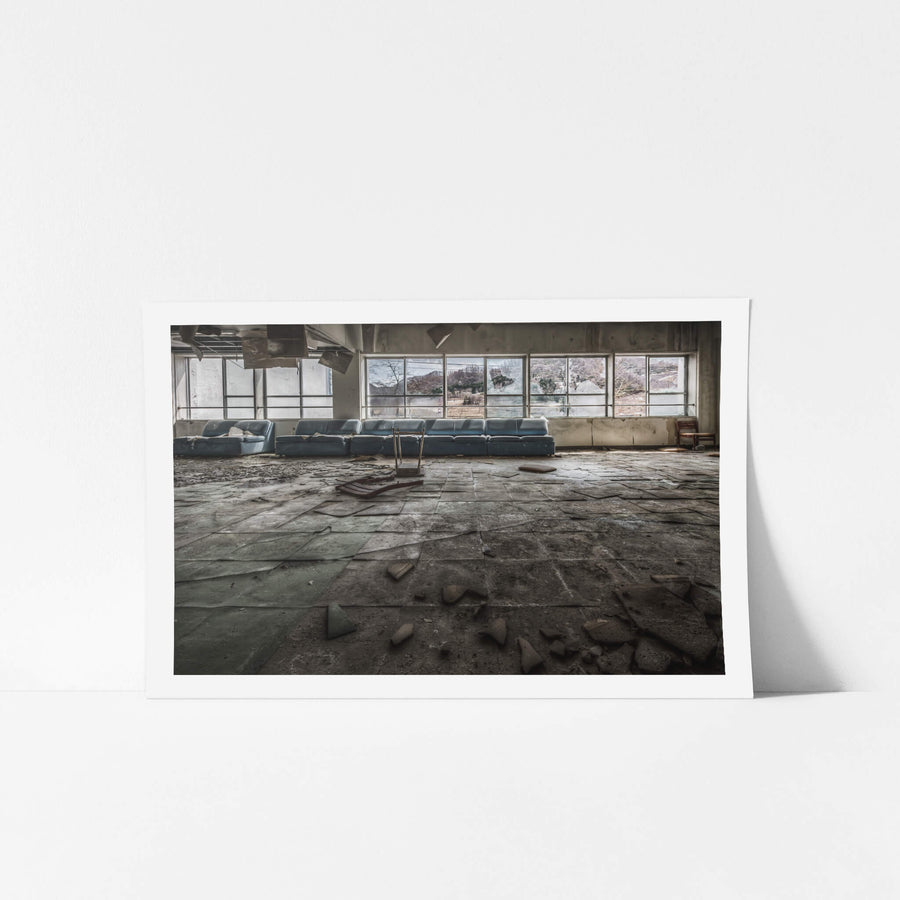
Mountain View at Family School Fureai, blue vinyl couches line the far wall beneath a bank of large windows.Mountain View at Family School Fureai, blue vinyl couches line the far wall beneath a bank of large windows.Mountain View at Family School Fureai, blue vinyl couches line the far wall beneath a bank of large windows.Mountain View at Family School Fureai, blue vinyl couches line the far wall beneath a bank of large windows.Mountain View at Family School Fureai, blue vinyl couches line the far wall beneath a bank of large windows.
01 PROVENANCE

Print datasheet

Title
Mountain View
Series
Family School Fureai
Catalogue
FSF-020
Process
Giclée
Captured
28 April 2016
Camera
NIKON D810
Lens
14.0-24.0 mm f/2.8
Aperture
f/9.0
Shutter
1/125 s
ISO
100
Focal length
14 mm
Paper
Ilford Galerie Smooth Cotton Rag 310 gsm
Paper size
290 × 200 mm
Location
Yubari, Hokkaido, Japan
Recognised by
Highly Commended in Multimedia at the 2016 National Trust of Australia (NSW) Heritage Awards
02 LOCATION

Yubari, Hokkaido, Japan

Map · Mapbox · OpenStreetMap

03 THE STORY

About this print

Inside Family School Fureai in Yubari, Hokkaido, this photograph records a classroom that has been empty for decades. Timber desks sit in rows facing a bank of windows, their glass clouded with grime, the forested mountain beyond filling the frame as though pressing itself against the building. Light falls through in pale columns onto the bare floor. The walls and ceiling show the slow work of water and time. The building opened on 1 April 1975 as Yubari Municipal Asahi Elementary School, a reinforced-concrete three-storey structure built on the demolished site of Yubari Daini Elementary School, which had enrolled 2,827 students at its 1952 peak. By the time Asahi opened, consolidating three predecessor schools, only 351 students across 13 classes remained. The coal industry that had built Yubari to a population of 107,972 at the 1960 census was already in its final years. The last mine closed in 1990. Asahi Elementary itself closed on 31 March 1983, just eight years after opening, merging into the newly formed Yubari Elementary School as the city's population continued to fall. The building stood vacant until around late 1994, when Yubari Kanko Kaihatsu Co., Ltd., a city-backed third-sector tourism entity, repurposed it as Family School Fureai, a public lodging and group training facility. The conversion was part of Yubari's broader attempt to reinvent a mining city as a tourist destination, a strategy that accumulated ¥5.46 billion in debt for the operator alone and contributed ¥18.6 billion, 53 per cent, to the city's total fiscal rehabilitation deficit of ¥35.3 billion. Family School Fureai ceased accepting guests in 2006. Yubari Kanko Kaihatsu filed for bankruptcy on 2 April 2007. The building was not among the facilities transferred to the successor operator. It has had no custodian since. This photograph was made in 2016, a decade into the building's second abandonment.

04 FROM THE FIELD NOTES

Inside Family School Fureai in Yubari, Hokkaido, a forgotten classroom still holds its desks in rows, each one facing a wall of windows framing a mountain that seems almost close enough to touch. The building began as Yubari Municipal Asahi Elementary School, purpose-built in reinforced concrete in 1975 to consolidate three predecessor schools whose combined enrolment had once numbered in the thousands. By opening day, only 351 students remained across 13 classes. The school closed in 1983, eight years after it opened, as Yubari's coal economy finished its long collapse. From around 1994, the building was repurposed as a public lodging and group training facility under the name Family School Fureai, operated by Yubari Kanko Kaihatsu Co., Ltd. as part of the city's ill-fated coal-to-tourism strategy. It ceased accepting guests in 2006, the year Yubari declared a fiscal crisis, and has stood empty since.

Brett Patman

Family School Fureai

The series

Family School Fureai

2016 · 30 photographs

Family School Fureai stands on a hillside at the northern end of Yubari in Hokkaido. The building opened on 1 April 1975 as Asahi Elementary School, a new three-storey reinforced-concrete structure built on the site of the demolished wooden Yubari Second Elementary (Daini). It consolidated three local schools - Daini, Fukuzumi and Teibi - that had lost most of their students as Yubari's coal industry shrank. By the early 1980s enrolment had collapsed; the school closed on 31 March 1983 after just eight years. The building stayed empty until Yubari City's tourism third-sector firm Yubari Kanko Kaihatsu, established October 1994, repurposed it as the Family School Fureai public dormitory. In June 2006 Yubari City announced its fiscal collapse; the city formally entered financial reconstruction status on 6 March 2007 and YKK ceased trading 31 March 2007 with ¥5.46 billion of debt. The building has sat empty since. Inside there is no graffiti - only kanji on the chalkboards. Deer and foxes use it now.

View all in this series →

05 SIZE GUIDE

Print sizes

The anatomy view shows what this finish is as a physical object: paper margin, mat band, frame depth, acrylic profile. The comparison strip shows how each size sits relative to the others at true scale. Click a size or a finish to update both.

Anatomy · true ratio
TypeSizeWidthHeight
08 BY POST · NO SPAM

Read the full story

Articles when they're published. The history behind a place. The day of a shoot. The work between prints. No marketing, no schedule.

You're subscribed.