
Mosaic
Provenance
- Camera
- NIKON D810
- Lens
- 14.0-24.0 mm f/2.8
- Settings
- 14mm · f/9.0 · 2s · ISO 100
- Paper
- Ilford Galerie Smooth Cotton Rag 310 gsm
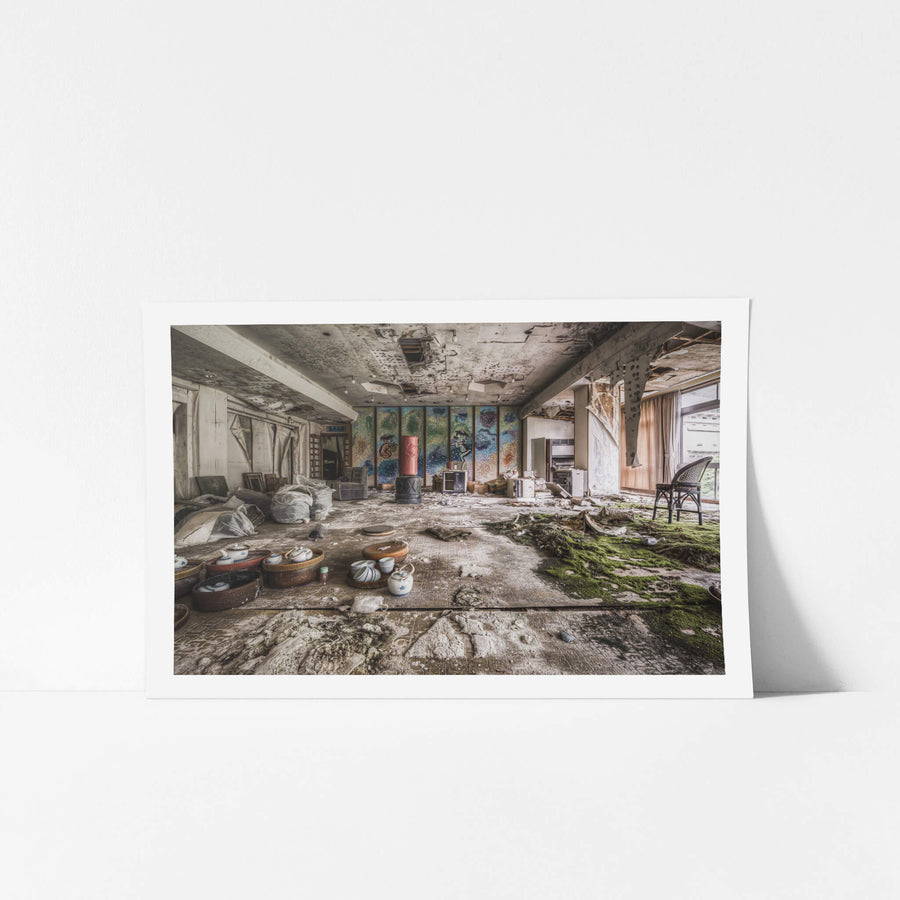
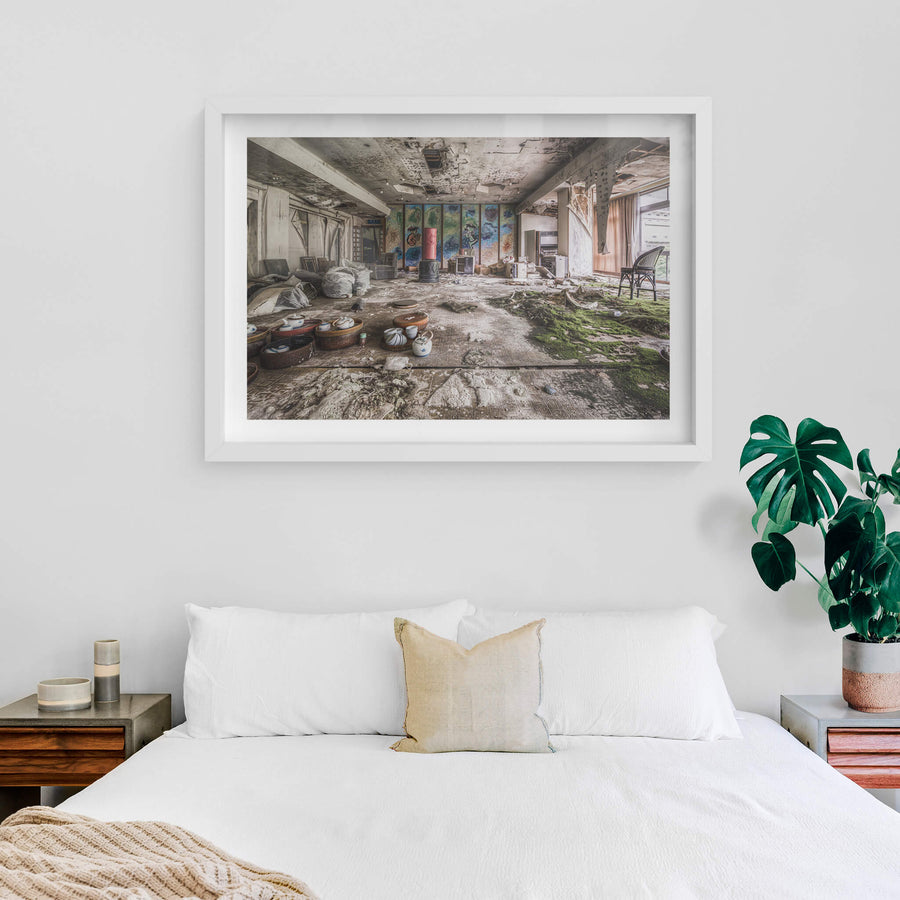
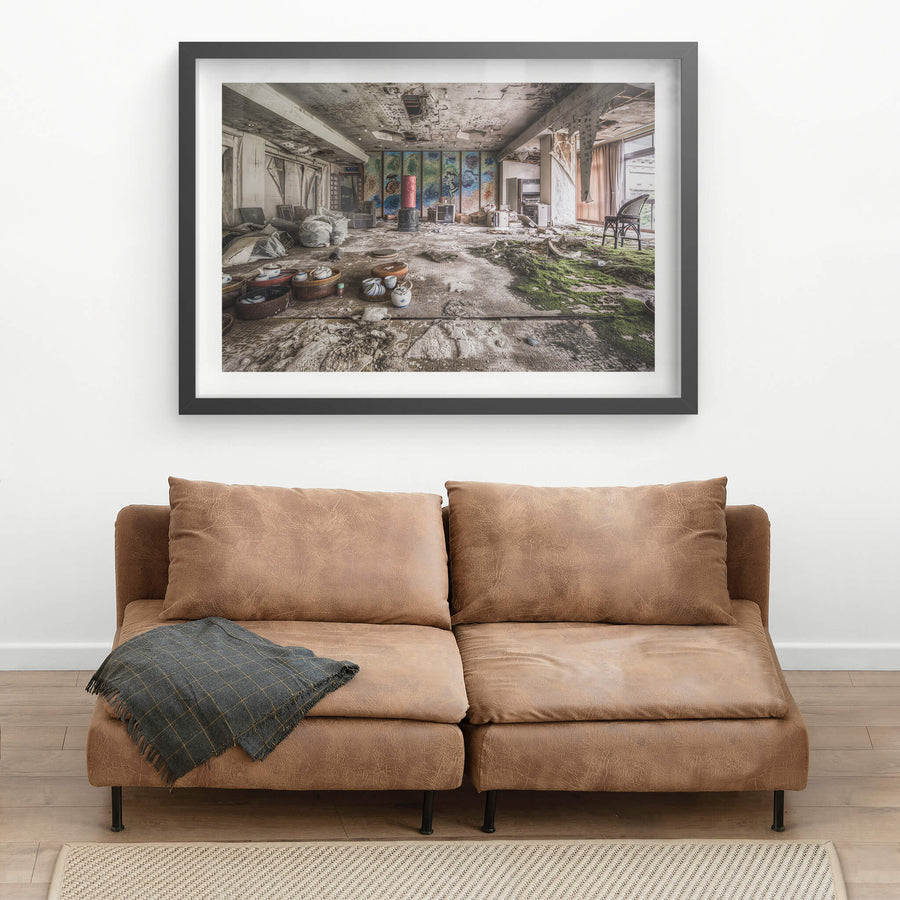
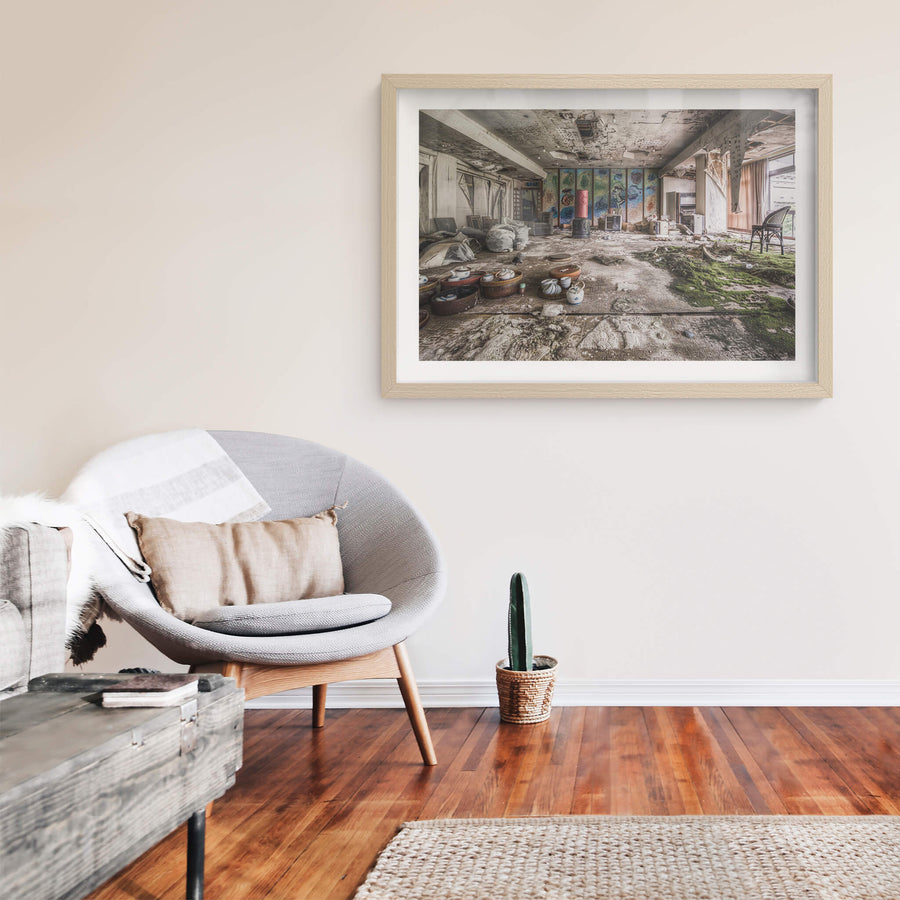
A colourful mosaic of cartoon-like figures, rendered in tens of thousands of small tiles, covers a wall inside the abandoned Kinugawa Kan hotel. Light filters through, highlighting the intricate pattern and its slow decay.
Open edition
Printed to order, no fixed quantity. Each print is hand-signed by the photographer.
Limited edition
A fixed number of prints exist. Once sold, the edition closes permanently. Each print is individually numbered and signed.
Shipping Free shipping over $250. Ships worldwide, rates calculated at checkout.
Returns Damaged in transit? We replace it. Full policy →
Ships within 10 business days · signed & numbered
In situ
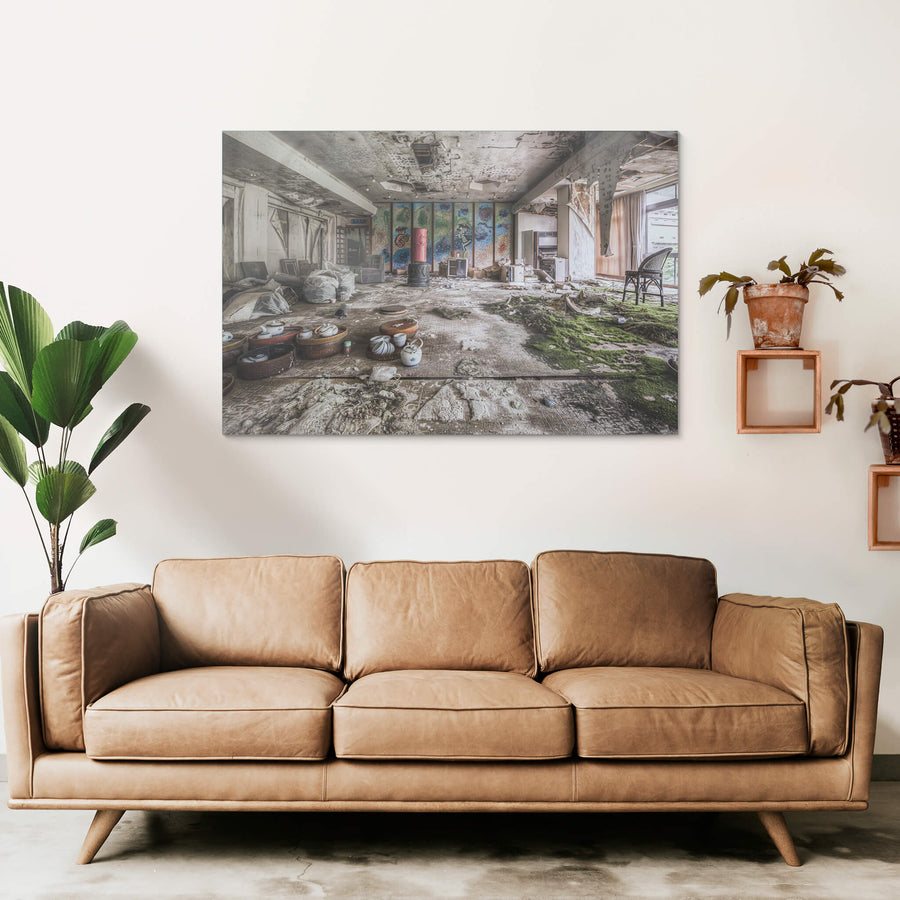
Print datasheet
- Title
- Mosaic
- Series
- Kinugawa Kan
- Catalogue
- KKA-015
- Process
- Giclée
- Captured
- 9 May 2016
- Camera
- NIKON D810
- Lens
- 14.0-24.0 mm f/2.8
- Aperture
- f/9.0
- Shutter
- 2s s
- ISO
- 100
- Focal length
- 14 mm
- Paper
- Ilford Galerie Smooth Cotton Rag 310 gsm
- Paper size
- 297 × 210 mm
- Location
- Nikko, Tochigi, Japan
- Authenticity
- C2PA verified provenance →
- Recognised by
- Highly Commended in Multimedia at the 2016 National Trust of Australia (NSW) Heritage Awards
Nikko, Tochigi, Japan
Map · Mapbox · OpenStreetMap
About this print
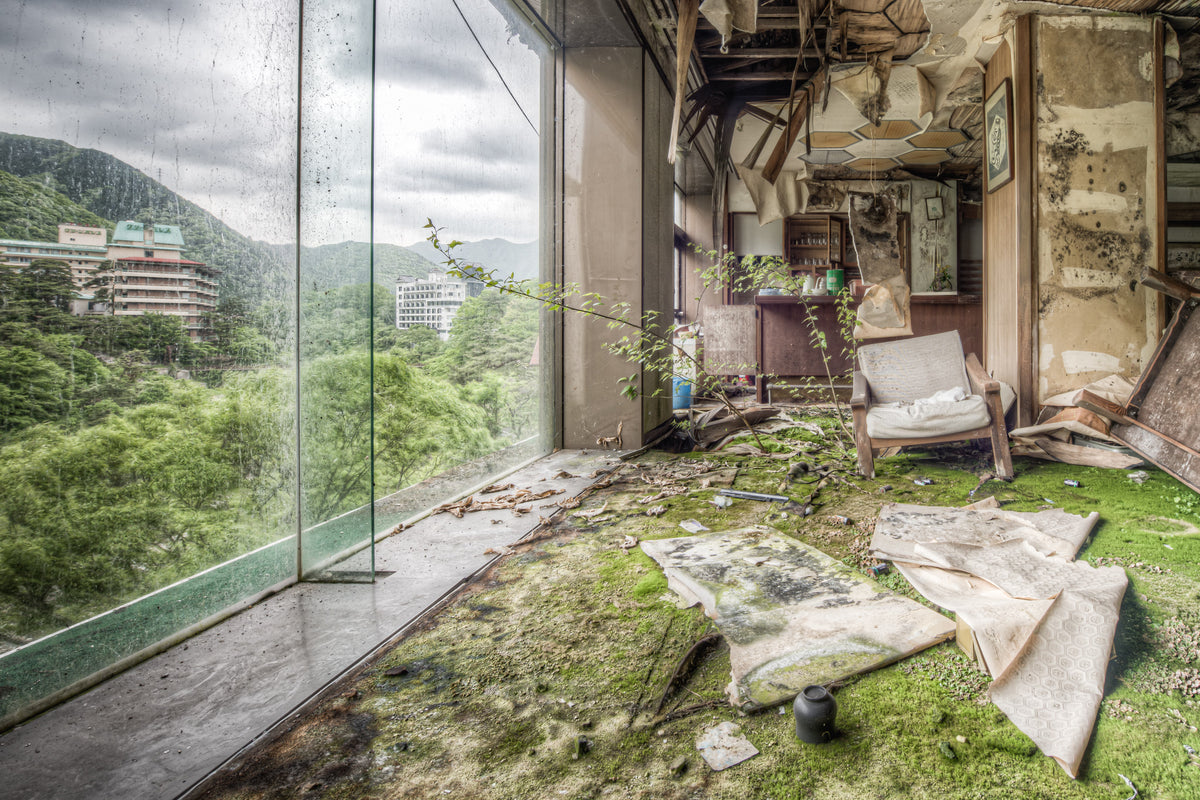
A large mosaic mural dominates the far wall. Bright blues, greens, and golds depict kappa figures mid-dance across its tiled surface. Below it, the room is gutted. Lacquered trays and porcelain teapots sit on the filthy floor alongside a red punching totem dragged from elsewhere in the building. Moss spreads in a thick green carpet near the windows. Ceiling panels hang loose, exposing concrete beams. Faded curtains filter weak light from the balcony.
Brett Patman
The series
Kinugawa Kan
Hoshi Takashi (星堯) incorporated Yugen-gaisha Kinukawa-kan Honten (有限会社きぬ川館本店) on 31 December 1942, on the Kinugawa River gorge in what is now Nikko City. The hotel grew to nine storeys, 70 guest rooms, one restaurant, and the Kappa-buro (かっぱ風呂) hot-spring bath on the river. In June 1999 the company filed for bankruptcy with debts of approximately 30億円, the first hotel at Kinugawa Onsen to fail in the post-bubble era.
Print sizes
The anatomy view shows what this finish is as a physical object: paper margin, mat band, frame depth, acrylic profile. The comparison strip shows how each size sits relative to the others at true scale. Click a size or a finish to update both.
| Type | Size | Width | Height |
|---|


