Split

Provenance

Camera
NIKON D850
Lens
14.0-24.0 mm f/2.8
Settings
14mm · f/8.0 · 1/13 · ISO 100
Paper
Ilford Galerie Smooth Cotton Rag 310 gsm

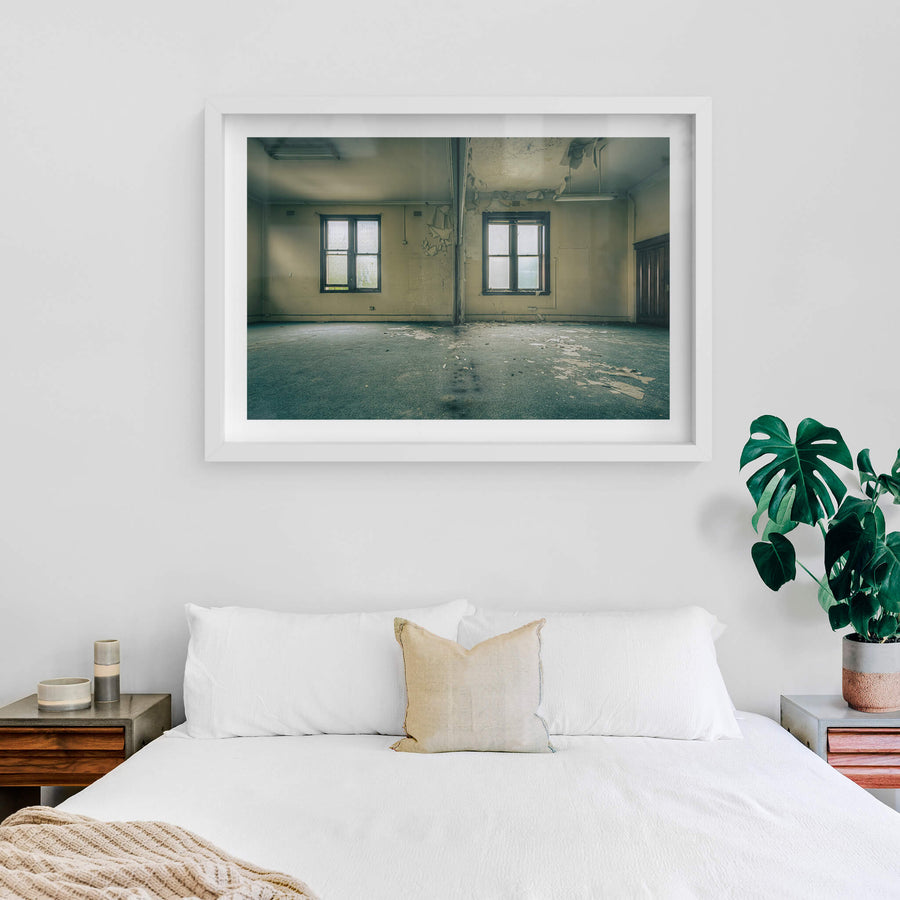
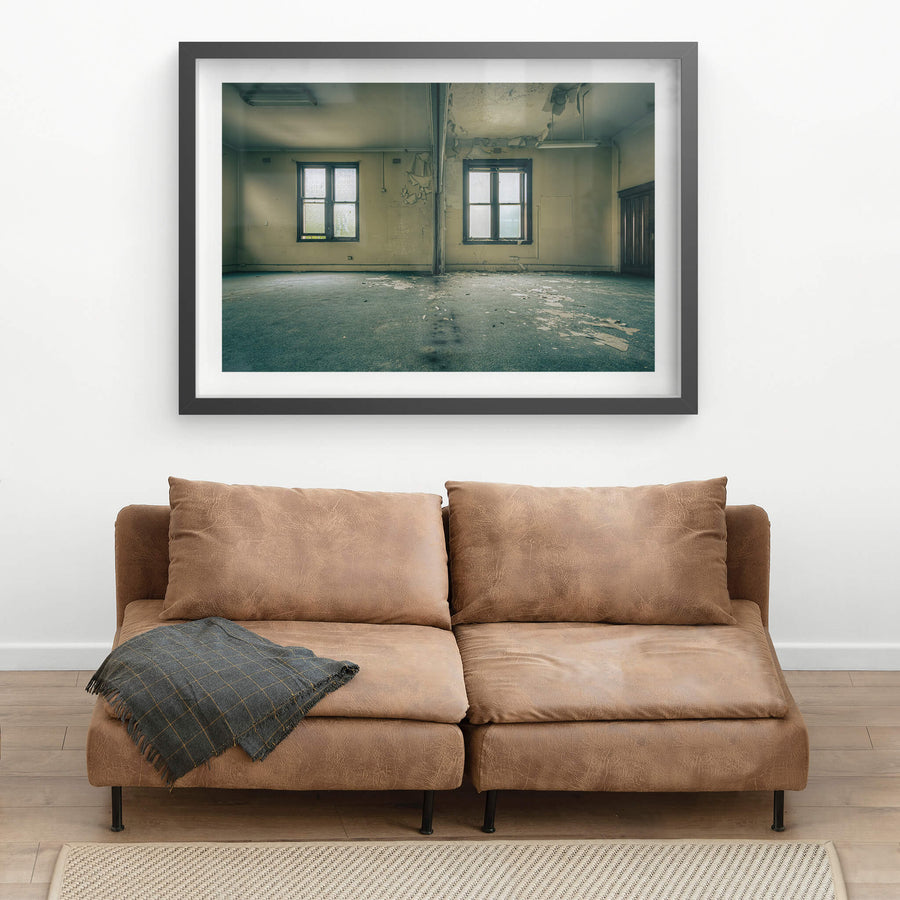
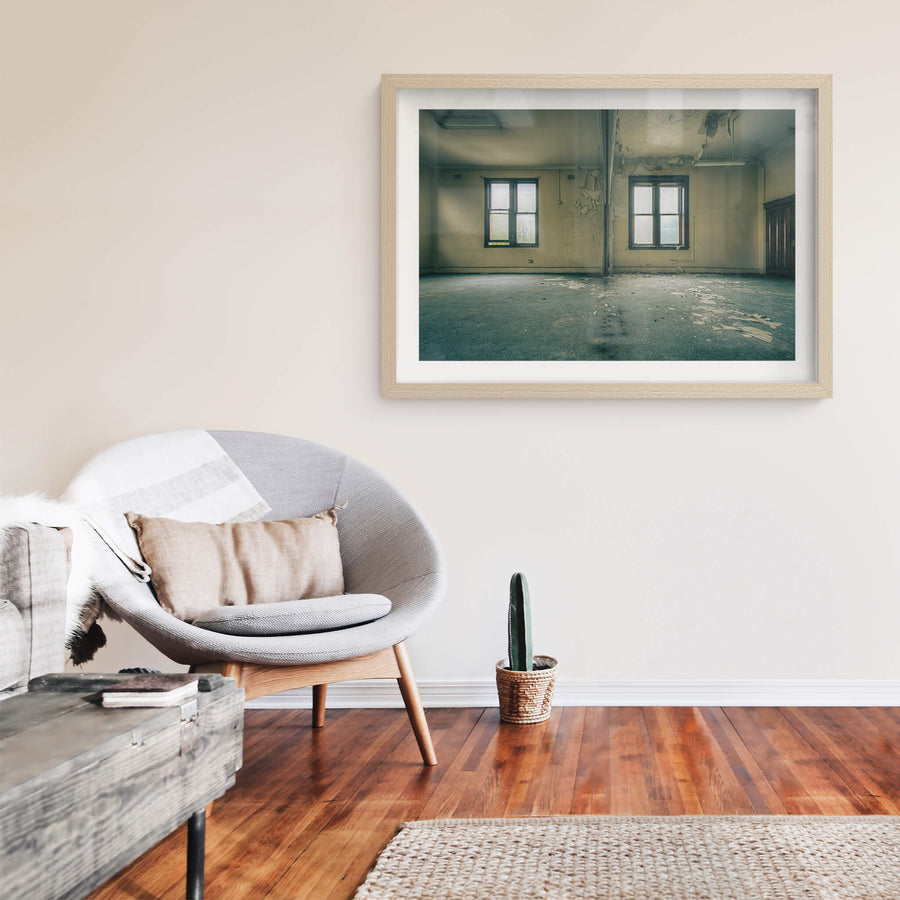
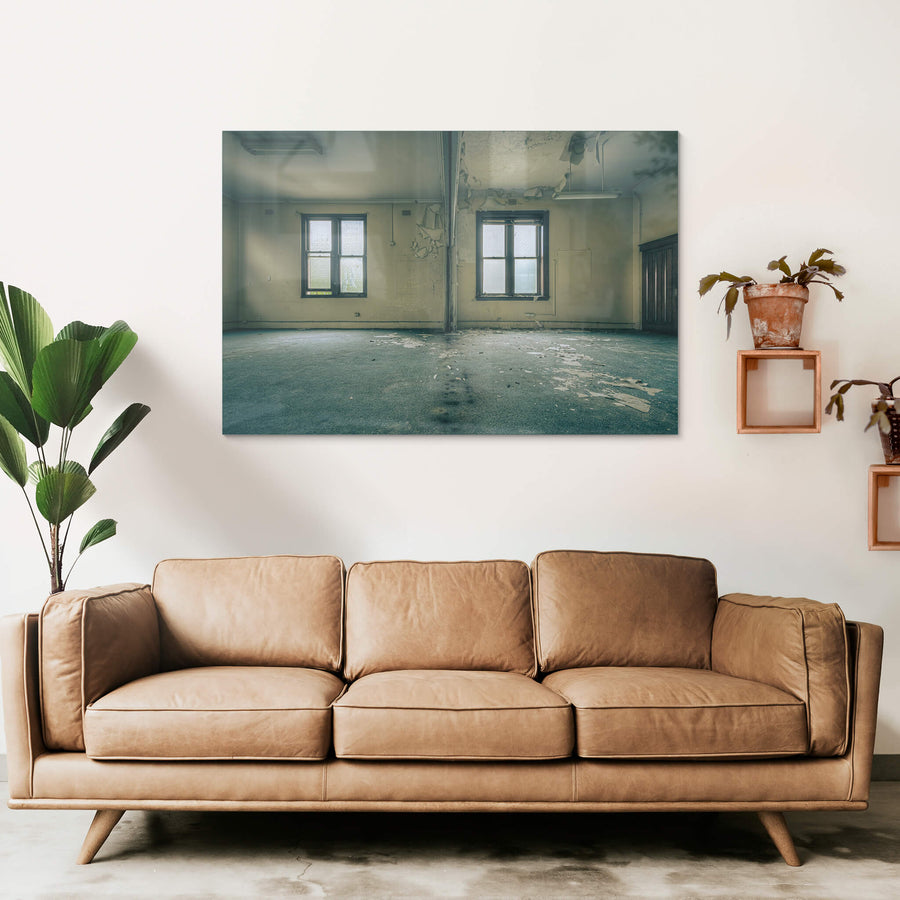
A ward wall with paint peeling in large splits and curls. Underlying plaster exposed in patches. Multiple paint layers visible at the edges of each split. Natural light falls across the surface, picking out the texture of the damage. The floor below is bare.

Edition
Open edition

Open edition
Printed to order, no fixed quantity. Each print is hand-signed by the photographer.

Limited edition
A fixed number of prints exist. Once sold, the edition closes permanently. Each print is individually numbered and signed.

$100.00 AUD
Size
Type
Colour
Signed, numbered, with COA. Made to order in 5 to 10 business days (unframed). Shipped in protective packaging with edition certificate, paper-stock reference and a printed care guide.
See certificate sample →

Shipping Free shipping over $250. Ships worldwide, rates calculated at checkout.

Returns Damaged in transit? We replace it. Full policy →

Ships within 10 business days · signed & numbered

In situ
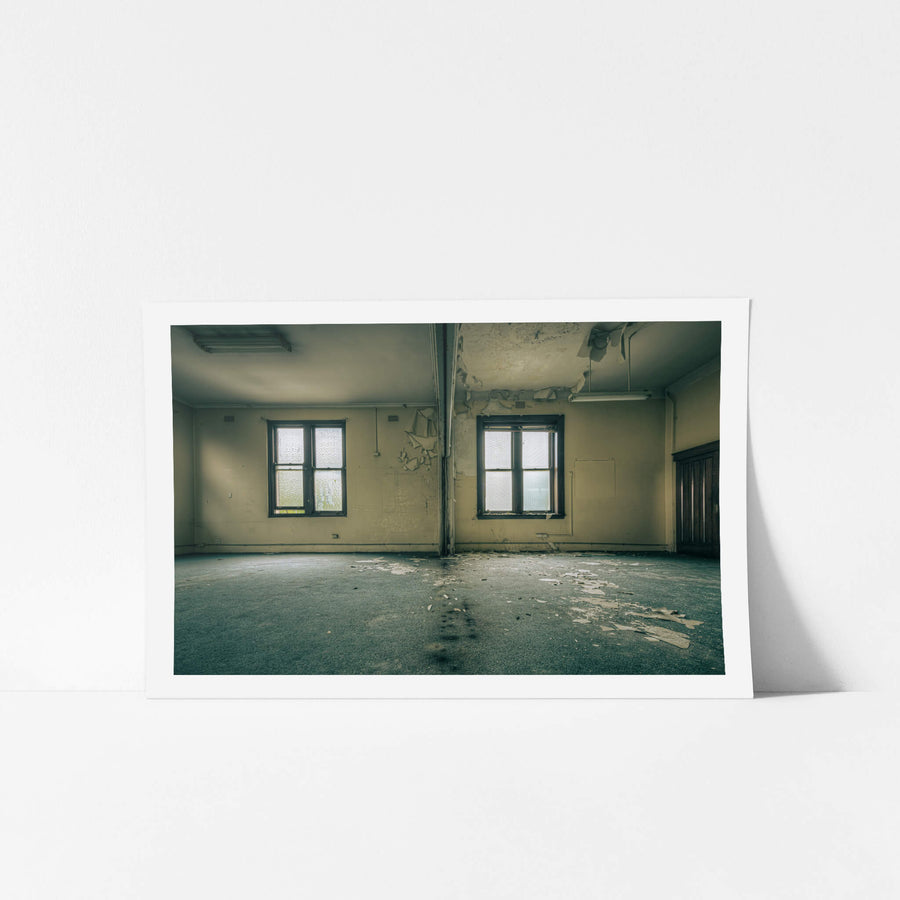
Split at Lewisham Hospital, two frosted-glass windows sit on adjacent walls, their dark timber frames squaring off dull.Split at Lewisham Hospital, two frosted-glass windows sit on adjacent walls, their dark timber frames squaring off dull.Split at Lewisham Hospital, two frosted-glass windows sit on adjacent walls, their dark timber frames squaring off dull.Split at Lewisham Hospital, two frosted-glass windows sit on adjacent walls, their dark timber frames squaring off dull.Split at Lewisham Hospital, two frosted-glass windows sit on adjacent walls, their dark timber frames squaring off dull.
01 PROVENANCE

Print datasheet

Title
Split
Series
Lewisham Hospital
Catalogue
LHO-021
Process
Giclée
Captured
28 January 2019
Camera
NIKON D850
Lens
14.0-24.0 mm f/2.8
Aperture
f/8.0
Shutter
1/13 s
ISO
100
Focal length
14 mm
Paper
Ilford Galerie Smooth Cotton Rag 310 gsm
Paper size
290 × 200 mm
Location
Lewisham, New South Wales, Australia
Recognised by
Highly Commended in Multimedia at the 2016 National Trust of Australia (NSW) Heritage Awards
02 LOCATION

Lewisham, New South Wales, Australia

Map · Mapbox · OpenStreetMap

03 THE STORY

About this print

The wall is doing what walls do when no one is left to maintain them. Paint applied over decades has split along its own seams, curling back from the plaster in long strips, exposing the layers beneath. Each stratum is a different colour, a different era, a different coat applied by someone whose name is no longer recorded anywhere. The ward is bare now. Light crosses the surface and catches the texture of the damage. The former Lewisham Hospital, Convent and Grounds sits on West Street in Lewisham, in Sydney's inner west. The Little Company of Mary, a Catholic nursing order founded in Nottingham in 1877, opened the first wing of the hospital on 9 June 1889 after six sisters arrived in Sydney four years earlier with five pounds between them. The order's patron, Cardinal Patrick Francis Moran, blessed seven foundation stones at the site over 22 years. By 1949, the hospital had treated 140,757 in-patients and 950,691 outpatients across its first six decades of operation. The complex grew in stages. A general hospital wing opened in 1900. A new convent followed in 1908. The Chapel of the Maternal Heart of Mary, a Byzantine Revival structure with a high vaulted ceiling, opened in 1927. The sisters ran a nurse training school from the site, the first of five they would operate across Australia. The Australasian Province, headquartered at Lewisham, became the largest province of the Little Company of Mary in the world. The Little Company of Mary vacated the site in 1986 after nearly a century of continuous operation. The Society of St Vincent de Paul took ownership in 1987 and the hospital formally closed around 1988. What the photograph recorded in 2019 is a ward wall in the process of returning to its component parts. The paint, the plaster, the years of maintenance and repainting, all of it separating in its own time.

04 FROM THE FIELD NOTES

The ward wall inside the former Lewisham Hospital, Convent and Grounds tells its own version of the building's history. Paint applied over decades has split and curled away from the plaster, each layer a record of a different era of occupation. The Little Company of Mary opened the hospital on 9 June 1889 and operated it for nearly a century, treating nearly a million outpatients in the first six decades alone. The sisters vacated the site in 1986. What the camera found in 2019 was a building slowly separating from itself, the walls giving back what the years had put on them.

Brett Patman

Lewisham Hospital

The series

Lewisham Hospital

2019 · 26 photographs

Lewisham Hospital was opened on 9 June 1889 by Cardinal Patrick Francis Moran, on the site where the Little Company of Mary, the Blue Nuns, had established their Sydney convent in 1887. Originally named the Children's Hospital of the Holy Child, it admitted women and children only until male patients were accepted from 1912. Over the following decades it became one of Sydney's main general hospitals and nurse training schools. It closed in 1988, a century of Catholic healthcare on one block of West Street, Lewisham. The Lost Collective photographs are of the novitiate building, the wing where new entrants to the order were trained, which sits within the broader hospital, convent, and grounds complex. The historic complex is listed as a local heritage item under the Inner West LEP (formerly Marrickville LEP 2011), within the Lewisham North Precinct. The convent chapel, in a revival Byzantine style with a 1927 Möller pipe organ, still stands on the site.

View all in this series →

05 SIZE GUIDE

Print sizes

The anatomy view shows what this finish is as a physical object: paper margin, mat band, frame depth, acrylic profile. The comparison strip shows how each size sits relative to the others at true scale. Click a size or a finish to update both.

Anatomy · true ratio
TypeSizeWidthHeight
08 BY POST · NO SPAM

Read the full story

Articles when they're published. The history behind a place. The day of a shoot. The work between prints. No marketing, no schedule.

You're subscribed.