
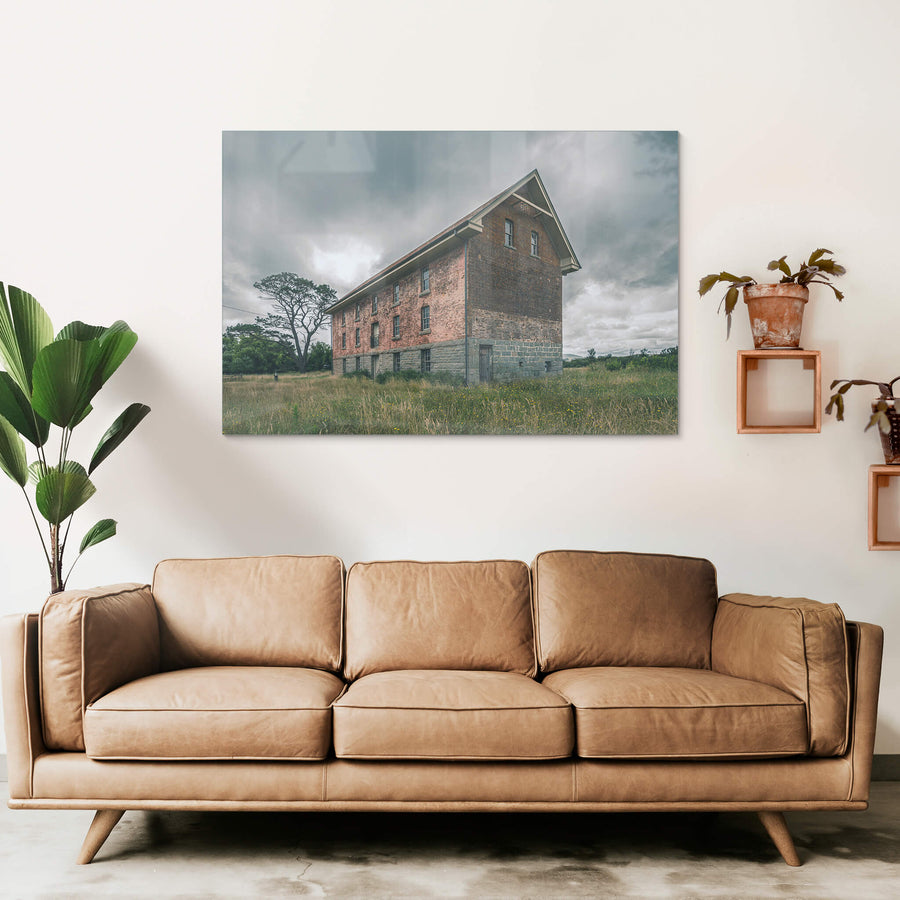
End of the Mill
Provenance
- Camera
- NIKON D850
- Lens
- 14.0-24.0 mm f/2.8
- Settings
- 16mm · f/8.0 · 1/800 · ISO 100
- Paper
- Ilford Galerie Smooth Cotton Rag 310 gsm
Weathered timber members and corroded iron components fill the frame. Surfaces are roughened by exposure, paint and finish long gone. Structural material sits in partial collapse. Natural light picks out the texture of aged wood grain and rust-scaled metal.
Open edition
Printed to order, no fixed quantity. Each print is hand-signed by the photographer.
Limited edition
A fixed number of prints exist. Once sold, the edition closes permanently. Each print is individually numbered and signed.
Shipping Free shipping over $250. Ships worldwide, rates calculated at checkout.
Returns Damaged in transit? We replace it. Full policy →
Ships within 10 business days · signed & numbered
In situ
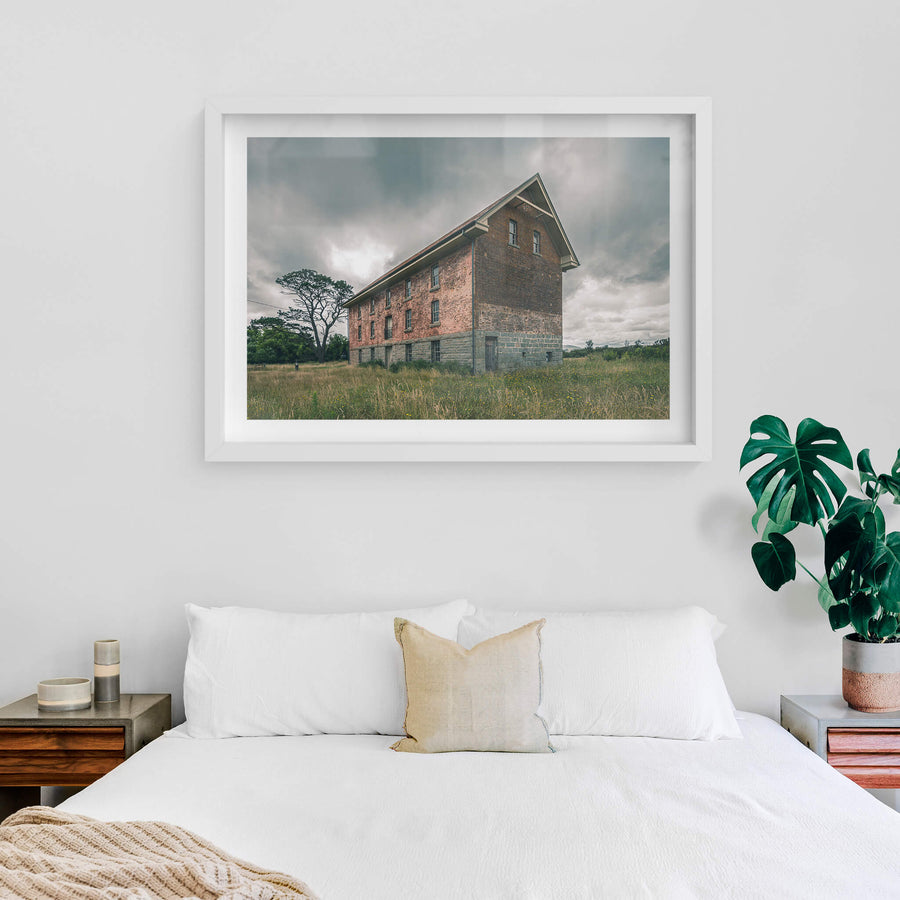
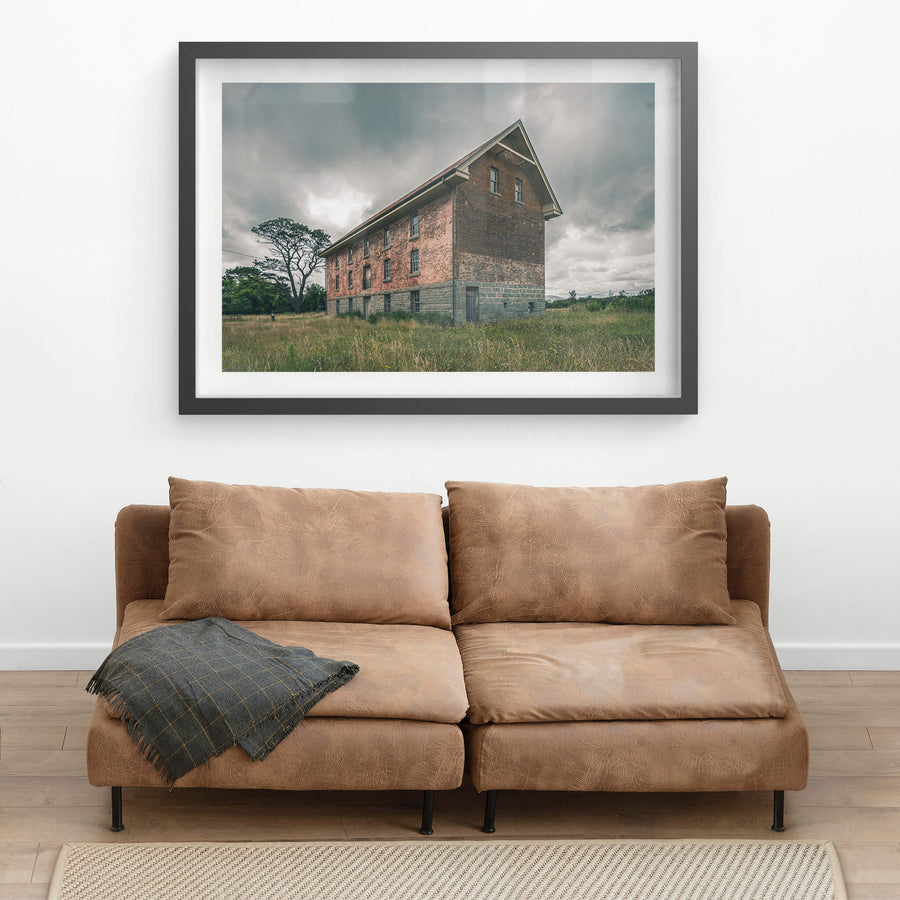
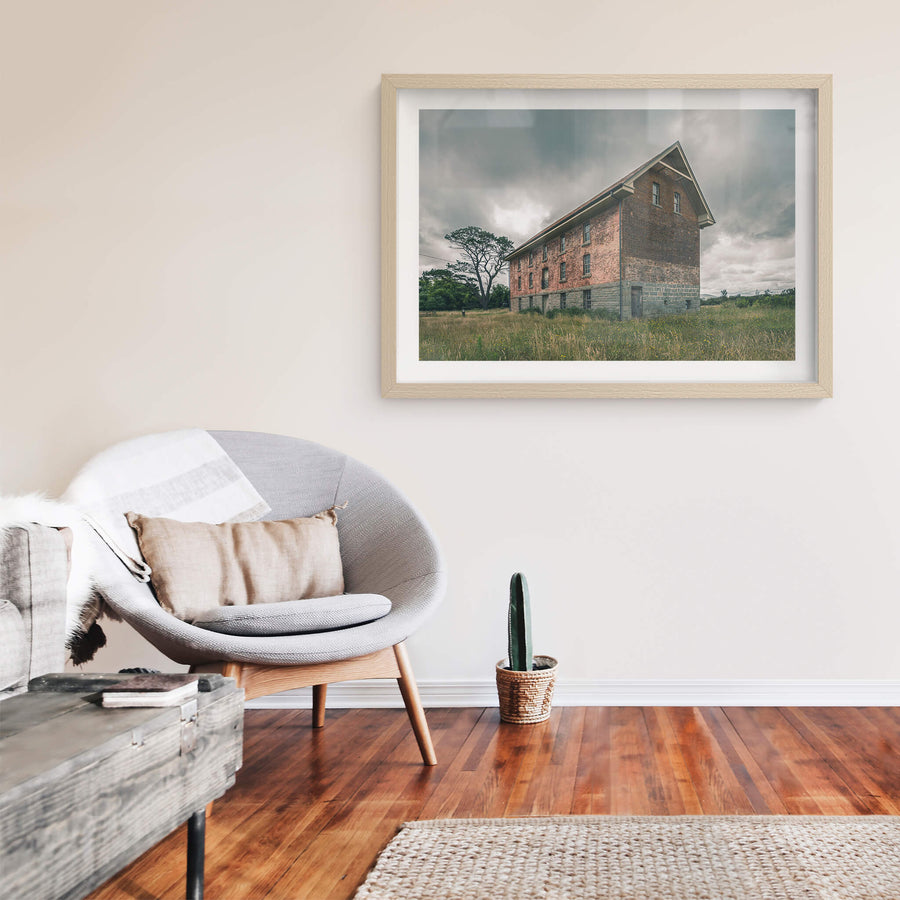
Print datasheet
- Title
- End of the Mill
- Series
- Mill Pond Farm
- Catalogue
- MPF-001
- Process
- Giclée
- Captured
- 21 January 2022
- Camera
- NIKON D850
- Lens
- 14.0-24.0 mm f/2.8
- Aperture
- f/8.0
- Shutter
- 1/800 s
- ISO
- 100
- Focal length
- 16 mm
- Paper
- Ilford Galerie Smooth Cotton Rag 310 gsm
- Paper size
- 297 × 210 mm
- Location
- Jembaicumbene, New South Wales, Australia
- Authenticity
- C2PA verified provenance →
- Recognised by
- Highly Commended in Multimedia at the 2016 National Trust of Australia (NSW) Heritage Awards
Jembaicumbene, New South Wales, Australia
Photographed under access arrangement. The exact location is held in the catalogue but not published on this page. The site is not publicly accessible.
Region · access by arrangement
About this print
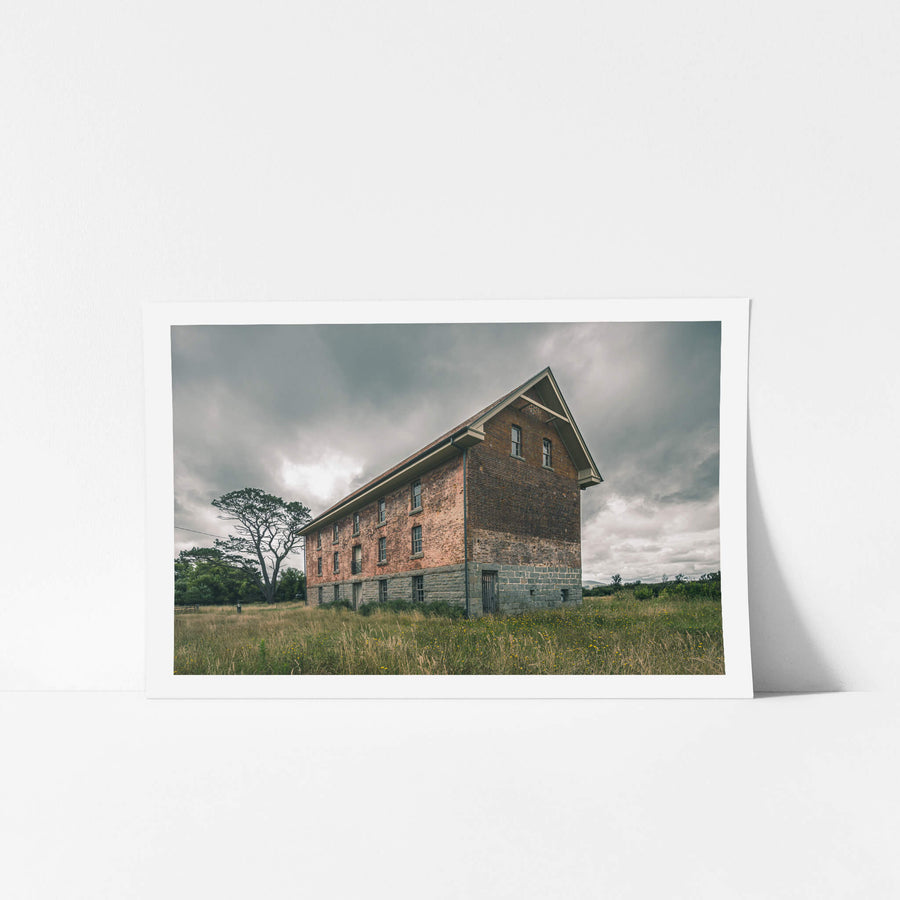
The remnants of the Jembaicumbene Steam Flour Mills at Mill Pond Farm, Jembaicumbene, record the end of a building that Charles Dransfield raised in 1859 from bricks manufactured on the property and granite drawn from the farm itself. The mill opened in January 1860, its steam engine and fittings supplied by P.N. Russell and Co. of Sydney. It served a creek-side community of more than 1,000 miners before milling operations ceased in 1885. What the 2022 photograph records is what slow time and weather have left behind.
Brett Patman

The series
Mill Pond Farm
Mill Pond Farm sits in Jembaicumbene, near Braidwood, on land first worked as the region's earliest dairy in the 1830s. In 1859 a Yorkshire-born goldminer named Charles Dransfield built a four-storey Steam Flour Mill on the property, designed by Sydney architect Charles Langley. A 24-horsepower steam engine ground wheat, sawed timber, and crushed quartz to extract gold. The mill ran until 1885, when the railway arriving in Tarago undercut local flour prices, the financial depression hit, and repeated wheat rust outbreaks finished the run. The mill, stables, and dairy buildings sat unworked for nearly a century. Restoration is in progress.
Print sizes
The anatomy view shows what this finish is as a physical object: paper margin, mat band, frame depth, acrylic profile. The comparison strip shows how each size sits relative to the others at true scale. Click a size or a finish to update both.
| Type | Size | Width | Height |
|---|


