
Long Corrugated Shed
Provenance
- Camera
- NIKON D850
- Lens
- 14.0-24.0 mm f/2.8
- Settings
- 14mm · f/8.0 · 1/1000 sec · ISO 100
- Paper
- Ilford Galerie Smooth Cotton Rag 310 gsm
A single dark power line runs diagonally across the frame towards a long, low building clad in weathered corrugated iron at Jembaicumbene, near Braidwood. A chimney rises through the roof at the left end, beside an open doorway where vegetation has pushed inside. The rightmost window in the facade is dark and boarded, and yellow wildflowers scatter through tall grass under a heavy, clouded sky.
Open edition
Printed to order, no fixed quantity. Each print is hand-signed by the photographer.
Limited edition
A fixed number of prints exist. Once sold, the edition closes permanently. Each print is individually numbered and signed.
Shipping Free shipping over $250. Ships worldwide, rates calculated at checkout.
Returns Damaged in transit? We replace it. Full policy →
Ships within 10 business days · signed & numbered
In situ
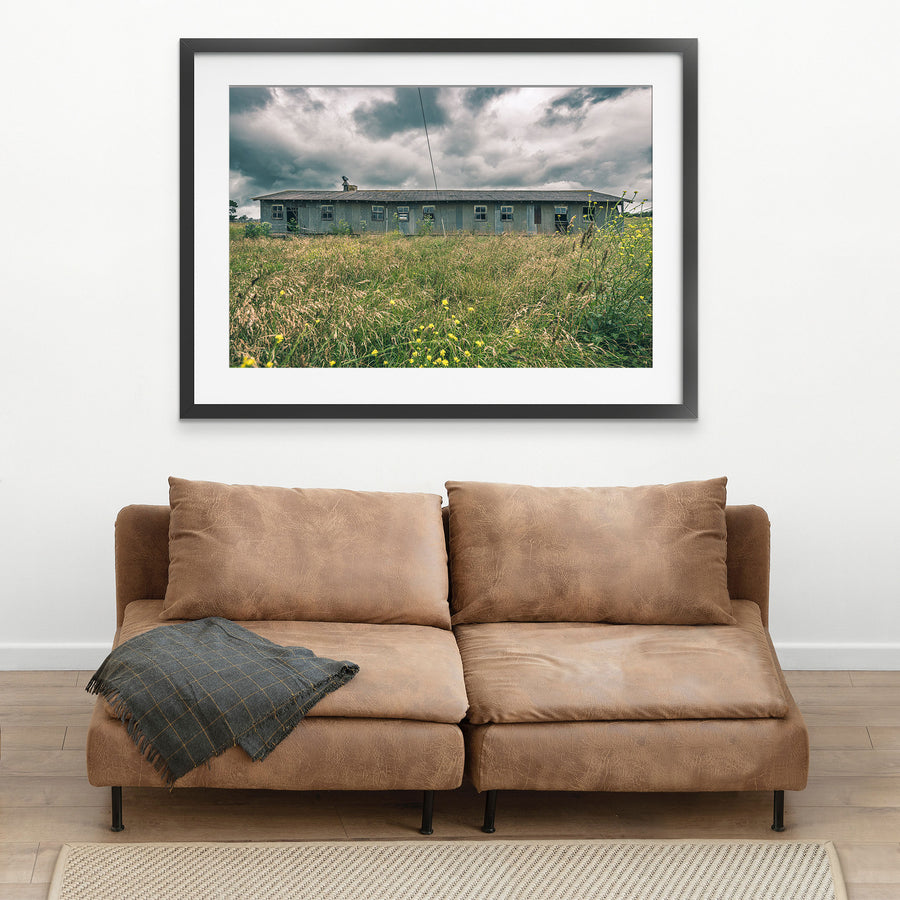
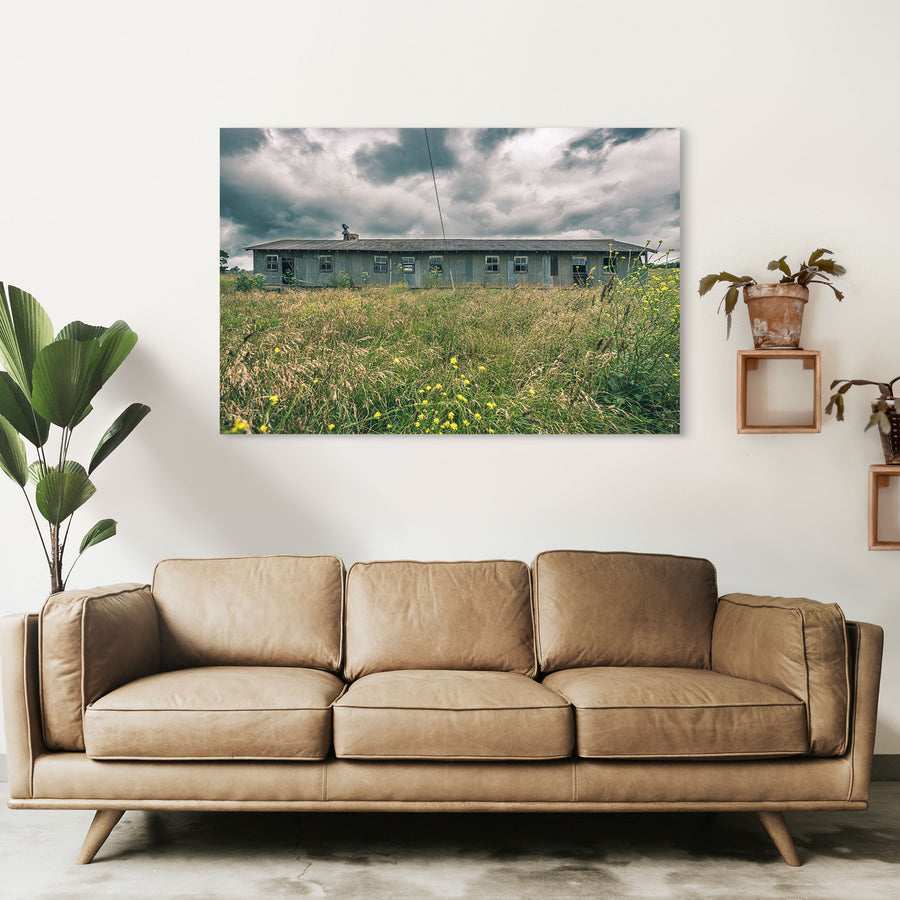
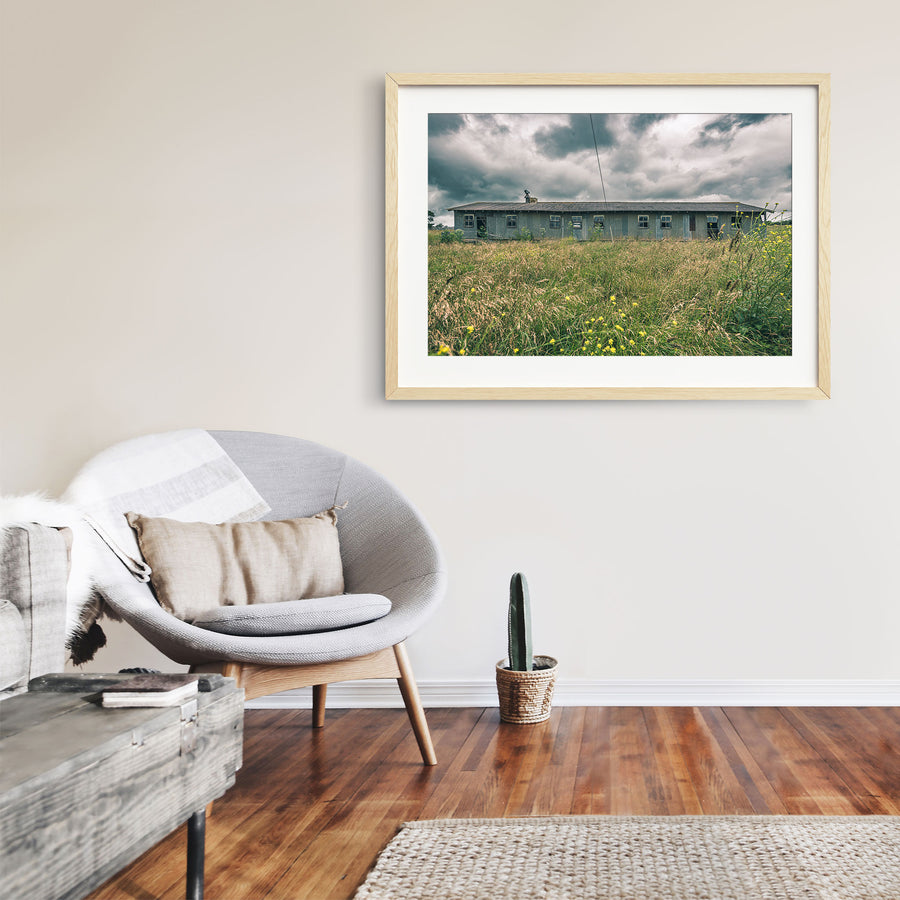
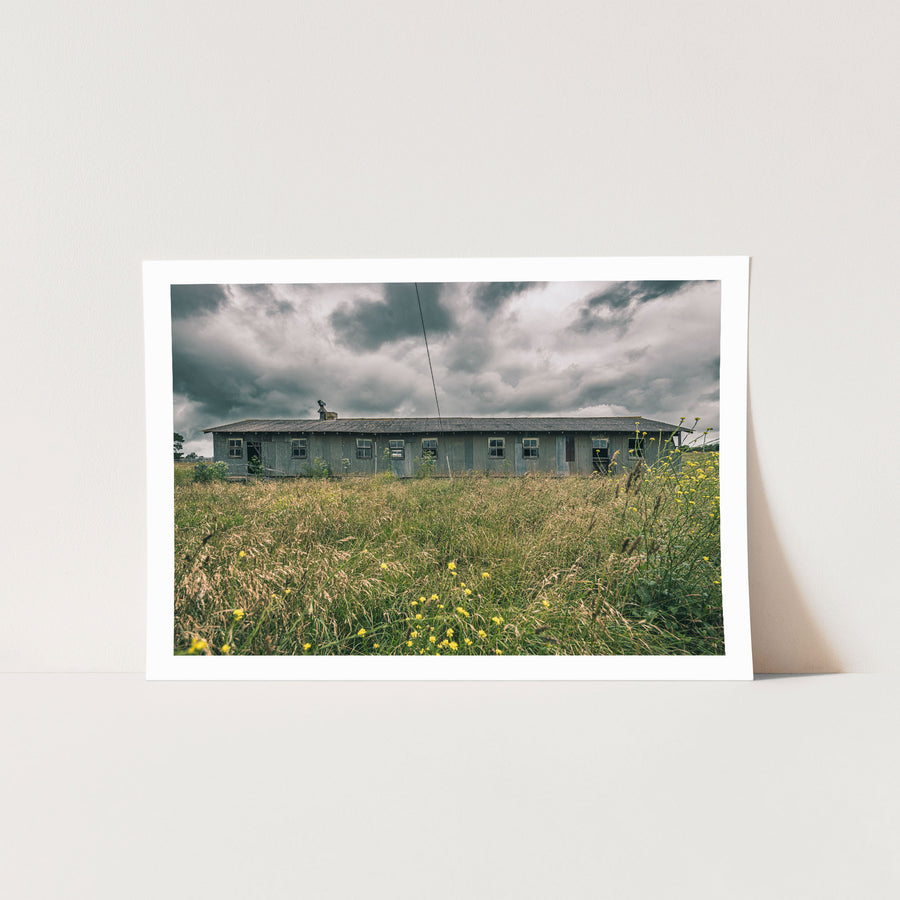

Print datasheet
- Title
- Long Corrugated Shed
- Series
- Mill Pond Farm
- Catalogue
- MPF-024
- Process
- Giclée
- Captured
- 21 January 2022
- Camera
- NIKON D850
- Lens
- 14.0-24.0 mm f/2.8
- Aperture
- f/8.0
- Shutter
- 1/1000 sec s
- ISO
- 100
- Focal length
- 14 mm
- Paper
- Ilford Galerie Smooth Cotton Rag 310 gsm
- Paper size
- 297 × 210 mm
- Location
- Jembaicumbene, NSW, Australia
- Authenticity
- C2PA verified provenance →
- Recognised by
- Highly Commended in Multimedia at the 2016 National Trust of Australia (NSW) Heritage Awards
Jembaicumbene, NSW, Australia
Photographed under access arrangement. The exact location is held in the catalogue but not published on this page. The site is not publicly accessible.
Region · access by arrangement
About this print
The long corrugated iron shed sits low behind a fringe of summer grass and yellow wildflowers on the Mill Pond Farm property at Jembaicumbene, New South Wales. The weathered iron and timber-framed windows mark it as a working farm outbuilding, part of a property that has been in pastoral use since the 1830s. A single power line runs across the grey sky. The photograph was made in 2022, when the property had been through more than a decade of restoration following years of gradual decline.
Brett Patman

The series
Mill Pond Farm
Mill Pond Farm sits in Jembaicumbene, near Braidwood, on land first worked as the region's earliest dairy in the 1830s. In 1859 a Yorkshire-born goldminer named Charles Dransfield built a four-storey Steam Flour Mill on the property, designed by Sydney surveyor Charles Langley. A steam engine ground wheat, sawed timber, and crushed quartz to extract gold. The mill ran until 1885. The mill, stables, and dairy buildings sat unworked for nearly a century. Restoration is in progress.
Print sizes
The anatomy view shows what this finish is as a physical object: paper margin, mat band, frame depth, acrylic profile. The comparison strip shows how each size sits relative to the others at true scale. Click a size or a finish to update both.
| Type | Size | Width | Height |
|---|


