Attic Opening

Provenance

Camera
NIKON D7000
Lens
AF-S Zoom-Nikkor 24-70mm f/2.8G ED
Settings
52mm · f/9.0 · 8s · ISO 100
Paper
Ilford Galerie Smooth Cotton Rag 310 gsm

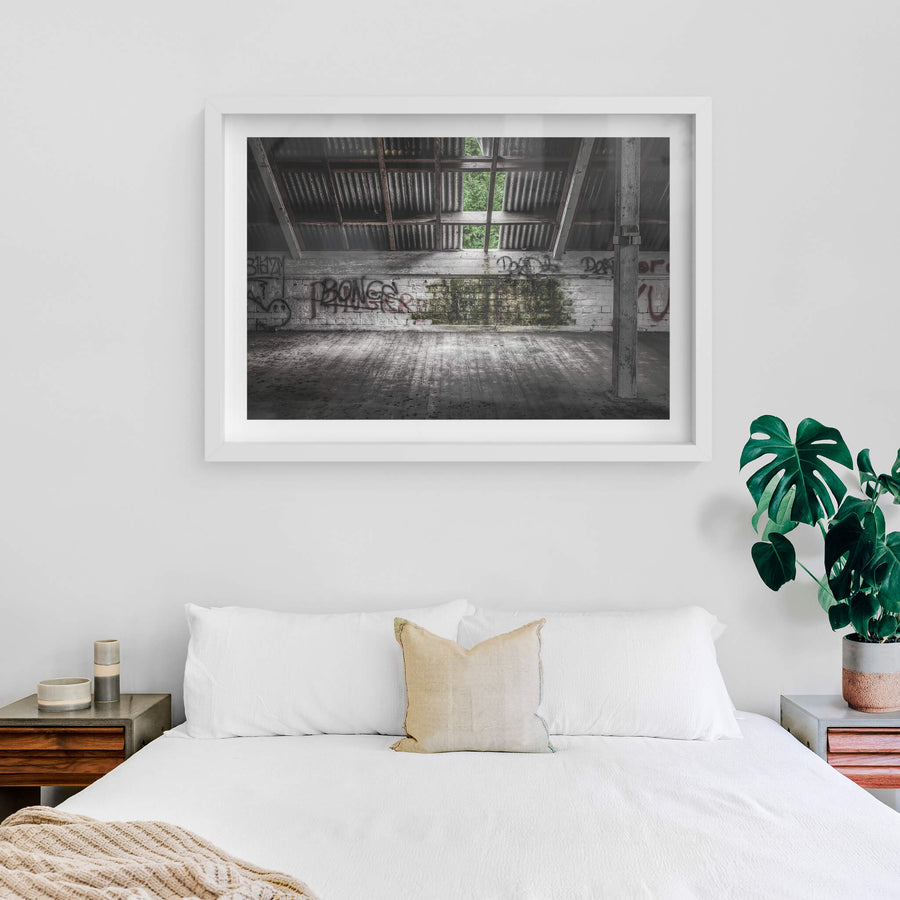
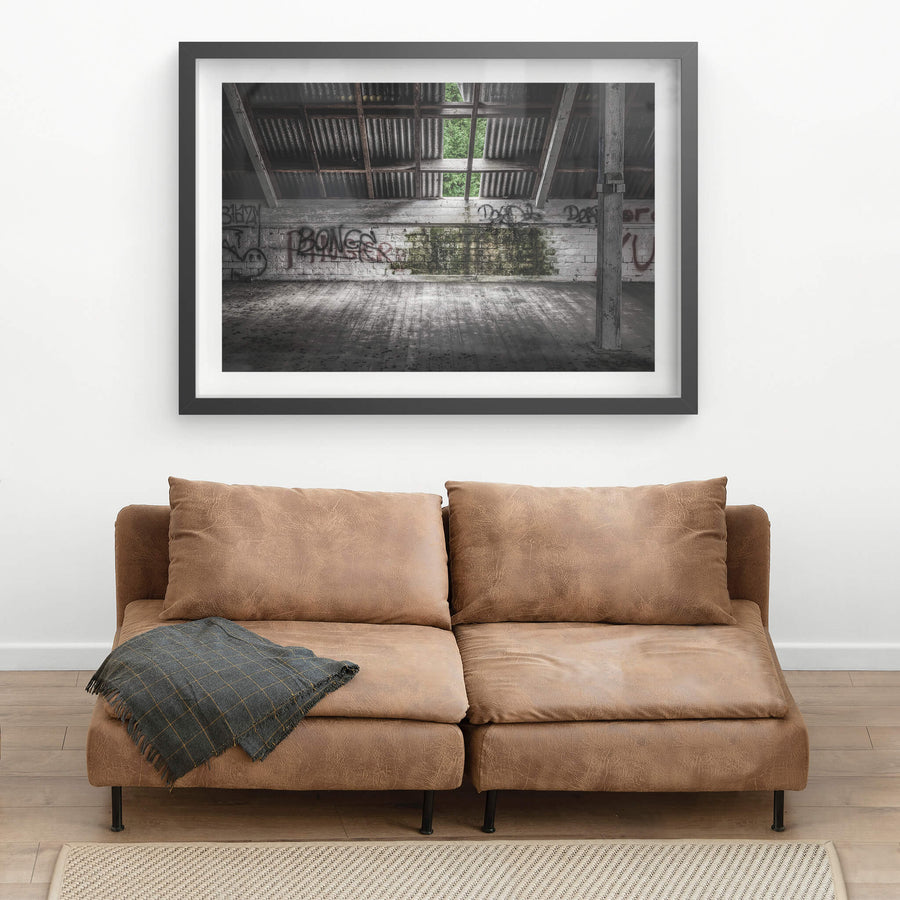
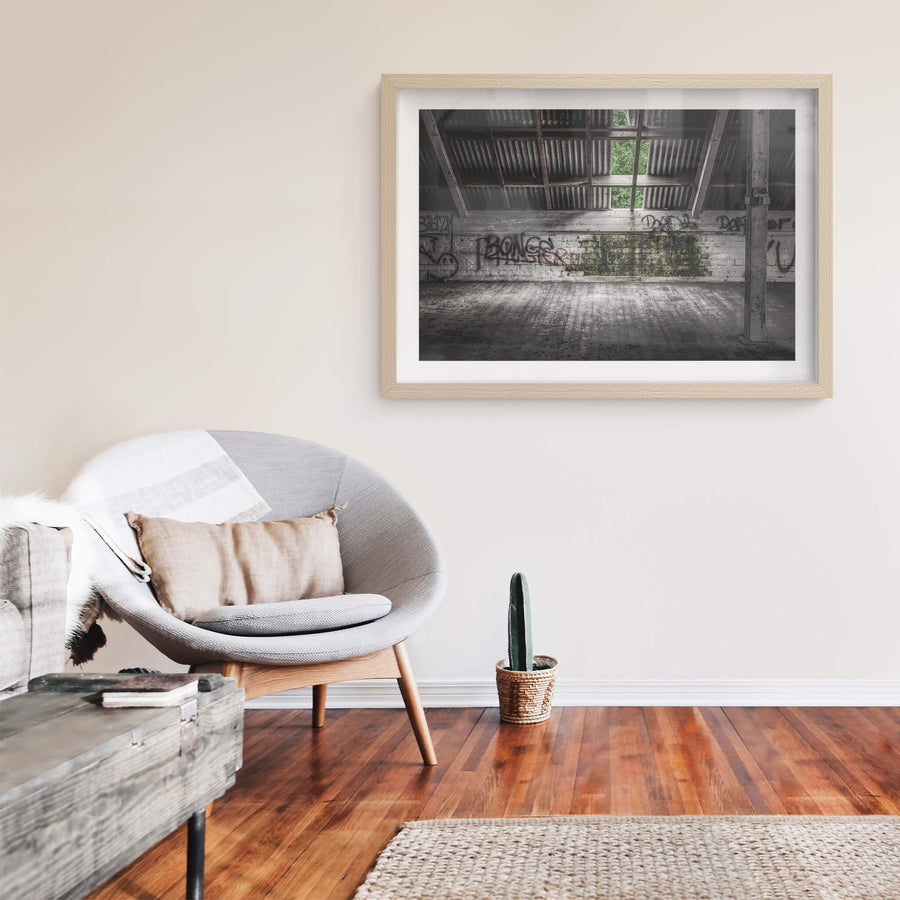
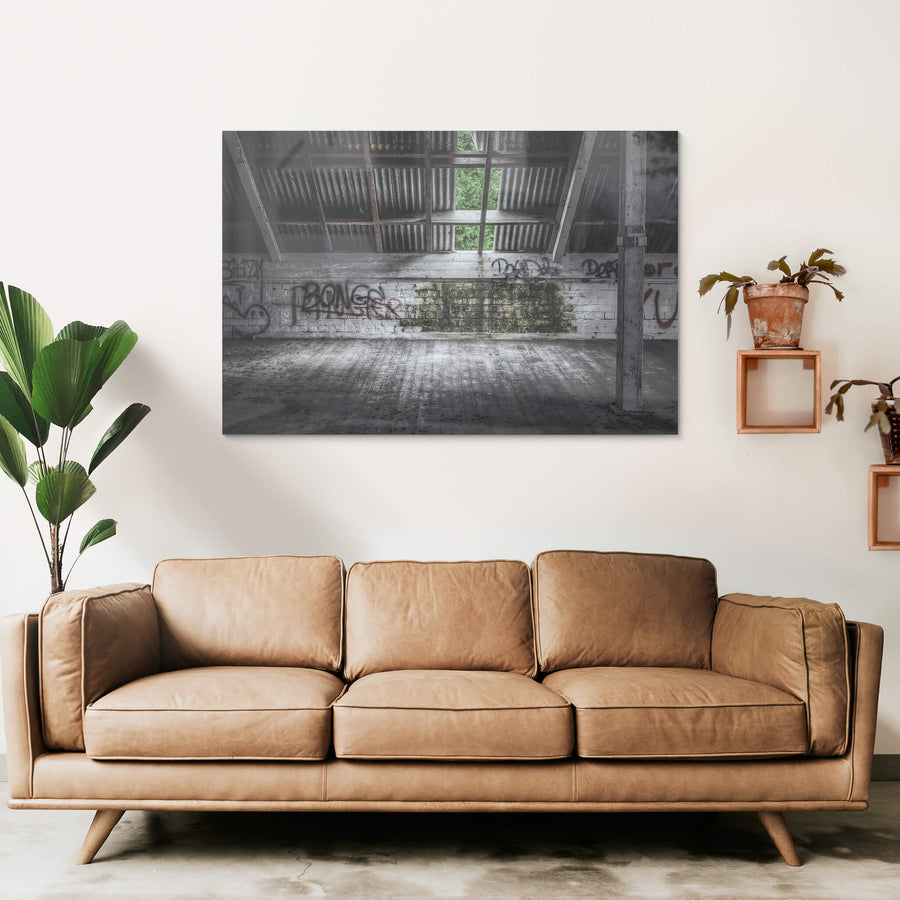
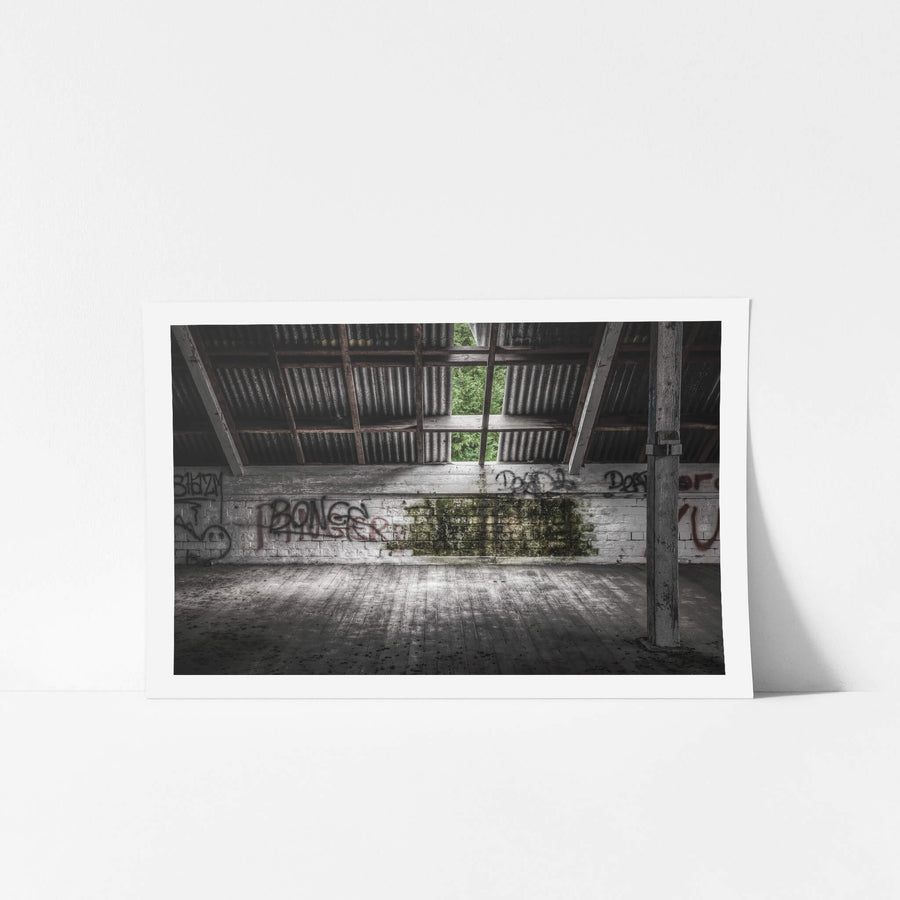
Natural light enters through a gap in the attic structure of Mittagong Maltings. Dust motes are visible in the shaft of light. Exposed timber beams cross the frame. Industrial remnants occupy the decaying floor space. Surfaces show advanced deterioration consistent with decades of disuse.

Edition
Open edition

Open edition
Printed to order, no fixed quantity. Each print is hand-signed by the photographer.

Limited edition
A fixed number of prints exist. Once sold, the edition closes permanently. Each print is individually numbered and signed.

$100.00 AUD
Size
Type
Colour
Signed, numbered, with COA. Made to order in 5 to 10 business days (unframed). Shipped in protective packaging with edition certificate, paper-stock reference and a printed care guide.
See certificate sample →

Shipping Free shipping over $250. Ships worldwide, rates calculated at checkout.

Returns Damaged in transit? We replace it. Full policy →

Ships within 10 business days · signed & numbered

In situ
Attic Opening at Mittagong Maltings, unframed print displayed in situ on a wall.Attic Opening at Mittagong Maltings, white-framed print displayed in situ on a wall.Attic Opening at Mittagong Maltings, black-framed print displayed in situ on a wall.Attic Opening at Mittagong Maltings, raw timber-framed print displayed in situ on a wall.Attic Opening at Mittagong Maltings, glass print displayed in situ on a wall.
01 PROVENANCE

Print datasheet

Title
Attic Opening
Series
Mittagong Maltings
Catalogue
MMA-001
Process
Giclée
Captured
10 May 2014
Camera
NIKON D7000
Lens
AF-S Zoom-Nikkor 24-70mm f/2.8G ED
Aperture
f/9.0
Shutter
8s s
ISO
100
Focal length
52 mm
Paper
Ilford Galerie Smooth Cotton Rag 310 gsm
Paper size
290 × 200 mm
Location
Mittagong, New South Wales, Australia
Recognised by
Highly Commended in Multimedia at the 2016 National Trust of Australia (NSW) Heritage Awards
02 LOCATION

Mittagong, New South Wales, Australia

Map · Mapbox · OpenStreetMap

03 THE STORY

About this print

An opening in the attic draws a column of light through the upper level of Mittagong Maltings, catching dust in suspension above exposed timber beams and the remnants of industrial fittings left behind when the works closed. The surfaces carry decades of deterioration: timber darkened and split, light diffusing through what was once a sealed and working floor space. The Maltings were constructed from 1898 by Stuart Brothers of Sydney, using bricks sourced from local Mittagong brickworks. Malthouse 1 was completed in August 1899 and began production immediately under manager George Lintott. The site sits on land acquired from the Oaklands Estate, northeast of Mittagong railway station, chosen for its access to rail transport, the Nattai Creek water supply, and the atmospheric conditions required by the floor malting process. Tooth and Co purchased the site in 1905, adding Malthouse 2 in 1906 and 1907, a grain store in 1913, and Malthouse 3 in 1916. At its peak in the early 1940s, the works produced approximately 200,000 bushels of malted barley annually, employing an average of 27 men across up to four shifts. The traditional floor malting method, which required the specialised expertise of the head maltster rather than mechanised control, was used throughout the complex's entire 81-year operational life. A fire in August 1942, reported by the Sydney Morning Herald as "the biggest fire in the history of Mittagong," damaged Malthouses 1 and 2. A further fire in 1969 gutted Malthouse 1 permanently. Production across the complex ceased in 1980 when Tooth and Co cited financial difficulties and the availability of subcontracted malting services. Mittagong Maltings is the only remaining example of a traditional maltings manufacturing facility in Australia. This photograph, made in 2014, records what the attic held in the years before a $68.1 million redevelopment was approved in 2022: light, timber, dust, and the particular quiet of a building that once ran without interruption.

04 FROM THE FIELD NOTES

An opening in the attic draws a shaft of light through the upper reaches of Mittagong Maltings, catching suspended dust above timber beams and the remnants of what once was a working industrial floor. The Maltings operated from 1899 until 1980, producing malted barley through a traditional floor malting process across three separate malthouses. Built by Stuart Brothers of Sydney using locally sourced brick, the complex served as the primary malt supplier to Tooth and Co for 75 years. It remains the only surviving traditional maltings manufacturing facility in Australia.

Brett Patman

Mittagong Maltings

The series

Mittagong Maltings

2016 · 11 photographs

Mittagong Maltings was a three-malthouse complex in the Southern Highlands, built between 1899 and 1916 to supply malt to New South Wales breweries. The Malting Company of New South Wales put up the first malthouse in 1899 between the railway line and Nattai Creek. Tooth and Co bought the operation in 1905 and built two more malthouses, in 1906 and 1916, taking the complex to the imposing scale that still defines the Mittagong skyline. At peak the maltings processed 140,000 bushels of barley a year. Fires damaged Malthouses 1 and 2 in 1942 and gutted Malthouse 3 in 1969, but production continued until 1980. Tooth and Co put the holdings up for sale in 1981. The buildings stood empty for almost forty years until Halcyons Hotels bought the site for $6.05 million in 2019, planning to retain the exteriors and convert the interiors to mixed use.

View all in this series →

05 SIZE GUIDE

Print sizes

The anatomy view shows what this finish is as a physical object: paper margin, mat band, frame depth, acrylic profile. The comparison strip shows how each size sits relative to the others at true scale. Click a size or a finish to update both.

Anatomy · true ratio
TypeSizeWidthHeight
08 BY POST · NO SPAM

Read the full story

Articles when they're published. The history behind a place. The day of a shoot. The work between prints. No marketing, no schedule.

You're subscribed.