
Malthouse Two
Provenance
- Camera
- NIKON D7000
- Lens
- AF-S Zoom-Nikkor 24-70mm f/2.8G ED
- Settings
- 36mm · f/8.0 · 2.5s · ISO 100
- Paper
- Ilford Galerie Smooth Cotton Rag 310 gsm
An orange chair rests on a mound of broken brick and rubble on the ground floor of Malthouse 2 at the Mittagong Maltings, its colour sharp against walls thick with graffiti, moss and grime. Rusted metal columns punctuate the space. An arched window opening lets in a band of light from the green vegetation outside.
Open edition
Printed to order, no fixed quantity. Each print is hand-signed by the photographer.
Limited edition
A fixed number of prints exist. Once sold, the edition closes permanently. Each print is individually numbered and signed.
Shipping Free shipping over $250. Ships worldwide, rates calculated at checkout.
Returns Damaged in transit? We replace it. Full policy →
Ships within 10 business days · signed & numbered
In situ

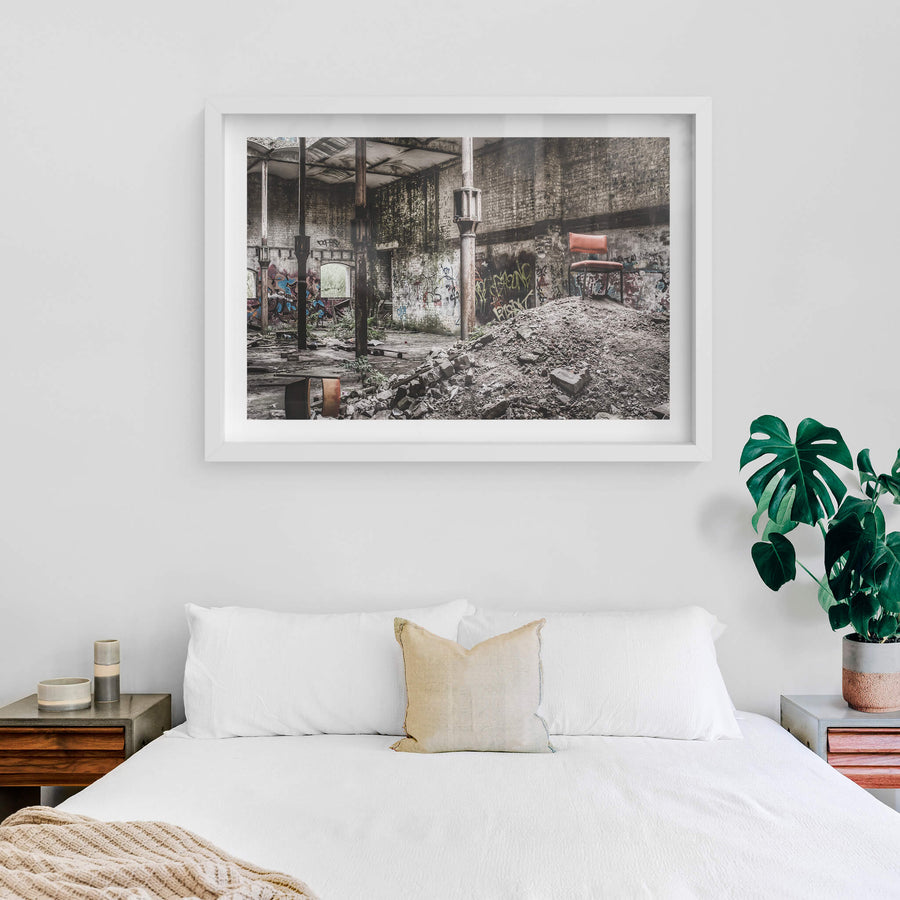
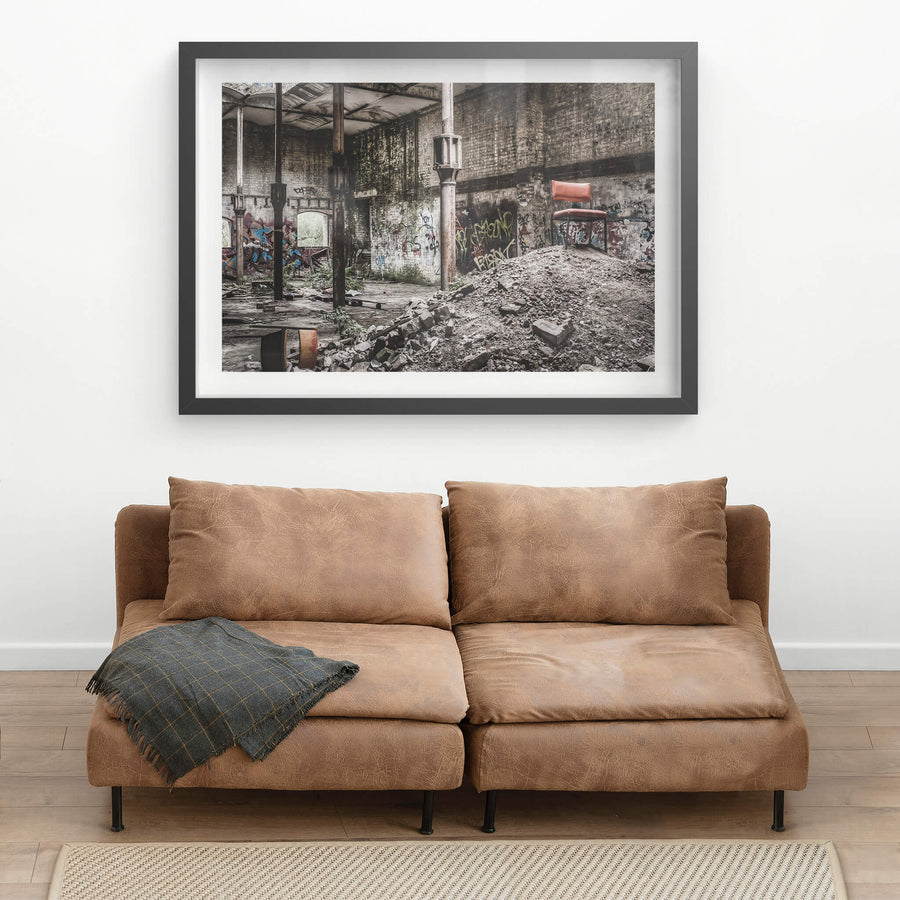
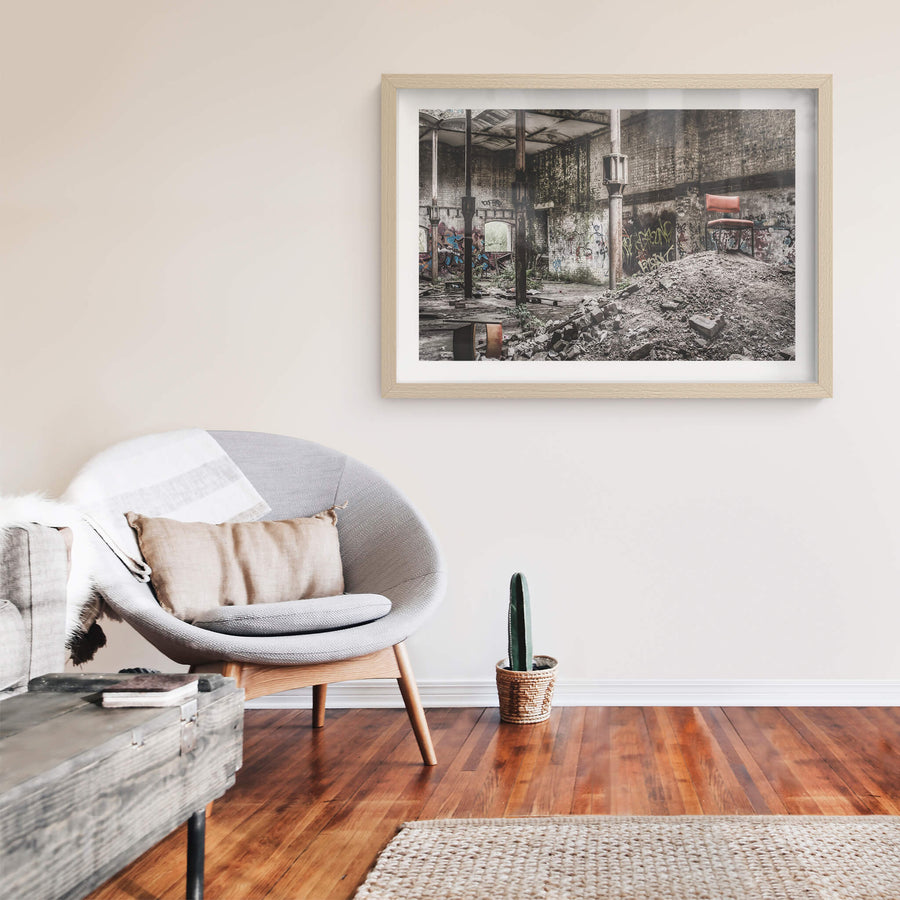
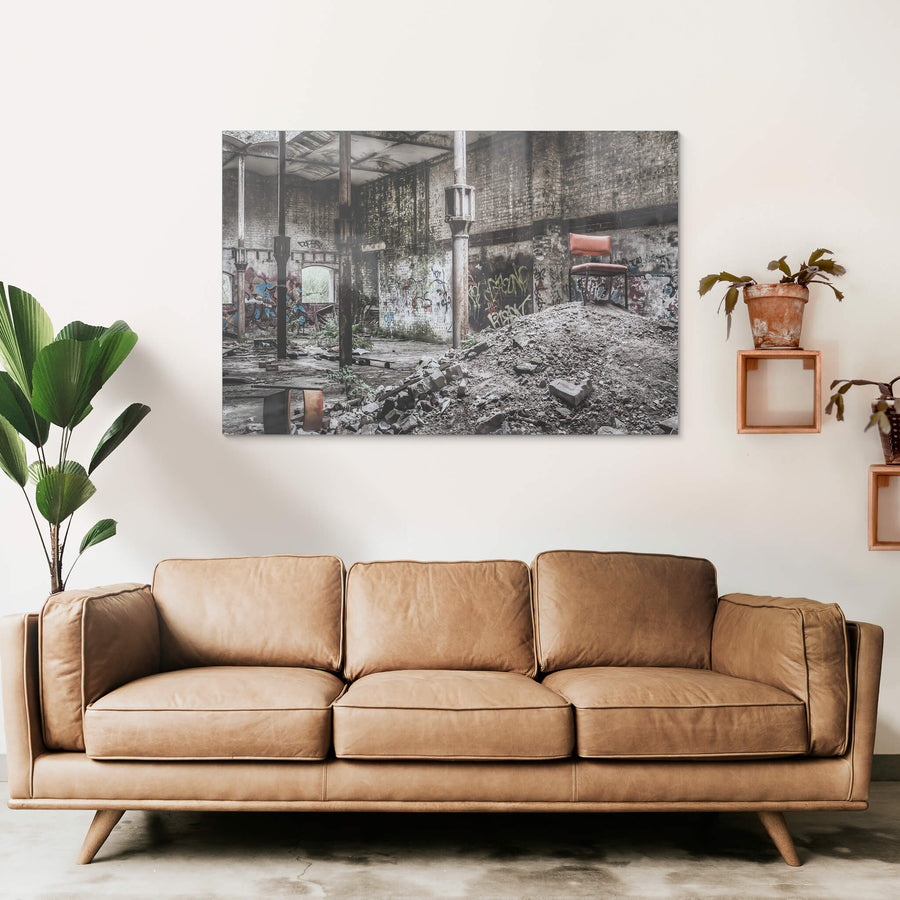
Print datasheet
- Title
- Malthouse Two
- Series
- Mittagong Maltings
- Catalogue
- MMA-008
- Process
- Giclée
- Captured
- 10 May 2014
- Camera
- NIKON D7000
- Lens
- AF-S Zoom-Nikkor 24-70mm f/2.8G ED
- Aperture
- f/8.0
- Shutter
- 2.5s s
- ISO
- 100
- Focal length
- 36 mm
- Paper
- Ilford Galerie Smooth Cotton Rag 310 gsm
- Paper size
- 297 × 210 mm
- Location
- Mittagong, New South Wales, Australia
- Authenticity
- C2PA verified provenance →
- Recognised by
- Highly Commended in Multimedia at the 2016 National Trust of Australia (NSW) Heritage Awards
Mittagong, New South Wales, Australia
Map · Mapbox · OpenStreetMap
About this print
Malthouse Two was constructed between 1906 and 1907 to the north of Malthouse One, a deliberate mirror image in polychrome brick and Federation Industrial detailing. After the 1942 fire caused significant damage, Malthouse Two did not return to active production until 1953 following a complete rebuild. For the remainder of the Maltings' operational life it processed barley using the traditional floor malting method. The hall stood silent from 1980, when Tooth and Co ceased production.
Brett Patman

The series
Mittagong Maltings
Mittagong Maltings was a three-malthouse complex in the Southern Highlands, built between 1899 and 1916 to supply malt to New South Wales breweries. The Malting Company of New South Wales put up the first malthouse in 1899 between the railway line and Nattai Creek. Tooth and Co bought the operation in 1905 and built two more malthouses, in 1906 and 1916, taking the complex to the imposing scale that still defines the Mittagong skyline. At peak the maltings produced about 200,000 bushels of malt a year. Fires damaged Malthouses 1 and 2 in 1942 and gutted one of the malthouses in 1969, but production continued until 1980. Tooth and Co put the holdings up for sale in 1980. The buildings stood empty for almost forty years until Halcyon Hotels bought the site for $6.05 million, planning to retain the exteriors and convert the interiors to mixed use.
Print sizes
The anatomy view shows what this finish is as a physical object: paper margin, mat band, frame depth, acrylic profile. The comparison strip shows how each size sits relative to the others at true scale. Click a size or a finish to update both.
| Type | Size | Width | Height |
|---|


