Malthouse Two Basement

Provenance

Camera
NIKON D7000
Lens
AF-S Zoom-Nikkor 24-70mm f/2.8G ED
Settings
51mm · f/8.0 · 8s · ISO 100
Paper
Ilford Galerie Smooth Cotton Rag 310 gsm

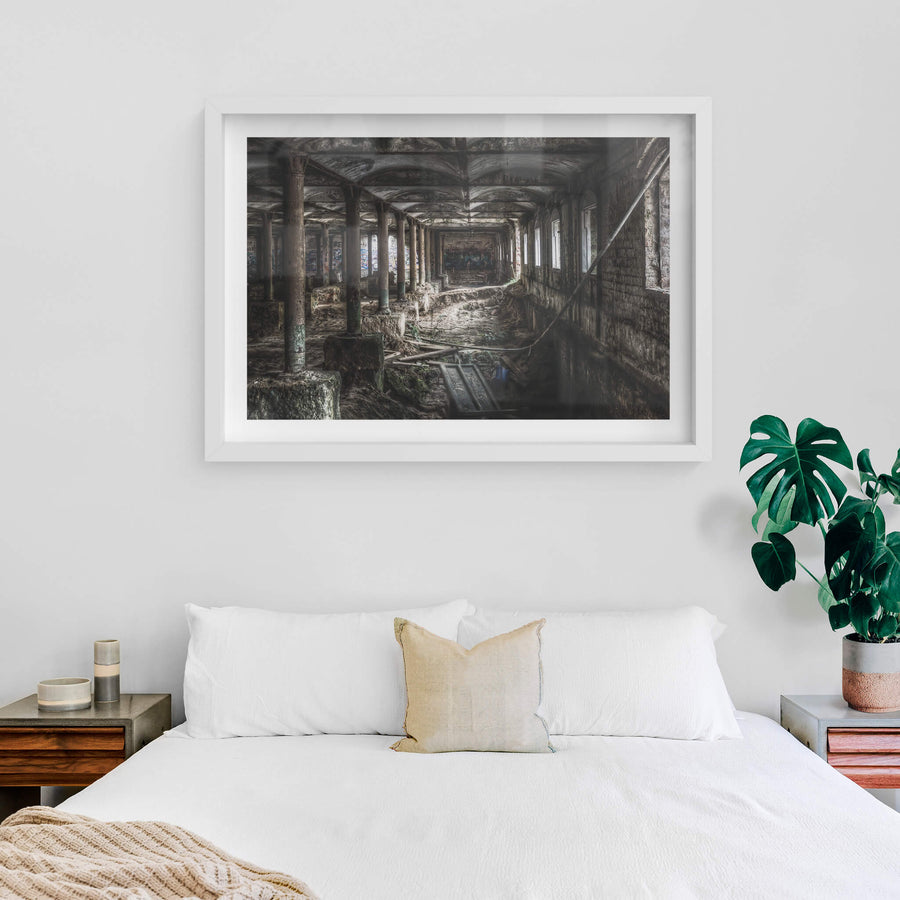
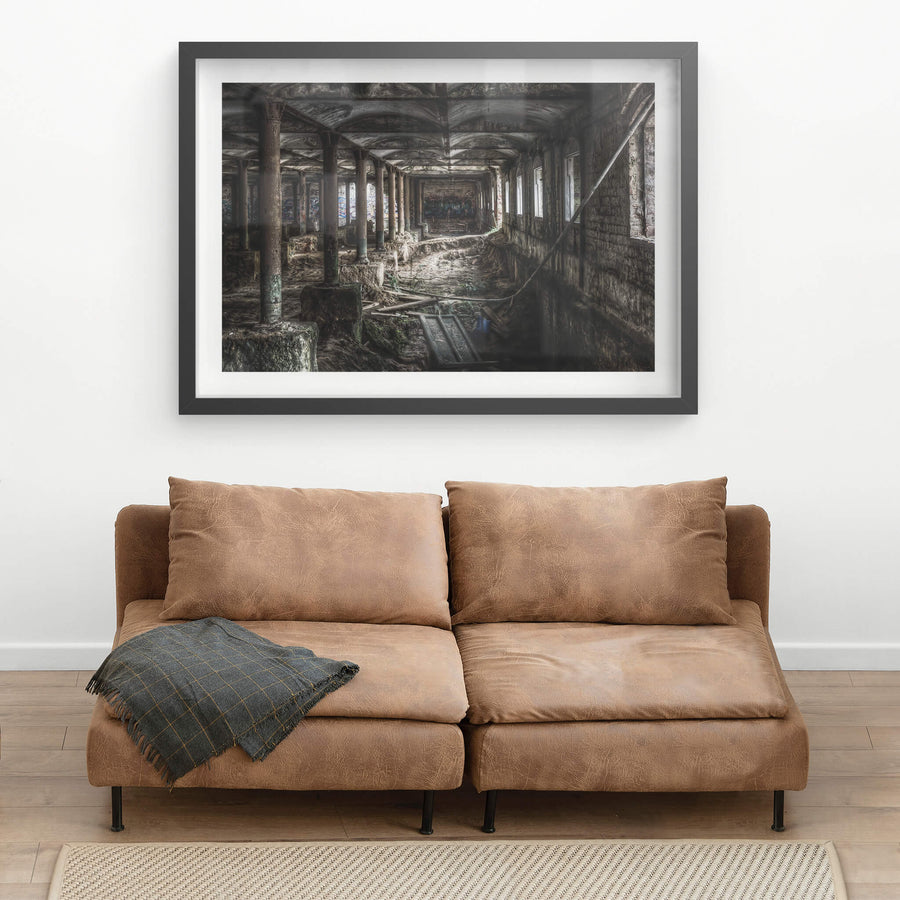
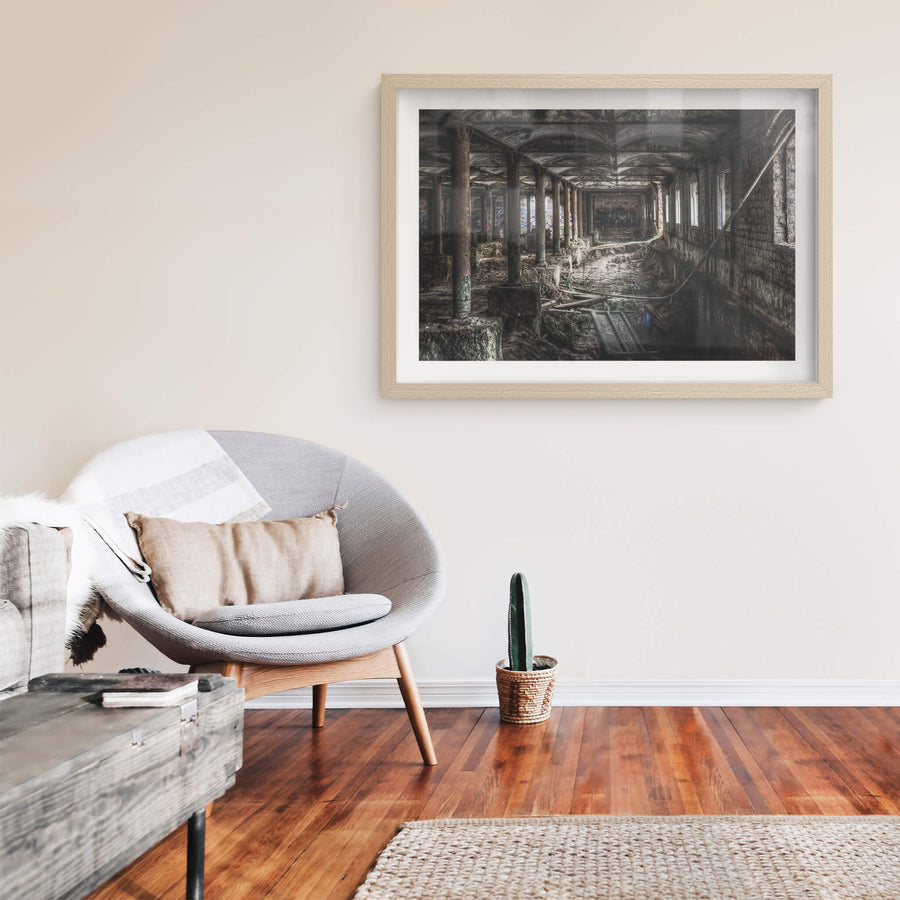
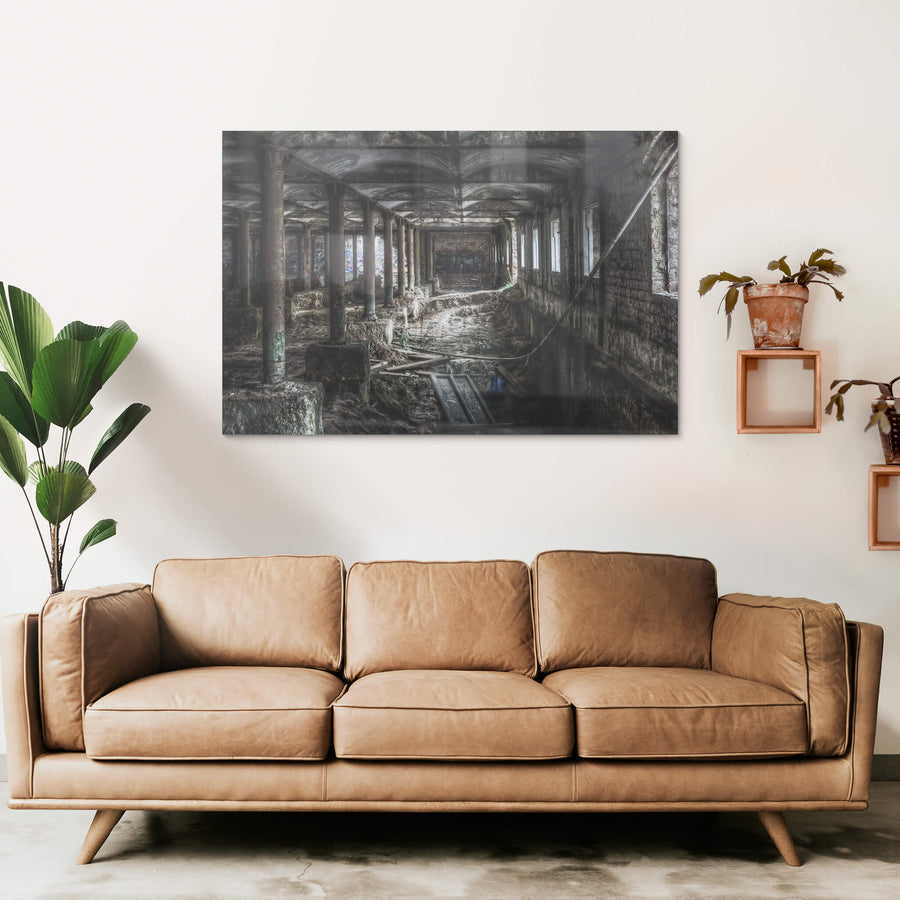
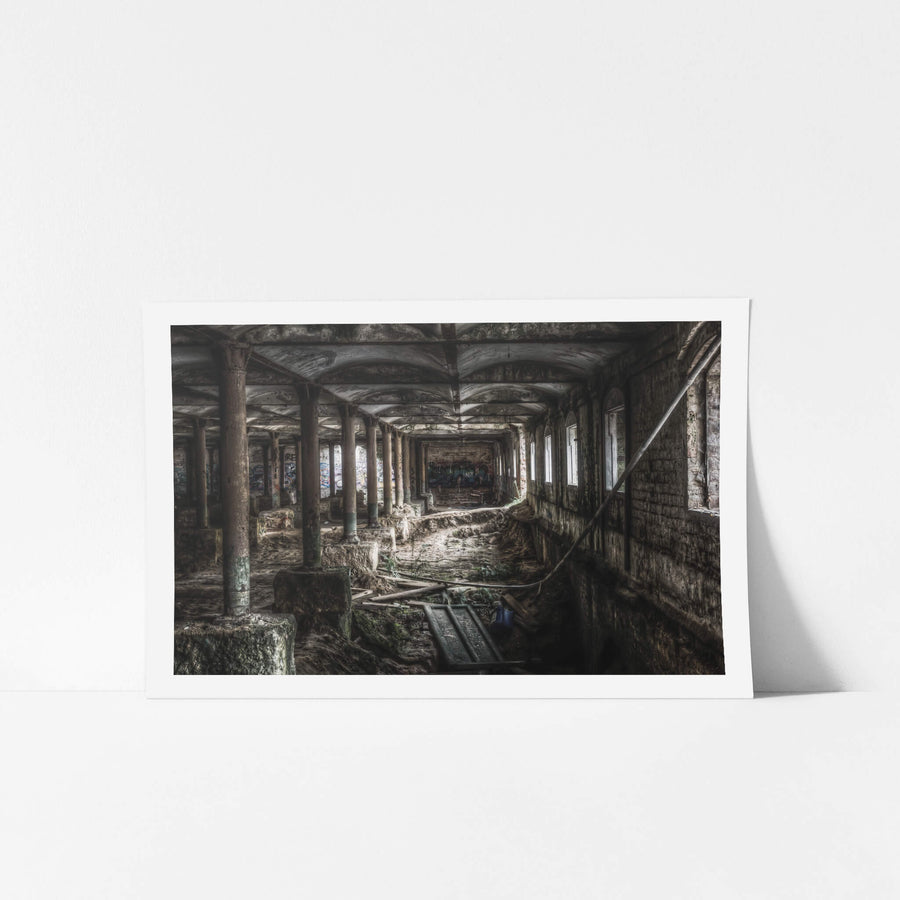
Brick columns extend the length of a low vaulted basement. Earth and debris fill the pit between column bases. A single chair sits in the middle distance. Graffiti covers the far wall. Light is flat and even across the brick surfaces.

Edition
Open edition

Open edition
Printed to order, no fixed quantity. Each print is hand-signed by the photographer.

Limited edition
A fixed number of prints exist. Once sold, the edition closes permanently. Each print is individually numbered and signed.

$100.00 AUD
Size
Type
Colour
Signed, numbered, with COA. Made to order in 5 to 10 business days (unframed). Shipped in protective packaging with edition certificate, paper-stock reference and a printed care guide.
See certificate sample →

Shipping Free shipping over $250. Ships worldwide, rates calculated at checkout.

Returns Damaged in transit? We replace it. Full policy →

Ships within 10 business days · signed & numbered

In situ
Malthouse Two Basement at Mittagong Maltings, unframed print displayed in situ on a wall.Malthouse Two Basement at Mittagong Maltings, white-framed print displayed in situ on a wall.Malthouse Two Basement at Mittagong Maltings, black-framed print displayed in situ on a wall.Malthouse Two Basement at Mittagong Maltings, raw timber-framed print displayed in situ on a wall.Malthouse Two Basement at Mittagong Maltings, glass print displayed in situ on a wall.
01 PROVENANCE

Print datasheet

Title
Malthouse Two Basement
Series
Mittagong Maltings
Catalogue
MMA-009
Process
Giclée
Captured
10 May 2014
Camera
NIKON D7000
Lens
AF-S Zoom-Nikkor 24-70mm f/2.8G ED
Aperture
f/8.0
Shutter
8s s
ISO
100
Focal length
51 mm
Paper
Ilford Galerie Smooth Cotton Rag 310 gsm
Paper size
290 × 200 mm
Location
Mittagong, New South Wales, Australia
Recognised by
Highly Commended in Multimedia at the 2016 National Trust of Australia (NSW) Heritage Awards
02 LOCATION

Mittagong, New South Wales, Australia

Map · Mapbox · OpenStreetMap

03 THE STORY

About this print

The basement of Malthouse Two occupies the sub-floor of a building constructed in 1906-07 as a deliberate mirror image of the original malthouse to its south. Brick columns run the full length of the space, a vaulted ceiling spanning low between them. Earth and debris have settled into the pit between the column bases. A lone chair sits in the middle distance. Graffiti covers the far wall. The photograph was made in 2014, more than three decades after the last malt left the site. Mittagong Maltings was built in stages across two decades. Malthouse One was completed in August 1899 by Stuart Brothers of Sydney, using bricks sourced locally from brickworks then operating in Mittagong. The Malting Company of New South Wales, whose directors included Arthur William Tooth and chairman George Judah Cohen, had selected the site for its proximity to rail, water supply, and the Sydney market. Tooth and Co purchased the company's assets in 1905 and moved quickly to expand. Malthouse Two followed in 1906-07; malt storage silos and a maltster's cottage were added in 1907. The 1942 fire, reported by the Sydney Morning Herald as "the biggest fire in the history of Mittagong," started in Malthouse One and spread to Malthouse Two. Brigades from Mittagong, Bowral, and Moss Vale responded, with additional crews dispatched from Sydney. Malthouse Two did not return to production until 1953, after a complete rebuild. It remained in operation until 1980, when Tooth and Co ceased production across the entire complex, citing financial difficulties and the availability of subcontracted malting services. The complex is the only remaining example of a traditional maltings manufacturing facility in Australia, a fact confirmed in the Heritage NSW significance assessment and the National Trust listing. The basement in this frame is part of that record: columns standing, ceiling intact, the space long emptied of any purpose beyond what time and occasional visitors have left behind.

04 FROM THE FIELD NOTES

The basement of Malthouse Two at Mittagong Maltings sits beneath a structure built in 1906-07 as a mirror image of the original Malthouse One. Tooth and Co had taken ownership the year before and moved quickly to expand capacity. After fire damaged both malthouses in August 1942, Malthouse Two did not return to active production until 1953, following a complete rebuild. By 1980, production across the whole complex had ceased. What the 2014 photograph records is the sub-floor space as it stood decades after the last malt was processed: columns intact, ceiling low, debris settled across the ground.

Brett Patman

Mittagong Maltings

The series

Mittagong Maltings

2016 · 11 photographs

Mittagong Maltings was a three-malthouse complex in the Southern Highlands, built between 1899 and 1916 to supply malt to New South Wales breweries. The Malting Company of New South Wales put up the first malthouse in 1899 between the railway line and Nattai Creek. Tooth and Co bought the operation in 1905 and built two more malthouses, in 1906 and 1916, taking the complex to the imposing scale that still defines the Mittagong skyline. At peak the maltings processed 140,000 bushels of barley a year. Fires damaged Malthouses 1 and 2 in 1942 and gutted Malthouse 3 in 1969, but production continued until 1980. Tooth and Co put the holdings up for sale in 1981. The buildings stood empty for almost forty years until Halcyons Hotels bought the site for $6.05 million in 2019, planning to retain the exteriors and convert the interiors to mixed use.

View all in this series →

05 SIZE GUIDE

Print sizes

The anatomy view shows what this finish is as a physical object: paper margin, mat band, frame depth, acrylic profile. The comparison strip shows how each size sits relative to the others at true scale. Click a size or a finish to update both.

Anatomy · true ratio
TypeSizeWidthHeight
08 BY POST · NO SPAM

Read the full story

Articles when they're published. The history behind a place. The day of a shoot. The work between prints. No marketing, no schedule.

You're subscribed.