
Showers
Provenance
- Camera
- NIKON D7000
- Lens
- 24.0-70.0 mm f/2.8
- Settings
- 24mm · f/4.0 · 1/13 · ISO 250
- Paper
- Ilford Galerie Smooth Cotton Rag 310 gsm
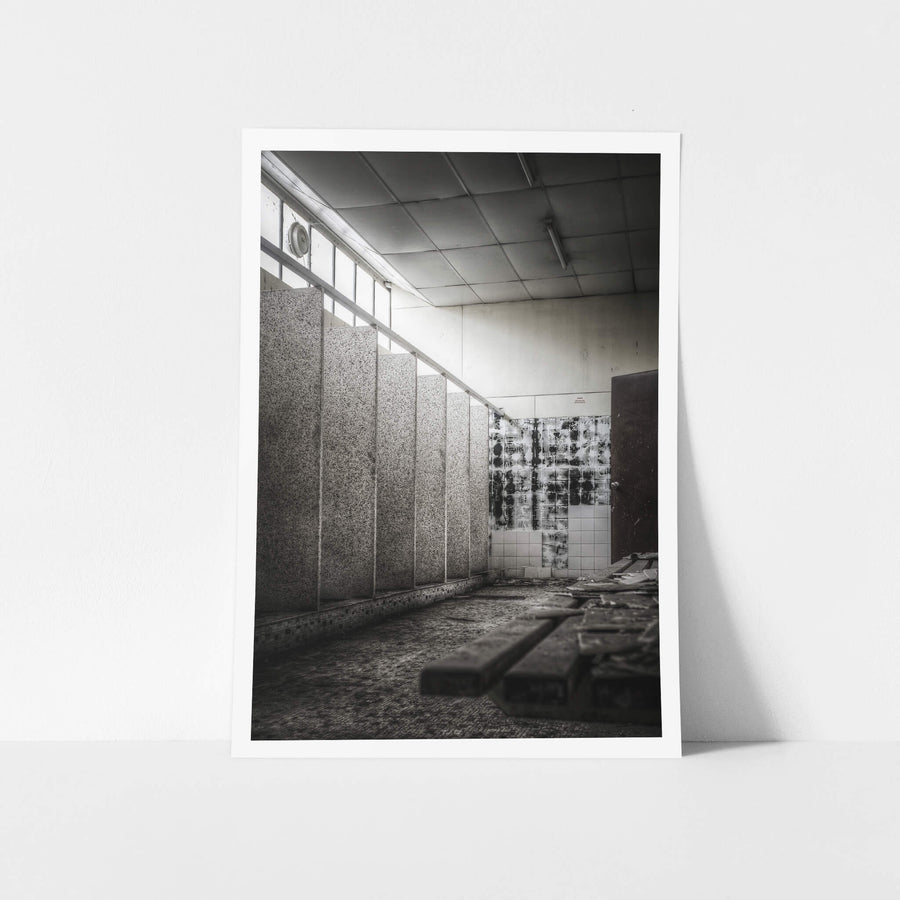
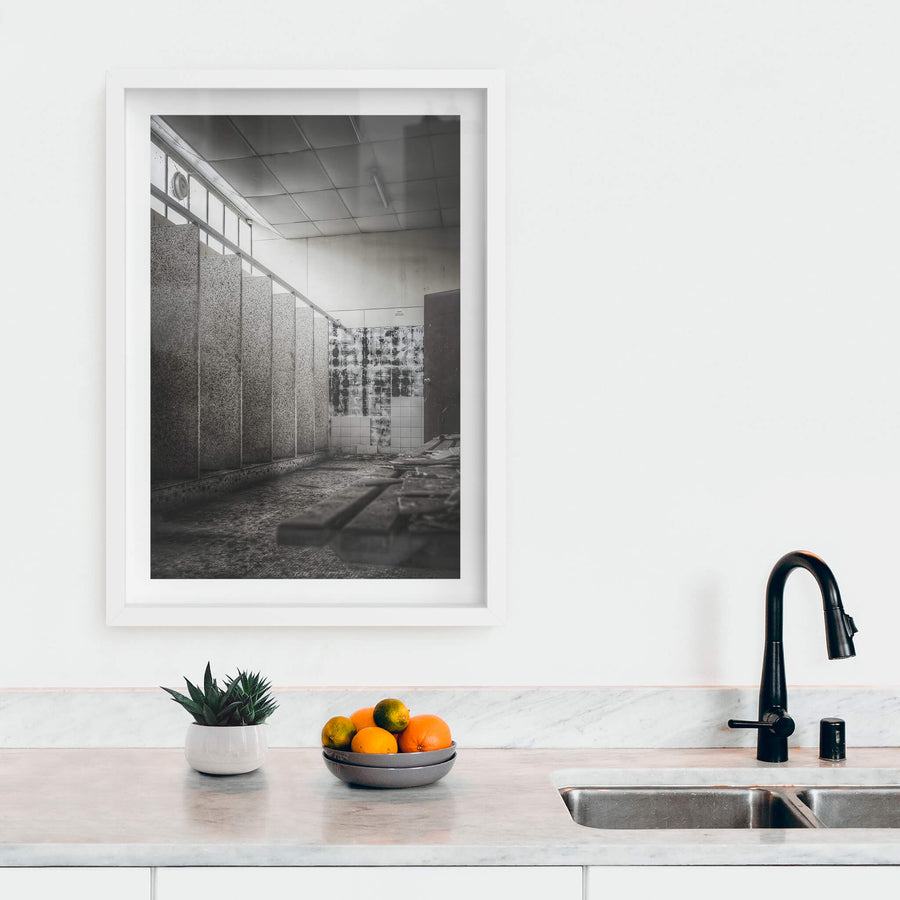
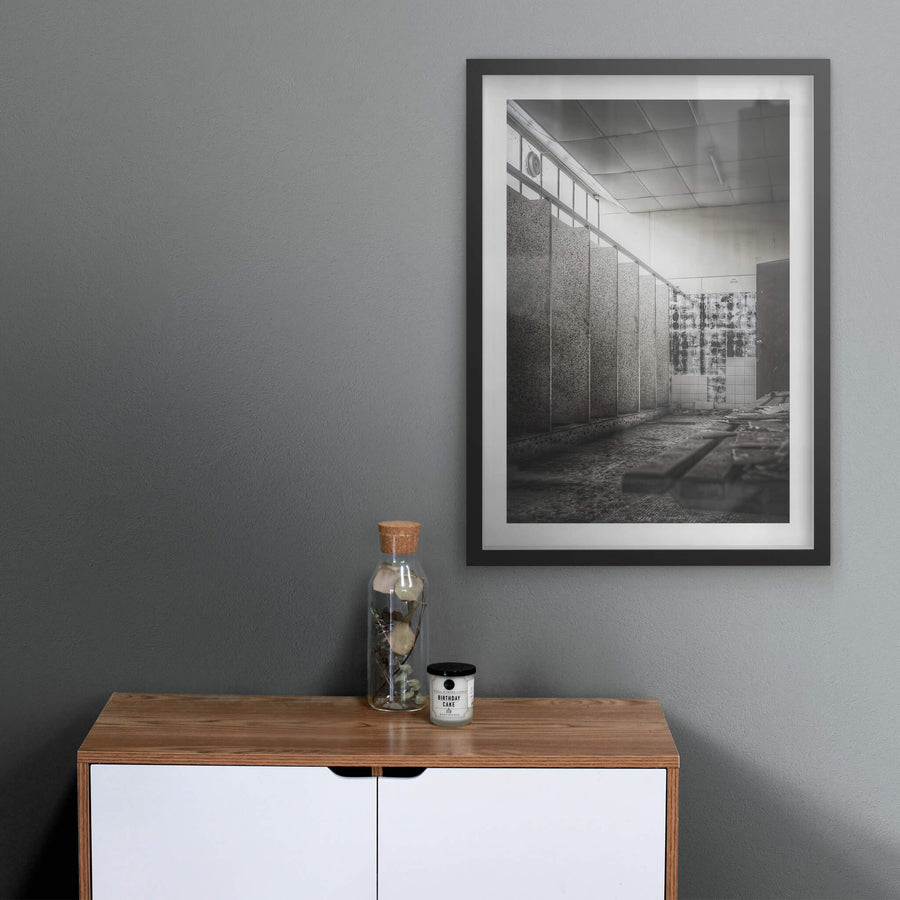
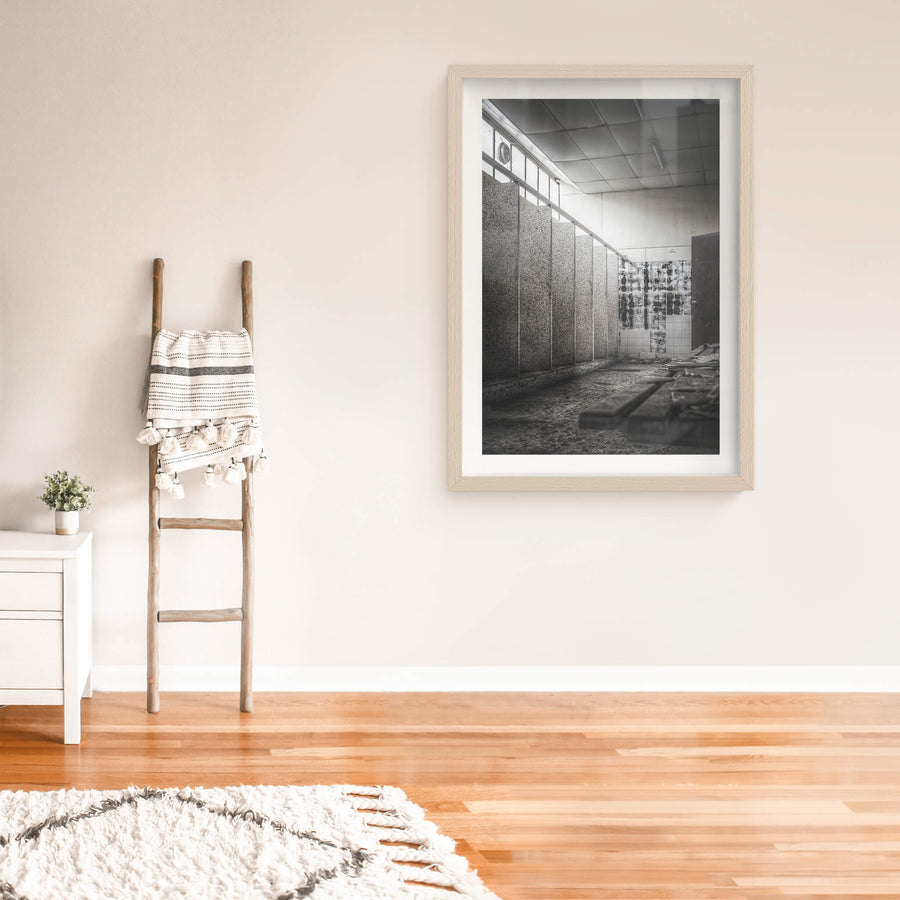
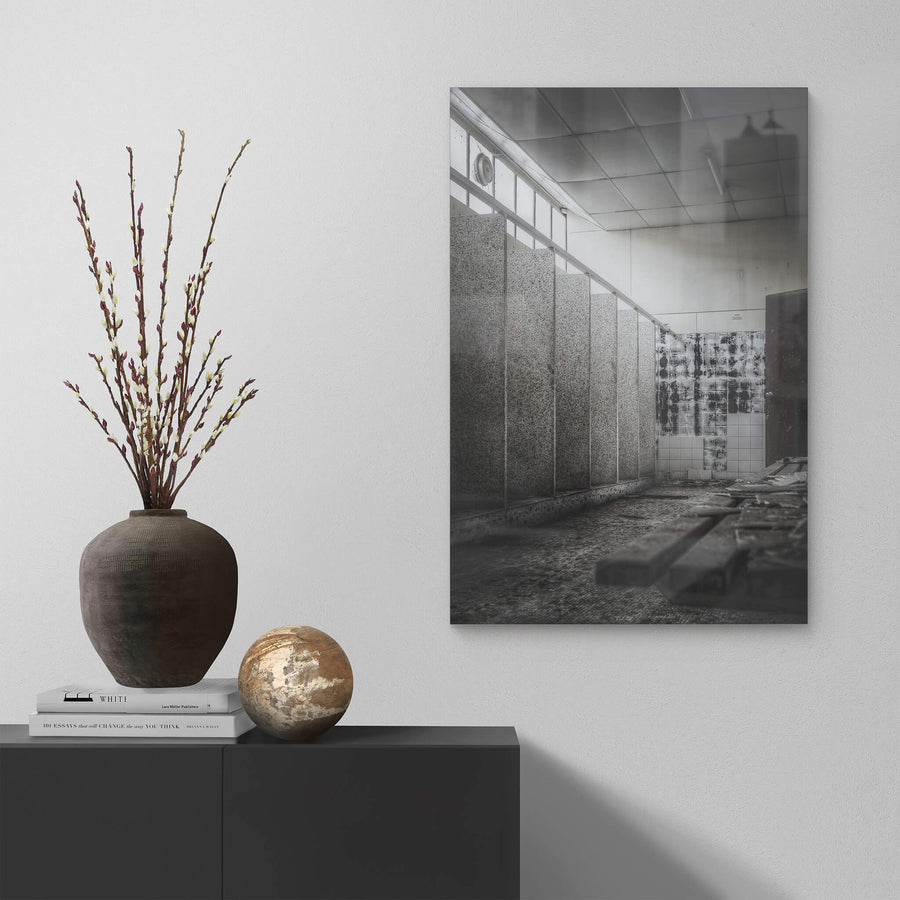
Speckled grey partitions run the full length of the amenities block, drawing the eye toward a dark timber door at the far end. Opposite, a tiled wall carries abstract black markings across its surface, the paint applied in broad, loose strokes. Natural light from a high row of windows falls across the debris-covered floor, picking out the pale dust between fallen material.
Open edition
Printed to order, no fixed quantity. Each print is hand-signed by the photographer.
Limited edition
A fixed number of prints exist. Once sold, the edition closes permanently. Each print is individually numbered and signed.
Shipping Free shipping over $250. Ships worldwide, rates calculated at checkout.
Returns Damaged in transit? We replace it. Full policy →
Ships within 10 business days · signed & numbered
In situ
Print datasheet
- Title
- Showers
- Series
- O-I Glass
- Catalogue
- OIG-014
- Process
- Giclée
- Captured
- 18 December 2011
- Camera
- NIKON D7000
- Lens
- 24.0-70.0 mm f/2.8
- Aperture
- f/4.0
- Shutter
- 1/13 s
- ISO
- 250
- Focal length
- 24 mm
- Paper
- Ilford Galerie Smooth Cotton Rag 310 gsm
- Paper size
- 297 × 210 mm
- Location
- Spotswood, Victoria, Australia
- Authenticity
- C2PA verified provenance →
- Recognised by
- Highly Commended in Multimedia at the 2016 National Trust of Australia (NSW) Heritage Awards
Spotswood, Victoria, Australia
Map · Mapbox · OpenStreetMap
About this print
Speckled grey partitions run the full length of the amenities block, drawing the eye toward a dark timber door at the far end.
Brett Patman

The series
O-I Glass
Alfred Felton and Frederick Grimwade founded the Melbourne Glass Bottle Works in 1872 at Graham Street, Emerald Hill, to supply their wholesale drug business. In 1890 the company purchased 12 acres on the Yarra at Spotswood and built the new manufacturing plant that would carry on glass production for over a hundred years, through Australian Glass Manufacturers, Australian Consolidated Industries, BTR and Owens-Illinois. The site was demolished by 2012, with only the 115-metre basalt wall on Douglas Parade, known to the workers as the Great Wall of Spotswood, left standing.
Print sizes
The anatomy view shows what this finish is as a physical object: paper margin, mat band, frame depth, acrylic profile. The comparison strip shows how each size sits relative to the others at true scale. Click a size or a finish to update both.
| Type | Size | Width | Height |
|---|


