
Passer By
Provenance
- Camera
- NIKON D750
- Lens
- 24.0-70.0 mm f/2.8
- Settings
- 24mm · f/4.5 · 1/400 · ISO 500
- Paper
- Ilford Galerie Smooth Cotton Rag 310 gsm
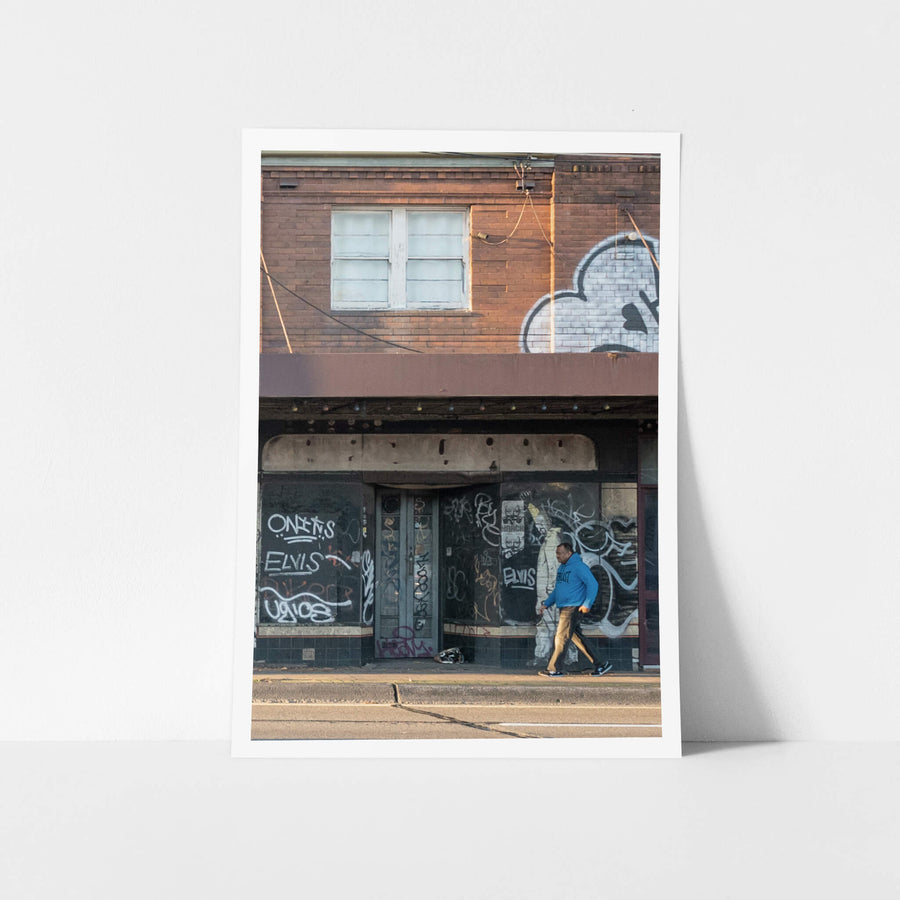
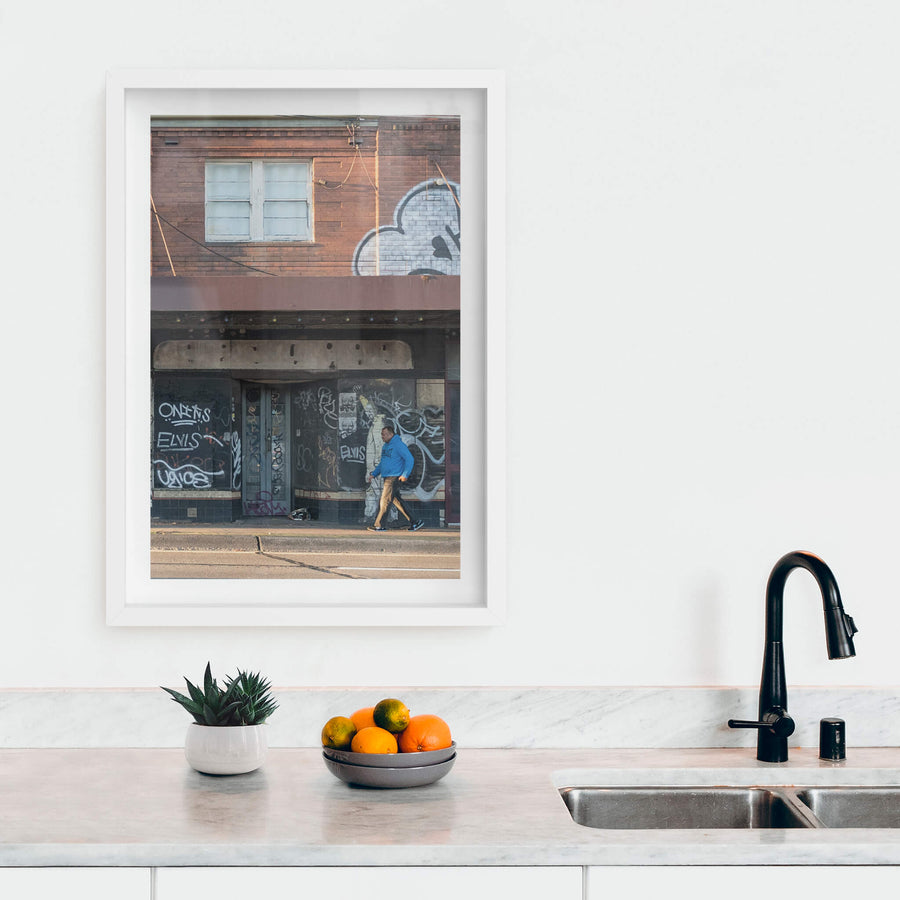
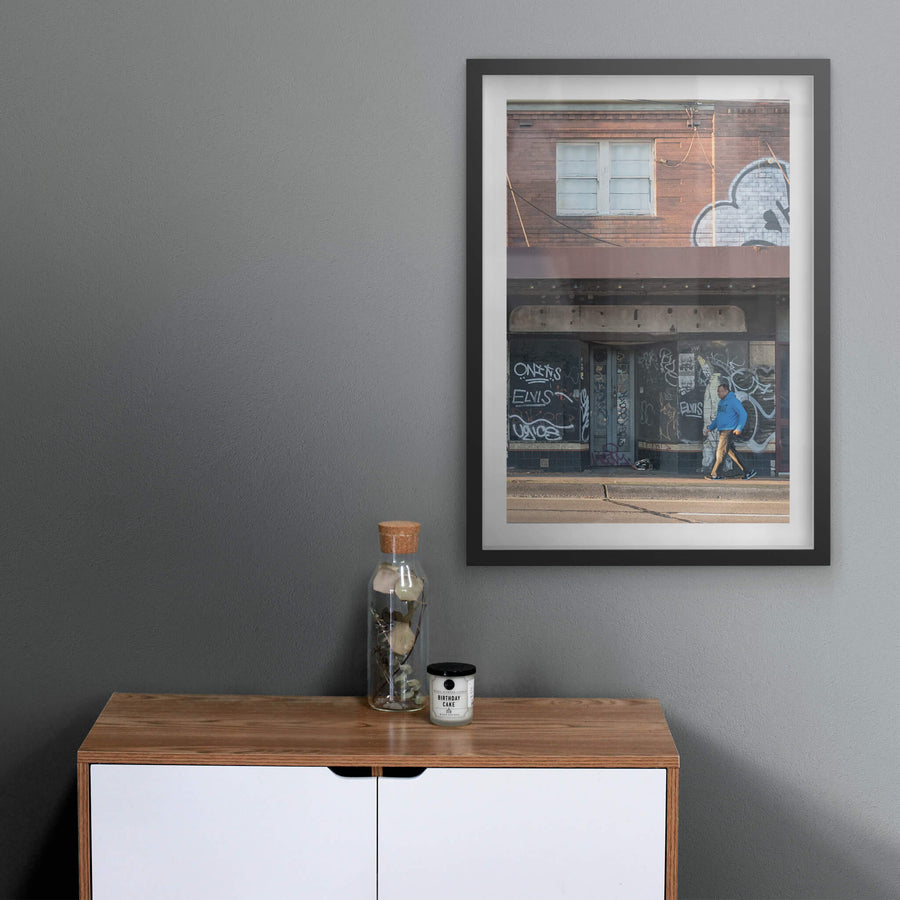
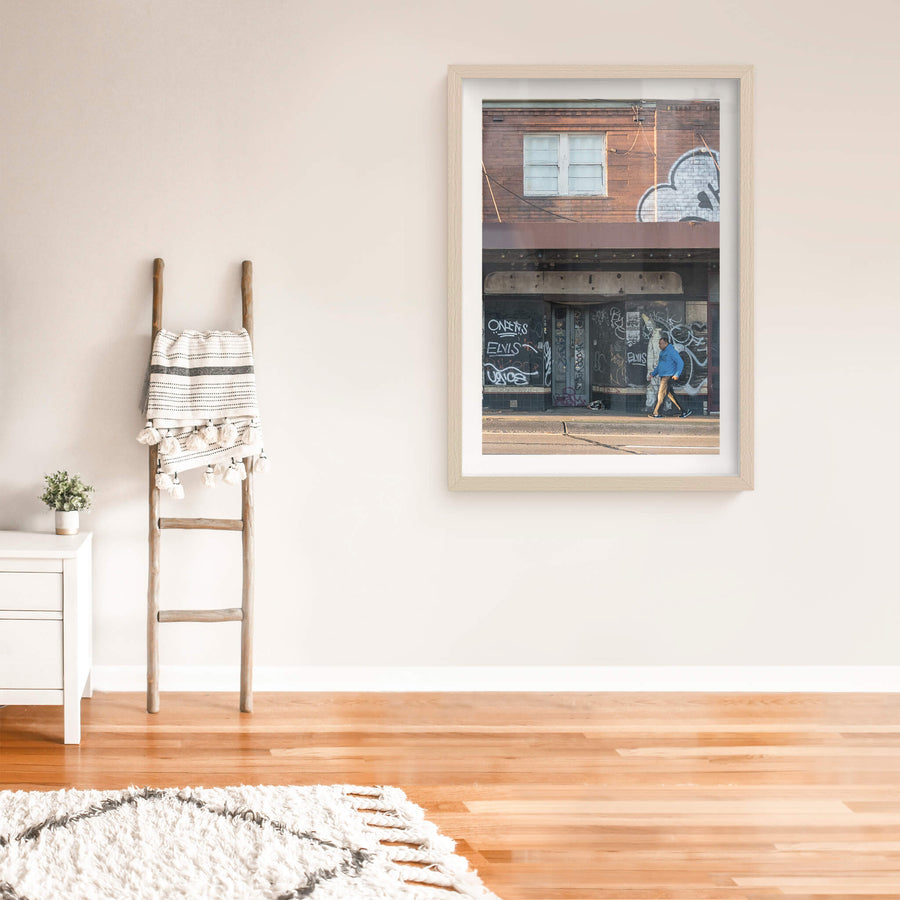
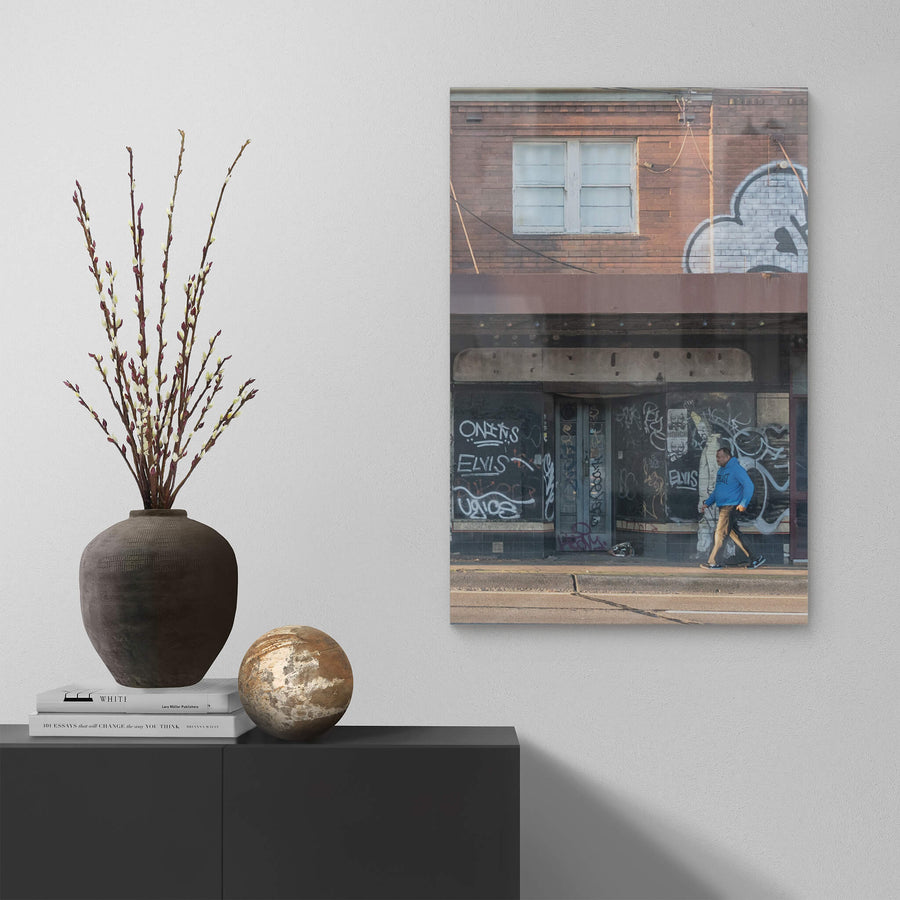
On Parramatta Road, a figure moves past a faded shopfront. A two-storey brick building sits hard against the road.
Open edition
Printed to order, no fixed quantity. Each print is hand-signed by the photographer.
Limited edition
A fixed number of prints exist. Once sold, the edition closes permanently. Each print is individually numbered and signed.
Shipping Free shipping over $250. Ships worldwide, rates calculated at checkout.
Returns Damaged in transit? We replace it. Full policy →
Ships within 10 business days · signed & numbered
In situ
Print datasheet
- Title
- Passer By
- Series
- Parramatta Road
- Catalogue
- PRO-013
- Process
- Giclée
- Captured
- 4 September 2016
- Camera
- NIKON D750
- Lens
- 24.0-70.0 mm f/2.8
- Aperture
- f/4.5
- Shutter
- 1/400 s
- ISO
- 500
- Focal length
- 24 mm
- Paper
- Ilford Galerie Smooth Cotton Rag 310 gsm
- Paper size
- 297 × 210 mm
- Location
- Sydney, New South Wales, Australia
- Authenticity
- C2PA verified provenance →
- Recognised by
- Highly Commended in Multimedia at the 2016 National Trust of Australia (NSW) Heritage Awards
Sydney, New South Wales, Australia
Map · Mapbox · OpenStreetMap
About this print
A two-storey brick building sits hard against Parramatta Road. The ground-floor shopfront is shuttered and dark, its plate glass windows blacked out and layered in graffiti. Tags in white paint repeat across the surface. Teal ceramic tiles line the base. A steel awning with bare bulb fittings extends over the footpath. Above, a large monochrome mural covers the upper brickwork. A figure in a blue hoodie walks past without stopping. Late afternoon light catches the upper storey warm and orange.
Brett Patman

The series
Parramatta Road
Parramatta Road follows a much older route, used for thousands of years by the Wangal, Wallumedegal, Burramattagal, and Cadigal peoples before colonial adoption around 1789 to 1791. Today it is one of Sydney's main thoroughfares: 23 km of heavy traffic, with used car dealers at the Parramatta end ("Auto Alley") and a mix of historic shopfronts, new apartment blocks, and WestConnex demolition at the eastern end. The series moves between streetscape and individual buildings - 107 Parramatta Road in Annandale (an 1890s Victorian Filigree shopfront with original living quarters above accessible only by ladder), the Marco Polo Motel at Summer Hill, the Olympia Milk Bar in Stanmore, Mario's Meat Market, and shopfronts whose ground floors have been busy for a century while the rooms above have been empty for fifty years.
Print sizes
The anatomy view shows what this finish is as a physical object: paper margin, mat band, frame depth, acrylic profile. The comparison strip shows how each size sits relative to the others at true scale. Click a size or a finish to update both.
| Type | Size | Width | Height |
|---|


