
Boiler House Wall
Provenance
- Camera
- NIKON D850
- Lens
- 14.0-24.0 mm f/2.8
- Settings
- 14mm · f/8.0 · 1/8 · ISO 100
- Paper
- Ilford Galerie Smooth Cotton Rag 310 gsm
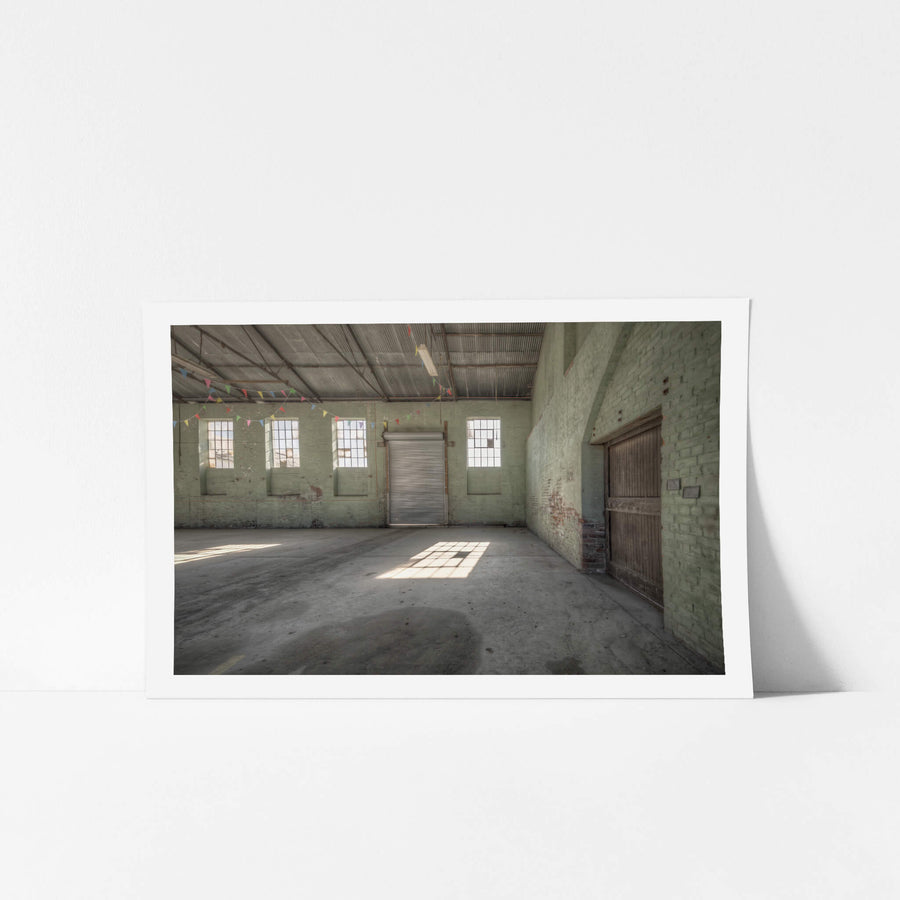
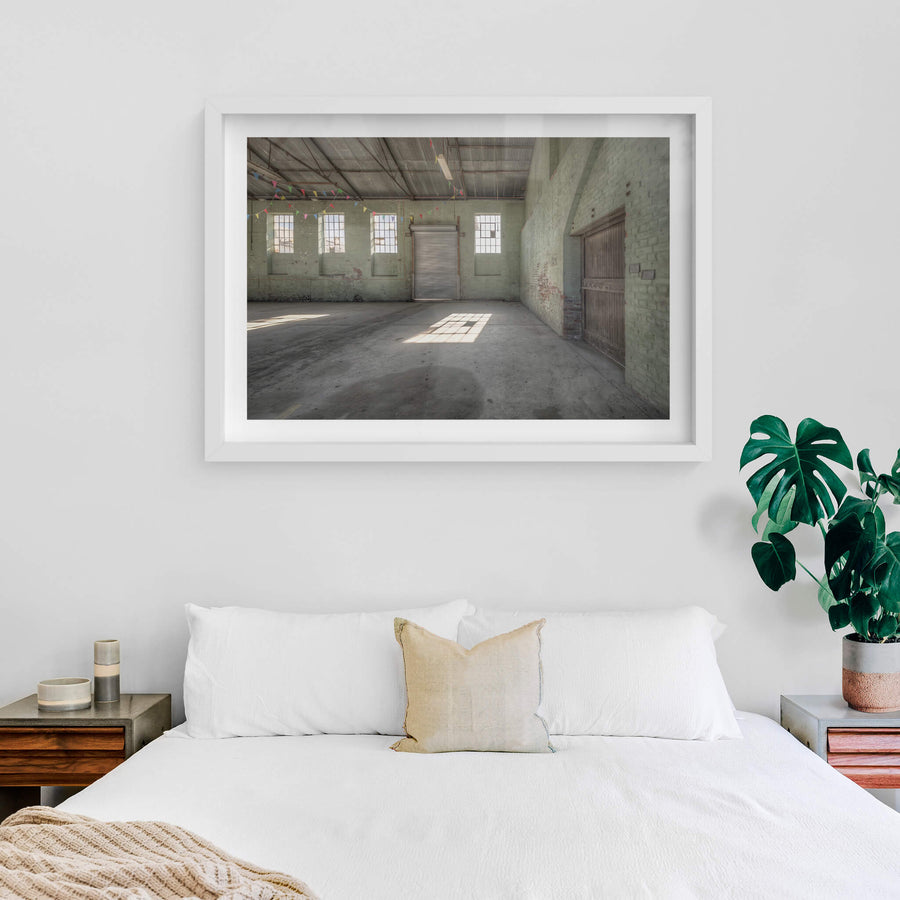
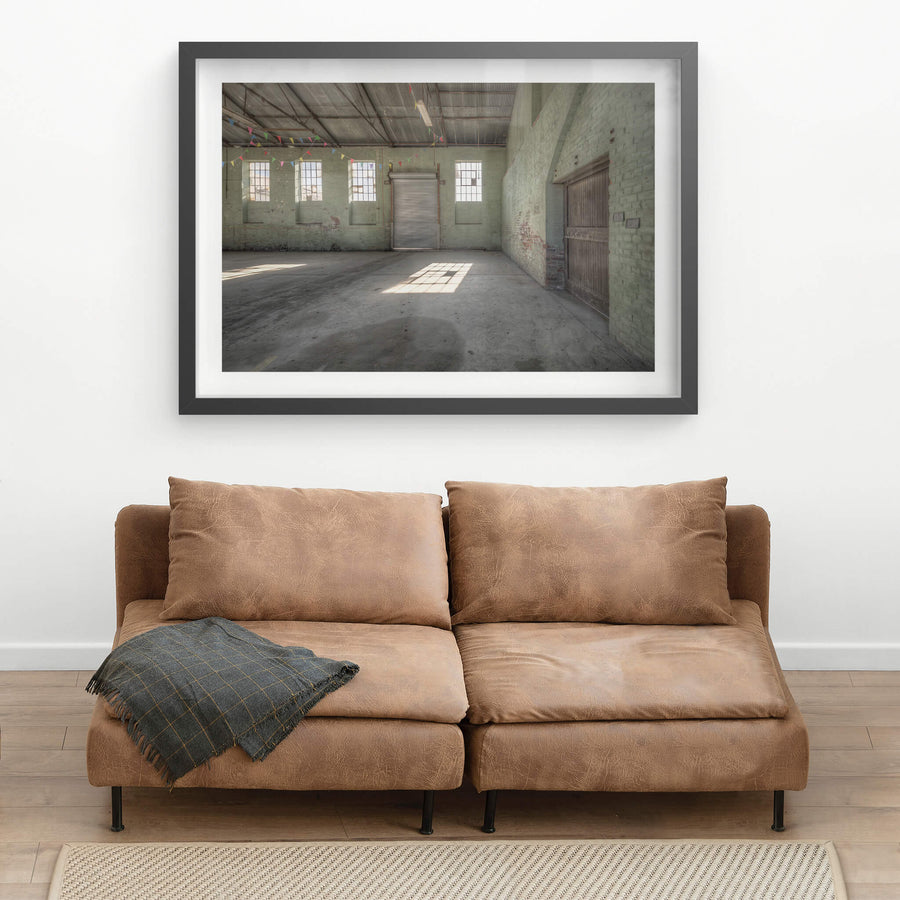
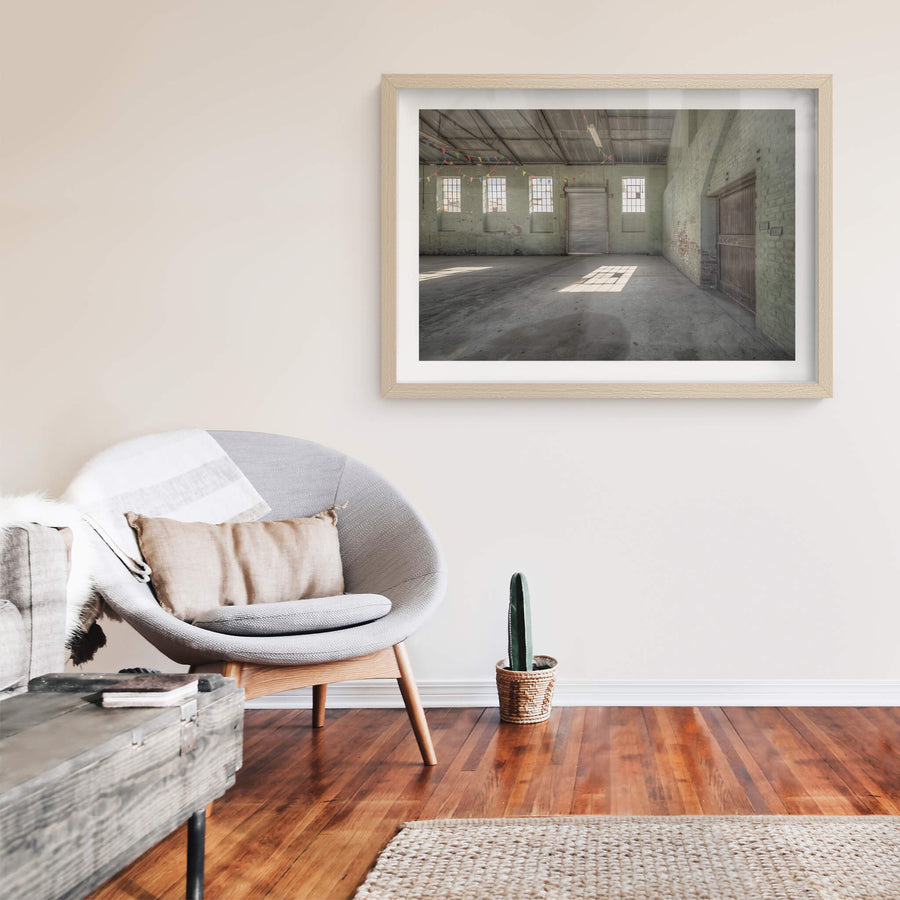
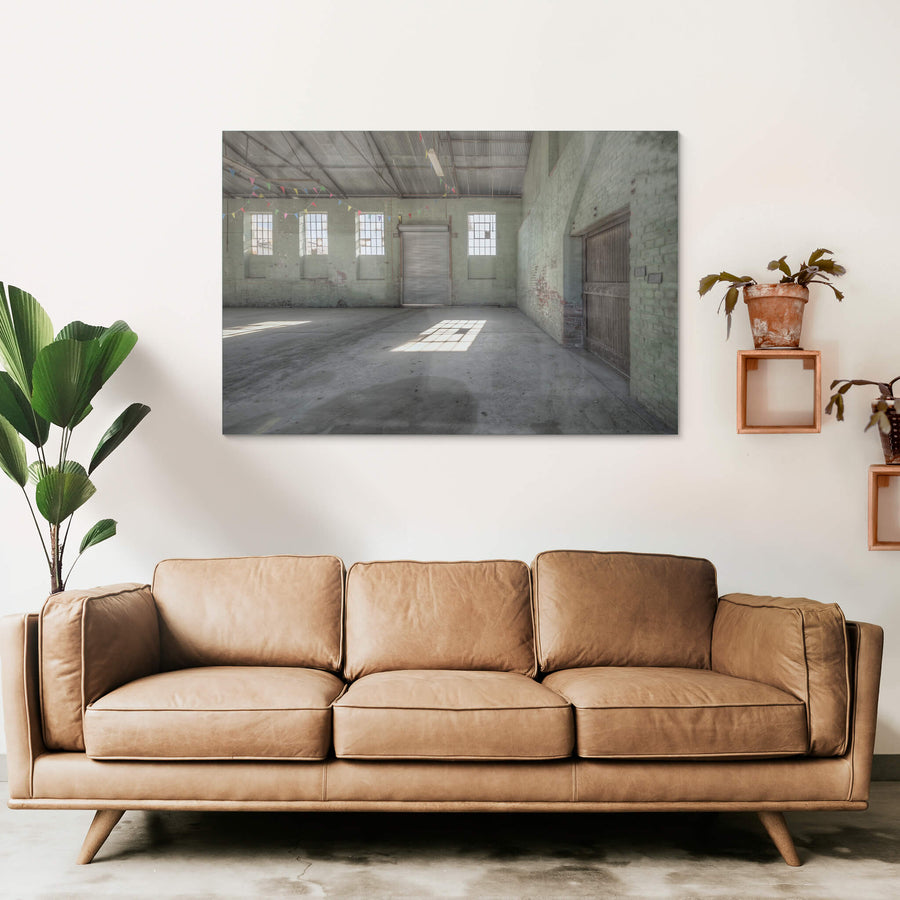
Coloured triangular bunting hangs across the upper left of a large brick interior at Portland Cement Works, the green-painted walls worn through to red brick in patches. Gridded windows on the left and a single window on the right throw sharp rectangular shadows across the concrete floor. A timber door stands at the far right and a corrugated metal roller door sits closed in the centre wall.
Open edition
Printed to order, no fixed quantity. Each print is hand-signed by the photographer.
Limited edition
A fixed number of prints exist. Once sold, the edition closes permanently. Each print is individually numbered and signed.
Shipping Free shipping over $250. Ships worldwide, rates calculated at checkout.
Returns Damaged in transit? We replace it. Full policy →
Ships within 10 business days · signed & numbered
In situ
Print datasheet
- Title
- Boiler House Wall
- Series
- Portland Cement Works
- Catalogue
- PCW-012
- Process
- Giclée
- Captured
- 22 July 2018
- Camera
- NIKON D850
- Lens
- 14.0-24.0 mm f/2.8
- Aperture
- f/8.0
- Shutter
- 1/8 s
- ISO
- 100
- Focal length
- 14 mm
- Paper
- Ilford Galerie Smooth Cotton Rag 310 gsm
- Paper size
- 297 × 210 mm
- Location
- Portland, New South Wales, Australia
- Authenticity
- C2PA verified provenance →
- Recognised by
- Highly Commended in Multimedia at the 2016 National Trust of Australia (NSW) Heritage Awards
Portland, New South Wales, Australia
Map · Mapbox · OpenStreetMap
About this print
The boiler house wall at Portland Cement Works carries the evidence of nearly nine decades of operation on its surface: rust running through grey paint, layers built up and stripped back across the years from 1902 to November 1991 when cement production finally ceased. The Powerhouse that housed this structure was one of the earliest buildings constructed under Dr August Scheidel's rebuilt works, a Federation-era brick building with steel trusses that served the Commonwealth Portland Cement Company and its successive owners across the full span of operations.
Brett Patman

The series
Portland Cement Works
Portland Cement Works in central western NSW began as a limestone quarry in 1863 and produced lime then cement on and off from the late 1880s. The Commonwealth Portland Cement Company, formed in December 1900, completed the main works in 1902 and built the distinctive arched-window powerhouse between 1900 and 1903 - its iron girders shipped from the same English manufacturer that supplied the Eveleigh Railway Yards. The works lit Portland's streets from 1910. The Off White cement that came out of the works in the 1960s became the basis of the Portland Cement brand still used in Australia. Production ran on a dry process, then a wet process from the 1940s, then under Blue Circle Southern Cement after the 1974 BHP merger. Cement ceased in 1991; quarrying ended in 1998. Listed on the NSW State Heritage Register on 3 August 2012. The site is now owned by AWJ Civil; Guido van Helten's silo murals, painted in April and May 2018, depict six former Portland Cement workers.
Print sizes
The anatomy view shows what this finish is as a physical object: paper margin, mat band, frame depth, acrylic profile. The comparison strip shows how each size sits relative to the others at true scale. Click a size or a finish to update both.
| Type | Size | Width | Height |
|---|


