
Render
Provenance
- Camera
- NIKON D810
- Lens
- 14.0-24.0 mm f/2.8
- Settings
- 24mm · f/9.0 · 1/40 · ISO 500
- Paper
- Ilford Galerie Smooth Cotton Rag 310 gsm
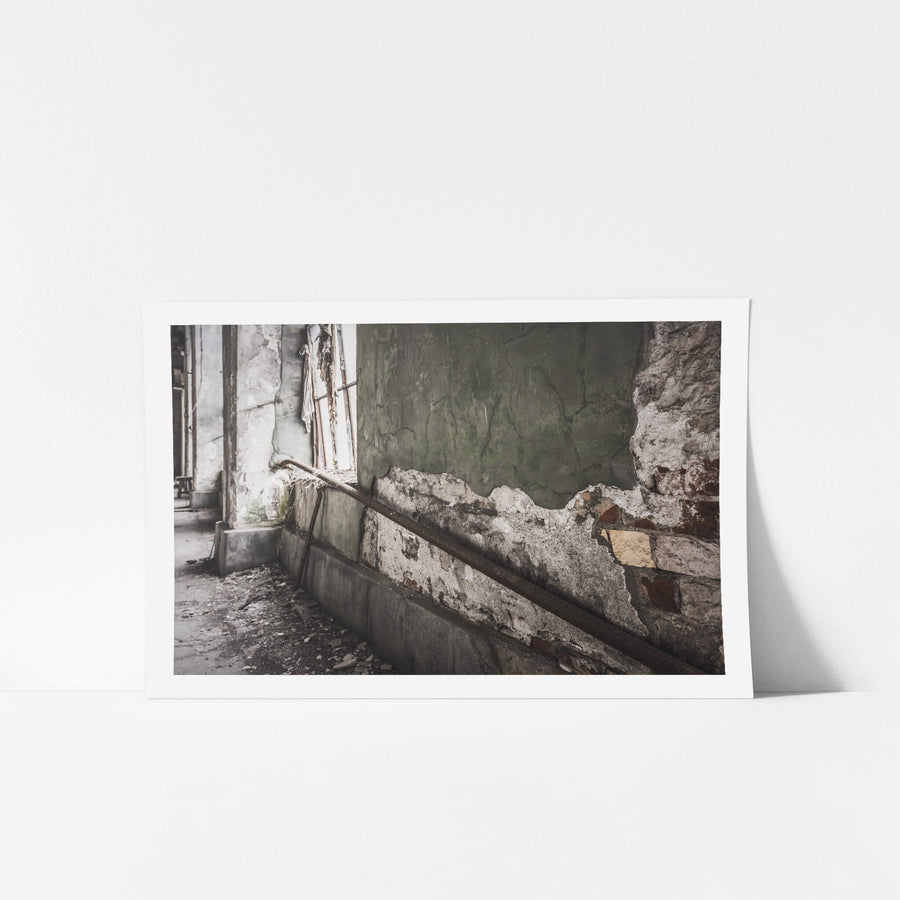
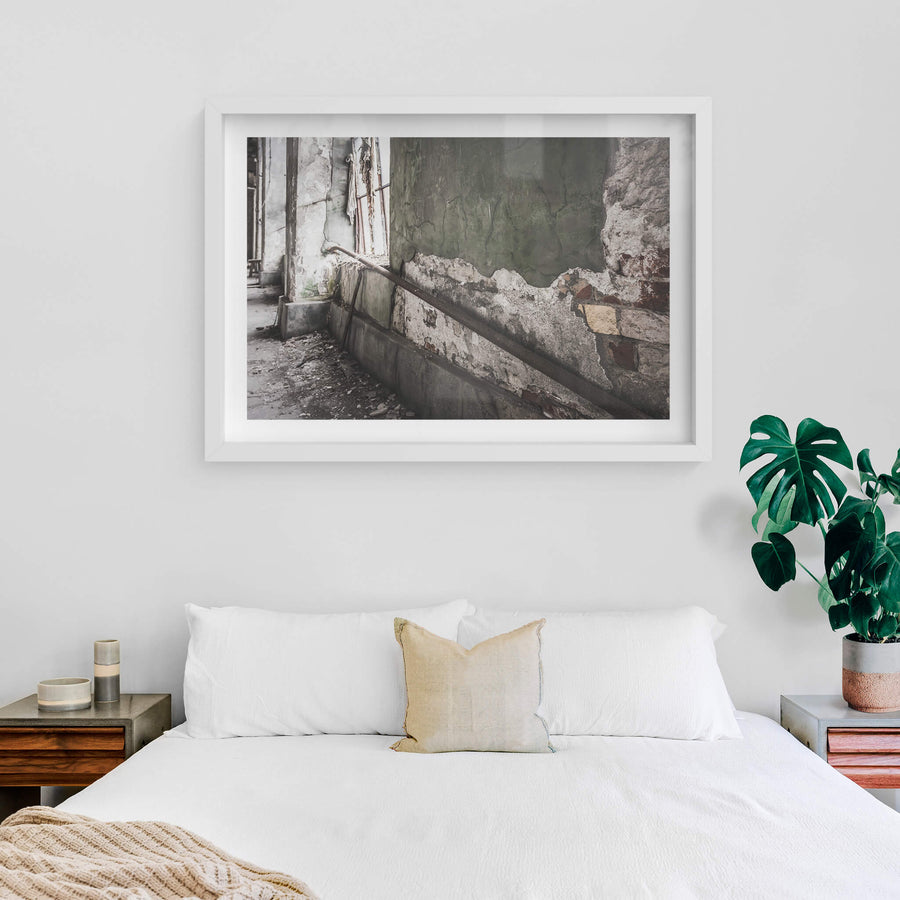
Green-tinged render pulls away from an interior wall at Shimizusawa Thermal Power Plant, revealing courses of red and yellow brick beneath. A rusted pipe runs diagonally across the lower section, its fixings pulling out of the crumbling surface. Bright light from a window to the left catches the rough masonry and the debris along the concrete base.
Open edition
Printed to order, no fixed quantity. Each print is hand-signed by the photographer.
Limited edition
A fixed number of prints exist. Once sold, the edition closes permanently. Each print is individually numbered and signed.
Shipping Free shipping over $250. Ships worldwide, rates calculated at checkout.
Returns Damaged in transit? We replace it. Full policy →
Ships within 10 business days · signed & numbered
In situ


Print datasheet
- Title
- Render
- Series
- Shimizusawa Thermal Power Plant
- Catalogue
- STP-004
- Process
- Giclée
- Captured
- 28 April 2016
- Camera
- NIKON D810
- Lens
- 14.0-24.0 mm f/2.8
- Aperture
- f/9.0
- Shutter
- 1/40 s
- ISO
- 500
- Focal length
- 24 mm
- Paper
- Ilford Galerie Smooth Cotton Rag 310 gsm
- Paper size
- 297 × 210 mm
- Location
- Yubari, Hokkaido, Japan
- Authenticity
- C2PA verified provenance →
- Recognised by
- Highly Commended in Multimedia at the 2016 National Trust of Australia (NSW) Heritage Awards
Yubari, Hokkaido, Japan
Map · Mapbox · OpenStreetMap
About this print
Exposed 1920s' brickwork.
Brett Patman

The series
Shimizusawa Thermal Power Plant
Shimizusawa Thermal Power Plant ran in the Shimizusawa district of Yubari, on Japan's northern island of Hokkaido, from 1926 to 1991. It was built and operated by the Hokkaido Colliery and Steamship Company, known locally as Hokutan, alongside the coal mines that supplied its fuel. It was reportedly the largest privately owned power generation plant in Japan at peak.
Print sizes
The anatomy view shows what this finish is as a physical object: paper margin, mat band, frame depth, acrylic profile. The comparison strip shows how each size sits relative to the others at true scale. Click a size or a finish to update both.
| Type | Size | Width | Height |
|---|


