
Wolumla Dairy
Provenance
- Camera
- NIKON D850
- Lens
- 24.0-70.0 mm f/2.8
- Settings
- 27mm · f/8.0 · 1/500 · ISO 100
- Paper
- Ilford Galerie Smooth Cotton Rag 310 gsm
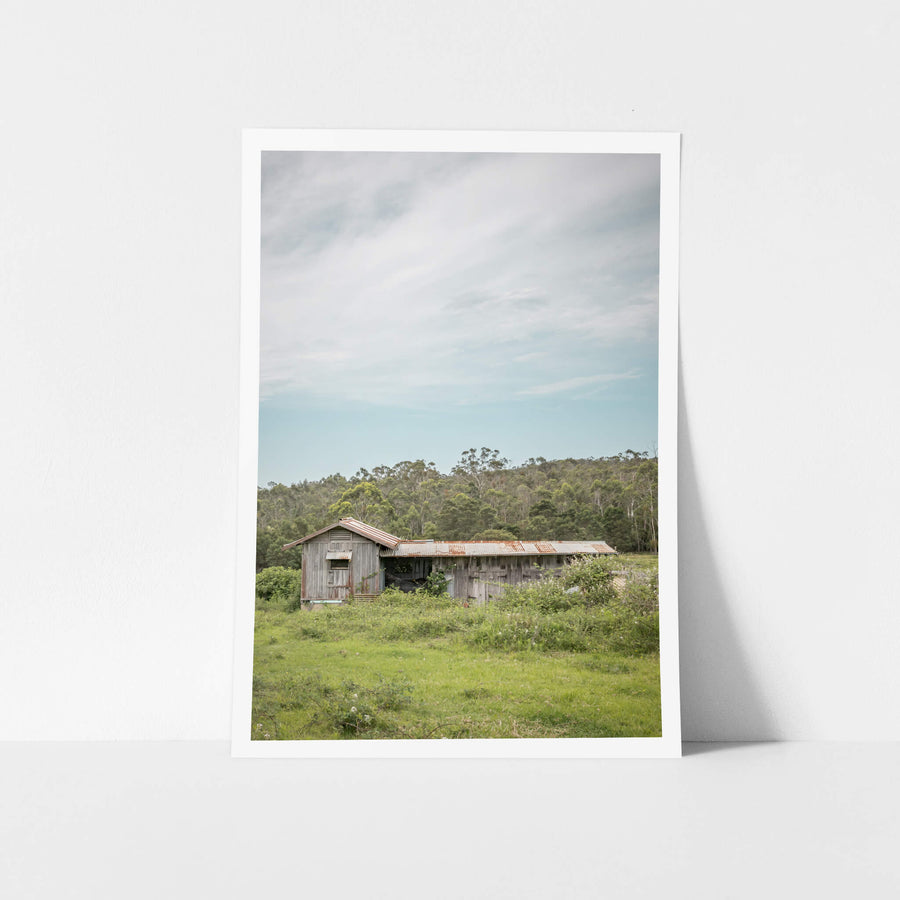
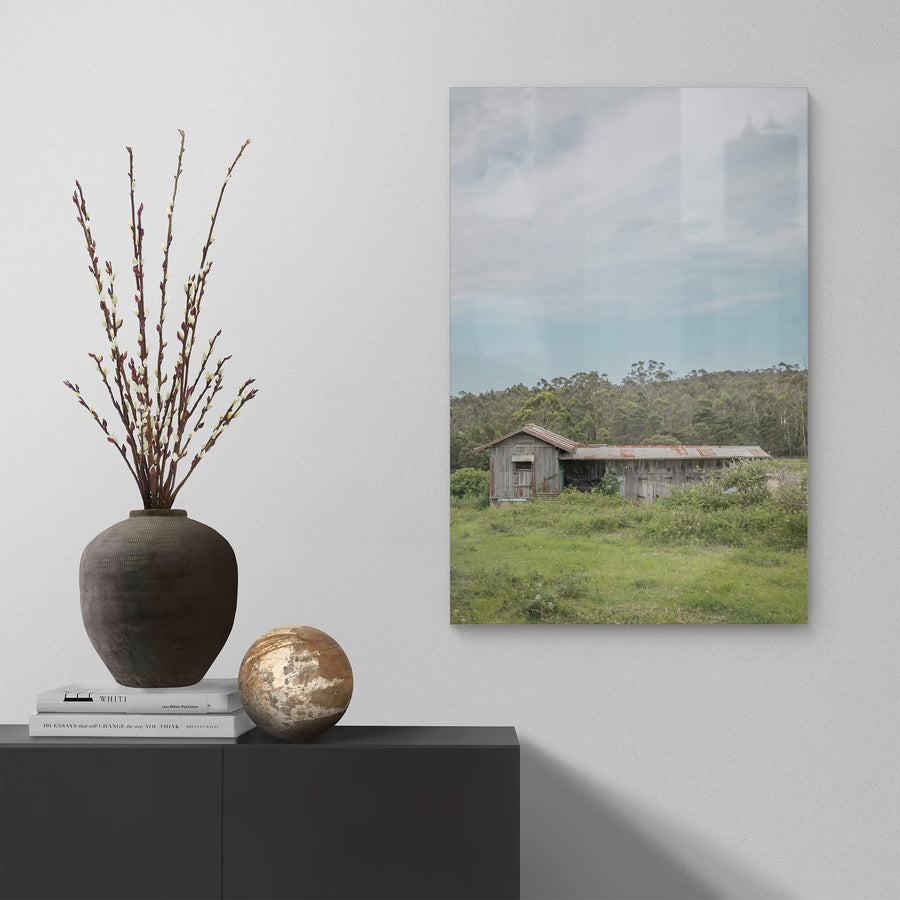
The Wolumla Dairy stands low in open paddock, a long timber building with a rusting corrugated iron roof and a gabled end carrying a small awning window. The weatherboards are split and silvered by exposure, most of the paint long gone. Grass and scrub grow up against the walls, and a wooded ridge rises close behind.
Open edition
Printed to order, no fixed quantity. Each print is hand-signed by the photographer.
Limited edition
A fixed number of prints exist. Once sold, the edition closes permanently. Each print is individually numbered and signed.
Shipping Free shipping over $250. Ships worldwide, rates calculated at checkout.
Returns Damaged in transit? We replace it. Full policy →
Ships within 10 business days · signed & numbered
In situ
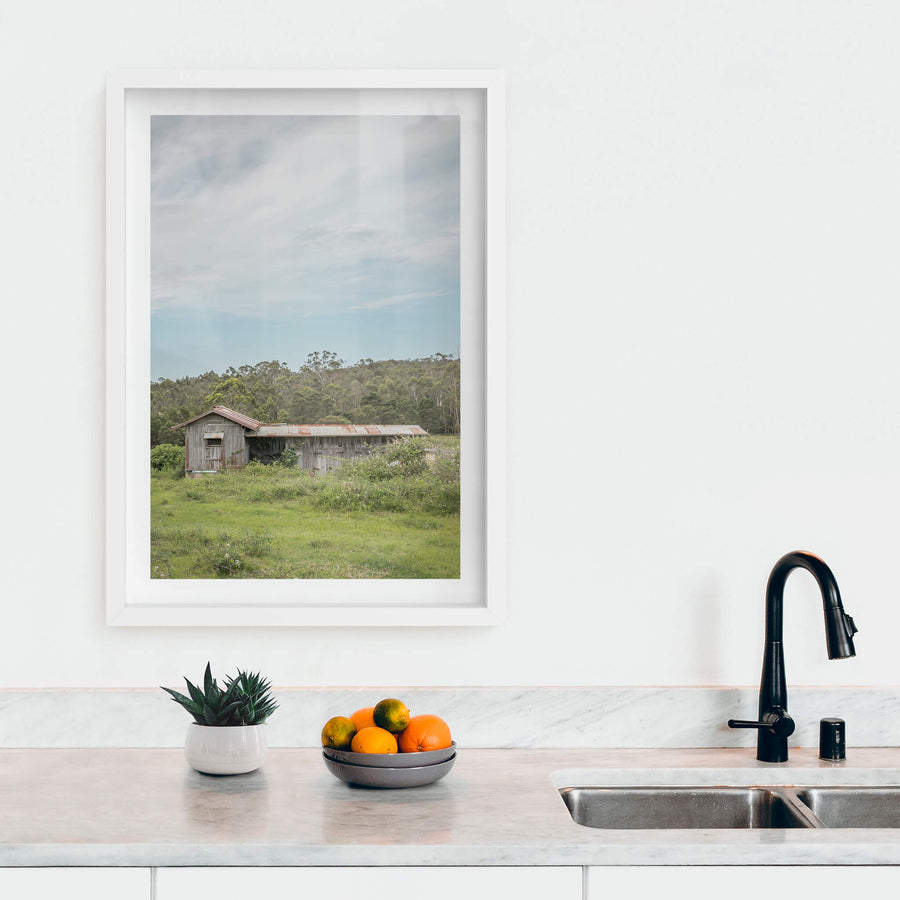
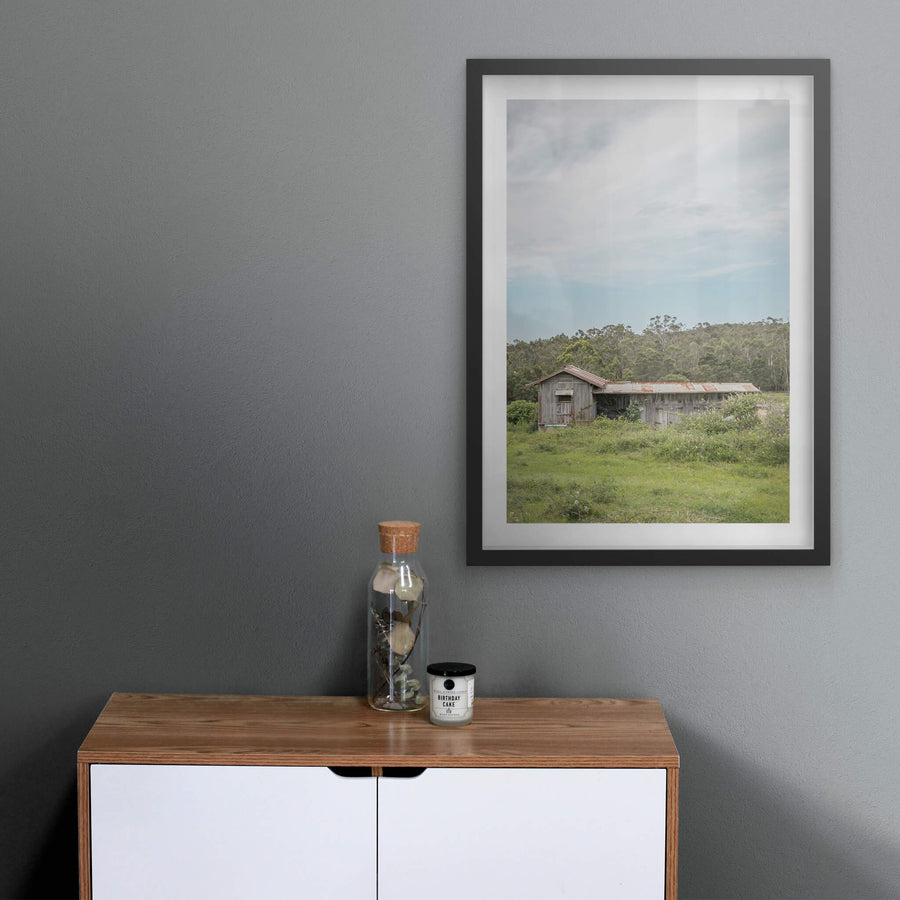
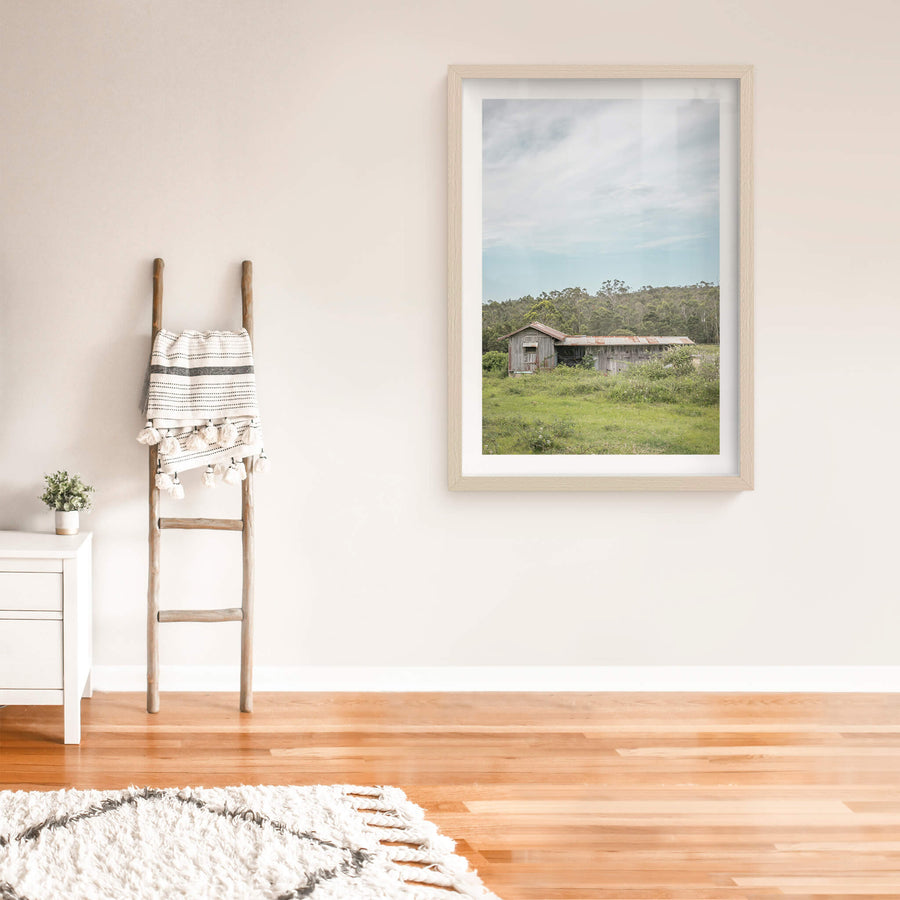
Print datasheet
- Title
- Wolumla Dairy
- Series
- The Dairy
- Catalogue
- DAI-002
- Process
- Giclée
- Captured
- 29 December 2018
- Camera
- NIKON D850
- Lens
- 24.0-70.0 mm f/2.8
- Aperture
- f/8.0
- Shutter
- 1/500 s
- ISO
- 100
- Focal length
- 27 mm
- Paper
- Ilford Galerie Smooth Cotton Rag 310 gsm
- Paper size
- 297 × 210 mm
- Location
- Various, Australia
- Recognised by
- Highly Commended in Multimedia at the 2016 National Trust of Australia (NSW) Heritage Awards
Various, Australia
Map · Mapbox · OpenStreetMap
About this print
Near Wolumla in the Bega Valley, a timber dairy building sits low in open paddock country, its rusting corrugated iron roof running the length of the structure. The weatherboard walls have shed most of their paint; the boards beneath are split and grey from decades of coastal weather. What remains is a farm-scale cream room, the kind of structure that was essential infrastructure on every dairy property in the district from the 1880s until bulk milk collection with refrigerated farm vats made on-farm separation redundant in 1966.
Brett Patman

The series
The Dairy
The dairy was once a cornerstone of rural life,a place of early mornings, steady hands, and the quiet rhythm of milk cans and cattle. These small buildings, scattered across the countryside, played an essential role in sustaining communities built around the land. Photographed across remote farmland and pastoral regions, this collection captures the character of these structures,some still in use, others long abandoned, their timber walls and corrugated iron roofs bearing the wear of time and changing industry. Many of these dairies, once vital to families and local economies, now stand silent, replaced by larger operations or lost to history. Yet their presence on the landscape remains, markers of a way of life that endures in memory. Through these images, step into the quiet solitude of these timeworn spaces, where traces of the past still linger in the empty stalls and weathered doorways. Explore the collection below.
Print sizes
The anatomy view shows what this finish is as a physical object: paper margin, mat band, frame depth, acrylic profile. The comparison strip shows how each size sits relative to the others at true scale. Click a size or a finish to update both.
| Type | Size | Width | Height |
|---|