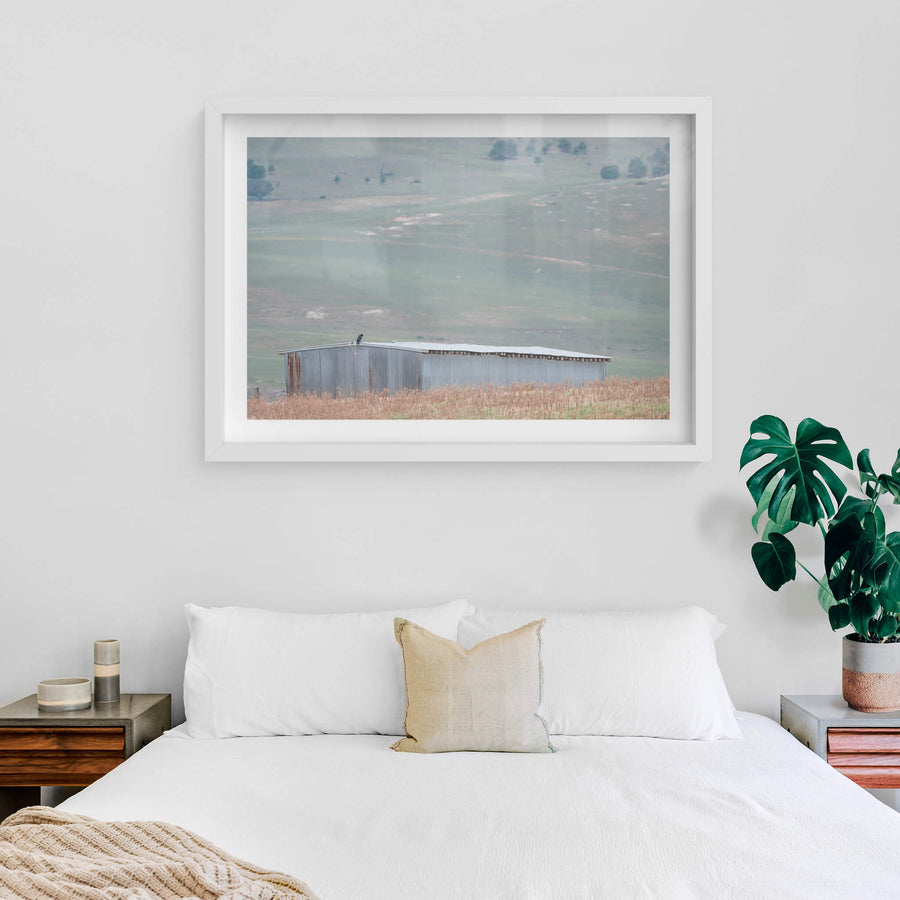
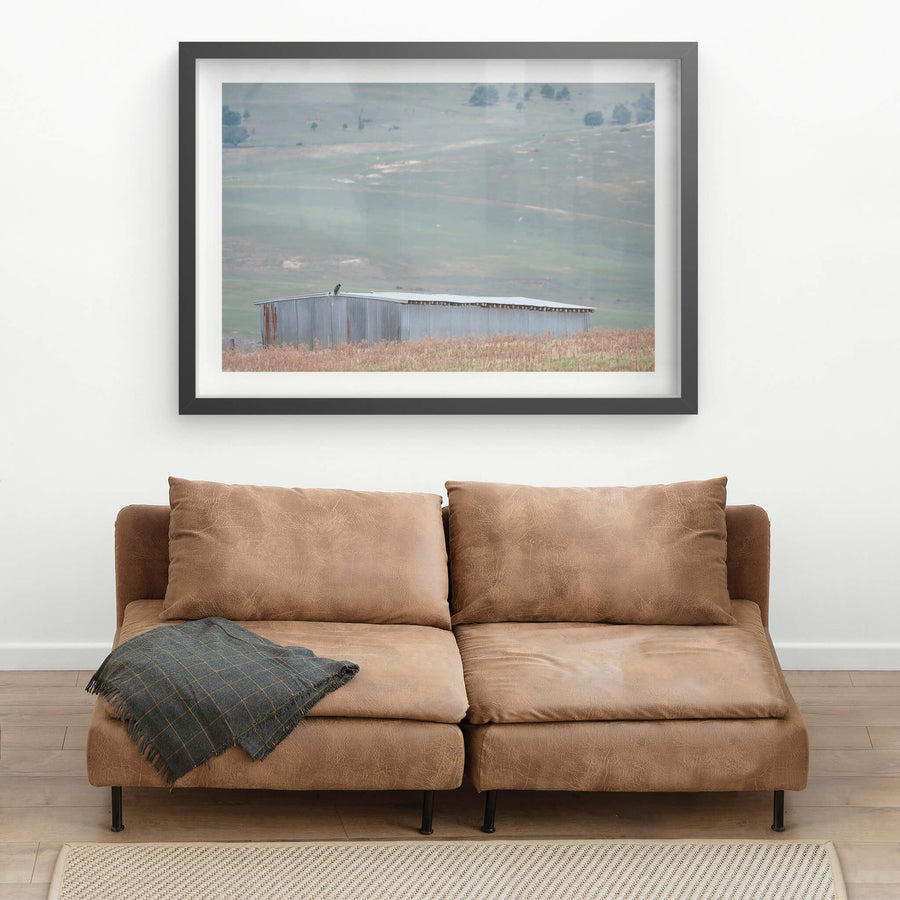
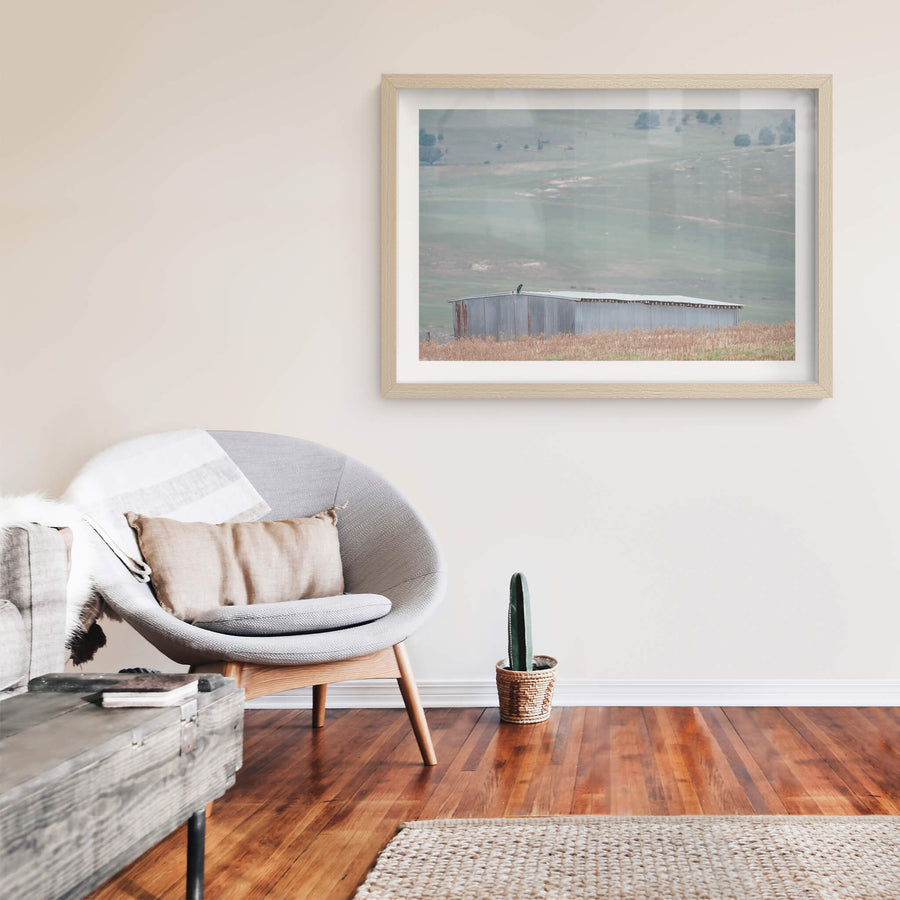
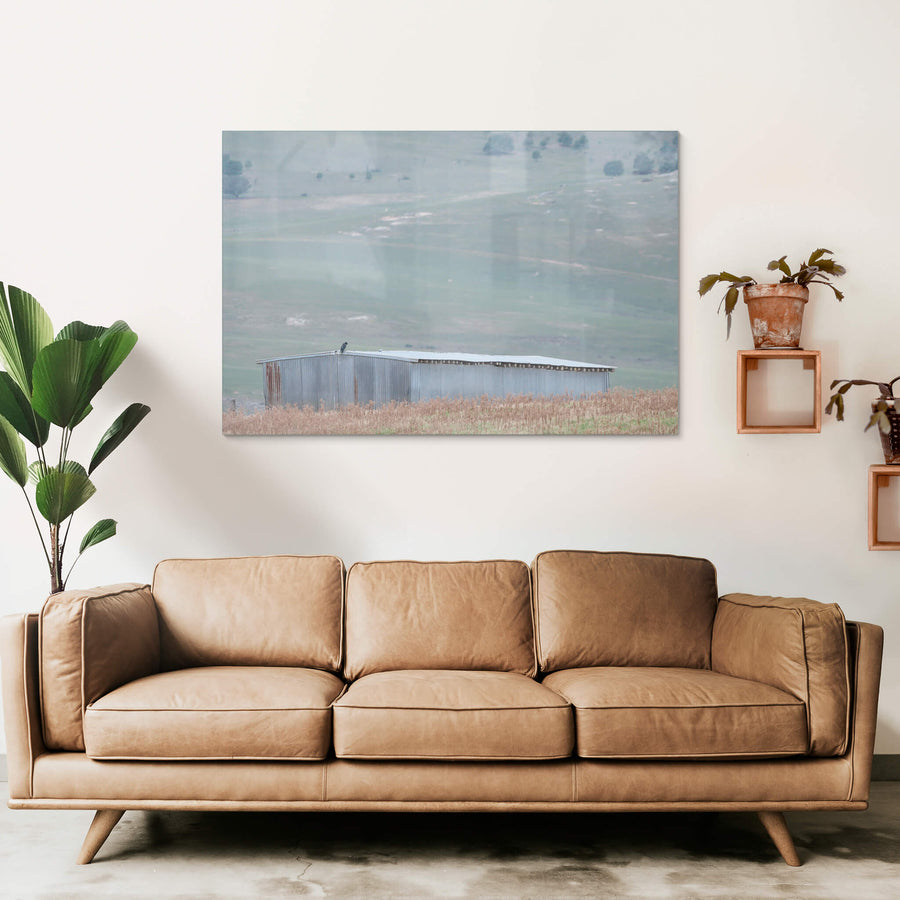
Crow On The Shed

Provenance

Camera
NIKON Z 7
Lens
250.0-560.0 mm f/5.6
Settings
560mm · f/5.6 · 1/640 · ISO 720
Paper
Ilford Galerie Smooth Cotton Rag 310 gsm

A crow perches on a corrugated iron roof. The iron is weathered, showing rust and age. The structure beneath is an abandoned woolshed. The sky provides contrast against the dark bird and pale, worn metal. No other figures or animals are visible in the frame.

Edition
Open edition

Open edition
Printed to order, no fixed quantity. Each print is hand-signed by the photographer.

Limited edition
A fixed number of prints exist. Once sold, the edition closes permanently. Each print is individually numbered and signed.

$100.00 AUD
Size
Type
Colour
Signed, numbered, with COA. Made to order in 5 to 10 business days (unframed). Shipped in protective packaging with edition certificate, paper-stock reference and a printed care guide.
See certificate sample →

Shipping Free shipping over $250. Ships worldwide, rates calculated at checkout.

Returns Damaged in transit? We replace it. Full policy →

Ships within 10 business days · signed & numbered

In situ

Crow On The Shed at The Woolshed, unframed print displayed in situ on a wall.Crow On The Shed at The Woolshed, white-framed print displayed in situ on a wall.Crow On The Shed at The Woolshed, black-framed print displayed in situ on a wall.Crow On The Shed at The Woolshed, raw timber-framed print displayed in situ on a wall.Crow On The Shed at The Woolshed, glass print displayed in situ on a wall.
01 PROVENANCE

Print datasheet

Title
Crow On The Shed
Series
The Woolshed
Catalogue
TWS-022
Process
Giclée
Captured
30 December 2018
Camera
NIKON Z 7
Lens
250.0-560.0 mm f/5.6
Aperture
f/5.6
Shutter
1/640 s
ISO
720
Focal length
560 mm
Paper
Ilford Galerie Smooth Cotton Rag 310 gsm
Paper size
290 × 200 mm
Location
Various, New South Wales, Australia
Recognised by
Highly Commended in Multimedia at the 2016 National Trust of Australia (NSW) Heritage Awards
03 THE STORY

About this print

Corrugated galvanised iron became the defining material of Australian rural construction from the 1850s onward, replacing bark and split-timber on woolsheds, outbuildings, and homesteads across NSW and Victoria. It was cheap to transport, quick to fix, and tough enough for the pastoral climate. The roofline of a woolshed became as recognisable a feature of the rural landscape as the water tank or the shearing board. The woolshed itself was the operational centre of any sheep property. Inside a working shed, the layout was deliberate and efficient: catching pens where sheep waited, numbered shearing stands along the board, a wool room where fleeces were skirted and classed, wool presses to compress the clip into branded bales. On mid-size properties, an eight-stand shed was common. Large stations employed itinerant shearing teams across the traditional NSW spring season. The whole machinery of the place served a single purpose: processing the clip. Many of these sheds were built during the 1880s to 1920s expansion of the pastoral industry, framed in local hardwood, ironbark, red gum, stringybark, using mortise-and-tenon and lap-joint construction that was built to last. Some have lasted well past the point of usefulness. As station consolidation, drought, and shifting land use reduced the number of operating sheep properties from the 1970s onward, smaller woolsheds fell quiet. Corrugated iron kept the rain out long after the shearers stopped coming. This photograph, made in 2018, records one of those sheds in its present state. A crow rests on the roofline. The iron beneath it is weathered and rust-streaked, the surface faded to the dull palette that comes from decades of sun and rain without maintenance. The bird sits without concern. The shed holds its shape. Part of The Woolshed series, documenting pastoral structures across NSW.

04 FROM THE FIELD NOTES

A crow sits on the corrugated iron roof of an abandoned woolshed somewhere across rural NSW. The iron is pitted and faded, the kind of surface that starts life galvanised and spends its decades slowly surrendering to weather. Woolsheds like this one were the operational centres of their properties, shearing stands, wool rooms, wool presses, the whole mechanical business of turning a mob of sheep into baled clip. Many smaller sheds fell out of use from the 1970s onward as properties consolidated and the industry contracted. This one now holds only light and a crow.

Brett Patman

The Woolshed

The series

The Woolshed

2016 · 29 photographs

The Woolshed is a series of working and former working woolsheds across south-eastern New South Wales, predominantly the south-east hinterland and Snowy Monaro region. Most are timber-framed and clad in corrugated iron or timber weatherboards, weathered through decades of use. Some still shear; many do not, as farming priorities have shifted and shearing technology has changed. Woolsheds were sometimes important community meeting points, used for dances and other gatherings. The buildings were always built for function - appearance was never a factor in their design.

View all in this series →

05 SIZE GUIDE

Print sizes

The anatomy view shows what this finish is as a physical object: paper margin, mat band, frame depth, acrylic profile. The comparison strip shows how each size sits relative to the others at true scale. Click a size or a finish to update both.

Anatomy · true ratio
TypeSizeWidthHeight
08 BY POST · NO SPAM

Read the full story

Articles when they're published. The history behind a place. The day of a shoot. The work between prints. No marketing, no schedule.

You're subscribed.