
Deddick Valley Ruined Shed
Provenance
- Camera
- NIKON Z 7
- Lens
- 180.0-400.0 mm f/4.0
- Settings
- 180mm · f/8.0 · 1/200 · ISO 180
- Paper
- Ilford Galerie Smooth Cotton Rag 310 gsm
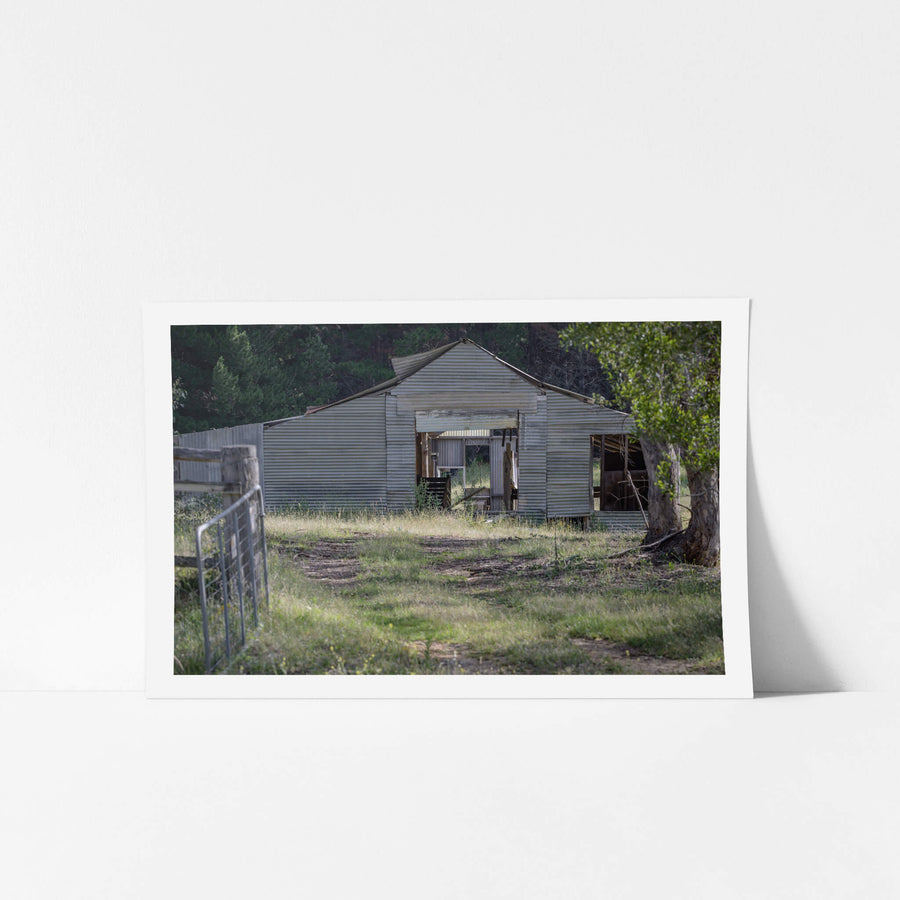
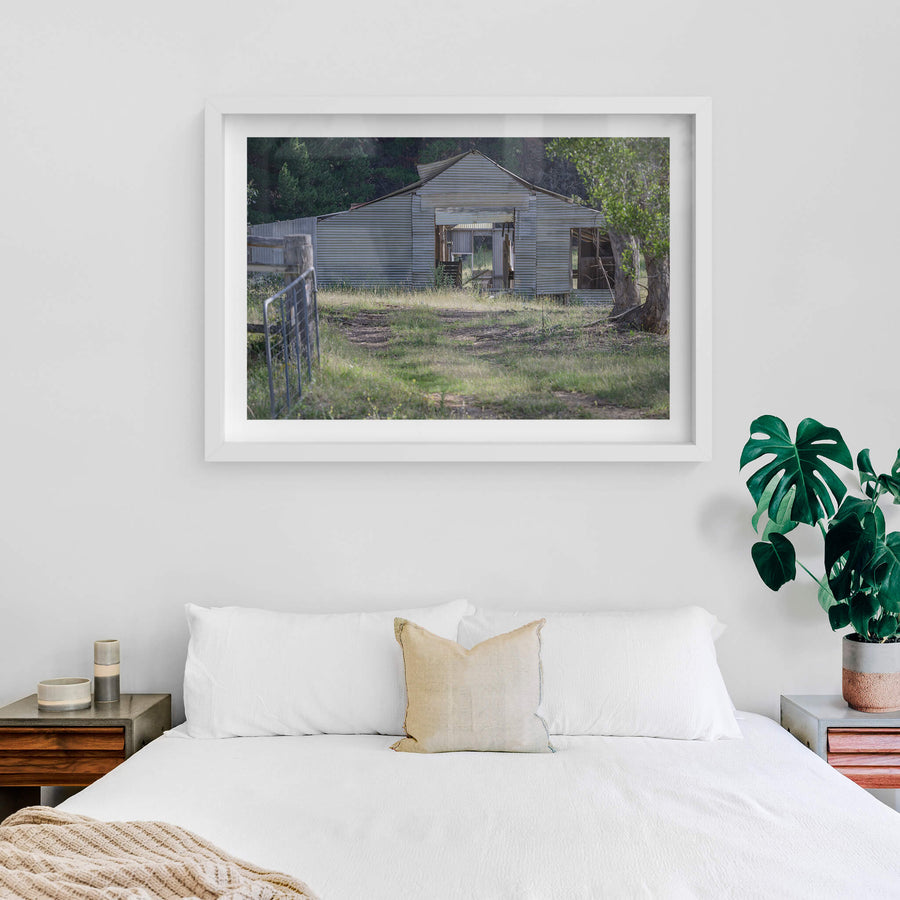
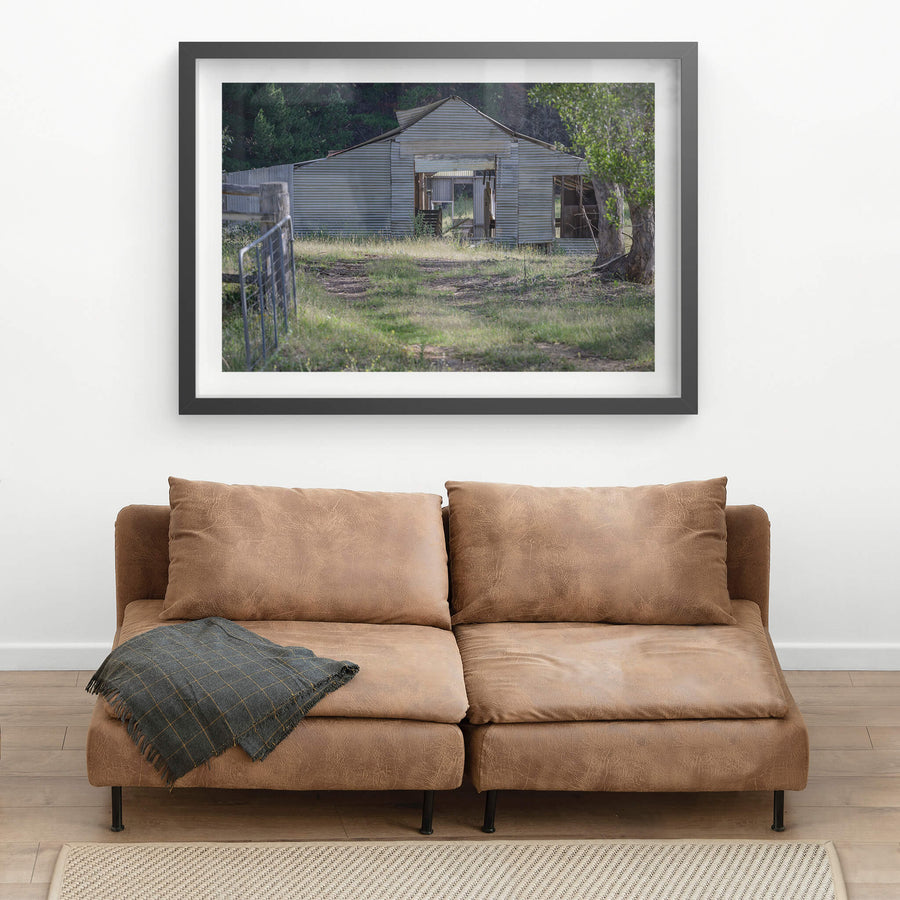
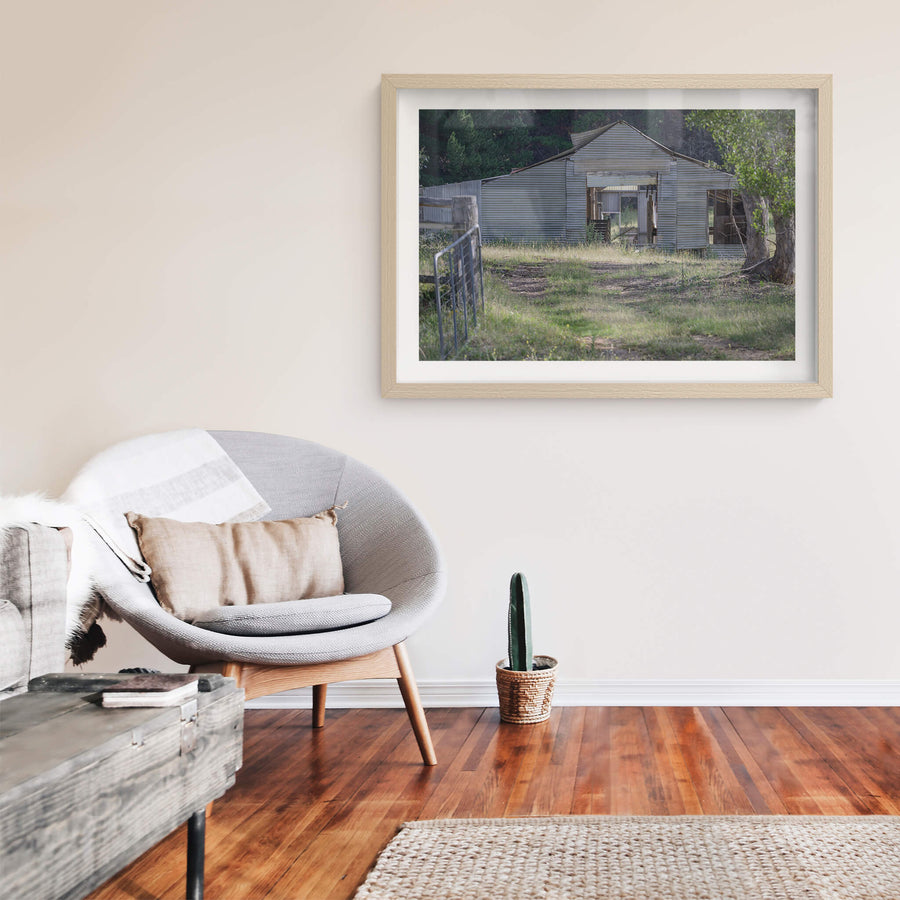
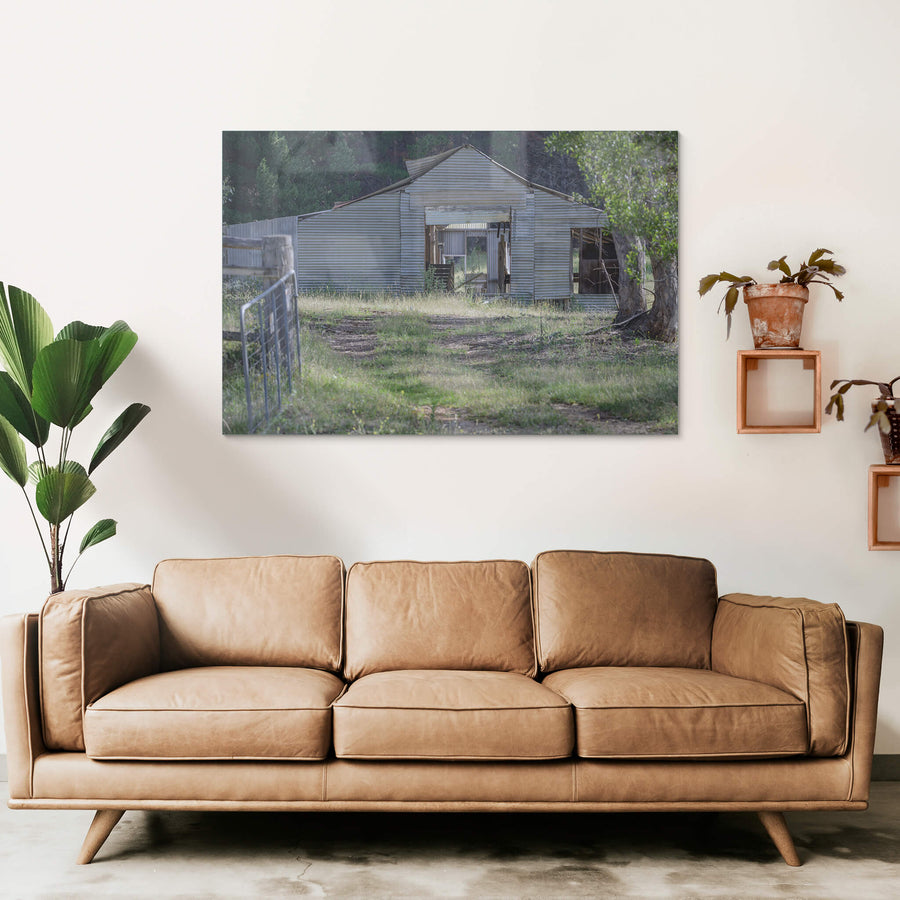
Dirt and dry grass lead from an open metal gate towards the wide entrance of a corrugated iron shed at Deddick Valley, its roof missing several sheets on the upper left side. A large tree trunk crowds in from the right, half-obscuring the far wall. Sunlight catches the path and the front face of the building, throwing the interior into shade.
Open edition
Printed to order, no fixed quantity. Each print is hand-signed by the photographer.
Limited edition
A fixed number of prints exist. Once sold, the edition closes permanently. Each print is individually numbered and signed.
Shipping Free shipping over $250. Ships worldwide, rates calculated at checkout.
Returns Damaged in transit? We replace it. Full policy →
Ships within 10 business days · signed & numbered
In situ
Print datasheet
- Title
- Deddick Valley Ruined Shed
- Series
- The Woolshed
- Catalogue
- TWS-009
- Process
- Giclée
- Captured
- 26 December 2018
- Camera
- NIKON Z 7
- Lens
- 180.0-400.0 mm f/4.0
- Aperture
- f/8.0
- Shutter
- 1/200 s
- ISO
- 180
- Focal length
- 180 mm
- Paper
- Ilford Galerie Smooth Cotton Rag 310 gsm
- Paper size
- 297 × 210 mm
- Location
- Deddick Valley, Victoria, Australia
- Authenticity
- C2PA verified provenance →
- Recognised by
- Highly Commended in Multimedia at the 2016 National Trust of Australia (NSW) Heritage Awards
Deddick Valley, Victoria, Australia
Map · Mapbox · OpenStreetMap
About this print
A corrugated iron shed stands open to the paddock, its gable roof peeling back at one corner. The doorway frames clear through to the far wall and the green hillside beyond. No glass in the windows. Dry grass reaches the threshold. A steel farm gate hangs ajar at the fence line, and a mature tree leans close against the right side of the structure. Afternoon light falls flat across the iron, turning it pale grey.
Brett Patman

The series
The Woolshed
The Woolshed is a series of working and former working woolsheds across south-eastern New South Wales, predominantly the south-east hinterland and Snowy Monaro region. Most are timber-framed and clad in corrugated iron or timber weatherboards, weathered through decades of use. Some still shear; many do not, as farming priorities have shifted and shearing technology has changed. Woolsheds were sometimes important community meeting points, used for dances and other gatherings. The buildings were always built for function - appearance was never a factor in their design.
Print sizes
The anatomy view shows what this finish is as a physical object: paper margin, mat band, frame depth, acrylic profile. The comparison strip shows how each size sits relative to the others at true scale. Click a size or a finish to update both.
| Type | Size | Width | Height |
|---|


