
Fibro Shed
Provenance
- Camera
- NIKON Z 7
- Lens
- 180.0-400.0 mm f/4.0
- Settings
- 400mm · f/5.0 · 1/400 · ISO 180
- Paper
- Ilford Galerie Smooth Cotton Rag 310 gsm
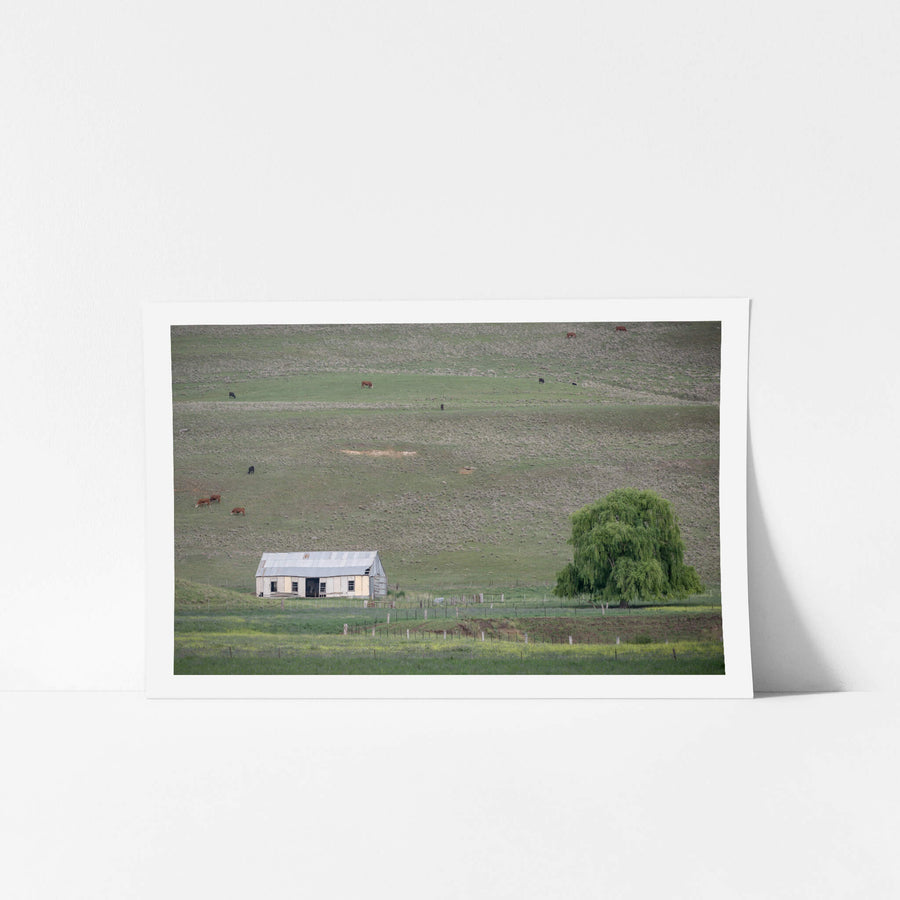
Pale yellow painted walls and a silver roof set this barn apart from the hillside behind it, where brown and black cattle graze the upper slopes. Fence lines cross the foreground paddock and a large willow fills the right edge of the frame, its canopy spreading well above the roofline. The central doorway opens onto a dark interior.
Open edition
Printed to order, no fixed quantity. Each print is hand-signed by the photographer.
Limited edition
A fixed number of prints exist. Once sold, the edition closes permanently. Each print is individually numbered and signed.
Shipping Free shipping over $250. Ships worldwide, rates calculated at checkout.
Returns Damaged in transit? We replace it. Full policy →
Ships within 10 business days · signed & numbered
In situ
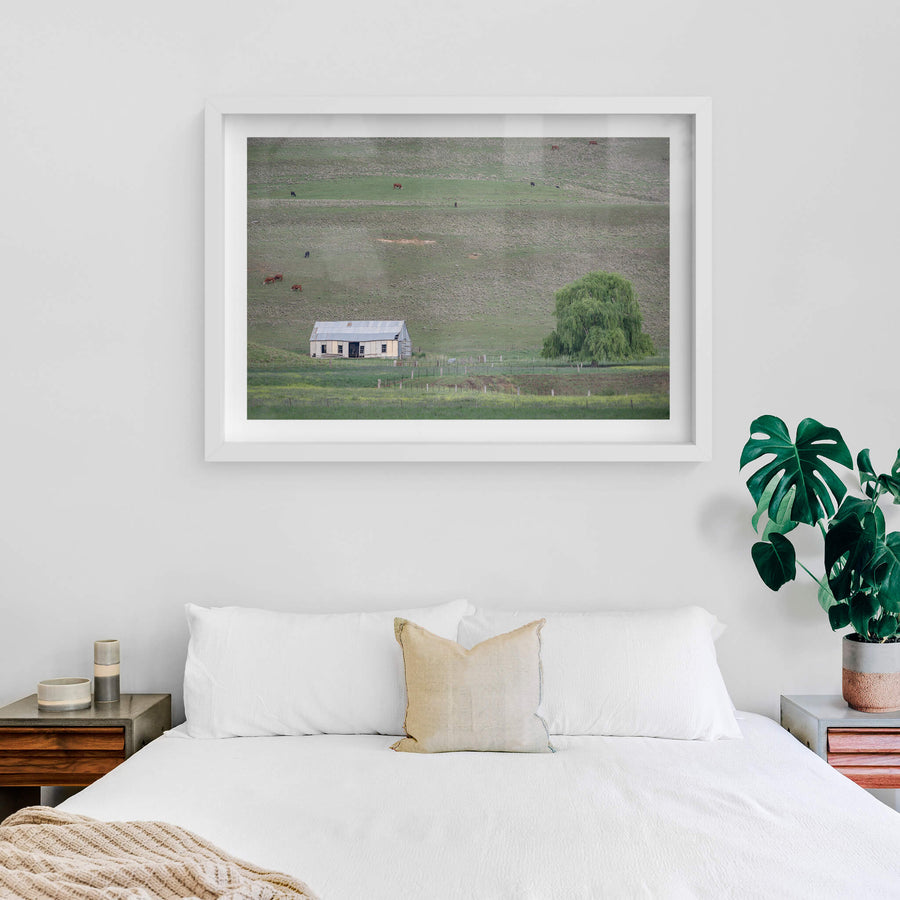


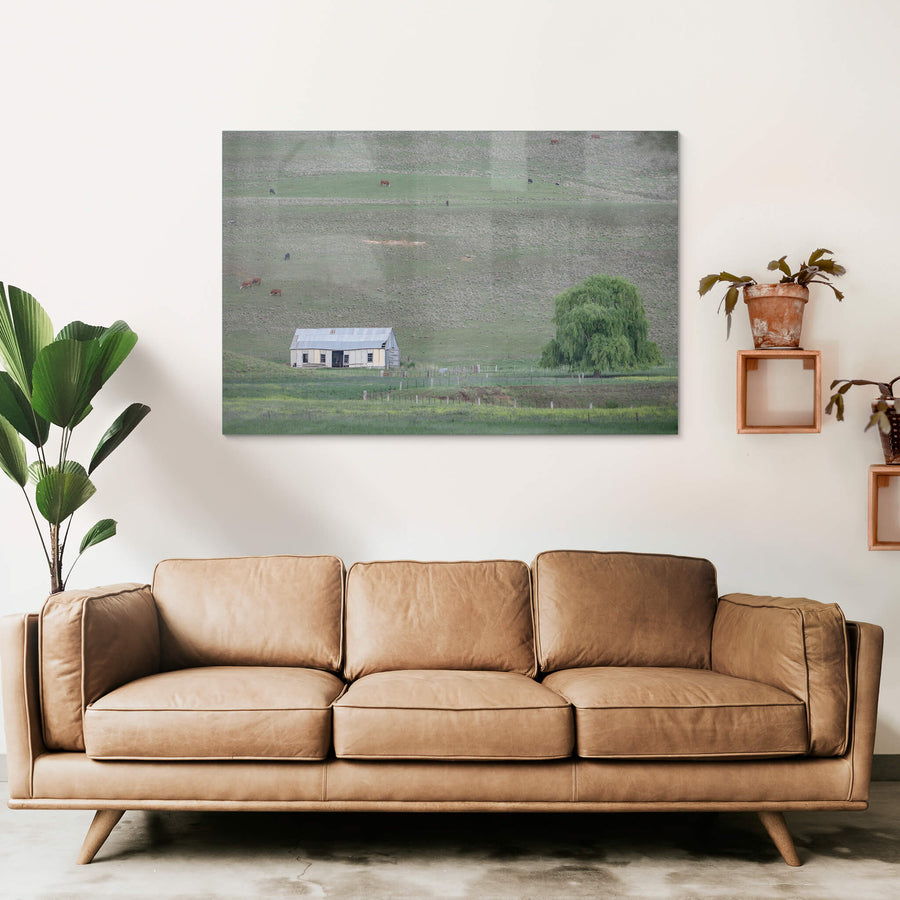
Print datasheet
- Title
- Fibro Shed
- Series
- The Woolshed
- Catalogue
- TWS-018
- Process
- Giclée
- Captured
- 29 December 2018
- Camera
- NIKON Z 7
- Lens
- 180.0-400.0 mm f/4.0
- Aperture
- f/5.0
- Shutter
- 1/400 s
- ISO
- 180
- Focal length
- 400 mm
- Paper
- Ilford Galerie Smooth Cotton Rag 310 gsm
- Paper size
- 297 × 210 mm
- Location
- Various, New South Wales, Australia
- Authenticity
- C2PA verified provenance →
- Recognised by
- Highly Commended in Multimedia at the 2016 National Trust of Australia (NSW) Heritage Awards
Various, New South Wales, Australia
Map · Mapbox · OpenStreetMap
About this print
A small fibro shed sits open to the light, its corrugated cement walls stripped back by years of sun and weather to reveal the colours underneath. Fibro-cement sheeting like this became common on post-war rural outbuildings across NSW from the 1950s, a cheaper alternative to galvanised iron on smaller structures. As sheep numbers declined and station consolidation reduced the number of working properties, sheds like this one were left standing but no longer needed. The photograph records what the weather and time have made of them.
Brett Patman

The series
The Woolshed
The Woolshed is a series of working and former working woolsheds across south-eastern New South Wales, predominantly the south-east hinterland and Snowy Monaro region. Most are timber-framed and clad in corrugated iron or timber weatherboards, weathered through decades of use. Some still shear; many do not, as farming priorities have shifted and shearing technology has changed. Woolsheds were sometimes important community meeting points, used for dances and other gatherings. The buildings were always built for function - appearance was never a factor in their design.
Print sizes
The anatomy view shows what this finish is as a physical object: paper margin, mat band, frame depth, acrylic profile. The comparison strip shows how each size sits relative to the others at true scale. Click a size or a finish to update both.
| Type | Size | Width | Height |
|---|


