
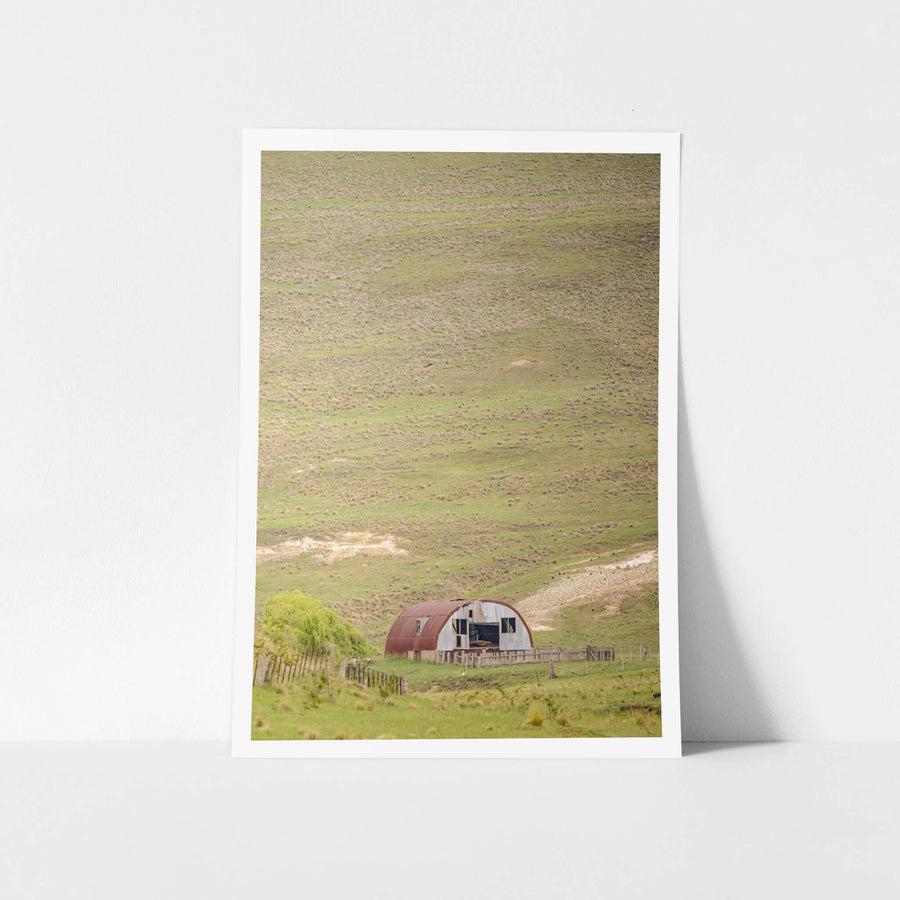
Nissen Hut In The Distance
Provenance
- Camera
- NIKON Z 7
- Lens
- 250.0-560.0 mm f/5.6
- Settings
- 560mm · f/5.6 · 1/640 · ISO 800
- Paper
- Ilford Galerie Smooth Cotton Rag 310 gsm
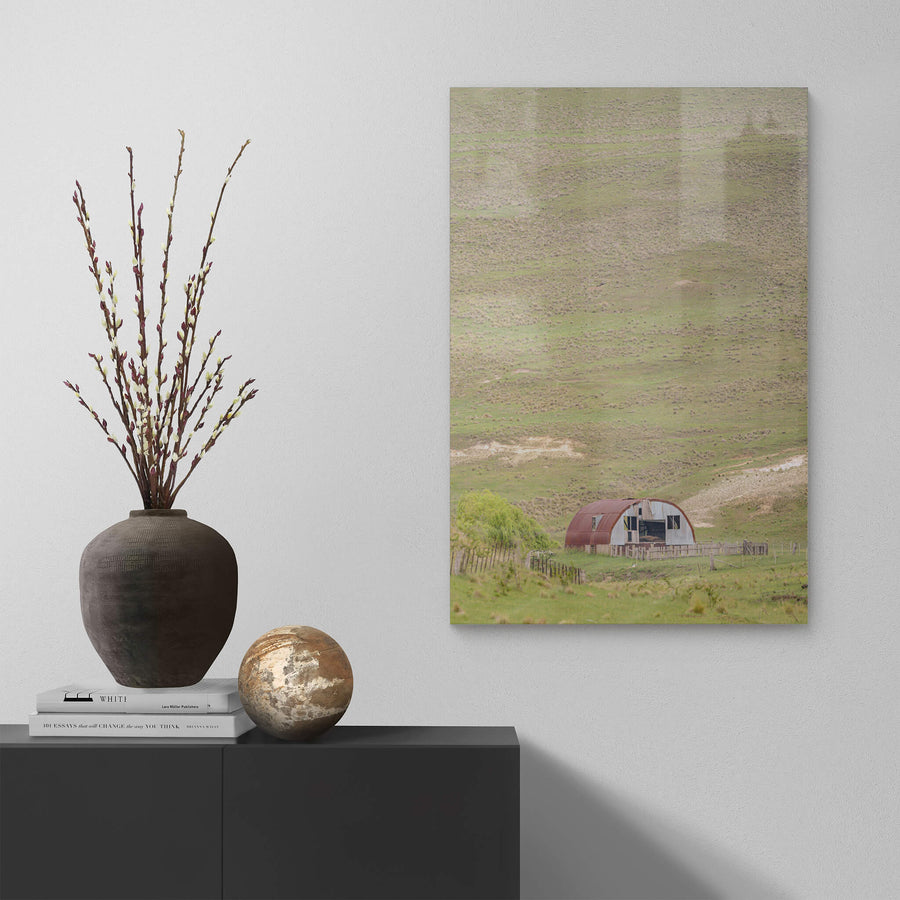
Arched metal cladding, patched with rust and panels of bare silver, wraps the front of a quonset-style barn at the centre of the frame. The timber facade beneath has pulled apart in places, leaving gaps between the planks, and a low wooden fence traces the perimeter of the yard. Clumps of light green scrub press in from the left, and the distant hills roll away in layered bands of ochre and green.
Open edition
Printed to order, no fixed quantity. Each print is hand-signed by the photographer.
Limited edition
A fixed number of prints exist. Once sold, the edition closes permanently. Each print is individually numbered and signed.
Shipping Free shipping over $250. Ships worldwide, rates calculated at checkout.
Returns Damaged in transit? We replace it. Full policy →
Ships within 10 business days · signed & numbered
In situ
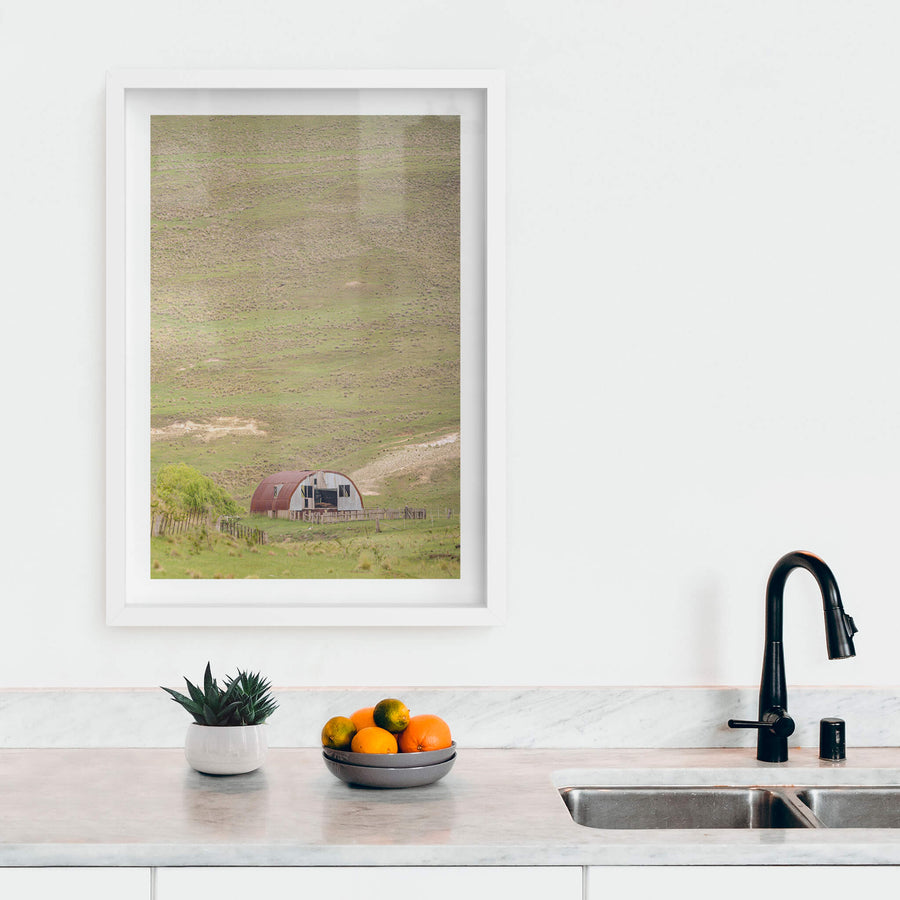
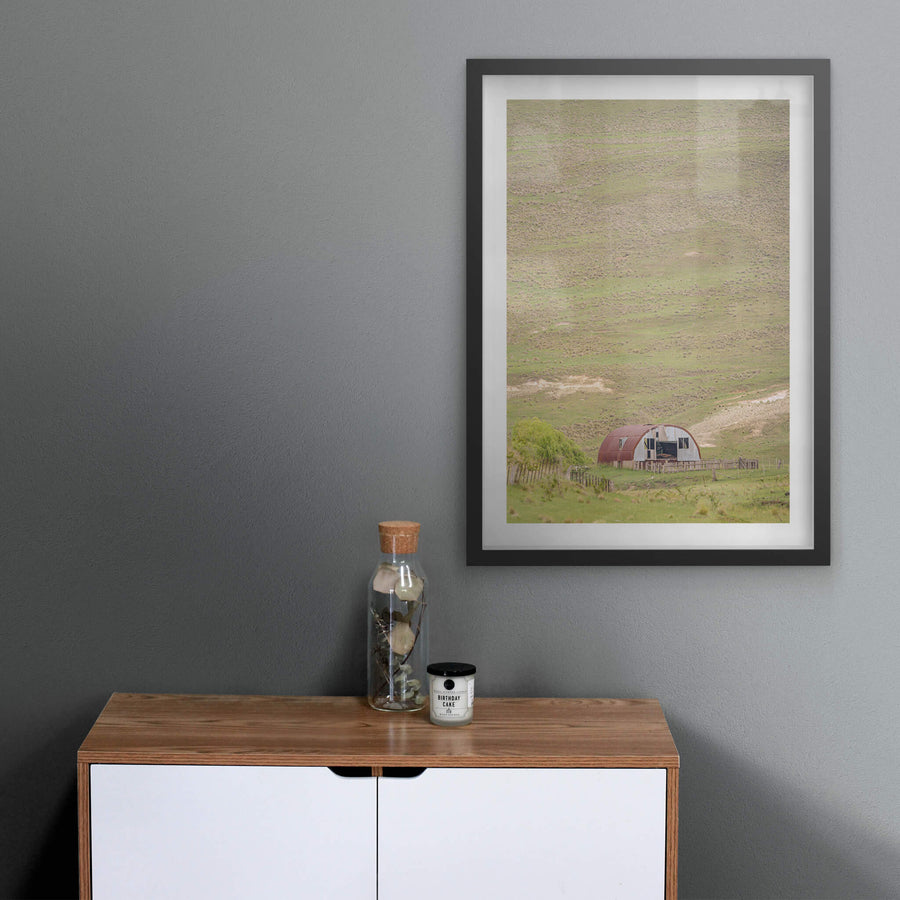
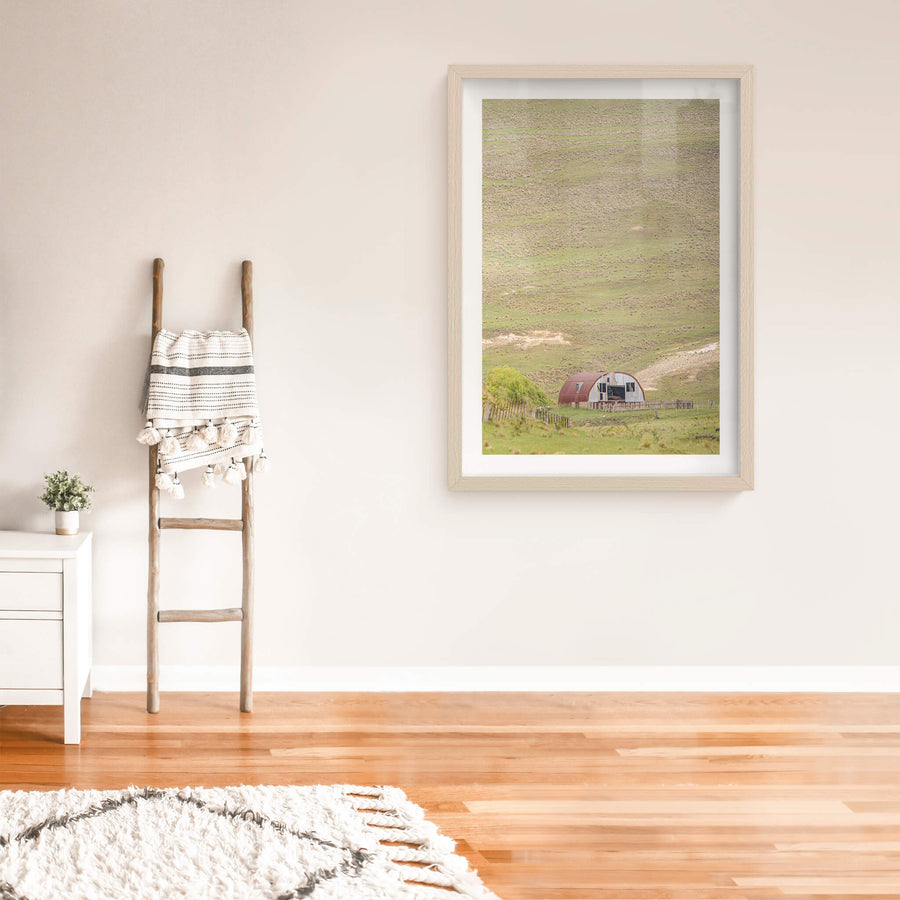
Print datasheet
- Title
- Nissen Hut In The Distance
- Series
- The Woolshed
- Catalogue
- TWS-027
- Process
- Giclée
- Captured
- 30 December 2018
- Camera
- NIKON Z 7
- Lens
- 250.0-560.0 mm f/5.6
- Aperture
- f/5.6
- Shutter
- 1/640 s
- ISO
- 800
- Focal length
- 560 mm
- Paper
- Ilford Galerie Smooth Cotton Rag 310 gsm
- Paper size
- 297 × 210 mm
- Location
- Various, New South Wales, Australia
- Authenticity
- C2PA verified provenance →
- Recognised by
- Highly Commended in Multimedia at the 2016 National Trust of Australia (NSW) Heritage Awards
Various, New South Wales, Australia
Map · Mapbox · OpenStreetMap
About this print
A lone Nissen hut stands in open NSW pastoral country, its semicircular corrugated iron shell holding its shape against years of sun and wind. Structures of this kind appeared across rural properties from the mid-20th century, put to use as shearers' quarters, storage sheds, or general farm outbuildings. As sheep numbers declined and station consolidation reshaped the landscape from the 1970s onward, many of these buildings were left behind. This one remains, a fixture in country that has largely moved on around it.
Brett Patman

The series
The Woolshed
The Woolshed is a series of working and former working woolsheds across south-eastern New South Wales, predominantly the south-east hinterland and Snowy Monaro region. Most are timber-framed and clad in corrugated iron or timber weatherboards, weathered through decades of use. Some still shear; many do not, as farming priorities have shifted and shearing technology has changed. Woolsheds were sometimes important community meeting points, used for dances and other gatherings. The buildings were always built for function - appearance was never a factor in their design.
Print sizes
The anatomy view shows what this finish is as a physical object: paper margin, mat band, frame depth, acrylic profile. The comparison strip shows how each size sits relative to the others at true scale. Click a size or a finish to update both.
| Type | Size | Width | Height |
|---|


