
Eleven
Provenance
- Camera
- NIKON D850
- Lens
- 14.0-24.0 mm f/2.8
- Settings
- 14mm · f/2.8 · 1/640 · ISO 64
- Paper
- Ilford Galerie Smooth Cotton Rag 310 gsm
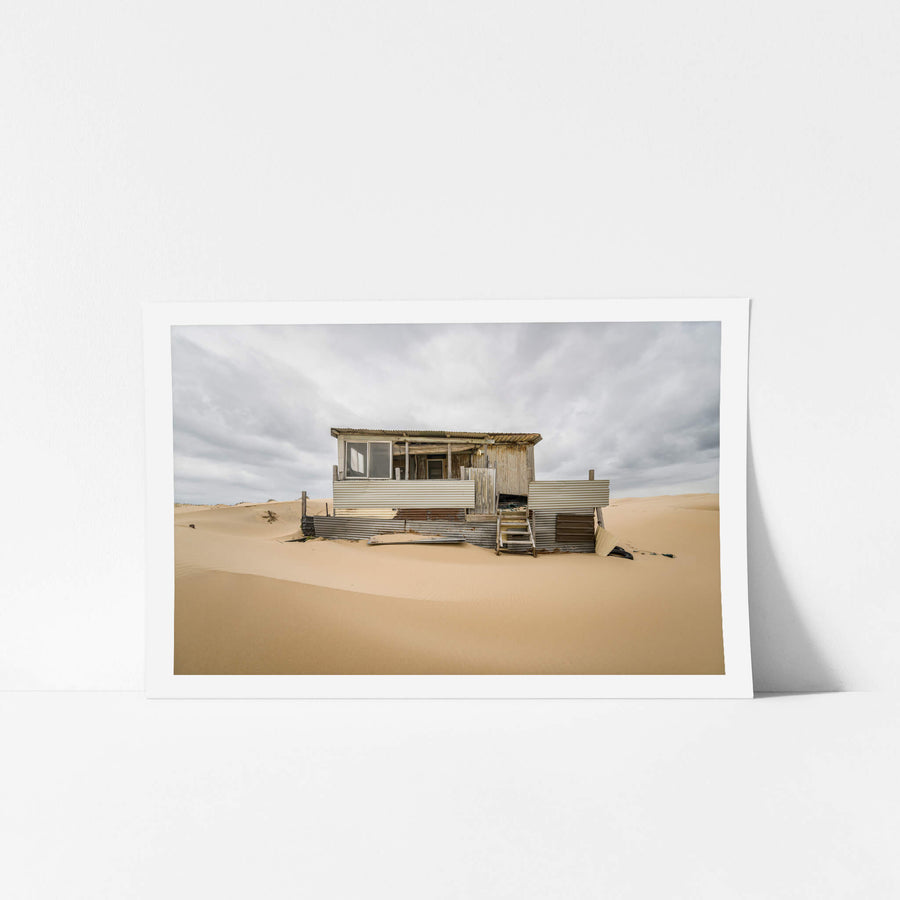
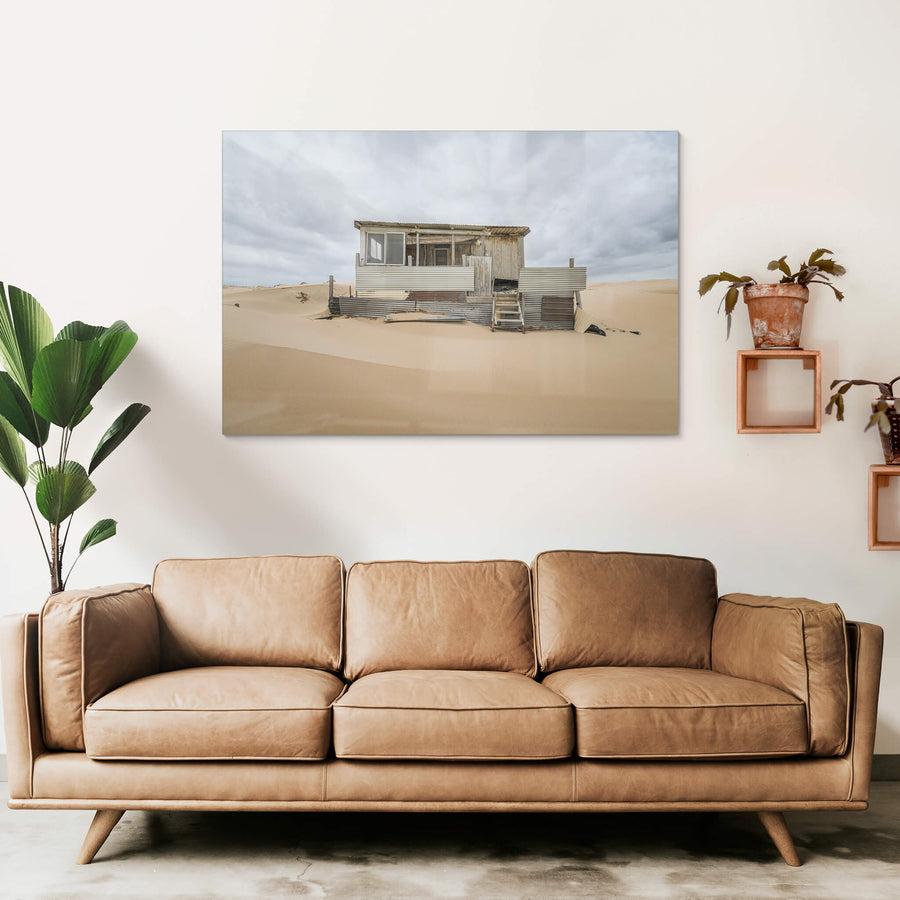
A lone shack sits at the southern end of Tin City, its silvery and rusted iron panels mixing unevenly across the walls. A small wooden ladder rises to the entrance on the right side. Faded paint and rusted iron front a clean stretch of wind-swept sand.
Open edition
Printed to order, no fixed quantity. Each print is hand-signed by the photographer.
Limited edition
A fixed number of prints exist. Once sold, the edition closes permanently. Each print is individually numbered and signed.
Shipping Free shipping over $250. Ships worldwide, rates calculated at checkout.
Returns Damaged in transit? We replace it. Full policy →
Ships within 10 business days · signed & numbered
In situ
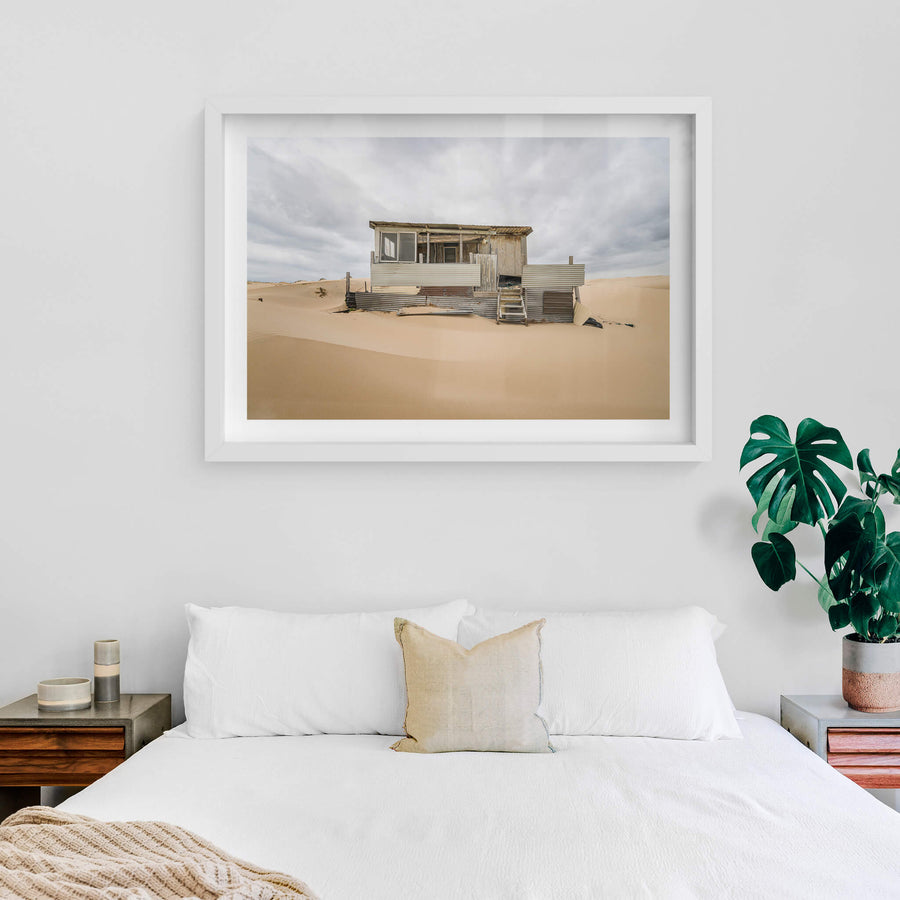
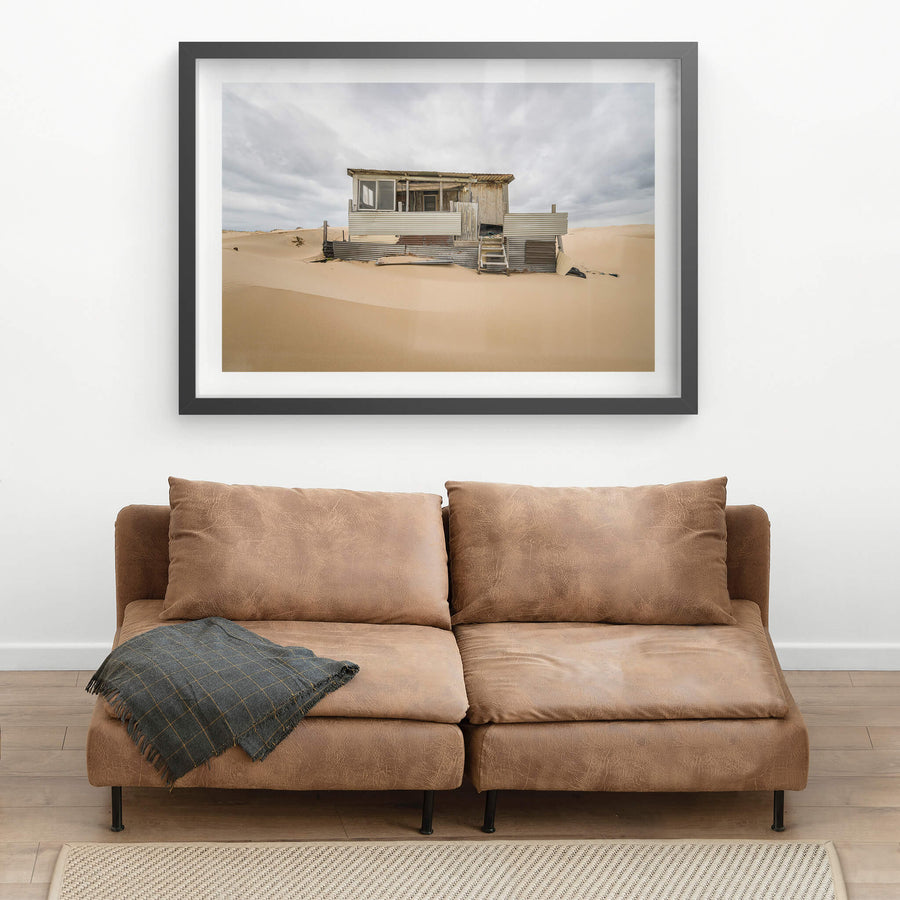
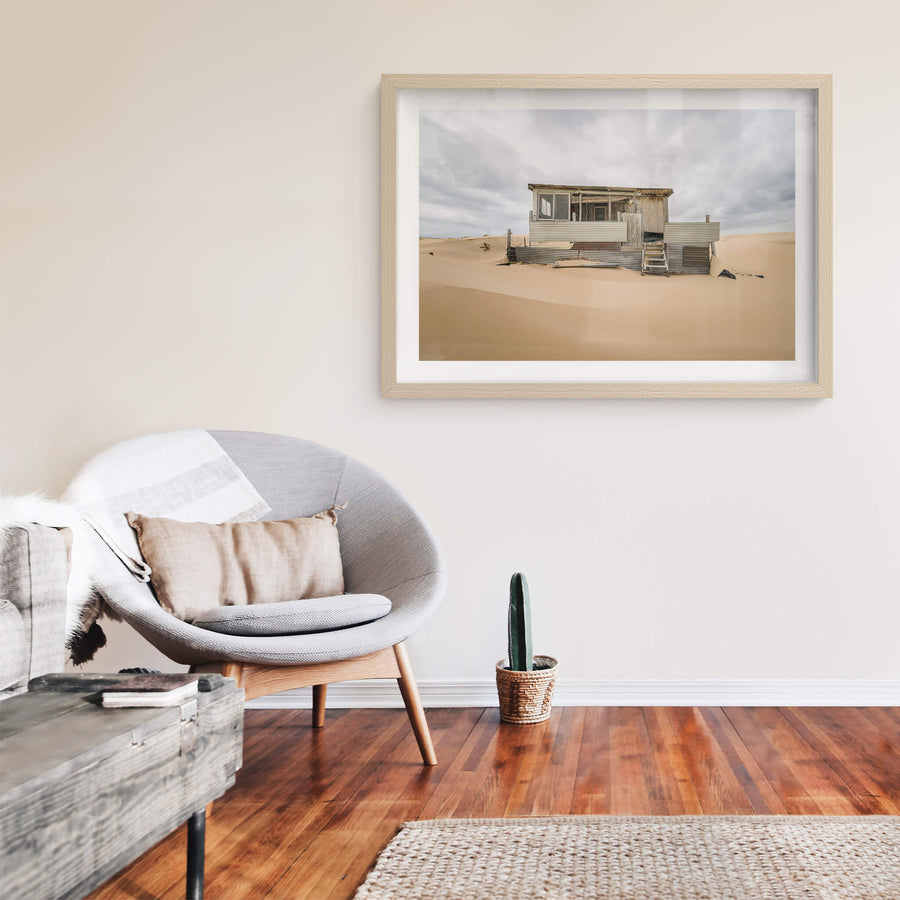
Print datasheet
- Title
- Eleven
- Series
- Tin City
- Catalogue
- TCI-025
- Process
- Giclée
- Captured
- 1 February 2018
- Camera
- NIKON D850
- Lens
- 14.0-24.0 mm f/2.8
- Aperture
- f/2.8
- Shutter
- 1/640 s
- ISO
- 64
- Focal length
- 14 mm
- Paper
- Ilford Galerie Smooth Cotton Rag 310 gsm
- Paper size
- 297 × 210 mm
- Location
- Anna Bay, New South Wales, Australia
- Authenticity
- C2PA verified provenance →
- Recognised by
- Highly Commended in Multimedia at the 2016 National Trust of Australia (NSW) Heritage Awards
Anna Bay, New South Wales, Australia
Map · Mapbox · OpenStreetMap
About this print
Clean lines in a sandy foreground before a weathered Tin City shack.
Brett Patman

The series
Tin City
Tin City is the local name for a group of huts behind the frontal dune on Stockton Bight, in the Worimi Conservation Lands between Newcastle and Port Stephens, New South Wales, on Worimi country. In 2015 there were 11, all single storey and clad in corrugated iron, with gable or skillion roofs. Most were built in the 1970s and 1980s; the oldest still standing that year dated from December 1970 and the youngest from 1992.
Print sizes
The anatomy view shows what this finish is as a physical object: paper margin, mat band, frame depth, acrylic profile. The comparison strip shows how each size sits relative to the others at true scale. Click a size or a finish to update both.
| Type | Size | Width | Height |
|---|


