
Condenser Plinth
Provenance
- Camera
- NIKON D7000
- Lens
- 24.0-70.0 mm f/2.8
- Settings
- 24mm · f/8.0 · 1/5 · ISO 100
- Paper
- Ilford Galerie Smooth Cotton Rag 310 gsm
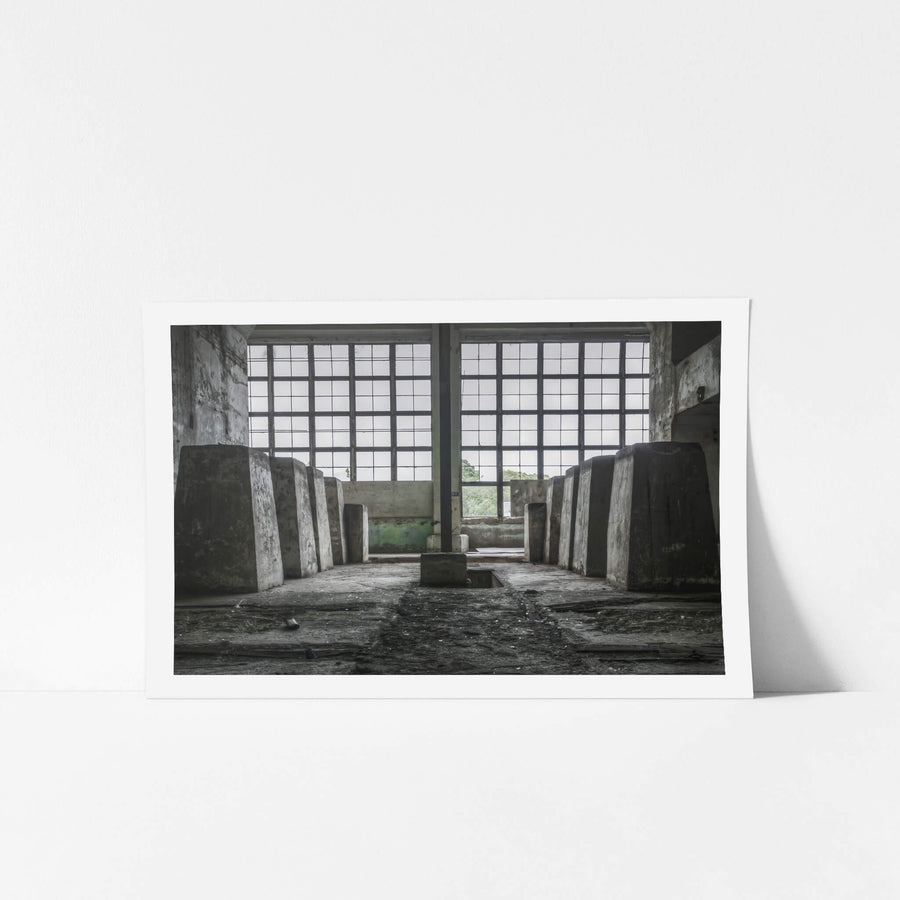
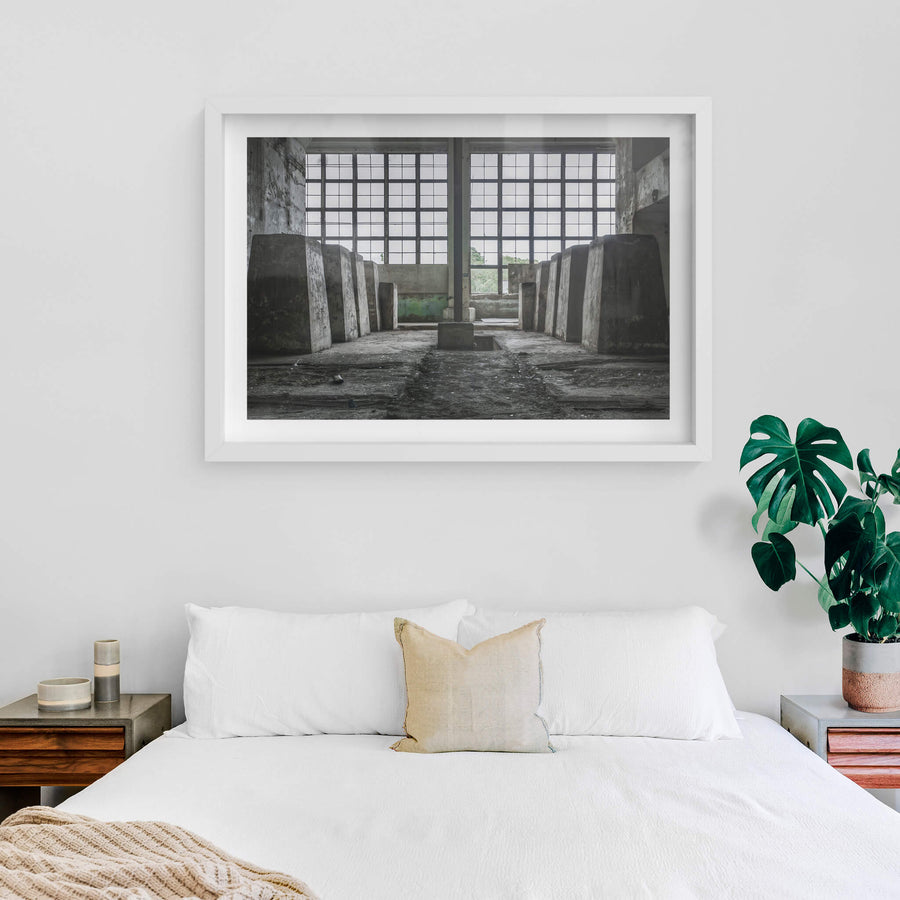
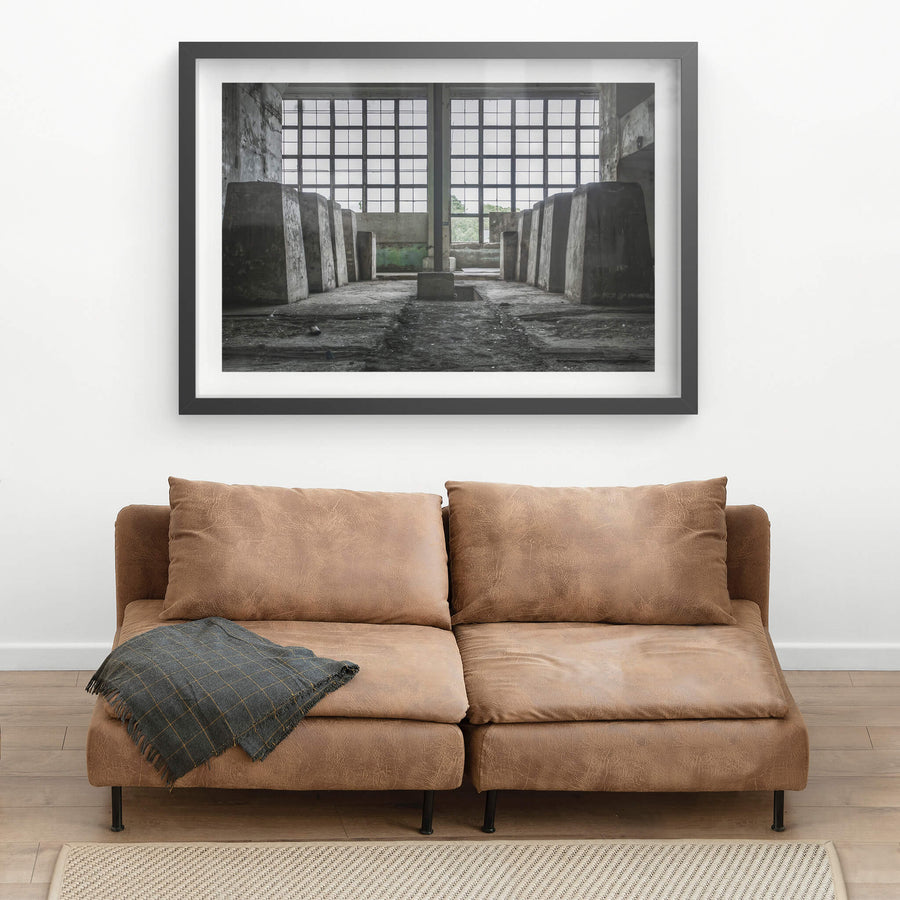
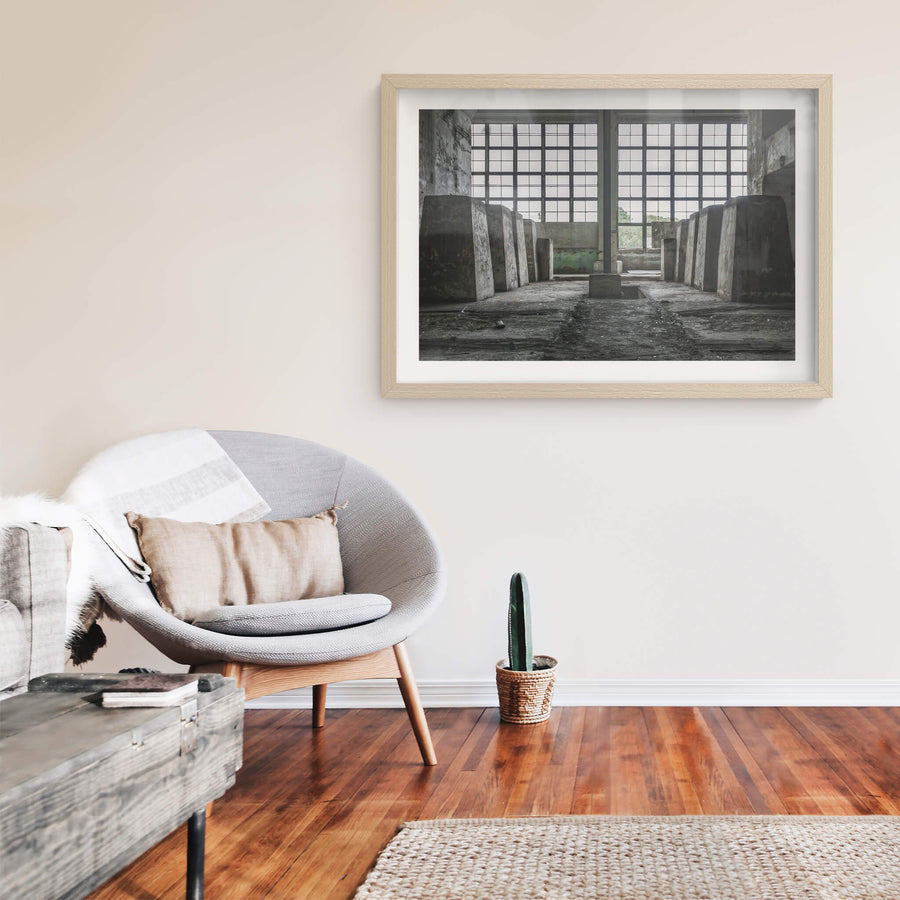
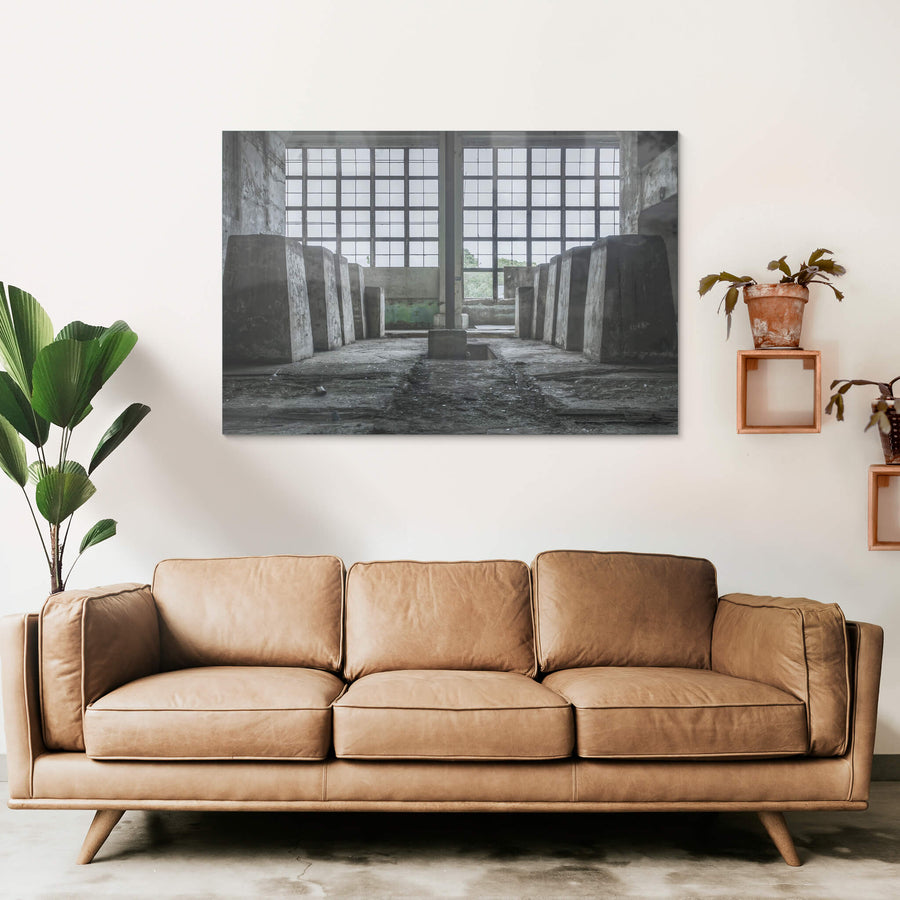
Two rows of trapezoidal concrete plinths flank a central column along the floor at Wangi Power Station, with a dark pit opening in the foreground where heavy equipment once met the slab. Green-painted render survives on the lower part of the left wall, and a broken pane on the right frames a glimpse of trees outside. The machinery these plinths carried was removed between 1995 and 1997.
Open edition
Printed to order, no fixed quantity. Each print is hand-signed by the photographer.
Limited edition
A fixed number of prints exist. Once sold, the edition closes permanently. Each print is individually numbered and signed.
Shipping Free shipping over $250. Ships worldwide, rates calculated at checkout.
Returns Damaged in transit? We replace it. Full policy →
Ships within 10 business days · signed & numbered
In situ
Print datasheet
- Title
- Condenser Plinth
- Series
- Wangi Power Station
- Catalogue
- WPS-023
- Process
- Giclée
- Captured
- 27 November 2015
- Camera
- NIKON D7000
- Lens
- 24.0-70.0 mm f/2.8
- Aperture
- f/8.0
- Shutter
- 1/5 s
- ISO
- 100
- Focal length
- 24 mm
- Paper
- Ilford Galerie Smooth Cotton Rag 310 gsm
- Paper size
- 297 × 210 mm
- Location
- Wangi Wangi, New South Wales, Australia
- Authenticity
- C2PA verified provenance →
- Recognised by
- Highly Commended in Multimedia at the 2016 National Trust of Australia (NSW) Heritage Awards
Wangi Wangi, New South Wales, Australia
Map · Mapbox · OpenStreetMap
About this print
Concrete plinths stand in two rows, tapered and chest-high, flanking a central aisle. Overcast light pours through tall steel-framed windows at the far wall. The floor between them is thick with grit, broken glass, and peeling debris. A green algae stain marks the lower wall beneath the window line. A single steel column divides the glass into two massive panels. Vegetation presses against the panes from outside.
Brett Patman

The series
Wangi Power Station
About a thousand men built Wangi Power Station, on the western shore of Lake Macquarie. They were Hunter Valley locals and post-war Italian migrants, many living in a tent city on the lakeshore through the build. By 1957 they'd put up the main building, 228 metres long and eleven storeys high in triple-brick over a riveted steel frame, with three 76-metre concrete chimneys behind it.
Print sizes
The anatomy view shows what this finish is as a physical object: paper margin, mat band, frame depth, acrylic profile. The comparison strip shows how each size sits relative to the others at true scale. Click a size or a finish to update both.
| Type | Size | Width | Height |
|---|


