
Nature Always Finds a Way
Provenance
- Camera
- NIKON D7000
- Lens
- 24.0-70.0 mm f/2.8
- Settings
- 36mm · f/8.0 · 1/6 · ISO 100
- Paper
- Ilford Galerie Smooth Cotton Rag 310 gsm
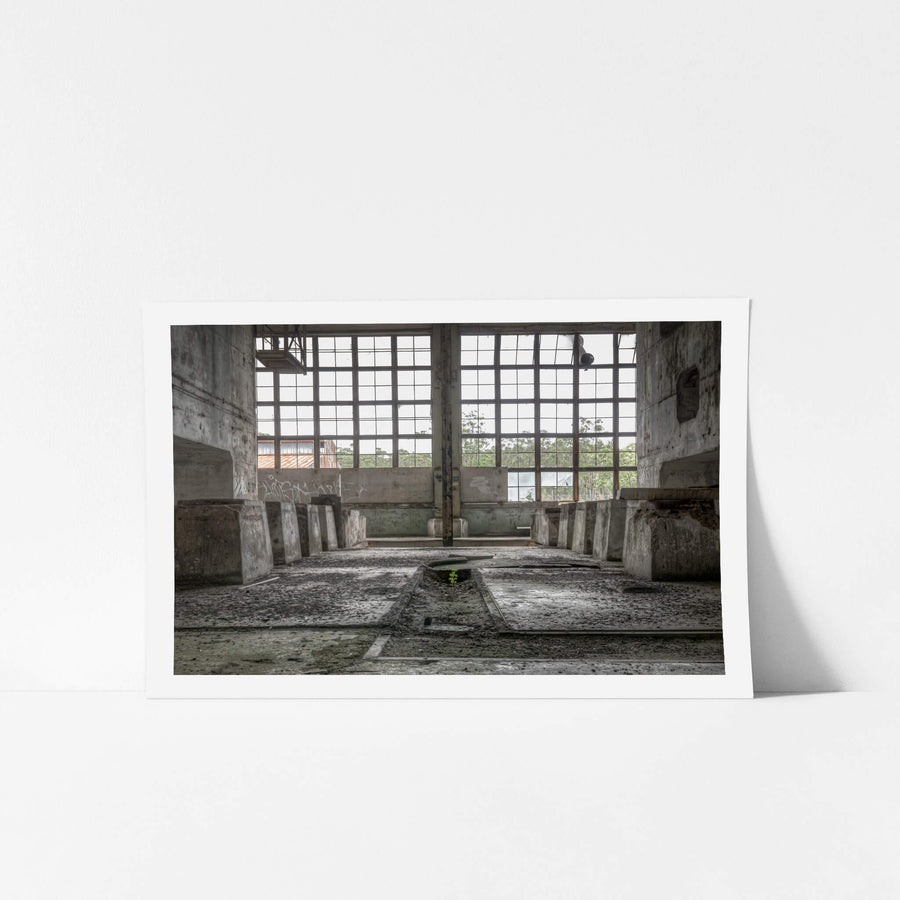
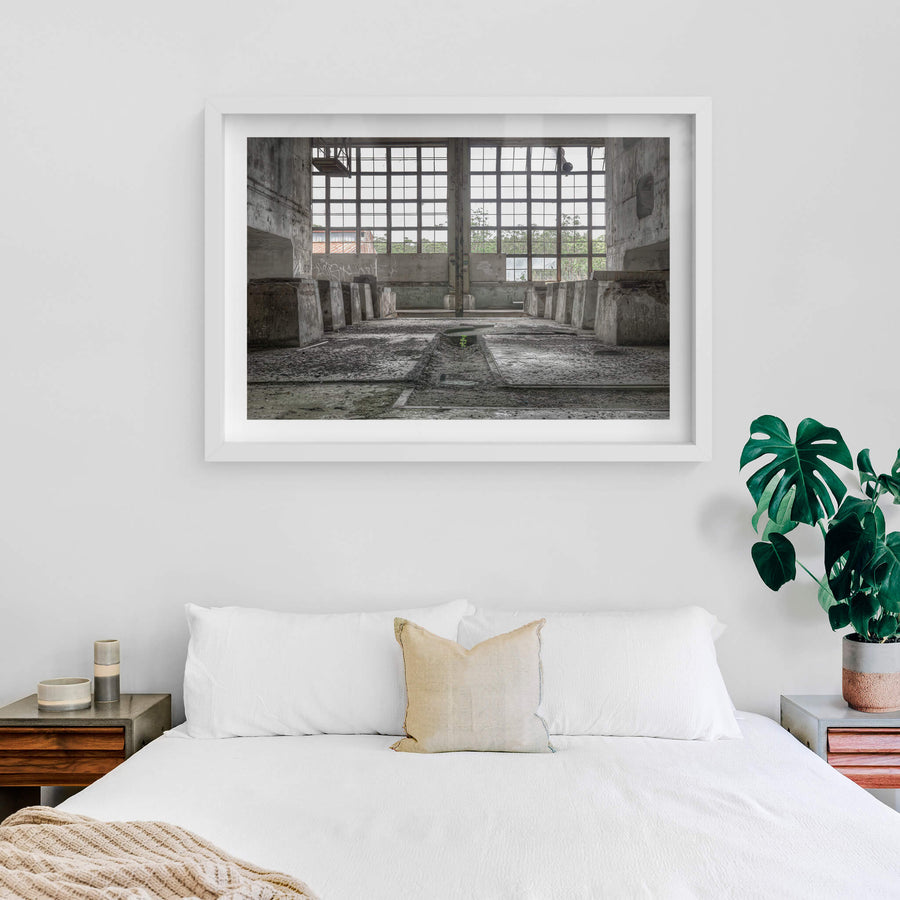
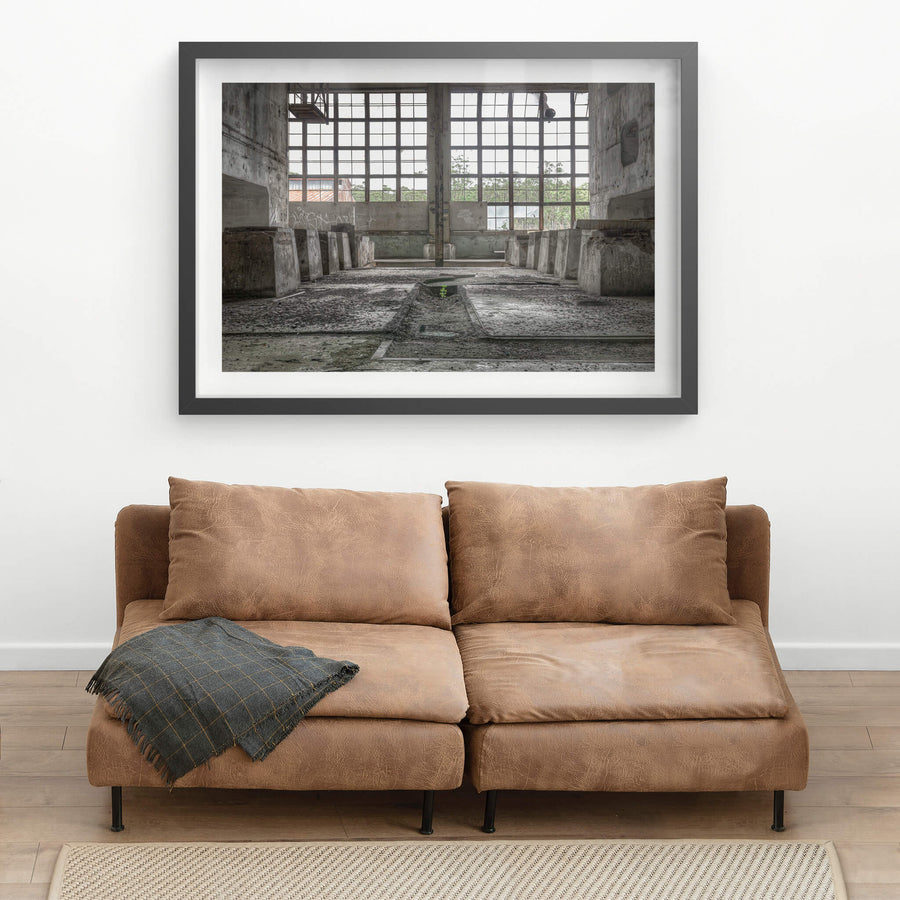
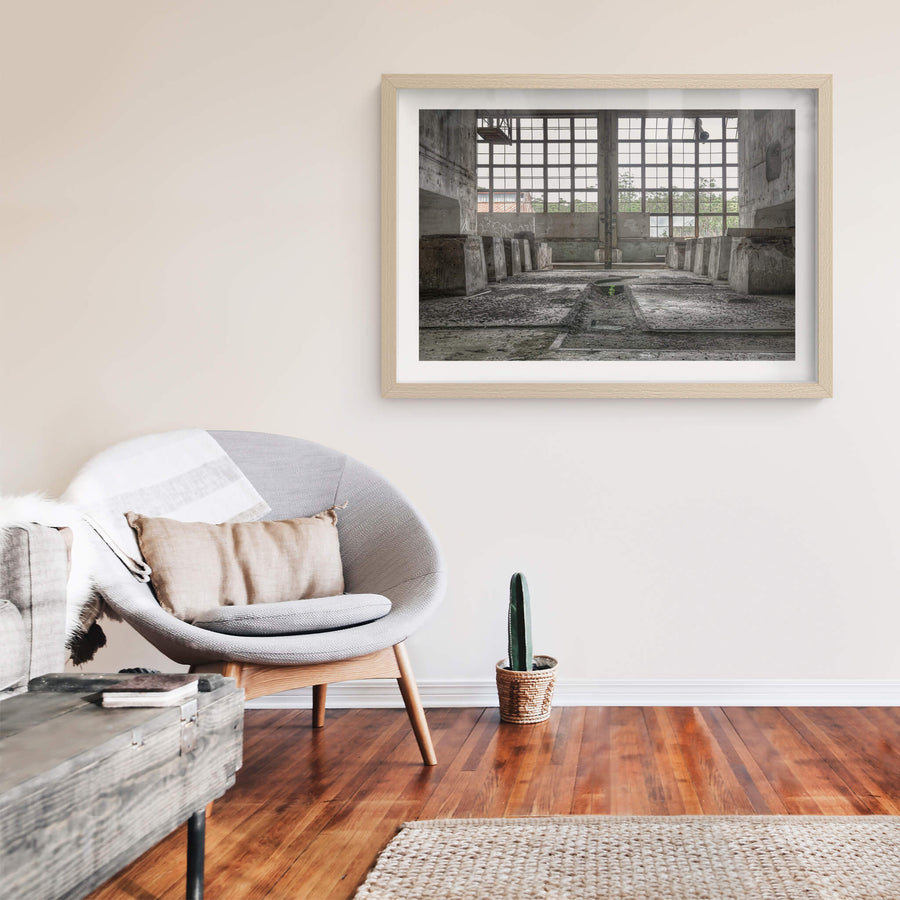
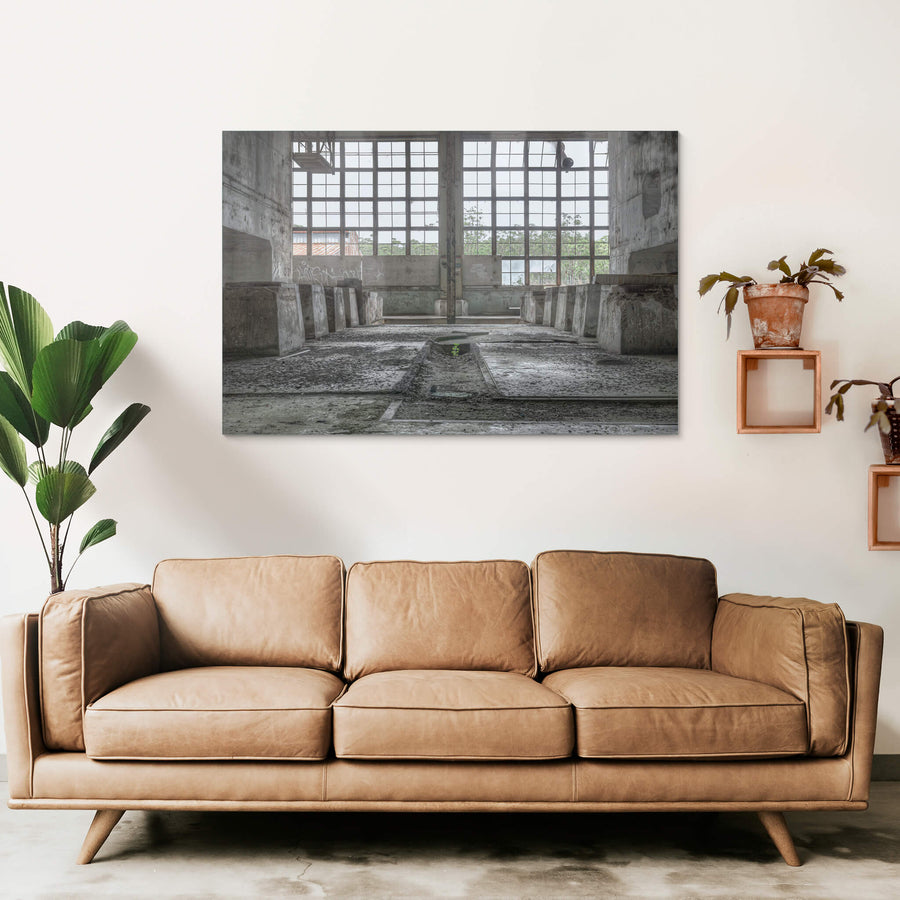
A single green plant pushes up from a central channel in the concrete floor at Wangi Power Station, growing through debris left when the machinery was taken out. Two full-height gridded windows span the far wall, one with a broken pane in its lower section and graffiti on the concrete below. The floor sits well above the basement void that once held the large condensers.
Open edition
Printed to order, no fixed quantity. Each print is hand-signed by the photographer.
Limited edition
A fixed number of prints exist. Once sold, the edition closes permanently. Each print is individually numbered and signed.
Shipping Free shipping over $250. Ships worldwide, rates calculated at checkout.
Returns Damaged in transit? We replace it. Full policy →
Ships within 10 business days · signed & numbered
In situ
Print datasheet
- Title
- Nature Always Finds a Way
- Series
- Wangi Power Station
- Catalogue
- WPS-034
- Process
- Giclée
- Captured
- 27 November 2015
- Camera
- NIKON D7000
- Lens
- 24.0-70.0 mm f/2.8
- Aperture
- f/8.0
- Shutter
- 1/6 s
- ISO
- 100
- Focal length
- 36 mm
- Paper
- Ilford Galerie Smooth Cotton Rag 310 gsm
- Paper size
- 297 × 210 mm
- Location
- Wangi Wangi, New South Wales, Australia
- Authenticity
- C2PA verified provenance →
- Recognised by
- Highly Commended in Multimedia at the 2016 National Trust of Australia (NSW) Heritage Awards
Wangi Wangi, New South Wales, Australia
Map · Mapbox · OpenStreetMap
About this print
Concrete turbine plinths stand in two rows inside the main hall at Wangi Power Station. The machinery is gone. Between the plinths, a rectangular pit opens in the floor, its edges caked in grime. A single green shoot grows from the dark water pooled at the bottom. Overhead, tall steel-framed windows stretch floor to ceiling, several panes missing. Grey light fills the space. The walls are stained, the concrete mottled with damp and graffiti.
Brett Patman

The series
Wangi Power Station
About a thousand men built Wangi Power Station, on the western shore of Lake Macquarie. They were Hunter Valley locals and post-war Italian migrants, many living in a tent city on the lakeshore through the build. By 1957 they'd put up the main building, 228 metres long and eleven storeys high in triple-brick over a riveted steel frame, with three 76-metre concrete chimneys behind it.
Print sizes
The anatomy view shows what this finish is as a physical object: paper margin, mat band, frame depth, acrylic profile. The comparison strip shows how each size sits relative to the others at true scale. Click a size or a finish to update both.
| Type | Size | Width | Height |
|---|


