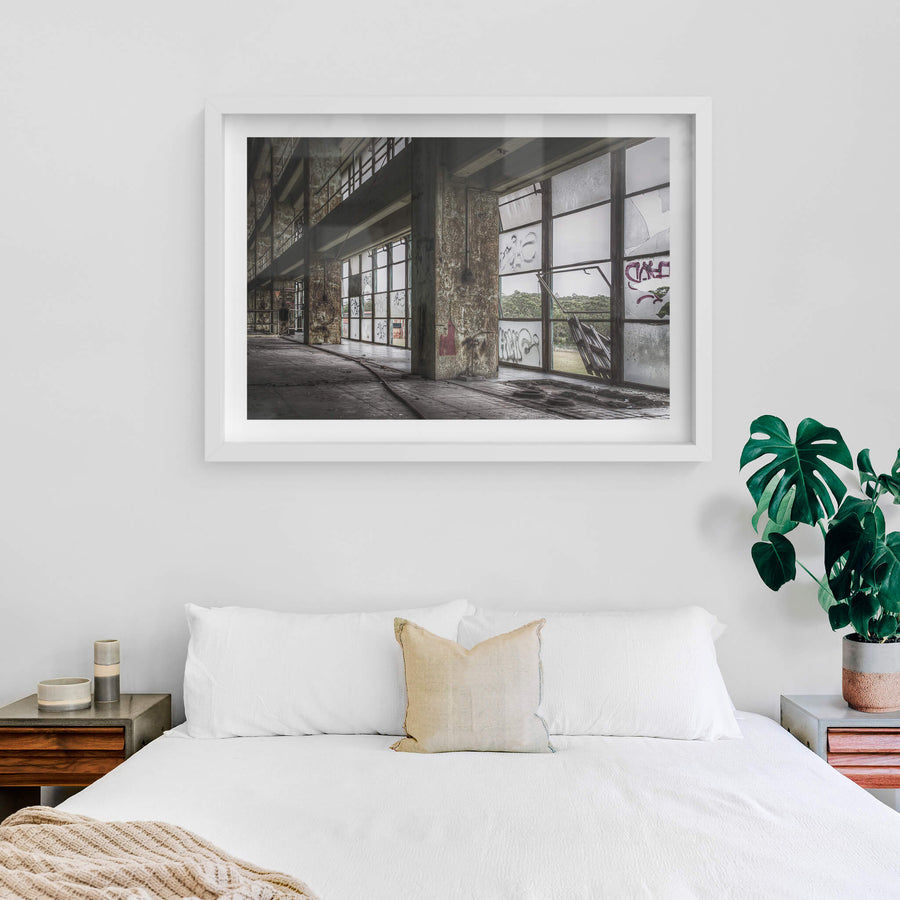
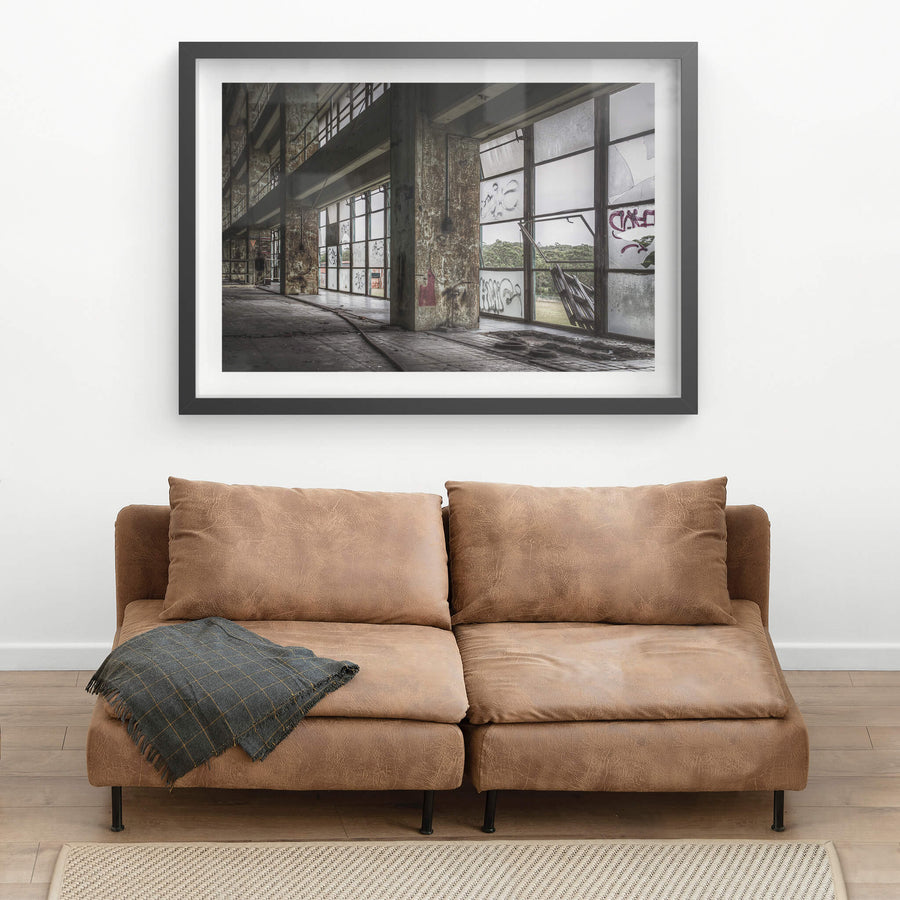
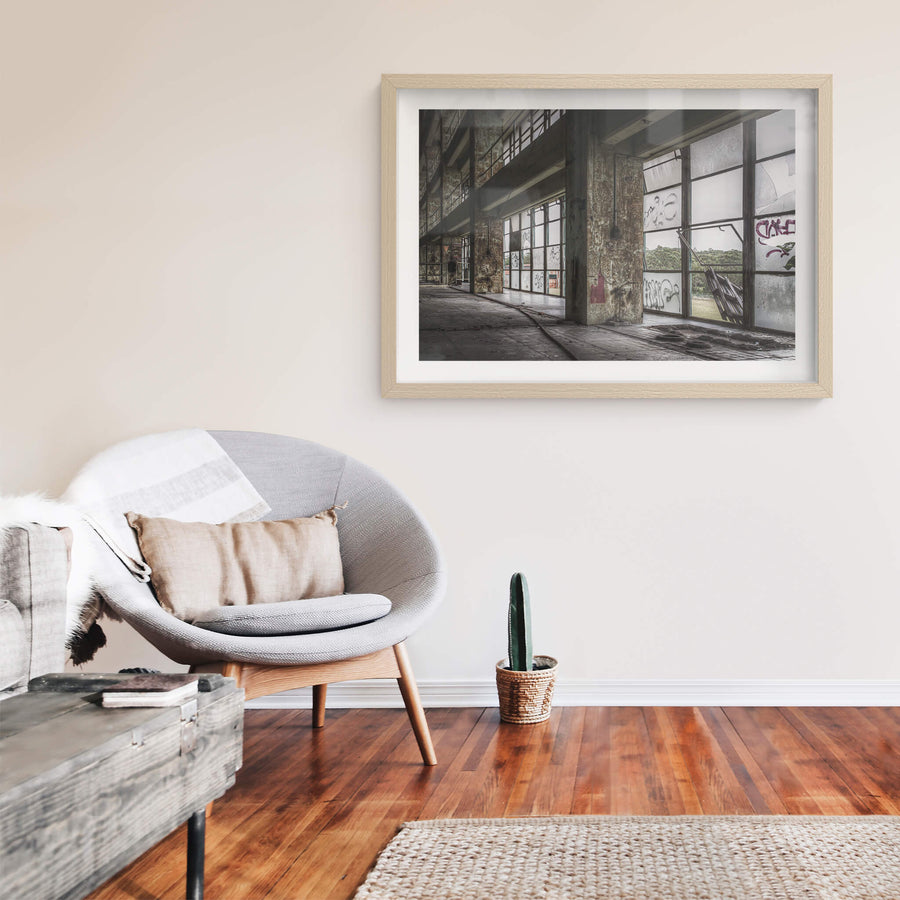
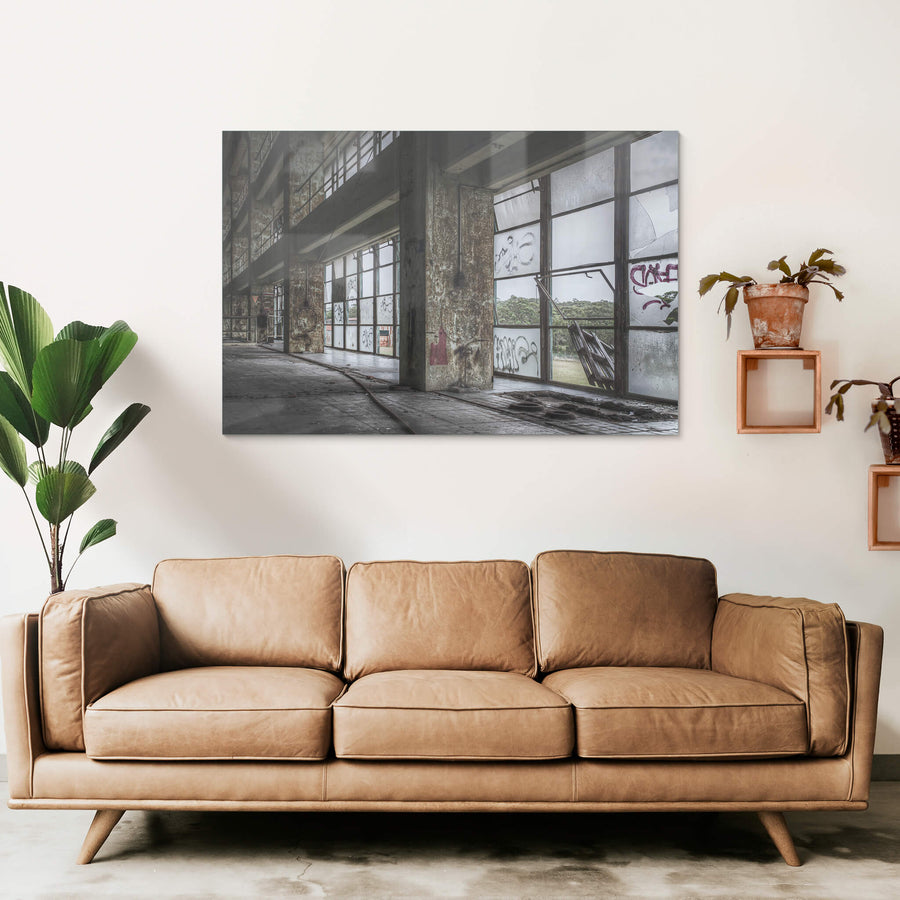
Turbine Hall A Station Windows

Provenance

Camera
NIKON D7000
Lens
24.0-70.0 mm f/2.8
Settings
24mm · f/8.0 · 1/10 · ISO 100
Paper
Ilford Galerie Smooth Cotton Rag 310 gsm

Sunlight pierces the tall, dust-streaked windows of Turbine Hall A, Wangi Power Station. The light illuminates the cavernous, abandoned industrial space, revealing the slow decay within this former powerhouse.

Edition
Open edition

Open edition
Printed to order, no fixed quantity. Each print is hand-signed by the photographer.

Limited edition
A fixed number of prints exist. Once sold, the edition closes permanently. Each print is individually numbered and signed.

$100.00 AUD
Size
Type
Colour
Signed, numbered, with COA. Made to order in 10 to 20 business days (framed). Shipped in protective packaging with edition certificate, paper-stock reference and a printed care guide.
See certificate sample →

Shipping Free shipping over $250. Ships worldwide, rates calculated at checkout.

Returns Damaged in transit? We replace it. Full policy →

Ships within 10 business days · signed & numbered

In situ
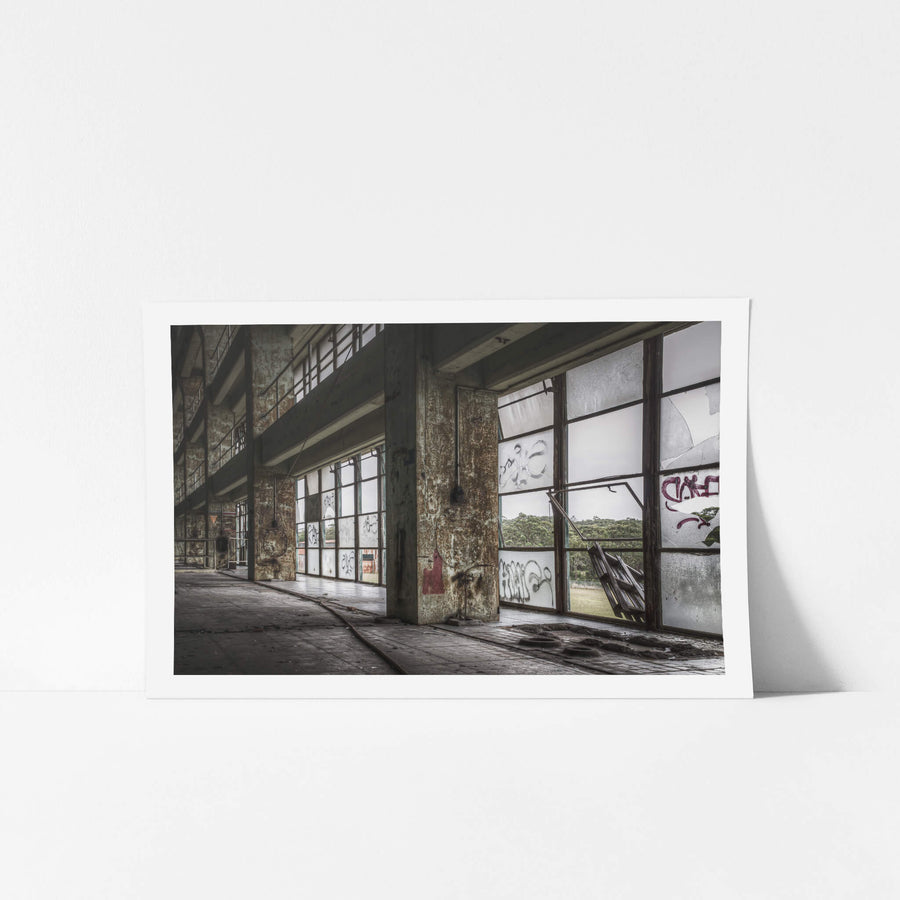
Turbine Hall A Station Windows at Wangi Power Station, tall steel-framed windows run the length of Turbine Hall.Turbine Hall A Station Windows at Wangi Power Station, tall steel-framed windows run the length of Turbine Hall.Turbine Hall A Station Windows at Wangi Power Station, tall steel-framed windows run the length of Turbine Hall.Turbine Hall A Station Windows at Wangi Power Station, tall steel-framed windows run the length of Turbine Hall.Turbine Hall A Station Windows at Wangi Power Station, tall steel-framed windows run the length of Turbine Hall.
01 PROVENANCE

Print datasheet

Title
Turbine Hall A Station Windows
Series
Wangi Power Station
Catalogue
WPS-044
Process
Giclée
Captured
27 November 2015
Camera
NIKON D7000
Lens
24.0-70.0 mm f/2.8
Aperture
f/8.0
Shutter
1/10 s
ISO
100
Focal length
24 mm
Paper
Ilford Galerie Smooth Cotton Rag 310 gsm
Paper size
290 × 200 mm
Location
Wangi Wangi, New South Wales, Australia
Recognised by
Highly Commended in Multimedia at the 2016 National Trust of Australia (NSW) Heritage Awards
02 LOCATION

Wangi Wangi, New South Wales, Australia

Map · Mapbox · OpenStreetMap

03 THE STORY

About this print

The windows along the turbine hall at Wangi Power Station's A Station bay run the full height of the wall, set into the steel structural frame in tall rectangular bays. Each window is divided into horizontal panes by mullions, the glazing original to the 1957 to 1958 build. Some of the panes are intact; others are broken or missing. The frames are steel, painted in a pale industrial green, the paintwork worn and rusted at the seams. Daylight falls through the window line in flat sheets across the empty turbine hall floor. The view out is across the switch yard toward Lake Macquarie beyond.

The window arrangement at Wangi Power Station was treated as part of the building's architectural intent, not just a means of admitting light. The long industrial facade carries a consistent rhythm of glazed bays along its 228-metre length. Colin Smith of C.H. Smith & Johnson was Elcom's project architect, the architect of record who took the station through. The NSW State Heritage Register listing specifically calls this out: Wangi is a rare example in Australia of a power station where architectural appearance and landscape setting were treated as integral to the design. The A Station windows are part of what makes that listing accurate. They have been in place since 1958.

04 FROM THE FIELD NOTES

Tall steel-framed windows run the length of Turbine Hall A, their panes shattered or missing. Concrete pillars divide each bay, surfaces stained dark with moisture and age. Graffiti covers the remaining glass. Rail tracks are set into the brick floor, leading deeper into the hall. Through the broken frames, eucalyptus canopy presses close. Discarded tyres and timber lean against the sills. Flat grey light fills the space.

Brett Patman

Wangi Power Station

The series

Wangi Power Station

51 photographs

About a thousand men built Wangi Power Station, on the western shore of Lake Macquarie. They were Hunter Valley locals and post-war Italian migrants, many living in a tent city on the lakeshore through the build. By 1957 they'd put up the main building, 228 metres long and eleven storeys high in triple-brick over a riveted steel frame, with three 76-metre concrete chimneys behind it.

View all in this series →

05 SIZE GUIDE

Print sizes

The anatomy view shows what this finish is as a physical object: paper margin, mat band, frame depth, acrylic profile. The comparison strip shows how each size sits relative to the others at true scale. Click a size or a finish to update both.

Anatomy · true ratio
TypeSizeWidthHeight
08 BY POST · NO SPAM

Read the full story

Articles when they're published. The history behind a place. The day of a shoot. The work between prints. No marketing, no schedule.

You're subscribed.