
Boiler House
Provenance
- Camera
- NIKON D850
- Lens
- 14.0-24.0 mm f/2.8
- Settings
- 14mm · f/8.0 · 3s · ISO 100
- Paper
- Ilford Galerie Smooth Cotton Rag 310 gsm
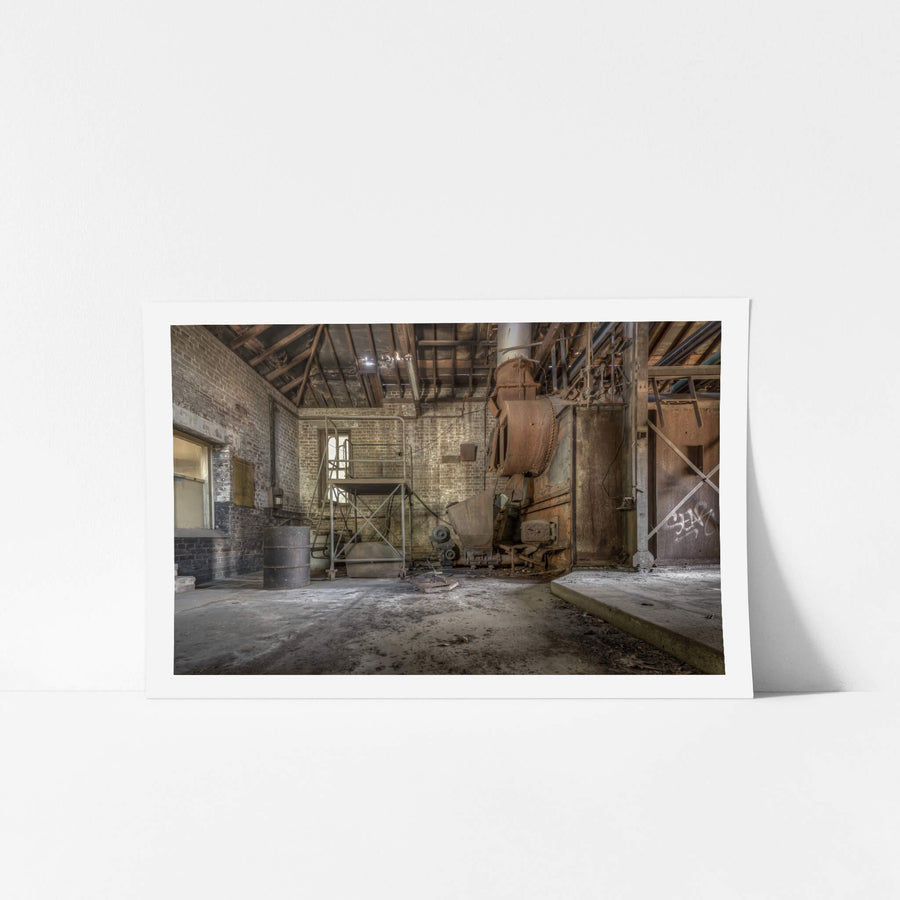
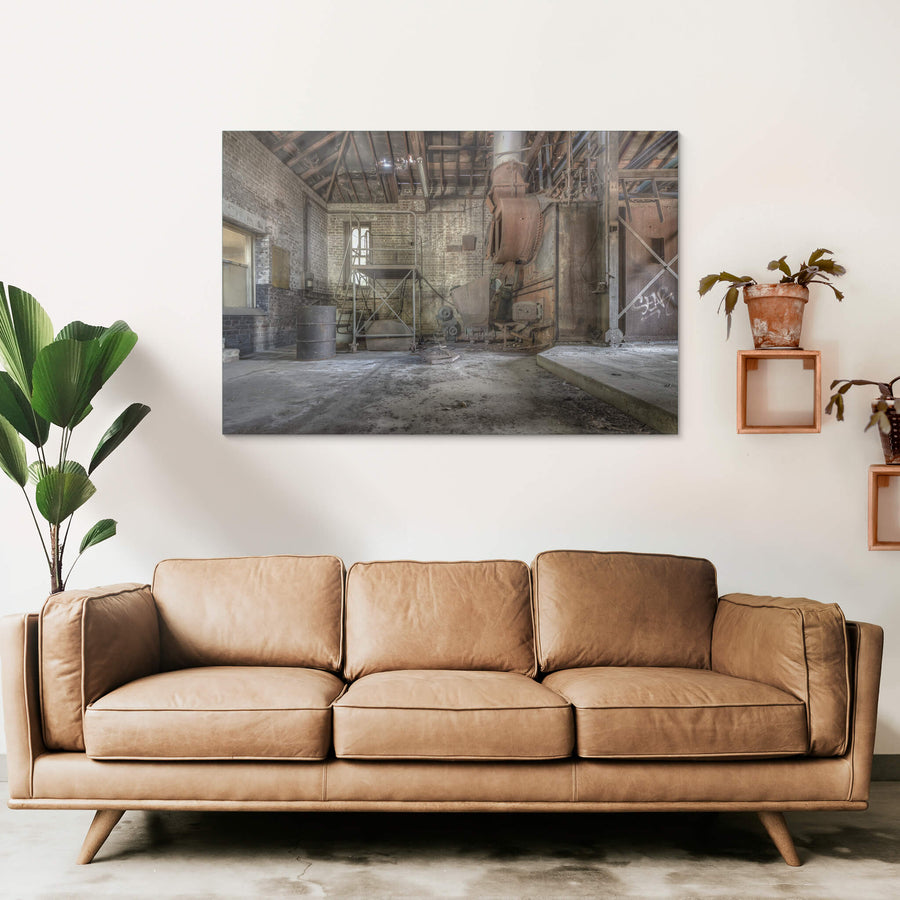
The Boiler House at Waterfall Sanatorium. Its brick walls enclose the rusting boiler, its circular blower housing and cast-iron access door still intact. The sanatorium treated tuberculosis patients from 1909 until 1958.
Open edition
Printed to order, no fixed quantity. Each print is hand-signed by the photographer.
Limited edition
A fixed number of prints exist. Once sold, the edition closes permanently. Each print is individually numbered and signed.
Shipping Free shipping over $250. Ships worldwide, rates calculated at checkout.
Returns Damaged in transit? We replace it. Full policy →
Ships within 10 business days · signed & numbered
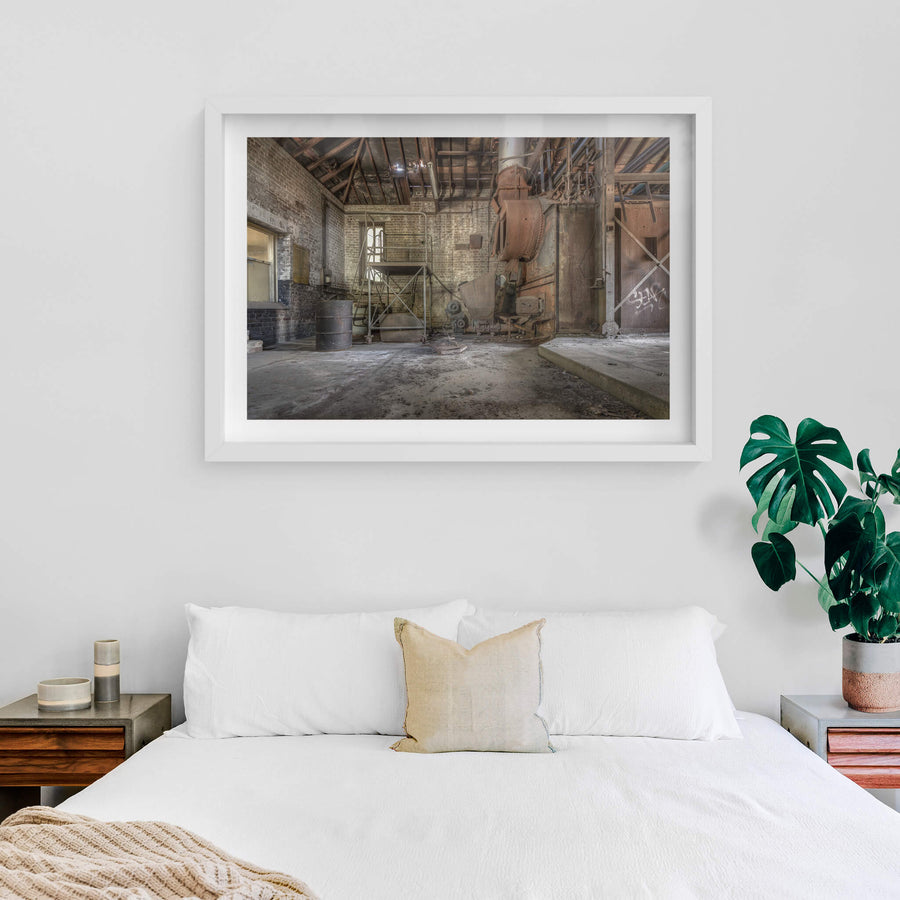
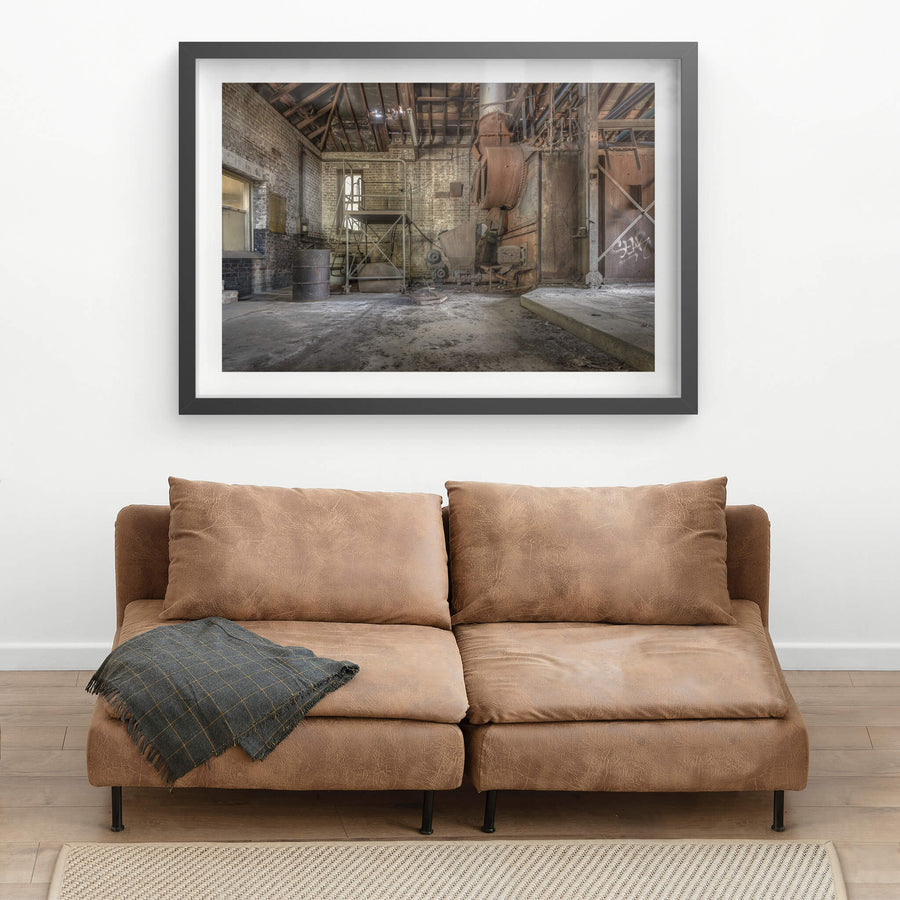
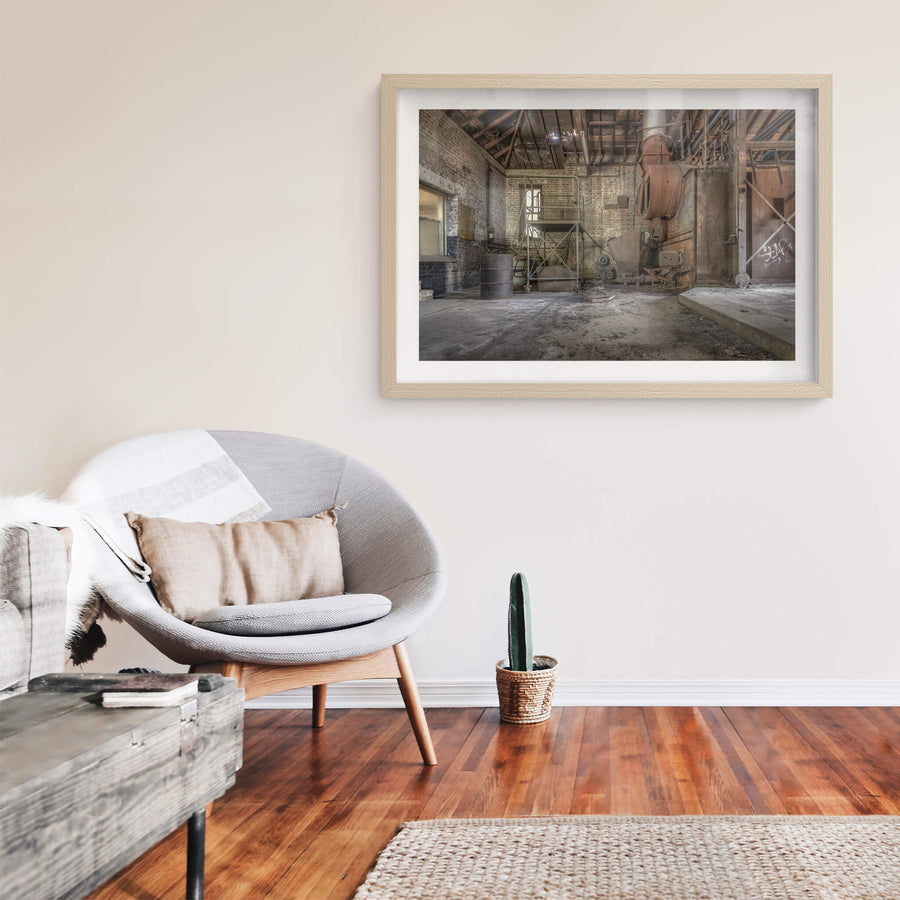
In situ
Print datasheet
- Title
- Boiler House
- Series
- Waterfall Sanatorium
- Catalogue
- WSA-004
- Process
- Giclée
- Captured
- 24 June 2018
- Camera
- NIKON D850
- Lens
- 14.0-24.0 mm f/2.8
- Aperture
- f/8.0
- Shutter
- 3s s
- ISO
- 100
- Focal length
- 14 mm
- Paper
- Ilford Galerie Smooth Cotton Rag 310 gsm
- Paper size
- 297 × 210 mm
- Location
- Waterfall, New South Wales, Australia
- Authenticity
- C2PA verified provenance →
- Recognised by
- Highly Commended in Multimedia at the 2016 National Trust of Australia (NSW) Heritage Awards
Waterfall, New South Wales, Australia
Map · Mapbox · OpenStreetMap
About this print
A heavy industrial boiler sits against the far wall, its casing oxidised to a deep burnt orange. Steel crossbracing and pipework climb the right side. To the left, a metal access platform reaches a small elevated doorway set into pale brick. A 44-gallon drum stands on the concrete floor. Timber roof trusses are exposed overhead, daylight pushing through gaps where sheeting has failed. The concrete is stained, layered with grit and leaf litter. Graffiti marks the rusted steel.
Brett Patman

The series
Waterfall Sanatorium
The first patients arrived at the Hospital for Consumptives, Waterfall on 14 April 1909, with initial provision for 180 men. A women's wing opened in May 1912 for 120; by 1919 it had become the largest sanatorium in New South Wales, holding 788 patients. The site sat at about 1,000 feet (305 m), 26 miles (42 km) south of Sydney, on the medical theory that tuberculosis needed 'high and rarefied atmosphere in the country away from the grime and pollution of cities'.
Print sizes
The anatomy view shows what this finish is as a physical object: paper margin, mat band, frame depth, acrylic profile. The comparison strip shows how each size sits relative to the others at true scale. Click a size or a finish to update both.
| Type | Size | Width | Height |
|---|


